水产养殖

Search documents
国联水产与海洋壹号基金达成战略合作
Zheng Quan Shi Bao Wang· 2025-08-05 10:26
人民财讯8月5日电,8月5日,国联水产(300094)与海洋壹号基金举行"资本赋能,产融共赢"战略投资 签约仪式。海洋壹号基金通过近1亿元规模资本注入,将强化链主核心竞争力,加速技术升级与产品创 新,巩固国联水产在精深加工领域的领先优势,并延伸产业链价值,向更高附加值环节拓展。 ...

从“白碱滩”到“鱼虾塘” 沙漠边缘飘“鲜”香 生态富民闯出乡村振兴新路
Yang Shi Wang· 2025-08-05 08:39
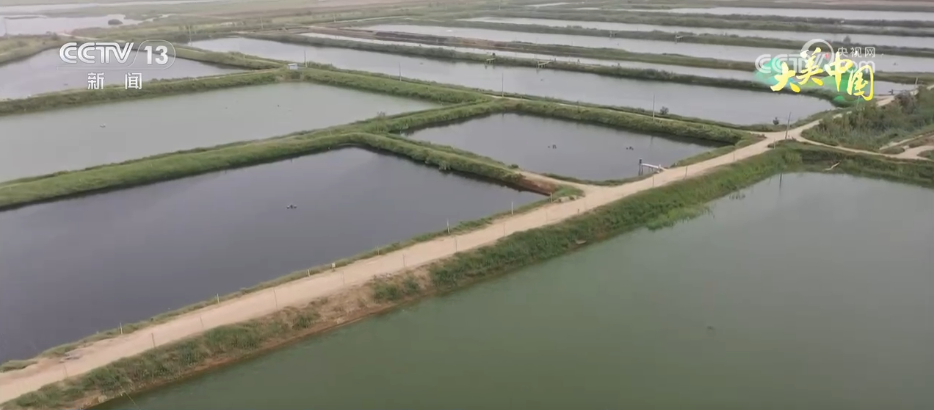
Core Viewpoint - The innovative "seafood land farming" model in Yutian County, Xinjiang, transforms previously barren land into productive aquaculture, providing local residents with access to seafood and creating a new path for ecological restoration and income generation [1][13]. Group 1: Aquaculture Development - The aquaculture base in Yutian County spans 1,240 acres and includes 43 ponds, cultivating over ten species such as grass carp, South American white shrimp, and Chinese mitten crabs, with sales extending to surrounding counties and regions like Tibet and Qinghai [3][5]. - The base is the largest aquatic production facility in the Hotan region, producing over 800 tons of four major fish species, 15 tons of South American white shrimp, and 10 tons of Chinese mitten crabs annually, making "desert seafood" a sought-after market commodity [5]. Group 2: Challenges and Solutions - A significant challenge in the aquaculture development was the high mortality rate of seedlings, primarily due to long transportation times from the eastern coastal regions and the stark differences in water quality between coastal and local saline-alkali environments [7]. - To address this, a 700 square meter greenhouse was constructed to create a specialized "acclimatization workshop" for seedlings, featuring large water storage and breeding tanks to improve survival rates [9]. Group 3: Economic Impact - The development of the aquaculture industry has not only satisfied local culinary desires but also provided new income opportunities for residents, transforming former farmers into "aquaculture technicians" and improving their livelihoods [11].

人工养贻贝 还能卖碳汇
Ren Min Ri Bao· 2025-08-04 22:39
Core Insights - Dachen Island has transformed into a model for carbon trading and ecological sustainability, with significant advancements in carbon credit transactions and renewable energy utilization [1][2]. Group 1: Carbon Trading and Financial Innovations - In October 2023, a company purchased 2,223 tons of carbon credits from Dachen Island's mussel farming for 100,500 yuan, marking Zhejiang's first marine blue carbon transaction [1]. - The establishment of a "dual carbon" smart platform on Dachen Island integrates carbon monitoring, assessment, and trading, utilizing satellite remote sensing and IoT technologies for real-time carbon data [2]. - A local cooperative successfully used mussels as collateral for a 150,000 yuan loan, representing the first carbon credit financial loan transaction in Taizhou [2]. Group 2: Ecological and Economic Impact - Dachen Island's wind turbines generate over 60 million kilowatt-hours annually, reducing carbon emissions by 45,000 tons and providing surplus electricity for the island [1]. - The local government has implemented a closed-loop mechanism for carbon credit income distribution, ensuring over 40% of revenues are reinvested into ecological protection [2]. - The ongoing development of a standardized trading and distribution system aims to create a replicable model for ecological economic value transformation [2].
学用结合,壮大乡村富民产业(干部状态新观察·年轻干部基层路)
Ren Min Ri Bao· 2025-08-04 22:39
Core Insights - The article highlights the efforts of a village cadre, Xun Ran, in promoting the farming of Australian blue crayfish as a means to boost the local economy and improve villagers' incomes [2][9] - The initiative faced initial skepticism from villagers regarding the viability and marketability of blue crayfish farming, which required strategic communication and support from local leaders [6][7] Group 1: Background and Initiatives - Xun Ran, with a background in food quality and safety, was appointed as an assistant to the village party secretary and played a crucial role in introducing blue crayfish farming to the village [2][3] - The village collaborated with neighboring villages to establish a 100-acre crayfish farming base, aiming to promote this venture among local farmers [2][3] Group 2: Challenges and Solutions - Initial resistance from villagers stemmed from concerns about the unknowns of blue crayfish farming, including survival rates and market access [6][7] - To address these concerns, Xun Ran and village leaders proposed a "base + farmer" management model and secured a buy-back agreement to ensure market access for the farmers [7][8] Group 3: Progress and Outcomes - Following the implementation of support measures, one farmer reported an average income of over 10,000 yuan per acre from crayfish farming, indicating the project's potential success [7][8] - By May 2023, the farming base had signed supply and sales agreements with 30 local farmers, expanding the farming area to over 700 acres [8]
【环球财经】希腊研究显示地中海升温威胁海洋生态系统
Xin Hua She· 2025-08-04 13:50
Core Insights - The Mediterranean Sea is experiencing significant warming trends due to climate change, posing serious threats to marine ecosystems and the sustainability of fisheries [1][2]. Group 1: Temperature Changes - From 1982 to 2023, the average annual sea surface temperature in the Mediterranean increased by 0.041 degrees Celsius [1]. - Between 1991 and 2020, the surface temperature of Greek waters rose approximately 1.5 degrees Celsius, with the upper 200 meters of water warming by about 1.2 degrees Celsius and depths of 200 to 800 meters warming by around 0.9 degrees Celsius [1]. - Even at depths of 4000 meters, a temperature increase of about 0.2 degrees Celsius has been observed [1]. Group 2: Ecological Impacts - The warming of the Mediterranean is leading to multiple ecological issues, including changes in the structure and function of phytoplankton populations, which are foundational to the marine food chain [1]. - Invasive species such as lionfish are rapidly expanding due to increased sea temperatures, which is squeezing the living space of native species [1]. - Coral and sponge populations are experiencing mass mortality during heatwaves, leading to overall degradation of the ecosystem [1]. Group 3: Impact on Aquaculture - The rising sea temperatures are adversely affecting aquaculture, particularly species like mussels that have limited capacity to cope with extreme heat and cannot easily migrate, resulting in significant losses during heatwaves [1].
焦点访谈|新疆突破想象的蜕变,藏着中国西部腾飞密码
Yang Shi Wang· 2025-08-04 13:31
Core Insights - Xinjiang is evolving beyond its traditional image, showcasing new industries and innovations that contribute to its economic development [1][26] Agriculture and Horticulture - In Hotan, the cultivation of desert roses has transformed the landscape, with over 81,000 acres now dedicated to rose farming, generating significant income for local farmers [9] - The income from rose cultivation can reach 10,000 yuan per acre, with the potential for further expansion into deep processing of rose products [9] Aquaculture - The introduction of seafood farming in saline-alkali ponds has turned a previously challenging environment into a productive aquaculture area, with significant yields from species like crabs and clams [10][13] - The first year of trial farming yielded over 10,000 yuan per acre, indicating a promising future for seafood production in the region [13] Technological Advancements - The development of an AI-powered "super brain" in Hami is enhancing operational efficiency in various sectors, including mining, with over 25% of mining trucks now operating autonomously [20] - The establishment of a high-performance computing network supports complex AI calculations, facilitating projects like the "Jiang-Suan-Ru-Yu" initiative, which connects data processing between Hami and Chongqing [24][22] Economic Transformation - Xinjiang is witnessing a shift from traditional industries like coal and agriculture to innovative sectors such as green energy and technology-driven agriculture, creating new growth opportunities [26] - The region's ability to adapt and innovate in harsh environments is leading to significant economic and social improvements, positioning Xinjiang as a key player in China's western development strategy [26]

传鲟龙科技拟赴港上市 国内鱼子酱市场占有率达80%
Zhi Tong Cai Jing· 2025-08-04 08:13
Group 1 - Company Sturgeon Dragon Technology is considering an IPO in Hong Kong and has engaged advisors for potential stock issuance, although details such as the issuance scale are not yet determined [1] - If successful, Sturgeon Dragon Technology may become the "first caviar stock" in Hong Kong [1] - The company was established in 2003 and is one of the earliest enterprises in China to research artificial sturgeon farming, with a total farming scale of 13,000 tons and an annual processing capacity of 250 tons of caviar and 2,000 tons of fish products [1] Group 2 - In 2023, Sturgeon Dragon Technology's caviar export volume accounted for 69.58% of China's total exports, and it holds an 80% market share in the domestic caviar market [1] - The company currently produces approximately 35% of the world's caviar, making it the largest caviar producer globally [1] - Financially, Sturgeon Dragon Technology is projected to achieve total revenue of 670 million yuan in 2024, representing a year-on-year growth of 15.95%, with a net profit attributable to the parent company of 293 million yuan, a year-on-year increase of 23.62% [1] Group 3 - Recently, Sturgeon Dragon Technology's shareholders voted to terminate its listing on the A-share New Third Board, and the company's stock has been suspended [2] - The company stated that the decision to delist was based on the development status of the industry and its strategic planning, aiming to focus on business management, reduce operational costs, and enhance decision-making efficiency [2] - Following the termination of the listing, the company will continue to deepen its main business development and enhance its market competitiveness and sustainable development capabilities [2]
新股消息 | 传鲟龙科技拟赴港上市 国内鱼子酱市场占有率达80%
智通财经网· 2025-08-04 08:11
Group 1 - Company Sturgeon Technology is considering an IPO in Hong Kong and has engaged advisors for potential stock issuance, although details such as the issuance scale are not yet determined [1] - If successful, Sturgeon Technology may become the first "caviar stock" in the Hong Kong market [1] - The company was established in 2003 and is one of the earliest enterprises in China to research artificial sturgeon farming, with a total farming scale of 13,000 tons and an annual processing capacity of 250 tons of caviar and 2,000 tons of fish products [1] Group 2 - In 2023, Sturgeon Technology's caviar export volume accounted for 69.58% of China's total exports, and it holds an 80% market share in the domestic caviar market [1] - The company currently produces approximately 35% of the world's caviar, making it the largest caviar producer globally [1] - Financially, Sturgeon Technology's total revenue for 2024 is projected to reach 670 million yuan, a year-on-year increase of 15.95%, with a net profit attributable to the parent company of 293 million yuan, reflecting a growth of 23.62% [1] Group 3 - Recently, Sturgeon Technology's shareholders voted to terminate its listing on the New Third Board, and the company's stock has been suspended [2] - The company had only been listed for a little over a year since its debut in March 2024, and the decision to delist was based on the overall planning of the company's strategic development and industry conditions [2] - Following the termination of the listing, Sturgeon Technology aims to deepen its main business development, enhance market competitiveness, and improve sustainable development capabilities [2]
一根小海参,如何撬动百亿大产业?
Jin Rong Shi Bao· 2025-08-03 06:38
Core Insights - The sea cucumber farming industry in Xiapu has grown from negligible beginnings in 2003 to a significant economic pillar, contributing to 30% of China's sea cucumber production with an annual output value exceeding 10 billion yuan [1] - The introduction of warehouse receipt pledge loans has addressed the financial challenges faced by sea cucumber farmers, enhancing their pricing power and profitability [2][3] Industry Development - Xiapu has transformed into a major sea cucumber farming base, overcoming historical limitations and establishing itself as a key player in the "North Cucumber South Farming" initiative [1] - The sea cucumber industry has expanded its scale, with production now accounting for 30% of the national output despite occupying less than 1% of the sea area [1] Financial Innovations - The warehouse receipt pledge loan system allows farmers to use their processed sea cucumbers as collateral for loans, significantly increasing their average loan amount from 300,000 yuan to 1.2 million yuan [3][4] - This financial innovation has filled a critical gap in the financing of the sea cucumber industry, providing necessary credit support during both production and sales phases [3] Market Dynamics - The introduction of warehouse receipt loans has extended the selling period for farmers from 3-5 days to over six months, allowing them to better time their sales according to market conditions [4] - The average profit margin for farmers can maintain above 30% in favorable years due to improved negotiation capabilities [4] Industry Structure Enhancement - The warehouse receipt pledge loan has facilitated the development of a comprehensive industry structure, integrating farming, processing, and cold chain storage [5] - The proportion of sea cucumber processing in the industry chain has increased from less than 40% to over 70%, with the number of cold storage enterprises growing from 2 to 9 since 2014 [5] Growth Metrics - The volume of warehouse receipt pledge loans surged from 85.12 million yuan in 2015 to 1.53 billion yuan in 2024, marking a 95-fold increase [6] - The number of banks offering these loans has expanded to 8, representing 80% of all banks in Xiapu [6] Support Mechanisms - A collaborative model involving banks, government financing guarantees, and storage enterprises has been established to reduce financial burdens on farmers [7] - The "Min Yi Rong" loan code initiative has streamlined the financing process for small and micro enterprises, enhancing access to financial services [8] Broader Impact - As of June 2025, 783 small micro enterprises have benefited from warehouse receipt pledge loans, accounting for 66% of the total loan volume [9] - The model has expanded beyond sea cucumbers to include other agricultural products, establishing a benchmark for inventory pledge loan services in the region [9]
海鱼游在盐碱滩
Ren Min Ri Bao· 2025-07-31 22:22
Core Insights - The development of aquaculture in Helan County, Ningxia, has transformed saline-alkali land into a productive area for aquatic farming, challenging the perception of Northwest China as a "fishery desert" [1][2] Group 1: Aquaculture Development - Helan County has established the largest facility for South American white shrimp farming in Northwest China, leveraging cold water resources to cultivate high-end species like rainbow trout and sturgeon [1] - The county's aquaculture area spans 58,000 acres, with a total aquatic product output of 65,000 tons and a projected comprehensive output value of over 900 million yuan for 2024, reflecting a year-on-year growth of 16.3% [1] - The average yield of aquatic products per acre in Helan County is 1,120 kg, nearly five times the regional average, making it the leader in Northwest China [1] Group 2: Technological Innovations - The use of artificial seawater by Ningxia Lanwan Ecological Agriculture Co., Ltd. has enabled the successful year-round production of South American white shrimp, with an annual output of approximately 120,000 pounds [2] - Factory-based aquaculture has reduced energy consumption by over 20% compared to traditional pond farming, and resource usage is less than one-tenth of that in conventional methods [2] Group 3: Environmental and Economic Benefits - The integration of aquaculture with rice farming has led to a 60% reduction in pesticide use and a decrease in soil salinity by 3.55 grams per kilogram over three years [3] - Helan County is planning a major project for modern zero-carbon aquaculture, with an investment of 2 billion yuan to develop a 11,000-acre technology park, including breeding facilities and processing areas [3]