集成电路

Search documents
六大经济部委释放2026关键转向:两大市场要稳,这些产业要飞
2 1 Shi Ji Jing Ji Bao Dao· 2026-01-13 12:47
Core Viewpoint - The Chinese government is focusing on stabilizing economic growth and expanding domestic demand in 2026, which marks the beginning of the "14th Five-Year Plan" period, with key policies aimed at supporting technology innovation, stabilizing the real estate and stock markets, and promoting consumption and investment [1][2]. Economic Policy Initiatives - Various ministries are implementing proactive macroeconomic policies, including enhancing economic monitoring, improving policy tools, and ensuring smooth policy transitions between 2025 and 2026 [2]. - The fiscal policy for 2026 will be more active, with an expanded fiscal spending plan, optimized government bond tools, and improved transfer payment efficiency to enhance local financial autonomy [2]. - The People's Bank of China will maintain a moderately loose monetary policy, focusing on high-quality economic development and reasonable price recovery, with expectations of a 25-50 basis point reduction in the reserve requirement ratio [3][4]. Consumption and Investment Promotion - The government aims to boost consumption through practical measures, including optimizing the trade-in policy for consumer goods and enhancing service consumption [7]. - Investment will be stabilized through government funding, including the issuance of new local government special bonds and increased central budget investments [8]. - A total of approximately 295 billion yuan has been allocated for early 2026 projects, with significant infrastructure projects approved, totaling over 400 billion yuan [8]. Real Estate and Stock Market Stability - The focus for 2026 will be on stabilizing the real estate market through targeted policies, including inventory reduction and optimizing supply [12]. - Recent adjustments in housing policies in major cities aim to support both rigid and improved housing demand, with expectations of further easing measures [12]. - The central bank is also working on mechanisms to mitigate financial risks in key areas, ensuring stability in capital markets [13]. Emerging Industries Development - The government is prioritizing the enhancement of technological innovation capabilities in industries, with a focus on sectors such as integrated circuits, new materials, and aerospace [10][11]. - A new venture capital fund has been established to support investments in "hard technology" sectors, with an expected investment scale exceeding one trillion yuan [10]. Overall Economic Growth Projections - GDP growth for 2026 is projected to be around 5%, with a broadening fiscal deficit and an increase in special bonds to support economic activities [3][4]. - The emphasis will be on combining short-term policies with long-term structural reforms to enhance domestic demand and economic resilience [9].

长三角融资占了全国的近半,京津冀屈居第2 梯队
3 6 Ke· 2026-01-13 12:16
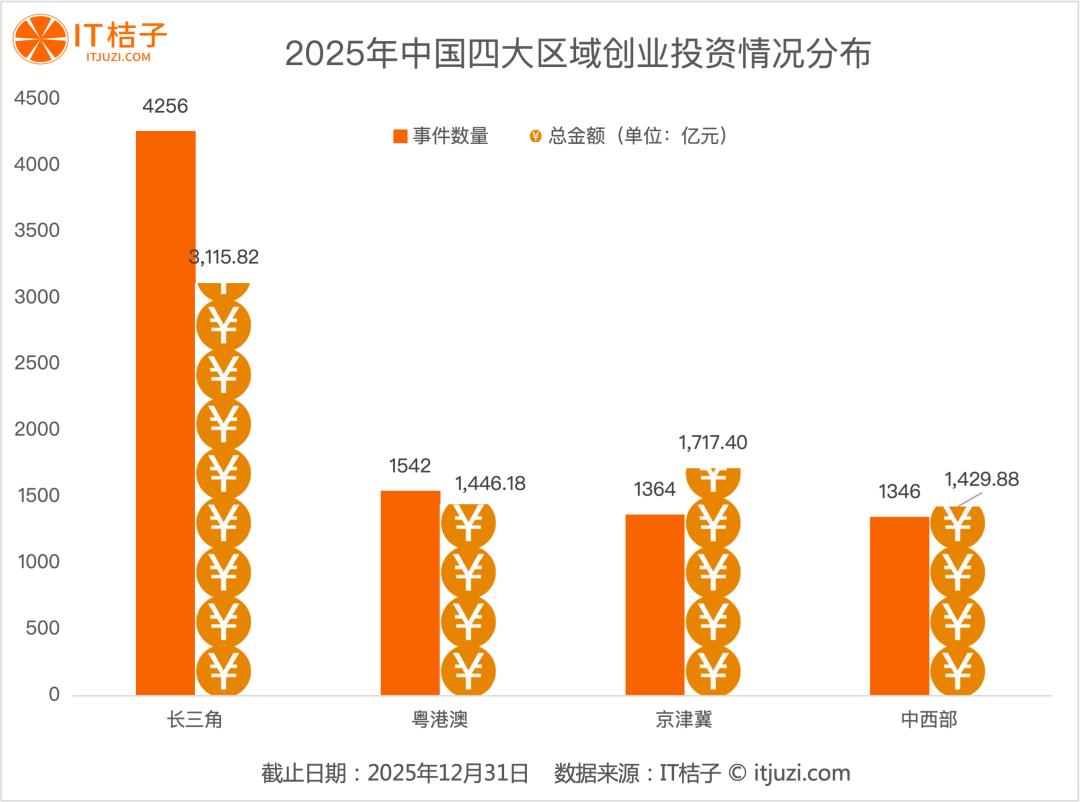
Core Insights - The investment landscape in China's venture capital is characterized by a "one strong, many strong" and "similarity with differences" pattern, with the Yangtze River Delta leading significantly [1] - The article analyzes four major economic regions, highlighting their scale, investment consensus, and unique sectors, creating a comprehensive view of capital flow [1] Regional Investment Landscape - The primary market in China has formed a clear tiered structure, with the Yangtze River Delta as the most active venture capital center, recording 4,256 investment events and attracting 311.58 billion yuan [2][4] - The second tier includes the Beijing-Tianjin-Hebei, Guangdong-Hong Kong-Macau, and Central-Western regions, with investment events close in number: 1,364, 1,542, and 1,346 respectively, indicating increasing competition among these regions [4] Core Investment Consensus - Despite regional differences, there is a strong national consensus on seven key investment sectors: artificial intelligence applications, pharmaceuticals, biotechnology, medical devices, new energy, integrated circuits, and robotics [5][7] - Integrated circuits have the highest consensus, ranking among the top two investment hotspots in the Yangtze River Delta (597 events), Guangdong-Hong Kong-Macau (160 events), and Central-Western regions (110 events) [5] Unique Regional Advantages - Each region has developed differentiated sectors based on local resources, creating unique competitive advantages: - **Beijing-Tianjin-Hebei**: Notable for aerospace (76 events), AIGC (60 events), and AI foundational technologies (52 events), showcasing its role as a national technology innovation center [8][10] - **Yangtze River Delta**: Strong industrial chain collaboration, with new materials (332 events) as a significant sector, complementing the leading integrated circuit industry [10][13] - **Guangdong-Hong Kong-Macau**: Focus on intelligent equipment (88 events), reflecting a deep foundation in precision manufacturing and the integration of cutting-edge technology with industry [15] - **Central-Western Regions**: Actively converting local resource advantages into industrial momentum, with new materials (104 events) emerging as a key growth area [18] Conclusion - The 2025 venture capital landscape in China illustrates a dynamic picture of "concentration with dispersion, consensus with uniqueness," defining the direction of capital flow and presenting opportunities for entrepreneurs and investors [19]
最高补助1000万元,一地支持仪器仪表等企业
Xin Lang Cai Jing· 2026-01-13 11:33
Core Insights - Shanghai has released a three-year action plan to support the transformation and upgrading of advanced manufacturing, aiming to add 100 manufacturing enterprises with an annual output value exceeding 1 billion yuan by 2028, totaling over 600 such enterprises, and to drive the addition of 500 large-scale industrial enterprises in the supply chain [2][8][11] Group 1: Main Goals - By 2028, the plan aims to add 100 manufacturing enterprises with an annual output value of over 1 billion yuan, totaling more than 600, and to increase the proportion of R&D expenses in revenue for large-scale manufacturing enterprises significantly [5][11] - The action plan emphasizes the continuous strengthening of cluster cultivation and innovation leadership in key strategic areas such as integrated circuits and instrumentation [2][8] Group 2: Structural Optimization and Upgrading Actions - The plan includes optimizing traditional advantageous industries, such as promoting petrochemical companies to shift from oil to new functional materials and enhancing the production of specialty steel and lightweight alloys in the steel and non-ferrous metal sectors [12] - It supports the strategic guidance of leading industries, particularly in integrated circuits, innovative pharmaceuticals, and high-end medical devices, aiming to cultivate internationally competitive leading enterprises [12][13] - The plan encourages the development of emerging industries, including new-generation electronic information, intelligent connected vehicles, and advanced materials, while promoting investment in low-altitude economy and commercial aerospace [12][13] Group 3: Innovation and Core Technology Initiatives - The action plan aims to release corporate innovation potential by supporting increased investment in basic research, with financial subsidies for companies meeting specific R&D expenditure thresholds [13] - It focuses on accelerating breakthroughs in core technologies, particularly in laser manufacturing, quantum technology, and new energy materials, while supporting key industry chains [13] Group 4: Resource and Support Actions - The plan emphasizes talent cultivation by supporting enterprises in attracting high-level talent and providing incentives for successful applicants [15] - It aims to enhance financial support for key industry chains, including lower interest rates and longer loan terms for manufacturing loans, as well as customized insurance services for major technological equipment [15] - The action plan also includes logistics support, aiming to build industrial logistics facilities and improve transportation infrastructure for manufacturing [15]

电科芯片:股价异常波动,2025年前三季度营收、净利润双降
Xin Lang Cai Jing· 2026-01-13 11:01
Core Viewpoint - The company announced that its stock price experienced an abnormal fluctuation, with a cumulative increase of over 20% over three consecutive trading days in January 2026, indicating potential market volatility [1] Financial Performance - For the first three quarters of 2025, the company's revenue was 644.42 million yuan, representing a year-on-year decline of 11.30% [1] - The net profit for the same period was 9.93 million yuan, showing a significant year-on-year decrease of 83.15% [1] Market Metrics - As of January 13, the company's rolling price-to-earnings (P/E) ratio stood at 1359.60, which is significantly higher than the industry average [1] - The recent trading activity has shown a high turnover rate, prompting caution among investors regarding potential risks [1]

2025 年中西部投资激增42%:硬科技"广撒网",新能源"重押注"
Sou Hu Cai Jing· 2026-01-13 10:56
Core Insights - The investment activity in the Midwest region of China is significantly increasing, driven by resource advantages, with a total of 1,346 investment events in 2025, a year-on-year increase of 42.3%, and total investment amounting to 142.99 billion yuan, up 42.5% from the previous year [3][4]. Resource Endowment - The growth of the venture capital market in the Midwest is attributed to its rich resource endowment, which influences the distribution of industrial types and attracts capital inflow, establishing a pattern of "industry first, capital follows" [4][13]. - The Midwest has unique advantages in the new energy and new materials industries, with resources such as rare earths and lithium providing strong upstream support for battery and new materials industries [4][13]. Hard Technology - Investment events in the hard technology sector in the Midwest are expected to rise from 152 in 2024 to 289 in 2025, nearly doubling and increasing its share from 16.07% to 21.47% [6]. - The investment strategy reflects a "broad net" approach, focusing on early-stage projects and fostering a wider innovation ecosystem in the hard technology field [6][13]. New Energy/New Materials - In contrast to hard technology, the new energy/new materials sector shows a trend of capital concentrating on mature projects, with the number of investment events increasing from 189 to 238, a growth of 25.9%, while the investment amount surged from 38.49 billion yuan to 63.85 billion yuan, a 66.1% increase [8]. - The number of projects in this sector decreased from 19.98% to 17.68%, while the investment amount's share increased from 38.3% to 44.65%, indicating a focus on larger, more mature projects [8]. Top Financing Events - The top 20 financing events in the Midwest in 2025 highlight a clear concentration in three areas, confirming the logic that resource endowment drives industry and attracts capital [9]. - Among the top 20 companies, 10 are in the new energy/new materials sector, indicating that these industries account for half of the total financing events, with significant investments closely tied to local resource advantages [10]. Geographic Concentration - Chongqing and Wuhan emerge as the primary hubs for investment, with six and three companies respectively in the top 20, collectively accounting for nearly half of the total [10]. - This concentration reflects the capital's focus on a few core cities with strong industrial foundations, educational resources, and policy support [10]. Investment Round Concentration - Strategic investments dominate the financing landscape, with 13 occurrences, making up 65% of the total, indicating a preference for investments from industrial capital and state-owned enterprises that prioritize synergy with local resources [11].



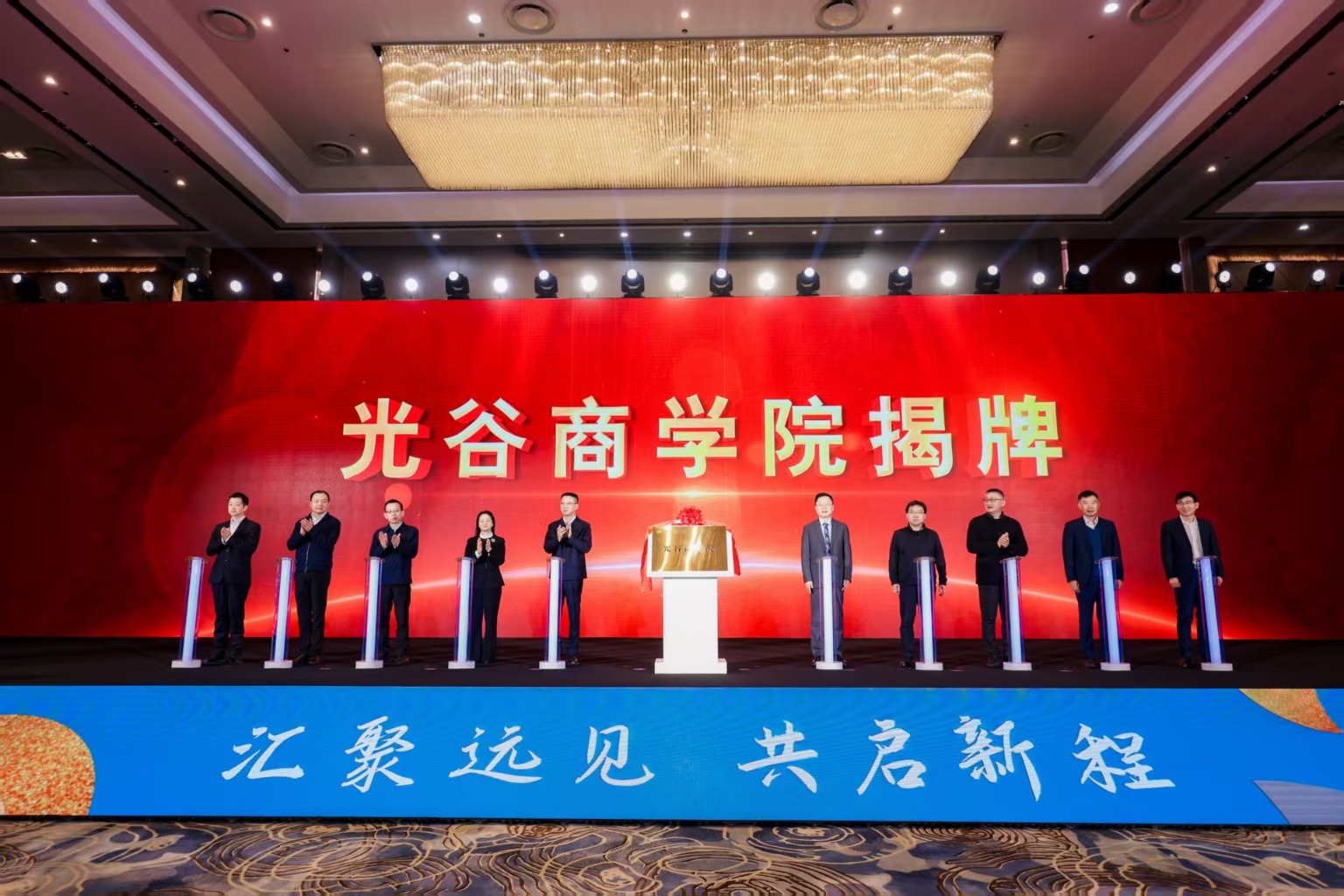
光谷商学院成立,首期“卓越班”开班,熊征宇出席并为学院成立揭牌
Chang Jiang Ri Bao· 2026-01-13 10:16
Core Viewpoint - The establishment of the Guanggu Business School aims to cultivate a new generation of technology entrepreneurs with a blend of technical expertise, business acumen, and global perspective, focusing on the full lifecycle development needs of enterprises [1][2]. Group 1: School Establishment and Objectives - The Guanggu Business School was inaugurated on January 13, with the goal of training 50 new business leaders, 200 technology entrepreneurs, and 1,000 management talents over three years [1]. - The school has designed a three-tier curriculum system ("Startup - Excellence - Leadership") to address the developmental stages of enterprises from inception to growth and leadership [1]. Group 2: Strategic Partnerships and Faculty - The school has formed strategic partnerships with over ten top educational and research institutions, including Peking University's Guanghua School of Management and Tsinghua University's Wudaokou School of Finance [2]. - Prominent entrepreneurs from sectors such as new energy vehicles, high-end medical equipment, integrated circuits, and optical communications have been appointed as advisory committee members [2].
“十五五”造芯路线图!广州发布重磅征求意见稿,全链条扶持IC产业
Shang Hai Zheng Quan Bao· 2026-01-13 10:04
Core Viewpoint - Guangzhou's Industrial and Information Technology Bureau has released a draft policy aimed at promoting high-quality development of the integrated circuit industry during the 14th Five-Year Plan period, focusing on innovation, scale development, and efficient collaboration to establish Guangzhou as a core area for national integrated circuit industry development. Integrated Circuit Design Industry Policy - Enhance chip design innovation capabilities by supporting the development of high-end general-purpose chips and specialized chips, with subsidies for eligible enterprises covering up to 50% of the first round of wafer costs, capped at 5 million yuan per enterprise annually [2] - Establish an emergency supply coordination mechanism for small and medium-sized design enterprises to ensure capacity support from local production lines [2] Integrated Circuit Manufacturing Industry Policy - Strengthen manufacturing capabilities by supporting advanced IDM and foundry enterprises in establishing R&D and production centers, particularly for 12-inch wafer production lines, with potential support for major projects [3] - Encourage technology upgrades in manufacturing enterprises with post-investment rewards for new equipment purchases, capped at 30 million yuan per project [3] Integrated Circuit Packaging and Testing Industry Policy - Promote advanced packaging and testing technologies, providing subsidies for new equipment purchases up to 20% of costs, with a maximum of 2 million yuan per project [4] - Encourage technology upgrades in packaging and testing enterprises with similar rewards as mentioned above [4] Integrated Circuit Materials and Equipment Policy - Focus on developing high-end materials and equipment, providing subsidies for new material products and equipment, with specific caps on funding [5] - Support enterprises in developing new materials and equipment with financial incentives based on sales prices [5] Integrated Circuit Collaborative Policies - Encourage collaboration across the supply chain and support enterprises in achieving automotive-grade certifications with financial assistance [6][7] - Promote efficient cooperation between integrated circuit enterprises and sectors like smart vehicles and AI through organized supply-demand meetings [5] Integrated Circuit Element Guarantee Policy - Accelerate the construction of specialized industrial parks for integrated circuits, with potential rewards for infrastructure development [6] - Promote financial support for major projects through loans and investments, encouraging participation from various financial institutions [6][7] Continuous Optimization of Industry Development Environment - Enhance the role of the new display and integrated circuit industry development office in facilitating major project progress and supporting high-level international events [7]
鉴往知来的产业脉络与机遇航图:“十五五”规划:循迹探新
Dongguan Securities· 2026-01-13 09:46
Group 1 - The "15th Five-Year Plan" emphasizes a transition from scale expansion to connotative development, focusing on high-quality growth and systemic integration [12][25] - The plan aims to establish a modern industrial system, highlighting the importance of the real economy and technological self-reliance [12][30] - Key areas of focus include technological innovation, expanding domestic demand, and building a robust security framework for industries and supply chains [12][30] Group 2 - The "15th Five-Year Plan" is positioned as a critical period for consolidating the foundation for achieving socialist modernization by 2035 [25][26] - Compared to the "14th Five-Year Plan," the "15th Five-Year Plan" places greater emphasis on quality and resilience in development, reflecting a cautious approach to international environments [25][28] - The plan outlines specific goals for economic growth, including a significant increase in the resident consumption rate and enhancing the role of domestic demand in driving economic growth [30][33] Group 3 - The capital market is expected to benefit from the policy catalysis effect of the "15th Five-Year Plan," with historical data indicating that planning periods often coincide with market uptrends [12][29] - Investment themes are centered around technological self-reliance, modernization of the industrial system, and sectors that boost domestic demand [12][30] - The manufacturing sector is anticipated to receive support from policy, funding, and fundamental improvements, particularly in advanced manufacturing [30][31]
唯捷创芯跌8.53% 2022年上市募资26.7亿元
Zhong Guo Jing Ji Wang· 2026-01-13 09:42
Group 1 - The stock of Weijie Chuangxin (688153.SH) closed at 41.60 yuan, reflecting a decline of 8.53%, indicating that the stock is currently in a state of breaking down [1] - Weijie Chuangxin was listed on the Shanghai Stock Exchange's Sci-Tech Innovation Board on April 12, 2022, with a public offering of 40.08 million shares at an issuance price of 66.60 yuan per share [1] - The total amount of funds raised from the initial public offering (IPO) was 2,669.328 million yuan, with a net amount of 2,502.5113 million yuan after deducting issuance costs, which was 15.2931 million yuan more than the original plan [1] Group 2 - The funds raised are intended for integrated circuit production testing projects, research and development center construction projects, and to supplement working capital [1] - The total issuance costs for the IPO amounted to 166.8167 million yuan, with underwriting and sponsorship fees accounting for 147.3130 million yuan [1]

光谷商学院揭牌开班 地方政府为何热衷面向企业家办学?
Di Yi Cai Jing· 2026-01-13 09:15
1月13日,光谷商学院揭牌仪式暨首期"卓越班"开班典礼在武汉举行。华工科技董事长马新强担任院长,蔚来创始人李斌、联影集团薛敏、长江存储董事长 陈南翔等来自新能源汽车、生物医药、集成电路等领域的产业领军人物为学院提供战略指导。 不只是武汉,第一财经记者注意到,国内不少地区都在面向企业家开设商学平台。接受采访的专家表示,地方政府开设企业家商学院,是政府从"管理者"转 向"服务者"的重要体现。 目标3年培育500名科技企业家 叶青在接受第一财经记者采访时提到,光谷商学院还应补齐光谷企业家的两个短板。一是重技术、轻经营的短板,要培养一批"懂技术、懂产业、懂经营、 懂创新"的领军人才,解决科技创业者普遍存在的"技术强、经营弱"的问题。二是"企二代"不够强的短板,光谷企业家也面临着"交班"问题,一些"企二代"在 研究能力、经营能力上还有所欠缺,甚至对接管企业不感兴趣,因此商学院要把培育二代作为重点。 政府为何面向企业家办学 早在2022年8月,河南郑州高新区就在中部地区率先成立企业家学院,通过组织"名企参访-对标学习"等系列活动,开展线上线下相结合、理论实操相结合、 长期短期相结合、请进来走出去相结合、坐下来转起来相结合 ...