光模块

Search documents
算力突发,“易中天”大跌!热门概念股“20cm”涨停,融资客看好这些绩优股
Zheng Quan Shi Bao Wang· 2025-10-31 05:08
Core Viewpoint - The innovative drug sector has seen significant investment and stock price increases, with a notable rise in financing activities and institutional interest in high-performing stocks [1][7]. Market Performance - As of October 31, the market experienced fluctuations, with the ChiNext Index dropping over 1%. However, sectors such as AI applications, pharmaceuticals, and lithium batteries showed strength, while computing power stocks faced declines [2]. Innovative Drug Sector Developments - The innovative drug sector rebounded, with stocks like Sanofi's "20cm" hitting the daily limit, and other companies such as Zai Lab and Maiwei Biotech also seeing gains [3]. - The National Medical Insurance Negotiation for 2025 commenced on October 30, introducing a "Commercial Insurance Innovative Drug Directory" mechanism, which aims to include innovative drugs with high clinical value that are not yet part of the basic medical insurance directory [5][6]. Financial Performance and Institutional Interest - Year-to-date, the average stock price of innovative drug companies has increased by 49.01%, with nine stocks doubling in value. Notable performers include Shuyou Shen, Guangsheng Tang, and Rongchang Biotech, with increases of 330.77%, 236.36%, and 194.45%, respectively [7]. - In October, 15 innovative drug stocks received institutional research, with Huadong Medicine reporting a 62% year-on-year increase in sales and agency service revenue for innovative products [7]. - Ninezhou Pharmaceutical has also seen a positive outlook, with increased production capacity and a rise in clinical trial projects [7]. Earnings Reports - Among the innovative drug companies that released Q3 reports, WuXi AppTec reported the highest net profit, with a revenue of 32.857 billion yuan, up 18.61% year-on-year, and a net profit of 12.076 billion yuan, up 84.84% [8]. - Several companies, including Kexing Biotech and Chengdu Xian Dao, reported net profit increases exceeding 100% year-on-year [8]. - As of October 30, multiple high-performing innovative drug stocks have attracted increased financing, including WuXi AppTec, Lijuzhong Group, and Haoyuan Pharmaceutical [8].

创业板人工智能ETF华夏(159381)连续4日吸金超1亿元,中际旭创营收净利润双双大增
Mei Ri Jing Ji Xin Wen· 2025-10-31 02:44
Group 1 - The A-share market showed mixed performance on October 31, with the Shanghai Composite Index slightly retreating while the Shenzhen Component and ChiNext Index experienced slight gains [1] - The lithium battery, power battery, and solid-state battery sectors continued to show strong momentum, while AI computing power stocks faced a pullback [1] - The AI-focused ETF, Huaxia (159381), and the 5G communication ETF (515050) both fell over 2.5% [1] Group 2 - There is a strong enthusiasm for increasing investment in AI computing power, with the Huaxia AI ETF seeing a net inflow of over 100 million yuan in the last four trading days [2] - The 5G communication ETF attracted over 115 million yuan in the same period [2] - Zhongji Xuchuang, a leader in optical modules, reported a revenue of 10.216 billion yuan for Q3 2025, a year-on-year increase of 56.83%, and a net profit of 3.137 billion yuan, up 124.98% [2] - The growth in revenue is attributed to increased sales of high-end optical modules driven by the growth in computing infrastructure and capital expenditures [2] - Zhongji Xuchuang anticipates continued growth in demand for optical modules, particularly with the ongoing release of 800G orders since Q1 of this year [2]

股指期货11月报-20251031
Yin He Qi Huo· 2025-10-31 02:04
1. Report Industry Investment Rating - No relevant content provided 2. Core Viewpoints of the Report - In the context of continued positive policy and valuations reaching the 80%-90% percentile of the past decade, attention should be focused on the capital market and the prospects of the technology sector. The unilateral strategy is to go long at low levels, and the arbitrage strategy is to go long on the main contracts of IM/IC and short ETFs for cash-futures arbitrage [5][6][45] 3. Summary Based on the Table of Contents 3.1 Second Part: Market Review in October 3.1.1 Stock Market - First Decline, Then Rise, and Reach a New High - In October, the A-share market first declined and then rose, with the stock index reaching a new high after oscillations. By October 29, the monthly increase of the CSI 300 Index was 2.3%, the SSE 50 Index rose 2.48%, the CSI 500 Index rose 0.93%, and the CSI 1000 Index fell 0.08% [10] - The oscillations in the stock index led to prominent performances in traditional industries. Sectors such as coal, insurance, telecommunications, public utilities, and oil and gas had significant increases, while sectors like media, automotive, healthcare, computer, real estate, and food declined. The technology sector showed differentiation, with high-level oscillations in concepts such as optical modules, domestic chips, advanced manufacturing processes, and humanoid robots [12] 3.1.2 Stock Index Futures - Periodic Expansion of Premium and Decline in Trading Volume and Open Interest - In October, the premium of stock index futures expanded periodically compared to the previous month. Especially after the listing of the 2606 contract, the premium of the quarterly contracts of IM, IC, and IF expanded significantly, while the premium of the current-month contracts slightly decreased overall, and the basis of each IH contract remained stable [16] - The trading volume and open interest of stock index futures declined overall in October. The average daily trading volume of IM, IC, IF, and IH decreased by 14.4%, 4.1%, 12.6%, and 3.8% respectively; the average daily open interest of IM, IF, and IH decreased by 4.9%, 3%, and 3.8% respectively, while the average daily open interest of IC slightly increased by 0.4% [23] - The expansion of the premium increased the rollover cost for short positions in stock index futures. The optimal choice for short positions in IM and IC to roll over to the next-month contracts had the lowest cost, with the average monthly annualized costs being 9.55% and 8.12% respectively, increasing by 0.82 and 0.59 percentage points compared to the previous month. The optimal choice for short positions in IF and IH to roll over to the next quarterly contracts had the lowest cost, with the average monthly annualized costs being 2.52% and 0.16% respectively, increasing by 0.32 and 0.23 percentage points compared to the previous month [27] - From the perspective of the open interest of major seats, the open interest of each variety remained stable overall, but the net short positions in IC increased significantly. The average monthly net short positions of the top five and top ten seats in IC increased by 2.1 and 2.5 percentage points respectively compared to the previous month. In addition, at the end of September, facing the National Day holiday, the short positions in IF significantly increased before the holiday and then quickly decreased after the holiday, indicating the hedging operations of investors using stock index futures [29] 3.2 Third Part: Market Outlook and Investment Strategy 3.2.1 What's Different About Reaching 4000 Points Again - On October 28, the Shanghai Composite Index stood above the 4000-point mark again after a decade, which was the third time since May 9, 2007, and April 8, 2015. Compared with the previous two times, this round of market has both similarities and some obvious differences [34] - In 2007, the first time the Shanghai Composite Index reached 4000 points was in the middle and later stages of the 2005 - 2007 bull market, driven by the split-share structure reform policy. Corporate profits improved in line with the macroeconomy, leading to a comprehensive bull market [34] - In 2015, the second time the Shanghai Composite Index reached 4000 points was in the later stage of the 2013 - 2015 bull market. Due to the quantitative easing policy implemented by the US at the end of 2012 and multiple reserve requirement ratio cuts and interest rate cuts in China, the liquidity in both China and the US was loose, and the margin trading in A-shares was active, resulting in a structural market driven by industrial upgrading [34] - Currently, the macroeconomy still faces significant uncertainties, but the artificial intelligence industry chain has experienced explosive growth. The ETF market has expanded significantly, and the absolute value of margin trading balance has continuously reached new highs. The proportion of margin trading is still far lower than that in 2015, and the market is generally stable. The policy is still to "fully consolidate the stable and improving trend of the market," and the development prospects of emerging industries are still broad. Therefore, this round of market is more similar to that in 2015, and the capital market and the prospects of the artificial intelligence industry will determine the height of the market [35] 3.2.2 The Third Quarter Reports to Test the Bull Market - As of October 31, 5437 companies announced their performance, and the overall third-quarter reports of listed companies showed an increase, adding confidence to the bull market. The total operating income of all A-shares reached 53.3 trillion yuan, a year-on-year increase of 1.21%, and the net profit attributable to the parent company reached 4.7 trillion yuan, a year-on-year increase of 5.34%, breaking away from the downward trend of the previous two quarters [40] - It should be noted that the 11.31% increase in the single-quarter net profit attributable to the parent company in the third quarter reports is related to the low base in the third quarter of last year (-15%), which is consistent with the continuous monthly increase of over 20% in the profits of industrial enterprises above the designated size from August to September. With the PMI remaining below the boom-bust line for six consecutive months and the order backlog index remaining at around 45%, the full-year performance still needs continuous tracking and observation [42] - For the performance growth of industry sectors that A-share investors are more concerned about, there have been some changes. Since April, the artificial intelligence wave has led to a significant increase in the performance of the semiconductor industry chain, forming a "Davis double-click" and stimulating market sentiment. However, among the three leading companies in the optical module (CPO) sector, the single-quarter operating income of two companies decreased quarter-on-quarter in the third quarter, and the net profit attributable to the parent company hardly increased quarter-on-quarter. Affected by this, the stock prices of relevant companies fell sharply, the sector declined, and the stock index was also affected. If the performance of the NVIDIA industry chain continues to fall short of expectations, attention should be paid to the progress of the domestic chip industry chain and the performance implementation of the robot industry [43] 3.2.3 Future Strategies - Based on the above analysis, in the context of continued positive policy and valuations reaching the 80%-90% percentile of the past decade, attention should be focused on the capital market and the prospects of the technology sector. Under the premise that the above factors remain unchanged, the unilateral strategy is to go long at low levels. Stock index futures investors should pay attention to the year-end convergence rule of the premium of IM/IC/IF, and the arbitrage strategy is to go long on the main contracts of IM/IC and short ETFs for cash-futures arbitrage [45]
4000点失守,能源金属逆市上扬
Yang Zi Wan Bao Wang· 2025-10-30 23:04
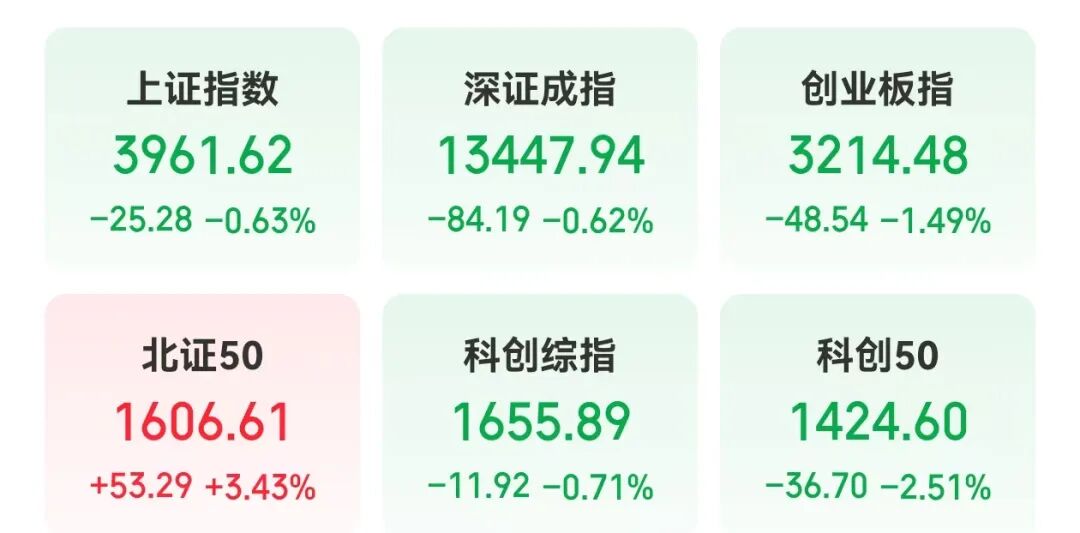
Market Overview - The stock market experienced a decline, with the Shanghai Composite Index falling below 4000 points, and a total trading volume of 2.42 trillion yuan, an increase of 165.6 billion yuan compared to the previous trading day [1] Company Performance - Zhongji Xuchuang reported a net profit of 3.137 billion yuan for Q3 2025, a year-on-year increase of 125% and a quarter-on-quarter increase of 30%. The revenue for Q3 was 10.216 billion yuan, up 56.83% year-on-year [2] - Baiwei Storage reported a net profit of 256 million yuan for Q3 2025, a significant year-on-year increase of 563.77%. The revenue for Q3 was 2.663 billion yuan, up 68.06% year-on-year [3] - Luxshare Precision expects a net profit for 2025 to be between 16.518 billion yuan and 17.186 billion yuan, representing a year-on-year growth of 23.59% to 28.59%. The company aims to enhance its global strategy and diversify its business in emerging fields [4] External Market Impact - The US stock market saw all three major indices decline, with the Nasdaq dropping 1.57% and Meta experiencing its largest single-day drop in three years, falling over 11%. Other major tech stocks also saw declines, while some digital currency stocks faced significant losses [5]


中际旭创(300308) - 投资者关系活动记录表20251030
2025-10-30 16:50
Financial Performance - In Q3 2025, the company reported a revenue of 102.16 billion CNY, with a gross margin of 43% [3] - The consolidated net profit reached 33.27 billion CNY, a 30.38% increase quarter-on-quarter [3] - The net profit attributable to shareholders was 31.37 billion CNY, showing significant quarter-on-quarter growth [3] - The cash flow and balance sheet indicators demonstrated strong performance throughout the year [3] Market Demand and Growth - The industry is experiencing rapid growth in demand, particularly from overseas clients increasing capital expenditures for data center construction [3] - The demand for 800G orders has been consistently rising since Q1 2025, with a continuous increase in shipment volume [3][4] - The company anticipates sustained growth in 1.6T shipments as key clients begin deployment [4] Production and Capacity Expansion - The company is actively preparing core materials and expanding both domestic and overseas production capacity to meet large-scale orders expected in 2026-2027 [4] - The construction in progress increased significantly from 100 million CNY to nearly 1 billion CNY, primarily due to capacity expansion investments [5] Product Development and Profitability - The gross margin for 1.6T products is expected to improve due to product structure optimization and increased demand for high-end products [5] - The silicon photonics solution is gaining recognition among key clients, which is expected to enhance the gross margin further [5] Challenges and Risks - The company faces challenges in securing core materials, particularly optical chips, due to rapid demand growth [6] - The effective tax rate for Q3 was 15.8%, slightly higher than previous quarters, influenced by the OECD's "Pillar Two" tax policy [7] Future Outlook - The company is preparing for significant industry trends, including the large-scale deployment of 1.6T products and advancements in optical connection solutions by 2027 [13] - The expected bandwidth demand in scale-up scenarios may reach ten times that of scale-out scenarios, indicating a strong future market for optical connection solutions [11]
主动权益基金大幅减仓小米、美团、泡泡玛特等企业
2 1 Shi Ji Jing Ji Bao Dao· 2025-10-30 15:40
Core Insights - In Q3 2025, active equity funds underwent significant adjustments in their holdings, shifting towards technology stocks while reducing exposure to consumer and banking sectors [1][3] Group 1: Changes in Major Holdings - The top ten holdings of active equity funds at the end of Q3 included Ningde Times (¥758.81 billion), Tencent Holdings (¥699.38 billion), and new entrants like Xinyi Technology and Zhongji Xuchuang, indicating a strong preference for technology stocks [3][4] - Ningde Times rose to the top position due to a substantial stock price increase of 60%, despite a reduction in the number of shares held by funds [5][6] - Conversely, Guizhou Moutai fell from third to tenth place, primarily due to a modest stock price increase of only 2.45% and a decrease in fund holdings [6][11] Group 2: Increased Allocation to Technology - Active equity funds significantly increased their allocations to technology stocks, particularly in AI-related sectors, with notable increases in holdings for companies like Industrial Fulian and Zhongji Xuchuang [8][9] - The top ten stocks with the highest increase in holdings were all from the technology sector, reflecting a collective bet on the AI industry [9][11] - Industrial Fulian saw the largest increase in fund holdings, with a remarkable stock price surge of 214.80% during Q3 [8][9] Group 3: Decreased Allocation to Consumer and Banking Sectors - Active equity funds drastically reduced their holdings in consumer and banking stocks, with Xiaomi Group experiencing the largest decline in market value, dropping by ¥10.8 billion (approximately 51%) [11][12] - Other consumer stocks like Midea Group and new consumption leader Pop Mart also faced significant reductions in fund holdings, indicating a broader trend of divestment from these sectors [12][13] - Banking stocks such as China Merchants Bank and Jiangsu Bank also saw substantial decreases in both stock price and fund holdings, reflecting a challenging environment for these sectors [12][13]


主动权益基金大幅减仓小米、美团、泡泡玛特等企业
21世纪经济报道· 2025-10-30 15:31
Core Viewpoint - In Q3 2025, active equity funds significantly adjusted their holdings, increasing allocation to technology stocks while reducing exposure to consumer and banking sectors [1][2]. Group 1: Changes in Major Holdings - The top ten holdings of active equity funds saw a major reshuffle, with Ningde Times reclaiming the top position due to a 60% stock price increase, while Guizhou Moutai dropped from third to tenth place due to minimal price growth of 2.45% [3][5][6]. - The top ten stocks included Ningde Times (75.88 billion), Tencent Holdings (69.94 billion), and new entrants like Xinyi Technology and Zhongji Xuchuang, indicating a shift towards technology [3][4][5]. Group 2: Increased Allocation to Technology - Active equity funds heavily increased their positions in technology stocks, particularly in AI-related sectors, with Industrial Fulian seeing a 214.80% price surge and a significant increase in fund holdings from 0.14% to 1.74% [8][9]. - The top ten stocks with the highest increase in holdings were all from the technology sector, reflecting a collective bet on the AI industry [9][10]. Group 3: Decreased Allocation to Consumer and Banking - Consumer and banking stocks faced substantial reductions in holdings, with Xiaomi Group experiencing the largest decline in market value, dropping by approximately 51% [11][12]. - Other notable declines included Midea Group and Bubble Mart, with significant reductions in both stock price and the number of funds holding these stocks [11][13].

国金资管:A股有望维持强势格局,风格或迎阶段性转换
Xin Hua Cai Jing· 2025-10-30 13:54
Core Viewpoint - The A-share market is currently experiencing a coexistence of new index highs and structural differentiation, indicating a complex market environment [1] Market Outlook - The low interest rate environment is expected to continue enhancing the attractiveness of equity assets for investors [1] - Economic fundamentals are showing positive signals of steady recovery, which will provide strong support for the market [1] - The overall A-share market is likely to maintain a strong trend in the fourth quarter, although sector styles may further differentiate and experience phase transitions [1] Sector Opportunities - The technology sector's growth momentum is highlighted as a key area of focus [1] - There is an optimistic outlook for overseas AI capital expenditure growth in the next two months, alongside ongoing advancements in the domestic AI industry [1] - The explosive growth in global AI large model training demand is driving sustained orders for hardware suppliers such as high-speed optical modules and storage chips, making the profit realization pace of related companies a core focus [1] - Under the "Consumption Boost Special Action" policy, sectors like home appliances, social services, and automobiles are expected to release recovery elasticity driven by policy implementation and terminal demand recovery [1]
光模块三剑客三季报出炉 中际旭创Q3净利润环比增长30%
Xin Lang Cai Jing· 2025-10-30 13:48
Core Viewpoint - The report highlights the strong financial performance of several optical module companies in their third-quarter results, indicating significant growth in net profits for key players in the industry [1]. Group 1: Company Performance - Zhongji Xuchuang reported a third-quarter net profit of 3.137 billion yuan, representing a quarter-on-quarter increase of 30.06% [1]. - Xinyi Technology achieved a net profit of 6.327 billion yuan in the first three quarters, marking a year-on-year growth of 284.37% [1]. - Shijia Photon recorded a net profit of 300 million yuan for the first three quarters, with a remarkable year-on-year increase of 727.74% [1]. Group 2: Industry Overview - Multiple optical module companies, including Zhongji Xuchuang, Xinyi Technology, and Shijia Photon, have disclosed their third-quarter reports, showcasing robust financial results [1]. - The overall performance of the optical module sector appears to be strong, with significant profit growth across various companies [1].




光模块“易中天”三季度业绩参差 两家营收环比下降
Di Yi Cai Jing· 2025-10-30 13:19
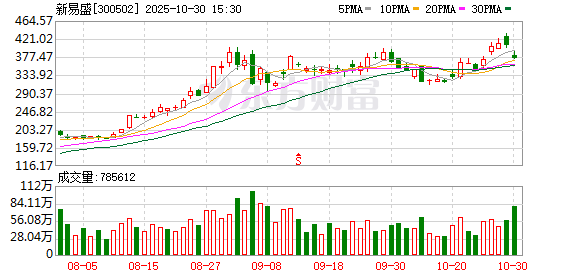
Core Viewpoint - The recent quarterly performance of three major optical module manufacturers, namely Zhongji Xuchuang, Xinyi Sheng, and Tianfu Communication, has raised concerns about whether their stock price movements align with their financial results [2][4]. Group 1: Quarterly Performance - Xinyi Sheng's stock rose by 1.65% to a record high of 410.62 yuan per share on October 28, but fell by 7.9% after the release of its Q3 financial report [2]. - Tianfu Communication's stock saw a cumulative increase of 30.58% from October 15 to 29, but dropped by 11.56% following its Q3 earnings announcement [2]. - Zhongji Xuchuang's stock also declined by 1.15% on October 30 after its earnings report [2]. Group 2: Financial Results - In Q3, Tianfu Communication reported revenue of 1.463 billion yuan, a year-on-year increase of 74.37%, and a net profit of 566 million yuan, up 75.68% [5]. - Xinyi Sheng achieved revenue of 6.068 billion yuan, a 152.53% year-on-year increase, with a net profit of 2.385 billion yuan, up 205.38% [5]. - Zhongji Xuchuang's Q3 revenue was 10.216 billion yuan, reflecting a year-on-year growth of 56.83%, and a net profit of 3.137 billion yuan, up 124.98% [5]. Group 3: Market Dynamics - The growth in revenue and net profit for all three companies is attributed to the increasing demand for computing power infrastructure driven by AI development [6]. - The global optical module market is projected to grow from $11.2 billion in 2020 to $17.8 billion in 2024, with an expected market size of $23.5 billion this year [10]. Group 4: Cost and Margin Analysis - Tianfu Communication's operating costs increased by 88.48%, outpacing its revenue growth of 63.63% [7]. - Xinyi Sheng's sales and management expenses rose significantly, with increases of 96.88% and 83.81% respectively, largely due to higher personnel costs [7]. - Zhongji Xuchuang's gross margin for the first three quarters was 40.74%, exceeding the first half of the year [7]. Group 5: Asset Impairment Losses - Tianfu Communication reported asset impairment losses of 33.1 million yuan, a significant increase of 238.76% year-on-year [8]. - Xinyi Sheng's asset impairment losses surged to 203 million yuan, up 883.08% compared to the previous year [8]. - Zhongji Xuchuang's asset impairment losses reached 66.4 million yuan, also significantly higher than the previous year's figures [8]. Group 6: Shareholder Actions - Some shareholders in the optical module sector have begun to reduce their holdings at high stock prices, with Zhongji Xuchuang's major shareholder planning to sell up to 5.5 million shares [12]. - Xinyi Sheng's chairman transferred 11.43 million shares, amounting to 3.749 billion yuan [12].