
建筑

Search documents
楼市大消息!住建部最新发声
券商中国· 2025-10-11 03:53
Core Viewpoint - The article discusses the achievements and future plans for high-quality development in housing and urban construction during the "14th Five-Year Plan" period, emphasizing urban renewal, housing supply, and infrastructure improvements [1][2]. Group 1: Urban Renewal and Housing Quality - The Ministry of Housing and Urban-Rural Development is focusing on transforming old houses into "good houses" through renovation, emphasizing five key aspects: good standards, good design, good materials, good construction, and good maintenance [2]. - The ministry aims to systematically promote the construction of "four goods": good houses, good communities, good neighborhoods, and good urban areas, with a particular focus on the renovation of old residential areas [2][3]. Group 2: Housing Market Dynamics - During the "14th Five-Year Plan," a total of 5 billion square meters of new residential buildings were sold, with 15 provinces and cities reporting higher transaction volumes in second-hand housing than new homes [4]. - The stability and health of the real estate market depend on the effective allocation of four resource elements: people, houses, land, and money, guiding local governments to develop housing plans based on population changes [4]. Group 3: Infrastructure Improvements - The government has updated and renovated 310,000 kilometers of aging pipelines for water, electricity, gas, and heating, addressing common issues such as leaks and unstable voltage [6]. - A total of 129,000 elevators have been installed in old residential areas, significantly improving accessibility for elderly residents [5][6]. Group 4: Historical Building Preservation - Pilot projects for the protection and utilization of historical buildings have been launched in over 70 cities, transforming many old factories and commercial areas into cultural and tourism sites [7].

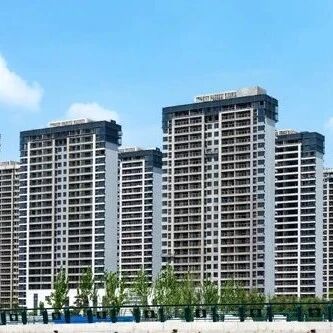
住建部:“十四五”期间 已为老旧小区改造加装12.9万部电梯
Mei Ri Jing Ji Xin Wen· 2025-10-11 03:19
Core Viewpoint - The Ministry of Housing and Urban-Rural Development emphasizes the importance of addressing urgent public concerns through infrastructure improvements and building renovations during the "14th Five-Year Plan" period [1] Group 1: Infrastructure Improvements - A total of 310,000 kilometers of aging pipelines for water, electricity, gas, and heating have been updated and renovated to address issues such as leaks, unstable voltage, and tangled wiring [1] - The initiative aims to resolve common public complaints regarding infrastructure reliability and safety [1] Group 2: Building Renovations - Public spaces in residential buildings are being repaired, with energy-saving renovations covering 37 million square meters to tackle problems like roof leaks and external wall insulation [1] - The installation of elevators in old residential communities has seen the addition of 129,000 elevators during the "14th Five-Year Plan" period, addressing a significant public concern [1]
英国建筑业持续低迷,折射经济复苏困境
Zhong Guo Xin Wen Wang· 2025-10-11 00:52
Core Insights - The UK construction sector's activity has contracted for the ninth consecutive month, reflecting a cautious outlook among businesses regarding the economic future [1][2] - The September PMI for the UK construction industry rose slightly to 46.2 from 45.5 in August, marking a three-month high but still indicating a contraction below the neutral level of 50 [1] - Employment in the construction sector has seen a decline for the first time in five months, highlighting the challenges faced in the overall economic recovery [1] Industry Performance - The construction sector's performance remains weak across various segments, with residential building activity continuing to struggle and civil engineering experiencing its first contraction since February 2023 [1] - The commercial sub-sector is also facing a downward trend, indicating widespread challenges within the industry [1] Economic Factors - High borrowing costs, a sluggish real estate market, and policy uncertainty are identified as primary factors suppressing the recovery of the UK construction industry [2] - The persistent inflationary pressures have led to a consumer price index increase of 3.8% in August, significantly above the Eurozone level, forcing the Bank of England to maintain a high base interest rate of 4% [2] - The government's recent proposal to stimulate infrastructure investment is seen as a potential positive, but the clarity of budget policies will be crucial in determining the industry's direction [2]

东莞证券2025年四季度股票组合
Dongguan Securities· 2025-10-10 10:59
Investment Themes - Recommended stocks include Huaxin Cement, China State Construction, and Ningde Times in the cyclical sector[2] - In the consumer sector, recommended stocks include Hengrui Medicine and Shanxi Fenjiu[2] - In the power equipment and new energy vehicle sector, recommended stocks include Ningde Times and Goldwind Technology[2] - In the TMT sector, recommended stocks include Longi Green Energy and Luxshare Precision[2] Market Performance - As of September 30, 2025, the Shanghai Composite Index rose by 12.73%, the Shenzhen Component Index by 29.25%, and the ChiNext Index by 50.40%[4] - The average gain of the recommended stock portfolio was 33.11%, significantly outperforming the CSI 300 Index's gain of 17.90%[4] - Key outperformers included Huaxin Cement and Ningde Times, with quarterly gains exceeding 50%[4] Economic Outlook - The macroeconomic environment remains stable, with a focus on "appropriate easing" in monetary policy to support growth[4] - The manufacturing PMI showed signs of recovery but remained in contraction territory as of September[4] - The report anticipates continued inflow of foreign capital due to the Federal Reserve's interest rate cuts, enhancing the attractiveness of equity assets[4] Company Highlights - Huaxin Cement's projected EPS for 2025 is 1.30, with a PE ratio of 14.27[6] - China State Construction's projected EPS for 2025 is 1.16, with a PE ratio of 4.68[12] - China Rare Earth's projected EPS for 2025 is 0.34, with a PE ratio of 150.92[25] - Hengrui Medicine's projected EPS for 2025 is 1.26, with a PE ratio of 56.90[33]






基建ETF(159619)盘中上涨1.1%,消费制造和装备制造业边际改善
Mei Ri Jing Ji Xin Wen· 2025-10-10 06:38
Group 1 - The core viewpoint indicates that the construction industry is showing signs of recovery, with the business activity index rising to 49.3%, an increase of 0.2 percentage points from the previous month [1] - New orders and business activity expectation indices have improved by 1.6 and 0.7 percentage points respectively, indicating a synchronized improvement in the sector [1] - The National Development and Reform Commission has announced a total of 500 billion yuan in new policy financial tools aimed at supplementing project capital, with funds being rapidly allocated to specific projects [1] Group 2 - The construction industry is expected to see a rebound in prosperity due to the accelerated implementation of key construction projects and special bond funds [1] - The manufacturing PMI production index has reached its highest level since April 2025, with external demand improving more than internal demand, which may indirectly support the construction and decoration industries [1] - The Infrastructure ETF (159619) tracks the CSI Infrastructure Index (930608), which selects listed companies involved in the construction and machinery sectors to reflect the overall performance of the infrastructure construction field in China [1] Group 3 - The CSI Infrastructure Index has a high industry concentration, clearly reflecting the "infrastructure" theme, with constituent stocks primarily consisting of leading enterprises in the industry [1] - The index has a high state-owned enterprise characteristic, relatively low valuation levels, and good liquidity [1]
中信期货晨报:能源化工多数下跌,股指延续升势-20251010
Zhong Xin Qi Huo· 2025-10-10 00:43
1. Report Industry Investment Rating No relevant content provided. 2. Core View of the Report - Overseas macro: The US government is in a shutdown, and Japan is likely to have its first female prime minister. A shutdown over 15 days may affect the release of important economic data. If Koike Sanae is elected, it may impact Sino - Japanese relations and market risk preference [7]. - Domestic macro: The domestic economy continues to stabilize. The manufacturing PMI is 49.8, up 0.4 percentage points month - on - month. The non - manufacturing PMI drops 0.3 points to 50.0. During the holiday, consumption and travel were active [7]. - Asset view: In October, domestic assets benefit from policy expectations and ample liquidity. Overseas, the focus is on the Fed's October rate cut and the BoJ's inaction. The weak - dollar trend continues but with a slower slope. In the fourth quarter, maintain the asset allocation order of equities > commodities > bonds [7]. 3. Summary by Related Catalogs 3.1 Financial Market - **Stock Index Futures**: All major stock index futures showed gains. The CSI 300 futures had a daily, weekly, monthly, quarterly, and year - to - date increase of 1.54%, 1.54%, 1.54%, 1.54%, and 19.59% respectively. The Shanghai 50 futures, CSI 500 futures, and CSI 1000 futures also had positive performances [3]. - **Treasury Bond Futures**: Most treasury bond futures had small increases, except for the 2 - year treasury bond futures with a year - to - date decline of 0.56% [3]. - **Foreign Exchange**: The US dollar index was flat on the day, with different trends in other currency pairs. For example, the euro - US dollar exchange rate remained unchanged on the day, while the US dollar - Japanese yen exchange rate had a weekly increase of 3.52% [3]. - **Interest Rates**: Some interest rates had minor changes, such as the 10 - year Chinese treasury bond yield decreasing by 2.7 bp [3]. 3.2 Hot Industries - Industries like construction, steel, and non - ferrous metals had positive daily, weekly, monthly, quarterly, and year - to - date performances. For example, the non - ferrous metals index had a year - to - date increase of 33.42% [3]. - Some industries such as food and beverage, automotive, and defense and military had mixed performances, with some showing daily declines but positive long - term trends [3]. 3.3 Overseas Commodities - **Energy**: Crude oil futures (NYMEX WTI and ICE Brent) had small daily increases but year - to - date declines. Natural gas prices were mostly down, with NYMEX natural gas having a daily decline of 5.14% [3]. - **Precious Metals**: Gold and silver had significant year - to - date increases, with COMEX gold up 53.85% year - to - date [3]. - **Non - ferrous Metals**: Most non - ferrous metals showed positive long - term trends, but some had daily fluctuations [3]. - **Agricultural Products**: Agricultural products had diverse performances. For example, CBOT soybeans had a year - to - date increase of 1.96%, while ICE 2 - cotton had a year - to - date decline of 5.03% [3]. 3.4 Other Commodities - **Shipping**: The container shipping route to Europe had a significant daily decline of 50.38% [4]. - **Precious Metals**: Gold and silver continued to show positive trends, with silver having a year - to - date increase of 49.52% [4]. - **Non - ferrous Metals and New Materials**: Copper, tin, and other metals had positive price movements, while some like alumina had a weak fundamental situation [4]. - **Black Building Materials**: Most black building materials showed a mixed performance, with some like iron ore having a positive year - to - date performance and others like silicon iron having a decline [4]. - **Energy and Chemicals**: Crude oil had a year - to - date decline of 15.88%. Most chemical products showed a trend of price fluctuations and were in a state of supply - demand adjustment [4]. - **Agricultural Products**: Some agricultural products like soybeans and peanuts had different price trends, with peanuts having a year - to - date decline of 2.83% [4]. 3.5 Market Outlook by Sector - **Financial**: Stock markets had a shrinking - volume rebound, and bond markets remained weak. Stock index futures were expected to rise in a volatile manner, while bond futures were expected to be volatile [8]. - **Precious Metals**: Driven by dovish expectations, the prices of gold and silver were expected to rise in a volatile manner [8]. - **Shipping**: Attention was paid to the rate of freight price decline, and the container shipping route to Europe was expected to be volatile [8]. - **Black Building Materials**: A negative feedback was difficult to form, and the sector was expected to remain volatile before the holiday [8]. - **Non - ferrous Metals and New Materials**: Supply disruptions continued to ferment, and most metals were expected to be volatile, with some like copper expected to rise in a volatile manner [8]. - **Energy and Chemicals**: The crude oil market continued to be volatile, and the chemical market was mainly for hedging and arbitrage, with most products expected to be volatile [10]. - **Agriculture**: Affected by Argentina's tariff policy, oilseeds and meal were hit. Most agricultural products were expected to be volatile [10].
高陞集团拓展全球业务布局 联手格林豪斯集团共建加纳首个国际度假娱乐城
Sou Hu Cai Jing· 2025-10-09 15:33
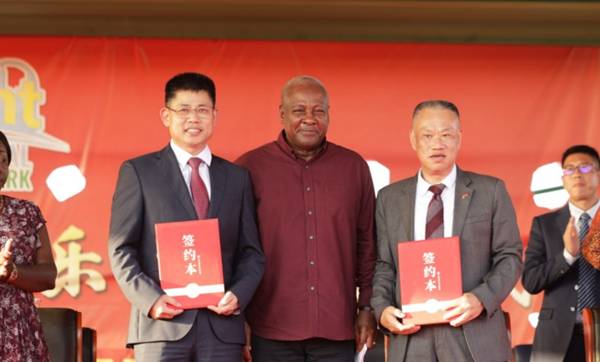
Core Insights - Gao Sheng Group has signed a framework cooperation agreement with Greenhouse Group Ghana to jointly develop a large-scale "International Resort and Entertainment City" project in Ghana, marking a significant step in the company's international expansion and alignment with the Belt and Road Initiative [1][3][6] Project Overview - The project will cover approximately 4,000 acres and will include diverse leisure, entertainment, and conference facilities, such as amusement rides, a water park, a golf course, an international conference center, luxury hotels, and vacation villas [3][5] - The project is expected to be developed in two phases and fully completed within five years, with an investment of approximately $500 million from Greenhouse Group and capital market funds [3][5] Strategic Importance - This project is poised to become the first large-scale resort and entertainment complex of international standards in West Africa, anticipated to attract both local and international tourists, thereby boosting the local tourism and service industries [3][5] - Gao Sheng Group will act as the general contractor for the project, responsible for design planning, construction, project management, and subsequent operational coordination [3][5] Partner Profile - Greenhouse Group has been a significant player in Africa for over 15 years, with a strong presence in industrial park development, real estate, energy, and infrastructure [5] - The company has successfully developed the "Bright Industrial Park," which spans over 12,000 acres and hosts more than 40 Chinese enterprises, serving as a vital platform for Sino-African industrial cooperation [5] Future Outlook - The project is expected to serve as a new economic engine for the region, leveraging Africa's vast economic potential and youthful population, particularly in the rapidly growing tourism and leisure sectors [6] - Gao Sheng Group aims to enhance its international competitiveness and create long-term value for shareholders through this strategic initiative [6]
青海省首届无损检验超声波探伤职能技能大赛成功举办
Zhong Guo Zhi Liang Xin Wen Wang· 2025-10-09 07:04
Core Viewpoint - The first ultrasonic testing skills competition in Qinghai Province aims to promote high-quality development in the non-destructive testing industry and cultivate more skilled talents [1][2][3] Group 1: Competition Overview - The competition is a provincial-level vocational skills contest organized by the Qinghai Provincial Market Supervision Administration, marking the first professional skills competition in the non-destructive testing field in the province [2] - A total of 66 elites from 21 companies, including State Grid Qinghai Electric Power Research Institute and China Railway Qinghai-Tibet Railway Co., participated in the event [1][2] - The competition included theoretical tests and practical preliminaries, ensuring fairness and professionalism through expert judges [2] Group 2: Industry Impact - The event provided a platform for non-destructive testing personnel to showcase their skills and foster collaboration and experience exchange [3] - It stimulated enthusiasm among non-destructive testing professionals to learn and improve their skills, exploring new pathways for talent cultivation in the industry [3] - The provincial market supervision authority plans to continue hosting skills competitions to strengthen the talent pool and contribute to equipment safety and industrial development [3]
中企再获中东“绿色奥斯卡”奖
人民网-国际频道 原创稿· 2025-10-09 05:02
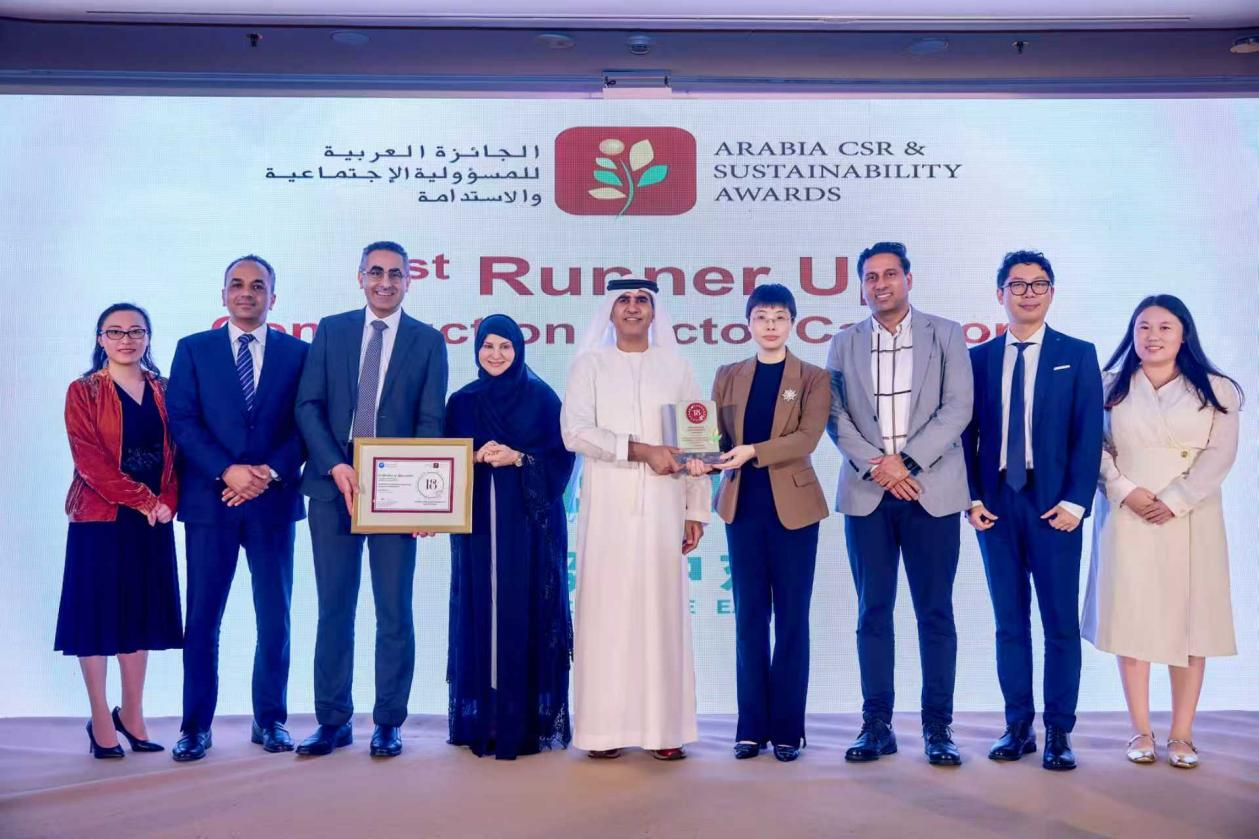
Core Points - The 18th Arab Corporate Social Responsibility and Sustainable Development Awards ceremony was held in Dubai, where China State Construction Middle East Company was the only Chinese enterprise to receive an award for five consecutive years [1] - The award recognizes the company's commitment to promoting green development in the construction industry and enhancing its image as a quality employer [1] - The awards are considered the most authoritative international recognition of corporate social responsibility in the MENA region, often referred to as the "Green Oscar" of the Middle East [1] Company Summary - China State Construction Middle East Company celebrated its 20th anniversary this year and expressed satisfaction with the recognition of its social responsibility performance [1] - The company aims to continue fulfilling its corporate social responsibility while expanding its mission of creating "happy spaces" [1] - The awards received applications from 141 institutions across 10 Arab countries and regions, covering over 40 industries including government, construction, energy, finance, education, and healthcare [1]
我省明确122项重点技术赋能未来住宅和城市建设
Xin Hua Ri Bao· 2025-10-09 02:51
Core Insights - The provincial housing and urban-rural development department has released a technology roadmap for the next 5 to 10 years, focusing on high-quality buildings, smart construction, and resilient smart cities [1][2] - The roadmap includes 122 key technologies that aim to address the transformation challenges faced by the industry, particularly in updating or reconstructing buildings built before 2000 [1] Group 1: High-Quality Buildings - There are 14 subcategories with 46 technologies aimed at improving sound insulation and overall living comfort, such as exterior wall and partition sound insulation systems [1] Group 2: Smart Construction and Industrialization - This area includes 6 subcategories with 23 technologies, such as the use of construction robots for tasks like putty spraying and tile laying, which can alleviate the pressure of an aging workforce [1] Group 3: Resilient Smart Cities - Comprising 28 subcategories with 53 technologies, this focus area aims to enhance urban infrastructure efficiency and risk resilience, including smart flood control systems that utilize IoT and AI for predictive management during heavy rainfall [1] Group 4: Future Applications of the Technology Roadmap - The technology roadmap will guide key technology research, assist enterprises in selecting technology investment directions, and support local industrial development through precise招商 and the establishment of specialized industrial parks [2]