半导体存储

Search documents
港股异动 | 兆易创新(03986)涨超10% AI驱动存储周期上行 存储龙头闪迪再创新高
智通财经网· 2026-01-21 02:09
Group 1 - The core viewpoint of the article highlights that兆易创新 (Zhaoyi Innovation) has seen its stock price rise over 10%, reaching a new high of 343.8 HKD, driven by positive market sentiment and developments in the semiconductor industry [1] - The article notes that overnight, SanDisk's stock in the US surged over 9%, reaching a historical high, indicating strong market performance in the memory sector [1] - Micron Technology has indicated that the slow expansion of wafer fabrication plants and complex customer certification processes will likely prevent a resolution to the current memory shortage until 2028 [1] Group 2 - Morgan Stanley's report suggests that major companies are optimistic about DDR4 procurement, with potential price increases of up to 50% in Q1 2026 due to supply constraints, which may continue into Q2 [1] - The shift in production capacity towards DDR4 has resulted in a severe shortage of high-density DDR3, positively impacting the performance of related suppliers [1] - According to public data, Zhaoyi Innovation holds the largest market share in NOR Flash and SLC NAND Flash products in mainland China for 2024, and ranks second in the niche DRAM market share [1] Group 3 - Everbright Securities previously reported that Zhaoyi Innovation is a leading domestic player in niche storage, benefiting from the upward cycle in the storage market, which is expected to enhance both volume and price [1] - The company's diverse product portfolio is anticipated to further open up incremental growth opportunities [1]

闪德资讯存储市场洞察报告 2025年10月
闪德资讯· 2026-01-20 08:45
Investment Rating - The report indicates a positive outlook for the storage industry, driven by strong demand from AI and cloud computing sectors, leading to an overall bullish investment rating for the sector [6][7]. Core Insights - The global storage giants, including Samsung and SK Hynix, reported record earnings in Q3 2025, with significant growth in sales and profits attributed to increased demand for high-bandwidth memory (HBM) and server memory [7][29]. - The report highlights a structural shortage in the supply of DRAM and NAND flash memory, with prices expected to continue rising due to strong demand from AI servers and high-end mobile devices [7][30]. - The domestic storage industry in China is accelerating, with companies like Yangtze Memory Technologies and ChangXin Memory Technologies preparing for IPOs and ramping up production of HBM and LPDDR5X [7][42]. Summary by Sections Macroeconomic Overview - In October 2025, the global manufacturing PMI showed mixed signals, with the Eurozone returning to expansion while the US and Japan continued to contract, indicating a fragile recovery in manufacturing [7][8][20]. - China's manufacturing PMI fell to 49.0, reflecting a slowdown in production and demand, although the electronic information industry showed signs of recovery with strong export growth [7][20][26]. Supply Chain Dynamics - The storage and testing industry is experiencing a significant uptick, with companies like Powertech and Nanya increasing production capacity in response to rising orders for HBM and DDR5 products driven by AI server demand [7][29][46]. - The report notes that the supply of T-Glass, a critical material for advanced packaging, is expected to remain tight until 2027, impacting the PCB market [7][49]. Market Trends - The report indicates that the storage market is heating up, with DRAM and NAND prices rising across the board due to strong demand from AI servers and high-end mobile devices, leading to supply constraints [7][30][58]. - Companies are adopting aggressive pricing strategies, with Samsung and SK Hynix increasing prices by up to 30% for DRAM and NAND products in response to supply shortages [7][36][38]. Company Performance - Samsung Electronics reported a record Q3 2025 revenue of 86.1 trillion KRW, with a 15% quarter-over-quarter increase, driven by strong sales in HBM and server SSDs [7][29][30]. - SK Hynix also achieved record sales of 24.4489 trillion KRW in Q3 2025, with a significant increase in DRAM and NAND prices due to high demand [7][32][33]. Domestic Industry Developments - Yangtze Memory Technologies is planning an IPO with an estimated valuation of 200-300 billion RMB, aiming to enhance its production capabilities in HBM technology [7][42]. - ChangXin Memory Technologies is also preparing for an IPO, focusing on increasing its production of high-bandwidth memory chips [7][42].





59家机构投资者“争抢”,江波龙股东拟212.09元/股转让3%股份
Guo Ji Jin Rong Bao· 2026-01-20 08:15
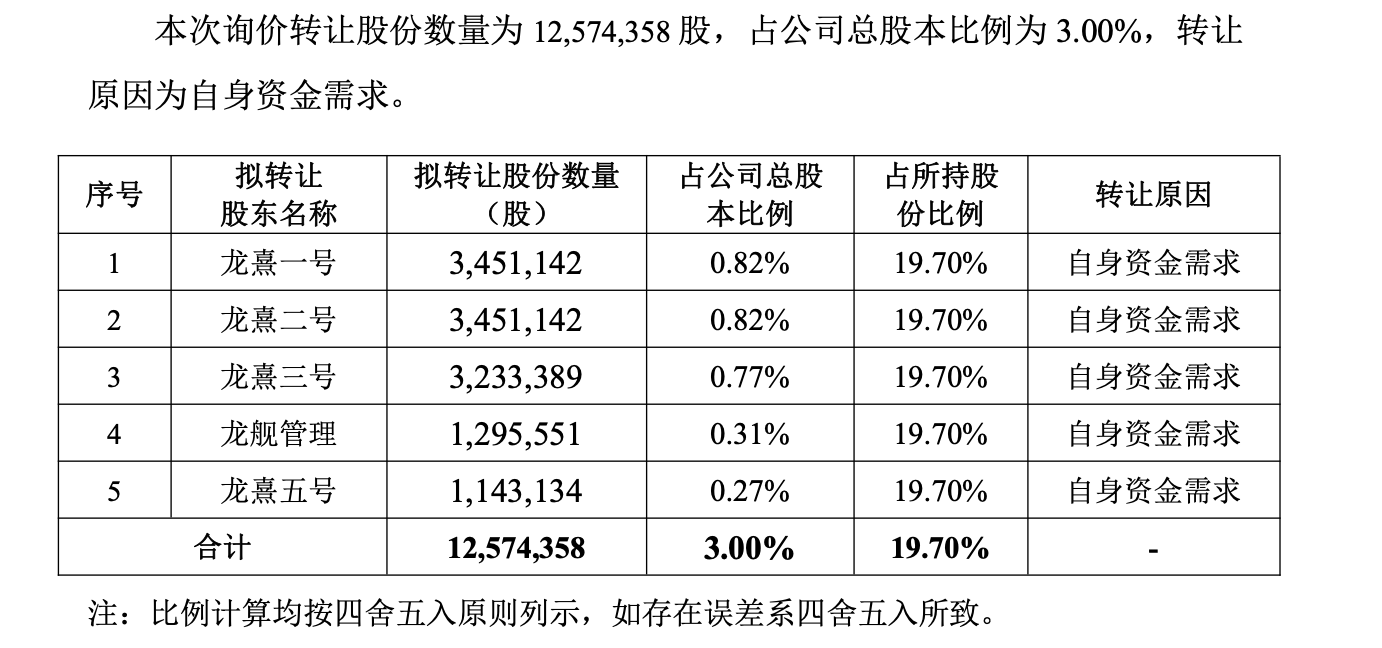
上述出让方龙熹一号、龙熹二号、龙熹三号、龙舰管理、龙熹五号为江波龙首次公开发行时控股股东、实际控制人的一致行动人,目前已解除一致行动 关系。江波龙控股股东、实际控制人、部分公司董事、高级管理人员通过出让方间接持有公司股份。 截至1月16日,龙熹一号、龙熹二号的持股数量占公司总股本的比例均为4.18%,龙熹三号的持股比例为3.92%,龙舰管理和龙熹五号则分别为1.57%、 1.38%。根据公告,五家机构股东转让股份的原因均为"自身资金需求"。 1月20日,根据存储模组企业江波龙发布的《股东询价转让定价情况提示性公告》,根据1月19日询价申购情况,初步确定的本次询价转让价格为212.09 元/股。 此前,江波龙于1月16日晚间发布公告,公司的五家机构股东龙熹一号自有资金投资合伙企业(有限合伙)(以下简称"龙熹一号")、宁波龙乙自有资金投资 合伙企业(有限合伙)(以下简称"龙熹二号")、宁波龙熹三号自有资金投资合伙企业(有限合伙)(以下简称"龙熹三号")、宁波龙舰自有资金投资合伙企业(有限合 伙)(以下简称"龙舰管理")、宁波龙熹五号自有资金投资合伙企业(有限合伙)(以下简称"龙熹五号"),计划通过询价转让方式合计 ...

江波龙实控人方询价转让套现26.67亿元 去年套现7.6亿
Zhong Guo Jing Ji Wang· 2026-01-20 06:35
中国经济网北京1月20日讯 江波龙(301308)(301308.SZ)昨日发布股东询价转让定价情况提示性公告。 经向机构投资者询价后,初步确定的转让价格为212.09元/股。参与本次询价转让报价的机构投资者家 数为59家,涵盖了基金管理公司、保险公司、证券公司、私募基金管理人、合格境外投资者等专业机构 投资者。本次询价转让拟转让股份已获全额认购,初步确定受本次询价转让拟转让股份已获全额认购, 初步确定受让方为54名机构投资者,拟受让股份总数为12,574,358股。 江波龙首次公开发行股票的发行费用(不含税)总额为15,313.23万元,其中,中信建投证券股份有限公 司、汇丰前海证券有限责任公司获得保荐及承销费用(含辅导费)12,596.60万元。 2025年3月21日,江波龙向香港联合交易所有限公司递交了发行境外上市外资股(H股)并在香港联交 所主板挂牌上市的申请,并于同日在香港联交所网站刊登了本次发行并上市的申请材料。公司本次发行 并上市尚需取得中国证券监督管理委员会、香港证监会和香港联交所等相关政府机关、监管机构、证券 交易所的批准、核准或备案,该事项仍存在不确定性。 公司控股股东、实际控制人承诺通过 ...
港股异动 | 兆易创新(03986)盘中涨超7%再创新高 公司受益于存储周期上行
智通财经网· 2026-01-19 03:41
Core Viewpoint - The stock of Zhaoyi Innovation (03986) surged over 7% in early trading, reaching a new high of 295 HKD, driven by positive market sentiment regarding the semiconductor industry and supply-demand dynamics in storage chips [1] Industry Summary - According to a Morgan Stanley research report, the supply-demand gap for traditional storage chips is continuing to widen, with a new super cycle expected in the industry from Q2 2025 to 2026 [1] - Products such as DDR4, DDR3, NOR Flash, and SLC/MLC NAND are experiencing increasing supply tightness, and there are no pessimistic indicators in the market [1] - The demand for advanced process storage products (e.g., DDR5, HBM) is strong, which is squeezing the allocation of mature process capacity [1] - In January 2026, major companies are expected to have a positive procurement attitude towards DDR4, with potential price increases of up to 50% in Q1 due to supply constraints [1] Company Summary - Zhaoyi Innovation is projected to hold the largest market share in NOR Flash and SLC NAND Flash products in mainland China in 2024, and is expected to be the second largest in niche DRAM market share [1] - According to Everbright Securities, Zhaoyi Innovation is a leading player in the domestic niche storage market, benefiting from the upward cycle in storage, which is expected to enhance both volume and price [1] - The company's diversified product portfolio is anticipated to further open up incremental growth opportunities [1]
警惕存储“超级周期”下的潜在风险
Zheng Quan Ri Bao· 2026-01-18 17:12
Core Viewpoint - The storage market is experiencing a significant price increase, driven by a "super cycle" primarily fueled by the demand for AI infrastructure and data center expansions, leading to a shortage of general memory supplies like DDR4 and DDR5 [1][2]. Group 1: Market Dynamics - Since September last year, the storage market has seen rare price hikes, with a notable increase of 19.36% in the price of DDR5 memory kits within a week [1]. - Counterpoint Research reports that the storage market has surpassed the historical high of 2018, with suppliers' bargaining power at an all-time high, and prices expected to rise by 40% to 50% in Q1 2026, followed by an additional 20% in Q2 [1]. - The current "super cycle" is distinct from previous recoveries driven by consumer electronics, as it is fundamentally driven by the demand for data storage resulting from AI applications [1]. Group 2: Industry Impact - Upstream manufacturers are benefiting significantly in the short term, with major storage companies like Micron projecting revenues of approximately $18.7 billion and a gross margin increase to 68% for Q2 2026 [2]. - However, downstream sectors are facing cost pressures, leading to increased prices for consumer electronics such as PCs and smartphones [2]. - The "super cycle" is expected to accelerate technological innovation and industry upgrades, but it may also lead to irrational exuberance and resource misallocation, with potential issues arising from over-speculation and neglect of foundational technology reliability [2]. Group 3: Cautionary Insights - The AI-driven "super cycle" may create a "siphoning effect" on supply, reducing the availability of general storage chips for consumer electronics, which could lead to price surges and supply shortages [3]. - There is a risk of blind expansion and technological iteration leading to a "cycle trap," where excessive production capacity could result in a market reversal once new technologies are fully deployed [3]. - The storage market's "super cycle" is reshaping the industry's product focus, competitive landscape, and value chain distribution, necessitating a balanced approach to avoid distorting the long-term health of the industry [3].
公募四季报密集披露 科技仍被看好
Bei Jing Shang Bao· 2026-01-18 15:11
此外,数据显示,截至2025年四季度末,还有华富新能源股票、中欧资源精选混合、华富科技动能混 合、前海开源沪港深乐享生活灵活配置混合、融通产业趋势臻选股票合计5只基金的最新规模环比增长 超10亿元。 公募基金2025年四季报陆续披露中,从当前已披露的情况来看,部分主动权益类基金的最新规模环比大 涨。公开数据显示,截至1月18日,共有106只基金的2025年四季报披露,其中有11只主动权益类基金的 最新规模环比翻倍,更有产品规模环比增长超10倍。除规模外,季报也同步披露了相关基金的最新资产 配置情况以及基金经理的后市投资思路。也有业内人士提醒投资者,在市场上涨的背景下切勿追高,要 保持理性不要加杠杆,尤其是在市场出现短期加速上涨时更应谨慎对待风险敞口。 规模环比增幅最高超42倍 公募四季报密集披露中,截至1月18日,已有106只基金披露2025年四季报,其中包含69只主动权益类基 金。就规模变化情况来看,多达36只主动权益类基金环比增长,有11只基金实现翻倍,更有2只产品增 长超10倍。 季报数据显示,中欧周期优选混合的最新规模环比涨超10倍,由2025年三季度末的0.36亿元涨至同年四 季度末的15.75亿元 ...

全球视野看家电:从三星电子看家电龙头产业升级之路
Changjiang Securities· 2026-01-18 14:25
Investment Rating - The report maintains a "Positive" investment rating for the home appliance industry [13] Core Insights - The report analyzes Samsung Electronics' successful transition from home appliances to semiconductor storage, display panels, and mobile phones, providing a reference for China's leading home appliance companies in their industrial upgrades [4] - Samsung Electronics has achieved an average annual compound growth rate of 19% in net profit from 1993 to 2024, making it the largest and fastest-growing home appliance company globally [7][34] - The report emphasizes the importance of proactive engagement with industry changes and policy opportunities during the growth phase of home appliances, highlighting Samsung's strategic investments and efficiency improvements [8][9] Summary by Sections Background and Timing - Samsung Electronics entered the semiconductor storage industry in 1983 when the penetration rate of home appliances in South Korea was rapidly increasing, supported by a strong GDP growth rate of over 10% [8][46] - The company capitalized on government support and market opportunities to navigate early losses and establish a profitable cycle in the semiconductor industry [8][46] Challenges and Strategies - Samsung leveraged its latecomer advantage and implemented a counter-cyclical investment strategy to quickly capture market share, achieving a 39% market share in the storage sector by 2024 [9] - The company focused on efficiency and cost advantages across various dimensions, including organizational structure and production strategies [9] Effects and Outcomes - By 2017, Samsung surpassed Intel to become the world's largest semiconductor manufacturer, with R&D investment increasing from 2% in 1980 to 12% in 2024 [10] - The company successfully expanded into display panels and mobile phones, creating a synergistic industrial system that enhanced its brand image and market position [10] Comparison with Midea Group - Midea Group is positioned to achieve significant industrial upgrades, with a projected 22% revenue contribution from non-home appliance sectors by 2024 and a growth rate of 15%-20% in recent years [11] - The report highlights Midea's advantages in cash flow stability and efficiency, suggesting a strong potential for industrial upgrades [11]

时空科技战略加码半导体存储 借力深圳产业生态拓展新局
Zheng Quan Shi Bao Wang· 2026-01-18 12:31
Group 1 - The core viewpoint of the articles highlights that the semiconductor storage sector is experiencing structural growth opportunities driven by the AI wave, positioning it as a key battleground for companies to seize technological competitive advantages [1][2] - The company, Shikong Technology, is actively transitioning towards the semiconductor storage field through a dual approach of "self-built + acquisition," including the planned acquisition of 100% equity in the local Shenzhen company, Jiahe Jingwei, which is recognized as a national-level "little giant" enterprise with over 40 invention patents [1] - Shikong Technology has established two semiconductor companies in Shenzhen within the last two months, aiming to accelerate integration into the local industry ecosystem through wholly-owned subsidiaries and partnerships with local enterprises [1] Group 2 - Shenzhen is chosen as the strategic hub for the company's transformation due to its unique industrial empowerment advantages, being the core engine of the semiconductor industry in the Guangdong-Hong Kong-Macao Greater Bay Area, with a complete design, manufacturing, and testing chain [1] - The local ecosystem in Shenzhen, supported by the "20+8" industrial cluster policies, funds, and talent, creates an efficient collaborative environment for production, education, research, and application, providing comprehensive support for storage enterprises [1] - This transformation aligns with national policies aimed at strengthening and supplementing the semiconductor industry chain, allowing the company to quickly achieve cross-industry growth and contribute to the high-quality development of the domestic semiconductor storage industry [2]

“每天涨价约50元”?!内存条价格“狂飙”
新华网财经· 2026-01-16 04:44
Core Viewpoint - The recent surge in memory prices has significantly impacted the consumer electronics industry, leading to increased costs and altered purchasing decisions for consumers and manufacturers [1][2]. Group 1: Price Surge and Impact on Consumers - Memory prices have risen dramatically, with reports indicating increases of 300% for DDR5 and over 150% for DDR4 since September 2025 [6]. - Consumers are experiencing unexpected price hikes, with some reporting increases of three to five times compared to last year [4][3]. - Retailers in Shenzhen are noting daily price increases of 40 to 50 yuan for memory products [4]. Group 2: Effects on the Consumer Electronics Industry - The rising costs of memory have forced companies to increase service prices, leading to reduced purchasing plans from clients [8]. - The smartphone, tablet, and smartwatch sectors are also facing cost pressures, prompting many manufacturers to raise product prices or delay new releases [10]. - TrendForce has revised its production forecasts for 2026, predicting a decline of 2% for smartphones and 5.4% for laptops, down from previous growth estimates [10]. Group 3: AI Demand and Memory Production Shifts - The surge in memory prices is attributed to the explosive demand for storage driven by AI applications, leading to strategic adjustments by memory manufacturers [13]. - Major chip manufacturers are prioritizing high-bandwidth memory (HBM) for AI data centers over standard DRAM for consumer devices, resulting in a strategic shift in global silicon wafer production [15]. - AI servers require 8-10 times more memory than standard servers, consuming 53% of global monthly memory production, which is squeezing the supply for consumer-grade memory [19]. Group 4: Market Dynamics and Future Outlook - The storage market is currently in a "super bull market" phase, surpassing historical highs from 2018, with suppliers enjoying unprecedented bargaining power [21]. - Several memory chip companies have announced expansion plans, but the release of new capacity will take time, suggesting that the memory shortage may persist [21].