量子技术

Search documents
“推动量子技术在更多产业领域应用”——潍坊学院瞄准“高精尖”发展特色学科
Ke Ji Ri Bao· 2025-08-05 23:46
Core Insights - The quantum technology team at Weifang University has made significant advancements in weak signal detection, addressing challenges in precision sensors [1] - The team is focused on enhancing quantum computing performance, precision measurement, and device efficacy through their ongoing research projects [2] - Weifang University's quantum team is recognized as a leader in quantum technology research and has developed several high-quality entangled photon sources [3] Research and Development - The quantum information technology research institute at Weifang University is one of the earliest dedicated institutions for quantum research in Shandong Province [2] - The laboratory has the largest facilities for quantum entanglement experiments in Shandong, with a history of producing world-class entangled photon sources [3] - The laboratory has achieved breakthroughs in quantum remote operations, improving fidelity from 80% to 90% through extensive optimization efforts [4] Industry Application - The team aims to promote the application of quantum technology across various industries, establishing a comprehensive R&D platform from basic research to industrial incubation [5] - Over the past three years, the laboratory has undertaken more than 110 applied research projects, securing approximately 35 million yuan in funding and achieving technology transfer worth 2.1 million yuan [6]
国盾量子: 关于召开2025年第三次临时股东大会的通知
Zheng Quan Zhi Xing· 2025-07-15 13:17
Meeting Information - The shareholders' meeting is scheduled for July 31, 2025 [1] - The meeting will be held at the Keda Guodun Quantum Technology Park, Hefei, Anhui Province [1] - Voting will be conducted through both on-site and online methods [1][2] Voting Procedures - The online voting system will be the Shanghai Stock Exchange's network voting system [1][2] - Voting will be available from 9:15 AM to 3:00 PM on the day of the meeting [1][2] - Shareholders must register by July 28, 2025, to participate [5][6] Agenda and Voting Rights - The meeting will review non-cumulative voting proposals approved by the board on July 15, 2025 [2] - Certain shareholders, including Zhongke University Asset Management Co., Ltd., must abstain from voting due to conflicts of interest [2] Attendance Requirements - Only shareholders registered by the close of business on July 24, 2025, are eligible to attend [5] - Shareholders can appoint proxies to attend and vote on their behalf [5][6] Additional Information - Attendees are responsible for their own travel and accommodation expenses [6] - Contact information for the company is provided for further inquiries [7]

深交所增补专家库专家至66人
news flash· 2025-07-11 13:16
Group 1 - The Shenzhen Stock Exchange has announced the addition of 33 experts to its industry consulting expert database, covering fields such as advanced manufacturing, information technology, new materials, and new energy [1] - The newly added experts include specialists in aerospace, quantum technology, artificial intelligence, biomedicine, and integrated circuits, enhancing the focus on technological innovation [1] - Following this addition, the total number of experts in the database has increased to 66, further optimizing industry configuration and enhancing the authority of the expert database [1]
中国创新生态全面升级 新质生产力加速形成
Yang Shi Wang· 2025-07-11 07:24
Group 1 - The core viewpoint is that China's "14th Five-Year Plan" has successfully implemented strategic tasks, leading to significant breakthroughs in innovation and a high level of R&D investment [1][4] - The plan includes 102 major projects that are progressing smoothly, integrating artificial intelligence with various industries, and promoting the deep integration of the internet, big data, and the real economy [4][10] - China's contribution to global economic growth remains around 30%, positioning the country as a stable and positive force in the world economy [7][13] Group 2 - The focus of Chinese innovation is not merely on technological breakthroughs but on enhancing user experience and market demand, creating a complete innovation ecosystem [7] - Chinese technology companies are gaining global recognition, particularly in emerging technologies such as energy transition and artificial intelligence [10][13] - The growth of the middle-income group, the development of the digital economy, and advanced infrastructure showcase the resilience and potential of the Chinese economy [13]

核聚变、量子信息、深空探测……重大科技基础设施建设“加速跑” 原创成果竞相涌现
Yang Shi Wang· 2025-07-10 06:21
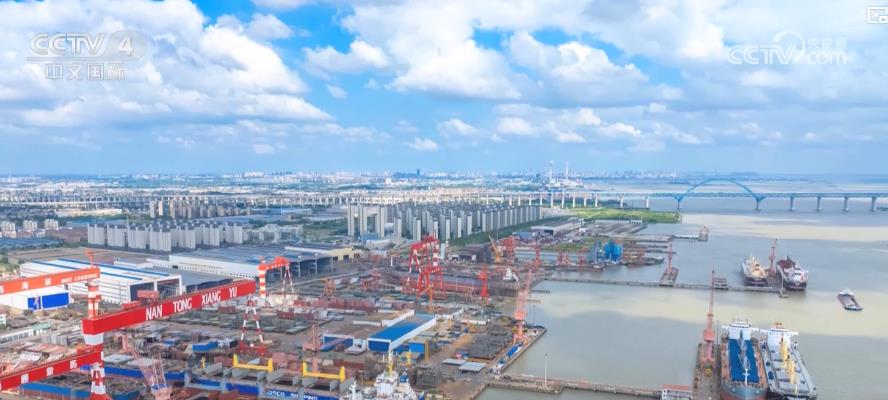
Group 1 - The core focus of the news is on the rapid development of major scientific and technological infrastructure in Anhui during the 14th Five-Year Plan period, particularly in fields like nuclear fusion, quantum information, and deep space exploration [1][10] - The Hefei Fusion Reactor Park is highlighted as a significant site for testing and installing key components of the "artificial sun," with ongoing integration tests for various systems [3][6] - The concept of the "artificial sun" is explained, emphasizing its potential to generate energy through nuclear fusion, with one liter of seawater yielding energy equivalent to 300 liters of gasoline, producing only helium and water as byproducts [5][7] Group 2 - The Hefei Fusion Reactor Park is expected to become the most advanced and comprehensive research and testing platform in the international fusion field, with the compact fusion energy experimental device BEST projected to be completed by the end of 2027 [7][19] - The development of large scientific devices in Hefei is accelerating, with multiple projects underway, including the Hefei Advanced Light Source, which is set to be completed by the end of 2026 [9][10] - The integration of large scientific devices and cutting-edge technologies is seen as a "treasure trove" for technological innovation, with potential for new applications emerging from these projects [10][11] Group 3 - The nuclear fusion project is expected to significantly boost the industrial chain, with an estimated investment of 10 billion yuan potentially leading to 100 billion yuan in industrial upgrades [19][30] - The article discusses the challenges of transforming scientific research into commercial applications, highlighting the need for real-world testing and collaboration between large enterprises and small tech firms [21][24] - Anhui's government has established a scene innovation promotion office to address the issue of insufficient application scenarios for new technologies, aiming to facilitate the transition from laboratory to market [29][30] Group 4 - The establishment of a scene innovation city alliance among multiple cities aims to break down administrative barriers and promote resource sharing and industrial collaboration [30][31] - Anhui has set up a technology achievement transformation guidance fund, with 18 sub-funds established by mid-2025, investing nearly 2.4 billion yuan in various projects [35][39] - The province has organized technology innovation achievement transformation fairs, with over 1,800 participating companies and more than 400 projects launched, involving over 26 billion yuan in funding [37][39]
活力中国调研行丨从实验室到地铁站 前沿科技成果竞相涌现
Yang Shi Xin Wen Ke Hu Duan· 2025-07-10 04:58
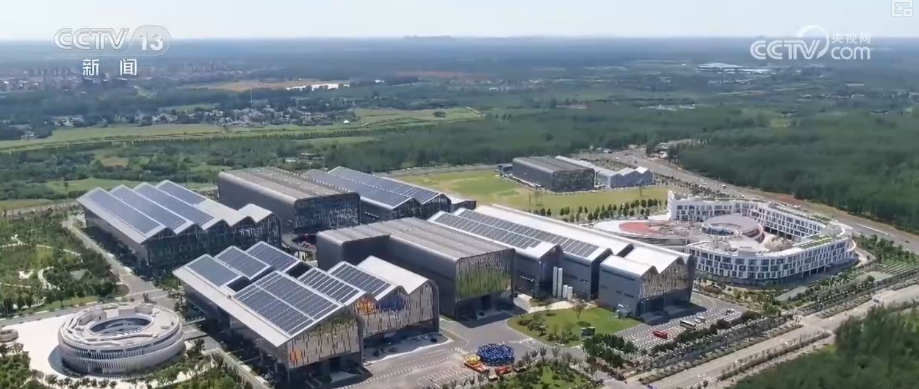
Core Insights - The article highlights the rapid development of major scientific infrastructure in Anhui during the 14th Five-Year Plan period, focusing on cutting-edge technologies such as nuclear fusion, quantum information, and deep space exploration [1][10]. Group 1: Major Scientific Achievements - The Anhui Hefei fusion reactor park is home to various laboratories working on key components for the "artificial sun," with significant progress in the integration testing of components [1][3]. - The "artificial sun" mimics the sun's principles, where hydrogen atoms fuse under extreme conditions, releasing energy equivalent to 300 liters of gasoline from one liter of seawater [5][7]. - The park aims to be the most advanced and comprehensive research and testing platform in the international fusion field, with the compact fusion energy experimental device BEST expected to be completed by the end of 2027 [7][8]. Group 2: Industry Chain Development - The construction of controllable nuclear fusion projects is accelerating, driving the development of the entire industry chain from materials to key components and systems [15][17]. - A preliminary estimate suggests that an investment of 10 billion yuan in controllable nuclear fusion could lead to an industry chain upgrade worth 100 billion yuan, highlighting its potential impact on the national industrial system [17]. Group 3: Technology Transfer Challenges - Despite the rapid development of new technologies, transferring these innovations from the laboratory to the market remains challenging [18][20]. - The Anhui government has established a Scene Innovation Promotion Office to address the issue of insufficient application scenarios for technology transfer, facilitating connections between large enterprises and small tech firms [26][28]. Group 4: Funding and Support Mechanisms - Anhui has set up a technology achievement transformation guidance fund, with 18 sub-funds established by mid-2025, investing nearly 2.4 billion yuan in 137 projects, some of which have successfully gone public [30][32]. - The province also hosts technology innovation achievement transformation fairs, with over 1,800 participating companies and more than 400 projects launched, involving over 26 billion yuan in funding [32].
港科大与比亚迪成立具身智能联合实验室,聚焦机器人技术与智能制造;混合量子系统实现超精密传感丨智能制造日报
创业邦· 2025-07-08 03:23
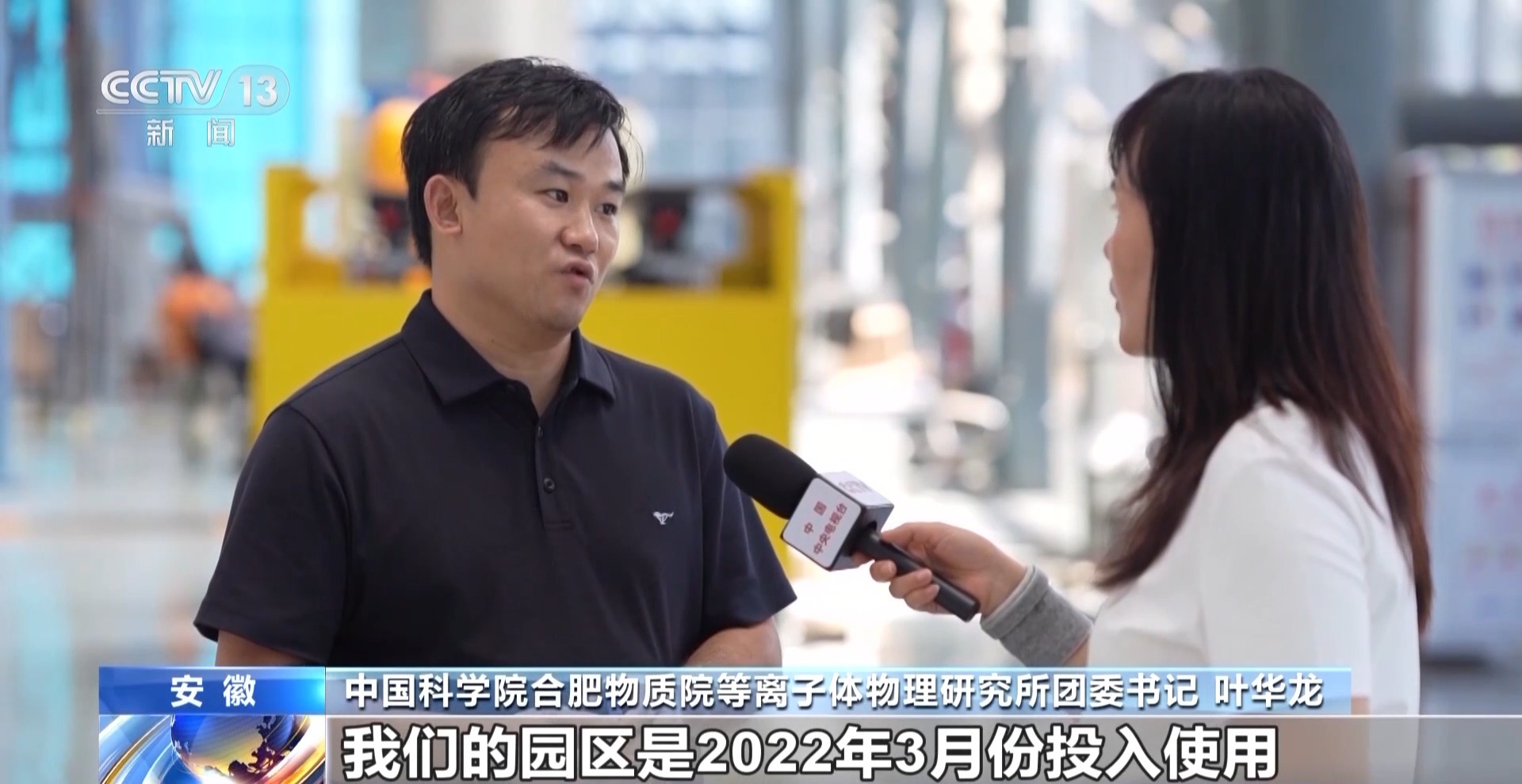
Group 1 - Samsung Electro-Mechanics has abandoned its plan to build a manufacturing plant in Mexico due to uncertainties surrounding U.S. tariffs and has dissolved its subsidiary in Mexico. The company had invested 4.9 billion KRW in a subsidiary established in Querétaro, Mexico, in 2023, as part of its broader strategy to expand its electric vehicle components business [1]. - A new adjustable quantum sensing technology has been developed by a team from the Niels Bohr Institute at the University of Copenhagen. This hybrid quantum system can achieve higher precision measurements across various applications, including detecting gravitational waves, environmental monitoring, and biomedical diagnostics. This breakthrough marks a new phase in quantum sensing technology [1]. - A joint initiative named "Kyoto Bionic Association" will be established by Murata Manufacturing and Temco to develop humanoid robots entirely manufactured in Japan. The organization aims to create disaster response robots and revive Japan's position in the robotics field [1]. - The Hong Kong University of Science and Technology (HKUST) has signed a cooperation framework agreement with BYD Auto to establish the "HKUST-BYD Embodied Intelligence Joint Laboratory." This lab will focus on cutting-edge research in robotics and intelligent manufacturing, with BYD committing to invest tens of millions of HKD over the coming years to support its operation [1].

量子产业化,日本下血本了
Hu Xiu· 2025-07-08 01:29
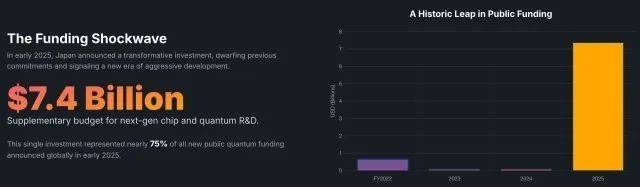
Group 1 - Japan's government has committed $7.4 billion (approximately 1.05 trillion yen) to quantum technology this year, which is more than three times the total investment over the past five years [1][2] - This investment represents a strategic shift driven by deep-seated concerns about historical failures in technology leadership, particularly in the semiconductor industry [3][4] - The Japanese government aims to transition from basic research to industrialization, with a clear goal of making quantum technology a pillar of future economic prosperity and national security [5][10] Group 2 - The investment is seen as a "preventive and high-risk" intervention to avoid being left behind in the global competition for technology leadership [7][9] - The government hopes to stimulate systemic change, encouraging research institutions, large enterprises, and potential startups to engage in the quantum race [8][9] - Japan's approach is characterized by a "collaborative giant ship" model, where the government leads and industrial giants collaborate, forming a powerful alliance [12][14] Group 3 - Major Japanese corporations like Toyota, NEC, and Fujitsu are expected to benefit significantly from government contracts and participation in core research projects [43][44] - The focus on building a self-sufficient supply chain for quantum technology components is a key aspect of Japan's strategy, aiming to avoid reliance on foreign suppliers [20][23] - The mixed quantum-classical computing strategy is seen as a pragmatic approach to leverage existing capabilities while aiming for quick results in various applications [17][18][19] Group 4 - Japan's commitment to quantum technology is likely to provoke responses from other major players, including the U.S. and China, potentially escalating a new round of "quantum arms race" [39][40][42] - The success of Japan's strategy will depend on overcoming challenges such as fostering a vibrant startup ecosystem and effectively translating research into marketable products [25][29][31] - Attracting and retaining top talent in the competitive global landscape is crucial for Japan to realize its quantum ambitions [32][34][38]


混合量子系统实现超精密传感
news flash· 2025-07-06 23:21
Core Insights - A new adjustable quantum sensing technology has been developed by the team at the Niels Bohr Institute, University of Copenhagen, which represents a significant advancement in quantum sensing capabilities [1] - This hybrid quantum system is expected to enhance measurement precision across various technologies, with applications in detecting gravitational waves, environmental monitoring, and biomedical diagnostics and imaging [1] - The breakthrough marks a new phase for quantum sensing technology, providing solid support for innovations in medical, astronomical, and information fields [1] Summary by Categories Technology Development - The new quantum sensing technology is a hybrid system that allows for higher precision measurements [1] - The research results have been published in the latest issue of the journal Nature, indicating peer recognition and validation of the findings [1] Applications - Potential applications include gravitational wave detection, environmental monitoring, and advancements in biomedical diagnostics and imaging [1] - The technology is poised to drive innovations across multiple sectors, including healthcare, astronomy, and information technology [1]
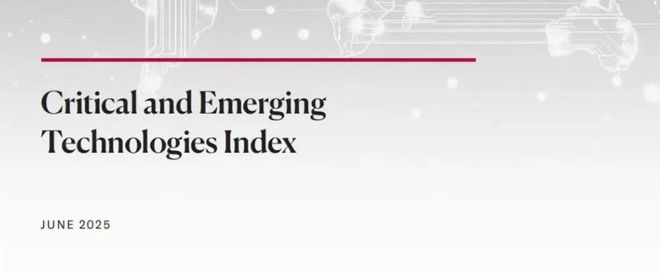
哈佛大学发布《2025全球关键和新兴技术指数报告》,揭示全球科技新格局
Tai Mei Ti A P P· 2025-07-04 09:17
Core Insights - The report from Harvard Kennedy School's Belfer Center outlines the intense global competition in key emerging technologies as of 2025, focusing on the rivalry between the US and China, with Europe lagging behind [1][6]. Group 1: Key Technology Areas - The report identifies five critical technology areas with assigned strategic weights: Semiconductors (35%), Artificial Intelligence (25%), Biotechnology (20%), Space Technology (15%), and Quantum Technology (5%) [3][6]. - Semiconductors are described as the "heart" of modern technology, while AI is viewed as a "multiplicator of competition" impacting various sectors [3][6]. Group 2: Global Technology Landscape - The US is recognized as the only "super technology power," leading in all five technology areas due to its vibrant decentralized innovation ecosystem [6][7]. - China ranks second globally, showing strong momentum, particularly in biotechnology and quantum technology, where it is rapidly closing the gap with the US [7][9]. - Europe ranks third overall but exhibits uneven performance across different fields, excelling in AI and biotechnology while lagging in semiconductors and space technology [10]. Group 3: Biotechnology Developments - Biotechnology is highlighted as the field where China has the best chance to surpass the US, driven by its dominance in pharmaceutical production and a significant increase in clinical trials and patents [12][13]. - Recent investments from major pharmaceutical companies in China underscore international recognition of its biotechnology capabilities [12][13][15]. Group 4: Artificial Intelligence Progress - In AI, while the US maintains a numerical advantage in model development, China is rapidly improving in model quality, with the performance gap narrowing significantly [16][18]. - China's cost-effective model training presents a competitive edge, with substantial reductions in training costs compared to US counterparts [18]. Group 5: Semiconductor Industry Challenges - The semiconductor industry is characterized by its complex global supply chain, with the US, Japan, Taiwan, and South Korea holding dominant positions [20][22]. - China's semiconductor development faces significant challenges due to US export controls, impacting its access to advanced manufacturing technologies [22]. Group 6: Future Technology Competitions - In quantum technology, the competition involves the US, China, and Europe, with China excelling in quantum sensing and communication, while the US leads in quantum computing research [23][25]. - The space technology sector is driven by innovative public-private partnerships in the US, exemplified by companies like SpaceX, which are revolutionizing space exploration [25][27]. Group 7: Nature of Technological Competition - The report emphasizes that technological progress relies on openness and cooperation, yet geopolitical realities are creating barriers to global collaboration [28]. - Countries are adopting strategies like "nearshoring" and "friend-shoring" to enhance supply chain resilience, which may lead to increased costs and reduced efficiency [28]. Group 8: Conclusion on Future Technology Race - The future of technological competition will hinge on the balance between open innovation and closed protectionism, as well as the interplay between national strategies and grassroots innovation [29].