咖啡

Search documents
皮爷咖啡宣布卖了
投资界· 2025-08-27 08:18
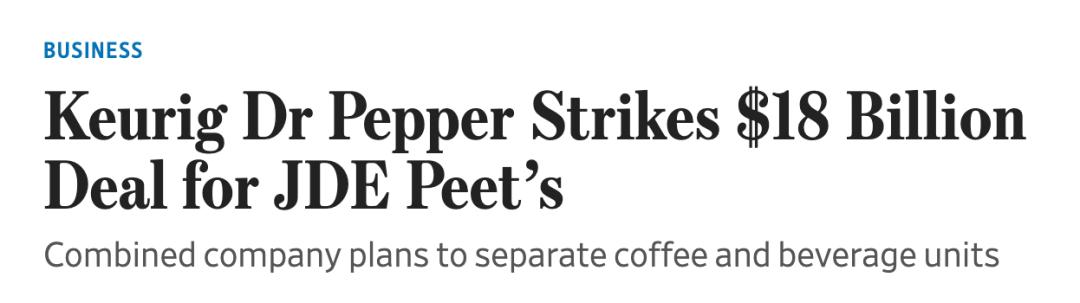
Core Viewpoint - The article discusses the acquisition of JDE Peet's by Keurig Dr Pepper (KDP) for €15.7 billion (approximately ¥130 billion), highlighting the strategic importance of this deal in the coffee industry and the historical significance of Peet's Coffee as a premium brand [3][13]. Group 1: Acquisition Details - KDP is acquiring JDE Peet's, which is known for its coffee and tea brands, including the well-known Peet's Coffee, often referred to as the "father of Starbucks" [3][5]. - The acquisition price of €31.85 per share represents a 33% premium over JDE Peet's 90-day volume-weighted average share price, totaling €15.7 billion [13]. - JAB Holdings, which has a significant stake in both KDP and JDE Peet's, is positioned to gain approximately $12.3 billion (around ¥88 billion) from this transaction [11][13]. Group 2: Historical Context of Peet's Coffee - Peet's Coffee was founded in 1966 by Alfred Peet, who initiated a revolution in the specialty coffee market in the U.S. [5]. - The brand has a historical connection to Starbucks, as the founders of Starbucks were trained by Peet and used its coffee beans in their first store [5][6]. - In 2012, JAB Holdings acquired Peet's Coffee for $977 million, leading to its privatization and subsequent global expansion [6][9]. Group 3: Market Performance and Future Outlook - JDE Peet's reported strong organic sales growth in China, with a 23.8% increase in adjusted EBIT, contributing to a global sales figure of €88.37 billion (up 7.9% year-on-year) [9]. - Despite the growth, Peet's Coffee has faced challenges in recent years, including rumors of store closures and a slowdown in expansion [9]. - KDP plans to split into two independent publicly traded companies post-acquisition, with one focusing on beverages and the other on coffee, aiming to create a global coffee giant with a projected combined annual net sales of approximately $16 billion [14][15]. Group 4: Broader Industry Trends - The article notes a surge in consumer mergers and acquisitions, with significant interest in brands like Starbucks and Froneri, indicating a trend of strategic repositioning in the consumer sector [17][18]. - The consumer sector is viewed as resilient during economic downturns, leading to increased merger activity as companies seek to optimize their portfolios [19]. - Investment firms are actively seeking opportunities in the consumer space, with a significant percentage of consumer goods executives anticipating asset sales in the coming years [19].


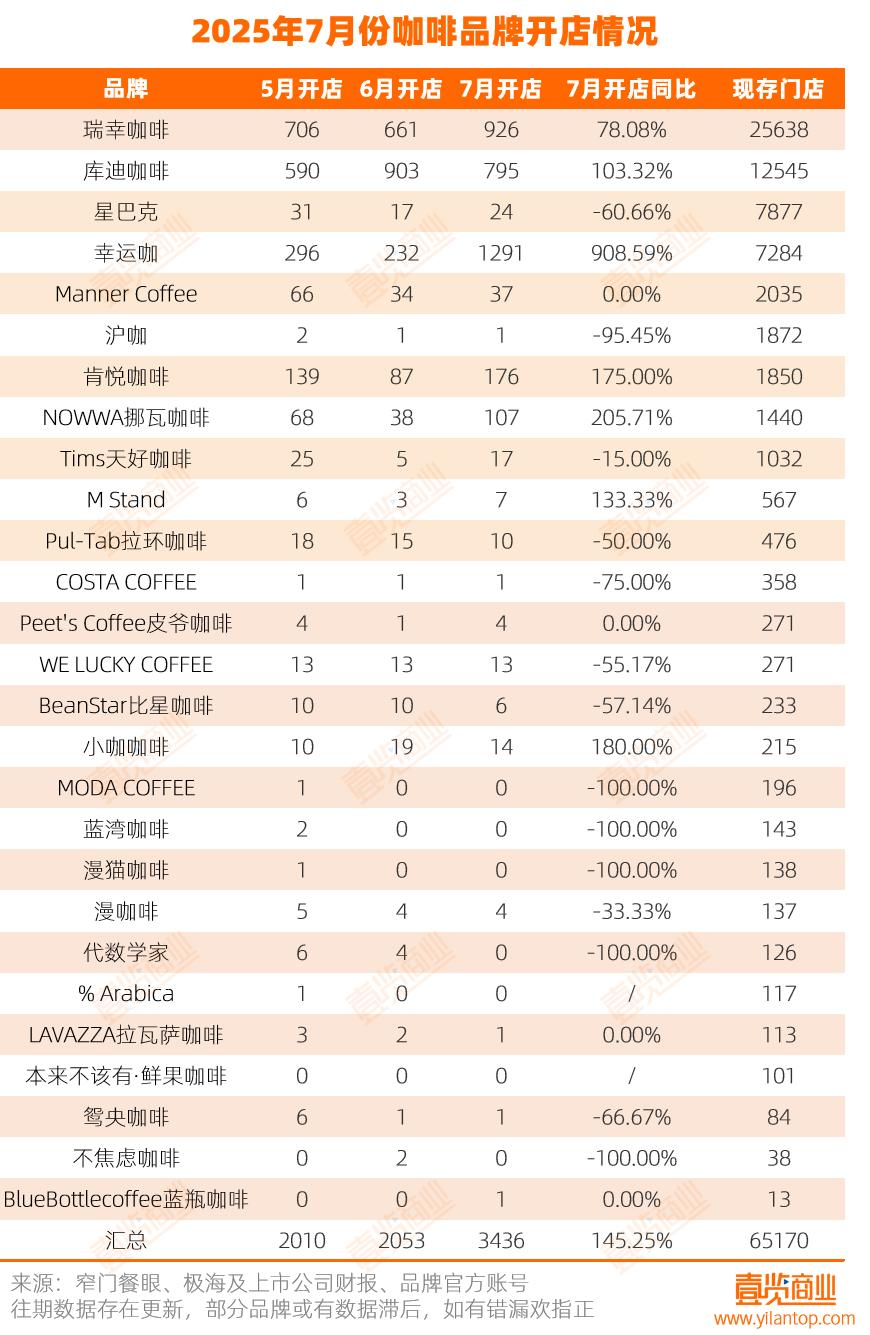
咖啡,7月开店3436家
3 6 Ke· 2025-08-27 03:39
Core Insights - The coffee market is experiencing rapid expansion alongside an accelerated rate of brand elimination, indicating a competitive landscape where both growth and decline are prevalent [1][11]. Expansion and Closure - In July, 27 tracked coffee brands opened a total of 3,436 new stores, representing a month-on-month increase of 19.39% and a year-on-year growth of 145.25%, doubling the overall expansion speed compared to last year [1][3]. - The total number of coffee shops reached 65,170, with a month-on-month decline of 2.02%, indicating that approximately 4,779 stores closed in the previous month [1][3]. Brand Performance - Luckin Coffee emerged as a significant player, opening 1,291 stores in July, achieving a staggering year-on-year growth of 908.59% and surpassing Luckin in monthly openings [3][4]. - Starbucks showed a decline in store openings, with a year-on-year decrease of 60.66%, reflecting a more cautious growth strategy focused on market consolidation rather than aggressive expansion [3][4]. - Kudi Coffee experienced a year-on-year growth of 103.32% but faced a month-on-month decline of 46.14%, signaling potential challenges in its expansion strategy [4]. Market Trends - The coffee market is characterized by a dual trend of rapid growth among leading brands and a high elimination rate among smaller brands, with some facing exit risks [11]. - Product innovation is centered around summer themes, with a focus on health and light food options, as well as ice cream elements becoming increasingly popular [10][11]. - Collaborative marketing efforts have decreased, with 14 partnerships in July, down from 19 in June, indicating a shift in marketing strategies [10][11]. Future Outlook - The coffee market is expected to continue its polarization, with leading brands leveraging scale and innovation to enhance their market position, while niche brands seek survival through unique positioning [11].


“消费刺客”退烧
虎嗅APP· 2025-08-26 13:44
Core Viewpoint - The article discusses the challenges faced by Baiguoyuan, a fruit retail brand, highlighting its failure to adapt to changing consumer expectations and market dynamics, leading to significant financial losses and a decline in brand trust [5][6]. Group 1: Baiguoyuan's Mistakes - Baiguoyuan was once seen as a model of consumption upgrade, relying on high-quality fruit to justify premium pricing [8][9]. - The brand's promise of quality became a liability when it failed to consistently deliver, leading to a loss of consumer trust [9][11]. - The founder's comments about "educating consumers" were perceived as out of touch, exacerbating the disconnect between the brand and its customer base [10]. Group 2: Market Trends and Competition - The article notes a broader trend of high-priced brands in various sectors, such as new tea drinks and coffee, adjusting their pricing strategies to remain competitive [12][13]. - The oversupply in the market has led to increased competition, with many brands struggling to differentiate themselves [15][16]. - Economic factors, including declining asset values and rising savings rates, have shifted consumer behavior towards more cautious spending [18][19]. Group 3: Future of Consumer Goods - The article suggests a bifurcation in the market, with brands either competing on cost efficiency or creating unique value propositions [22][23]. - Baiguoyuan is caught between these two strategies, lacking the cost advantage of low-price competitors and the unique experience offered by niche brands [26][27]. - The brand must either enhance its operational efficiency or develop a distinctive value proposition to survive in the evolving market landscape [27][28].

Stratus(STRS) - 2025 Q2 - Earnings Call Transcript
2025-08-26 13:30
Financial Data and Key Metrics Changes - The company reported a net sales increase of 11.5% year over year, reaching ILS 3,100,000,000 for the quarter, with a 15.5% increase when excluding the impact of a stronger shekel [42][43] - EBIT improved significantly, with higher operating profit attributed to increased net sales and ongoing productivity measures, despite raw material price inflation [43][44] - Net income was negatively impacted by increased financing and tax expenses, with financing expenses rising by ILS 57,000,000 in Q2 due to the stronger shekel and higher interest rates [45][46] Business Line Data and Key Metrics Changes - Strauss Israel saw a 9% growth in sales, driven by both volume and price increases, with Health and Wellness performing particularly well [14][48] - The coffee segment in Israel experienced volume increases, especially in roasted and ground coffee, although EBIT remained stable due to rising coffee prices [16][49] - The international coffee business, particularly in Brazil, reported a significant turnaround with a 30% increase in sales, primarily driven by price increases [20][21] Market Data and Key Metrics Changes - The company increased its overall market share in Israel from 34.1% to 35.1%, despite price increases in several segments [18] - The water business experienced 4-5% top-line growth in Q2, supported by a higher installed base and improved sales mix, although impacted by the war in June [50] - In China, the company faced increased competition, particularly from Xiaomi, which affected sales and net income [27][28] Company Strategy and Development Direction - The company is focusing on core activities and major brands to improve profitability and market share, with a strong emphasis on productivity and operational excellence [34][36] - New product launches, including alternative milk and water purification machines, are expected to drive growth in the coming quarters [31][33] - The company aims to transition from a single product to a multiproduct company, enhancing its market position and expanding its product offerings [26][36] Management's Comments on Operating Environment and Future Outlook - Management acknowledged challenges from inflation and raw material costs but expressed confidence in the company's ability to pass on costs to consumers [63] - The company expects improvements in net income in the coming quarters as one-time financial costs and tax issues are resolved [63] - Future growth is anticipated from productivity initiatives and new product launches, with a focus on maintaining EBIT margins despite rising costs [41][63] Other Important Information - The company received a stable outlook upgrade and maintained a strong AA1 rating, reflecting its solid financial position [47] - The cocoa prices have shown a significant decrease, which is expected to positively impact the funding indulgence segment moving forward [55][56] Q&A Session Summary Question: What are the expected benefits of the new Jotvita facility? - The new facility will address unmet market demand, allowing for a substantial increase in sales volume and value, thereby improving EBIT and margins [51][52] Question: What relief is being seen in commodity pricing? - Some relief is noted in coffee prices, although recent increases are concerning. Cocoa prices have decreased significantly, which is expected to benefit the funding indulgence segment [55][56] Question: How will the acquisition of JDE Peet by Keurig impact the markets? - The company does not anticipate significant impacts in its operating markets, as competition remains strong and JD is already a competitor in those regions [58][59]

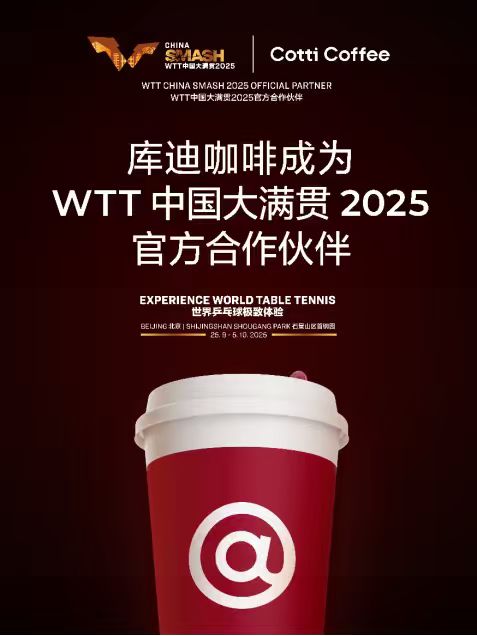
库迪咖啡成为WTT中国大满贯2025官方合作伙伴
Xin Lang Cai Jing· 2025-08-26 12:15
日前,库迪咖啡宣布成为WTT中国大满贯2025官方合作伙伴,将作为"官方指定咖啡品牌"亮相赛事现 场。 WTT中国大满贯是世界乒乓球职业大联盟(WTT)组织的国际顶级赛事之一,也是WTT系列赛中最高 级别的赛事。WTT中国大满贯2025赛将于9月25日至10月5日在北京石景山首钢园区举行,云集了众多 世界级乒乓球运动员,现男单、女单世界排名第一的中国选手林诗栋、孙颖莎将领衔出战。 库迪咖啡首席策略官李颖波表示,咖啡与体育赛事一样,天生拥有专业、运动与热爱等基因,两者在精 神气质层面高度契合。公开数据显示,库迪咖啡业务遍及全球28个国家和地区,门店数量超过15000 家。2024年IIAC国际咖啡品鉴大赛上,库迪咖啡斩获7项金奖。2025年,库迪咖啡再度斩获8项IIAC金 奖,也是自2022年10月成立以来连续第三年获奖。 责任编辑:何俊熹 ...
两大巨头被传“卖身”!全球咖啡市场格局生变
Sou Hu Cai Jing· 2025-08-26 11:06
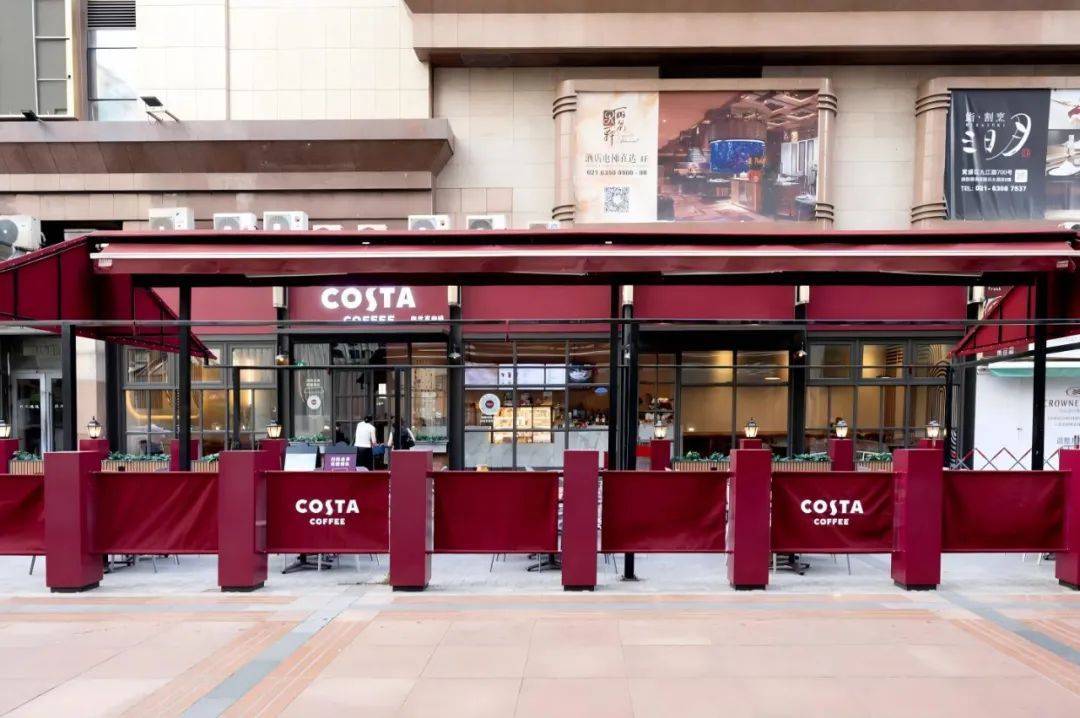
Core Viewpoint - The global coffee market is undergoing significant changes, with major players like Coca-Cola and JDE Peet's considering sales of their coffee brands, indicating a potential shift in the industry landscape [1][9]. Group 1: Company Developments - Coca-Cola is reportedly in talks to sell Costa Coffee, the largest coffee chain in the UK, after acquiring it for £3.9 billion in 2018 [2][3]. - Costa Coffee has struggled to expand since its acquisition, with only about 400 new stores added in seven years, bringing the total to approximately 4,200 stores globally [3][7]. - In China, Costa has closed over 100 stores in the past five years, focusing on profitability rather than aggressive expansion [3][5]. Group 2: Market Trends - The global specialty coffee market is projected to grow at a compound annual growth rate (CAGR) of 9.2% until 2028, but growth in the Chinese market is expected to slow from 25% in 2023 to 12% by 2025 [5][6]. - Starbucks China has initiated a price adjustment plan due to declining same-store sales, while JDE Peet's has launched a budget brand, Ora Coffee, in response to market pressures [6][9]. Group 3: Financial Implications - Costa's revenue for 2023 was £1.22 billion, a 9% increase from the previous year, but still below pre-acquisition levels [7]. - Reports suggest that Costa's potential sale price could be around £2 billion, indicating a significant loss for Coca-Cola compared to its original acquisition cost [7][8].

泰国咖啡逆经济趋势增长,人均年饮340杯
Shang Wu Bu Wang Zhan· 2025-08-26 04:10
Core Insights - The Thai coffee industry is experiencing continuous growth, aligning with the global coffee market trend, which is valued at approximately $269 billion and is expected to reach $369 billion by 2030 [1] - Thai coffee consumption has significantly increased, with per capita annual consumption rising from 180 cups to over 340 cups, leading to a domestic market value projected to soar to 65 billion THB in 2025, reflecting an 8.3% growth compared to 2024 [1] - There is a shift in consumer preference from instant coffee to freshly brewed coffee, indicating a new generation's higher demand for quality, taste, and experience [1] Industry Performance - In the first half of 2025 (January to June), 415 new coffee enterprises were established, marking an 8.9% year-on-year increase, predominantly small businesses, with over 33% located in Bangkok, showcasing strong market momentum [1] - Despite stable total revenue over the past three years, the industry's net profit has declined, particularly in the production segment, which faces cost fluctuations and intense competition [1] - The total revenue for the coffee industry in 2024 is projected to be 206.75 billion THB, with the production segment contributing 37.22 billion THB and the wholesale/retail segment 169.53 billion THB, reflecting a 1.7% year-on-year growth, approximately 3.45 billion THB [1]
两大巨头被传“卖身”,全球咖啡市场格局生变
3 6 Ke· 2025-08-26 03:49
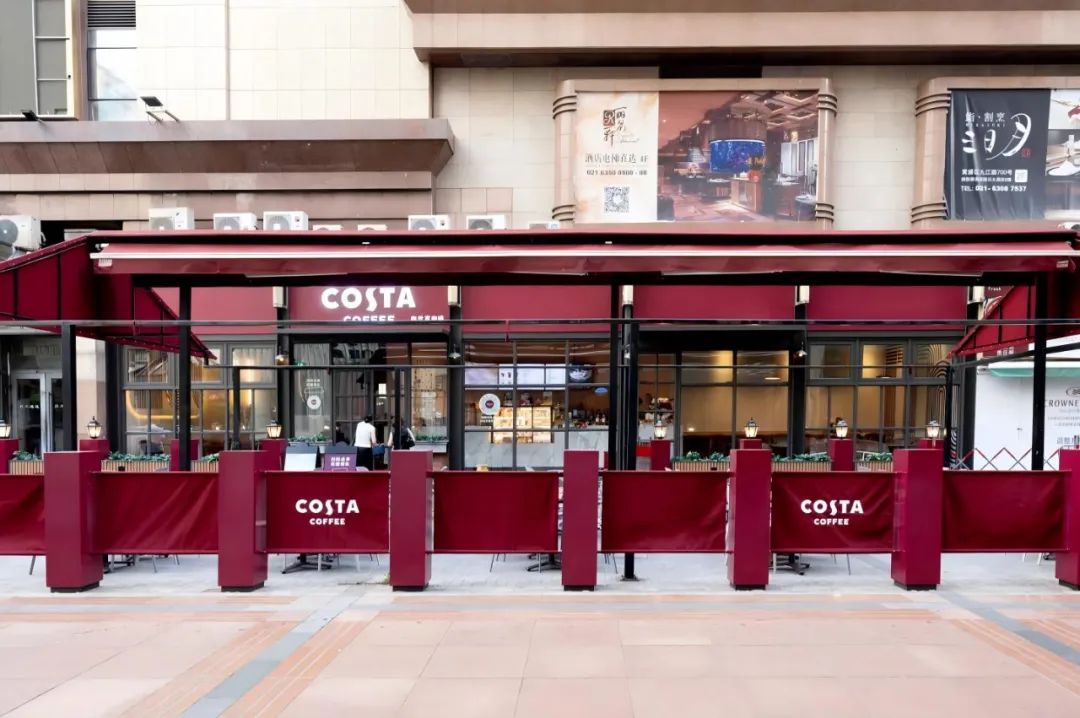
Core Viewpoint - The global coffee market is undergoing significant changes as major players like Coca-Cola and Keurig Dr Pepper are considering selling their coffee brands, indicating a potential shift in the industry landscape [1][10]. Group 1: Company Developments - Coca-Cola is reportedly planning to sell Costa Coffee, the largest coffee chain in the UK, after acquiring it for £3.9 billion in 2018 [2][10]. - Costa Coffee has struggled to expand its store presence significantly since its acquisition, with only about 400 new stores added in seven years, totaling approximately 4,200 stores globally [3][8]. - In China, Costa has closed over 100 stores in the past five years, focusing on maintaining high-end positioning rather than competing on price [3][5]. Group 2: Market Trends - The global specialty coffee market is projected to grow at a compound annual growth rate (CAGR) of 9.2% until 2028, but growth in the Chinese market is expected to slow from 25% in 2023 to 12% by 2025 [5]. - Starbucks China has initiated a price adjustment plan due to declining same-store sales, reducing prices on popular items by an average of 5 yuan [7]. - JDE Peet's, the parent company of Peet's Coffee, is also facing challenges, with plans for a $18 billion acquisition by Keurig Dr Pepper amid a slowdown in store openings in China [12]. Group 3: Financial Performance - Costa Coffee reported annual revenue of £1.22 billion in 2023, a 9% increase from the previous year, but still below pre-acquisition levels [8]. - The potential sale price for Costa is rumored to be around £2 billion, indicating a significant loss for Coca-Cola compared to its original acquisition price [10].

近1300亿元交易震动咖啡圈,皮爷咖啡母公司易主在即?
3 6 Ke· 2025-08-26 03:04
Core Viewpoint - The article discusses the challenges and potential future of Peet's Coffee in the Chinese market amidst a changing global coffee landscape and competitive pressures from both local and international brands [1][4][10]. Group 1: Industry Dynamics - KDP, formed from the merger of Keurig and Dr Pepper, has seen its coffee business underperform, prompting a strategic acquisition of JDE Peet's to separate its beverage segments [1][3]. - JDE Peet's, a leading European coffee brand, has a market capitalization of approximately $15 billion and is backed by JAB, which also holds a significant stake in KDP [1][3]. - The coffee segment of KDP is expected to remain "sluggish" until the 2025 fiscal year, with rising costs and intense competition impacting profitability [3][10]. Group 2: Peet's Coffee in China - Peet's Coffee entered the Chinese market in 2017 through a joint venture with Hillhouse Capital, expanding from one store to around 260 locations in a few years [2][4]. - Despite its growth, Peet's brand recognition in China lags behind competitors like Starbucks and Luckin Coffee, which have extensive store networks and broader consumer appeal [4][5]. - The expansion pace of Peet's Coffee has slowed significantly, with new store openings dropping from 98 in 2023 to 51 in 2024, and closures of key locations due to poor profitability [6][9]. Group 3: Consumer Trends and Competition - Consumer sensitivity to pricing has increased, with nearly 80% preferring drinks priced between 10-20 yuan, while only 4% are willing to pay over 25 yuan for coffee [8][9]. - Competitors like Luckin Coffee are aggressively pricing their products, further squeezing the market for high-end coffee brands like Peet's [9][10]. - The premium coffee segment is experiencing a downturn, with several brands, including Seesaw and M Stand, closing a significant number of stores due to financial pressures [9][10]. Group 4: Strategic Adjustments - Peet's Coffee has initiated a dual-brand strategy by launching Ora Coffee, a more affordable sub-brand aimed at capturing a broader customer base with prices between 15-25 yuan [10][11]. - The potential acquisition by KDP could provide Peet's with enhanced resources and operational synergies, allowing for better integration with other coffee brands under the same umbrella [10][11]. - Future strategies for Peet's may include optimizing store locations, adjusting product offerings based on local preferences, and leveraging its expertise in coffee roasting to create unique products [11][13].
走进绿水青山,共话两岸乡情
Ren Min Ri Bao Hai Wai Ban· 2025-08-26 01:12
Group 1 - The event "2025 Cross-Strait Rural Development Exchange Conference and Huzhou-Taiwan Neighborhood Festival" was held in Huzhou, Zhejiang, focusing on promoting agricultural and cultural tourism products from Taiwan [1] - Over 150 grassroots representatives and youth from Huzhou and Taiwan participated in discussions on rural tourism, youth development, and green rural development [1][2] - Huzhou's cultural and tourism bureau promoted ticket exemptions for Taiwanese visitors and highlighted tourism routes during the opening ceremony [1] Group 2 - Taiwanese youth are increasingly establishing businesses in mainland rural areas, with many transforming local houses into popular homestays [1][2] - The "rural + coffee" model is gaining traction in mainland China, fostering new consumption patterns and emotional connections between the two sides [2] - Huzhou has been actively deepening exchanges with Taiwan across various sectors, including trade, culture, and sports, and has organized multiple cross-strait youth exchange activities [2][4]