
工业机器人

Search documents
埃斯顿首亏8.1亿募投项目不及预期 境外市场营收降14%推进赴港上市
Chang Jiang Shang Bao· 2025-06-05 23:33
Core Viewpoint - Estun, a leading domestic industrial robot company, plans to issue H-shares and list on the Hong Kong Stock Exchange to enhance its global strategy, accelerate overseas business development, and improve its international brand image [1][2][3] Financial Performance - In 2024, Estun reported a revenue of 4.009 billion yuan, a year-on-year decrease of 13.83%, and a net loss of 810 million yuan, marking the first loss since its IPO [1][9] - The company's overseas revenue was 1.37 billion yuan in 2024, down 14.1% year-on-year, accounting for approximately 34.2% of total revenue [4][9] - The gross margin for 2024 was 32.66%, an increase of 1.4 percentage points compared to the previous year [4] Historical Context - Estun was listed on the A-share market in March 2015, with revenues and net profits increasing from 483 million yuan and 51.19 million yuan in 2015 to 1.461 billion yuan and 101 million yuan in 2018 [6] - The company achieved its highest revenue and net profit post-IPO in 2022, with figures of 3.881 billion yuan and 166 million yuan, respectively [8] Recent Challenges - In 2023, Estun's performance declined again, leading to the significant losses reported in 2024 [9] - The company attributed its losses to lower-than-expected revenue, increased operating expenses, and challenges faced by its subsidiaries, which resulted in goodwill impairment totaling 345 million yuan [9][10] Future Plans - Estun aims to expand its global business, focusing on markets in Europe, America, the Middle East, and Southeast Asia, particularly targeting opportunities with leading domestic clients in the new energy and lithium battery sectors [3][9]

中国经济样本观察·企业样本篇|从大学生创业园闯出来的“小巨人”——卡诺普机器人的逐梦历程
Xin Hua She· 2025-06-05 09:27
Core Insights - The article highlights the journey of Chengdu Kanop Robot Technology Co., Ltd., which has evolved from a small startup to a national-level specialized "little giant" in the industrial robotics sector, reflecting the broader development of China's industrial robot market [1][2][6]. Company Development - Founded in 2012 by a group of five young entrepreneurs, Kanop started with an initial capital of 500,000 yuan and has grown to over 400 employees, producing more than 60 types of complete machines [2][5]. - The company initially focused on developing key components, specifically controllers, which are essential for industrial robots, allowing them to establish a foothold in a market dominated by international giants [3][4]. Market Strategy - Kanop faced challenges in finding market opportunities but eventually secured its first client through persistent efforts, including direct engagement and on-site support [4][5]. - The company capitalized on the growing domestic demand for industrial robots, achieving significant market share in the controller segment by 2018, becoming a "hidden champion" in this niche [5][12]. Transformation and Innovation - In 2017, Kanop made a strategic decision to transition from component manufacturing to producing complete machines, aiming to meet the needs of small and medium enterprises [7][10]. - The company invested two years in developing welding robots, which were well-received in the market, leading to over 1,000 orders in 2019 [11][12]. Technological Advancements - Kanop emphasizes continuous innovation, with a focus on enhancing the flexibility and precision of its robots, achieving positioning accuracy comparable to international standards [13][14]. - The company has developed over 60 types of robots and aims to integrate AI technology into its products, with plans to launch humanoid robots and smart automation solutions [13][14]. Global Expansion - Kanop's products are now exported to over 20 countries, with export revenue accounting for nearly 20% of total output [14]. - The company is also involved in talent cultivation through partnerships with universities, contributing to the development of a robust industrial robotics ecosystem in Chengdu [14].

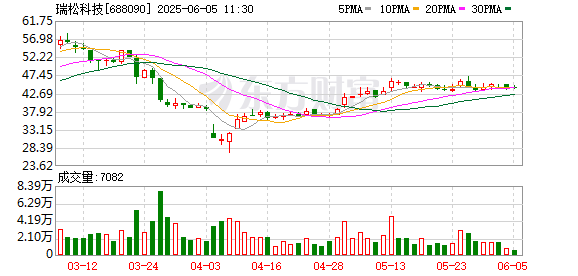
瑞松科技孙志强:开辟从“技术跟随”到“生态主导”的新路径
Nan Fang Du Shi Bao· 2025-06-05 03:59
Core Viewpoint - The establishment of the Guangdong Artificial Intelligence and Robotics Industry Alliance aims to inject new momentum into the development of a global innovation hub for AI and robotics in Guangdong, leveraging the region's strong industrial base and resources [2][6]. Group 1: Industry Context - Guangdong is recognized as the largest industrial robot production base in China, with a natural ecosystem conducive to the development of AI robots [3]. - The region's enterprises can achieve rapid industrialization by leveraging supply chain efficiency and deep integration of robotics in industrial scenarios [3][6]. - The alliance is positioned as a critical point for industry collaboration, aiming to transform Guangdong into a high-tech, high-growth, and large-scale industrial pillar [6][9]. Group 2: Company Innovations - Ruisheng Technology has made significant advancements in intelligent manufacturing, exemplified by its flexible production line capable of producing 200,000 electric vehicles annually, achieving a cycle time of 48 seconds per unit [4]. - The company's AI vision system demonstrates high precision and rapid response, with defect detection rates reaching 99.9% and false detection rates below 0.1% [4]. - Ruisheng's R&D team, comprising 21.94% of its workforce, has developed high-speed six-axis parallel robots and advanced production lines for aerospace and semiconductor applications, achieving international leading production yields [5]. Group 3: Future Directions - The alliance aims to enhance collaboration among members in core technology development, application scenario innovation, and standardization efforts [7]. - Ruisheng Technology plans to leverage AI and industrial big data to expand its solutions across various industrial applications, contributing to the establishment of a new industrial development system [6][9]. - The company emphasizes the need for national support to advance mid-to-high-end robotics, addressing the current dominance of international brands in the domestic market [6][8]. Group 4: Strategic Vision - The integration of manufacturing capabilities with AI algorithms is seen as a pathway for China to transition from a technology follower to an ecosystem leader in the global AI and robotics industry [9]. - The alliance's ultimate value lies in fostering innovation through collaboration, enabling each member to contribute to a cohesive smart manufacturing ecosystem [9].


埃斯顿拟发行H股并在香港联交所上市 加速推进全球化战略布局
Zheng Quan Shi Bao Wang· 2025-06-04 14:20
Group 1 - The company, Estun, plans to issue H-shares and list on the Hong Kong Stock Exchange to accelerate its global strategy and enhance its international brand image and core competitiveness [1] - Estun's main business segments include automation core components, motion control systems, industrial robots, and intelligent manufacturing systems, targeting various industries such as new energy, automotive, and logistics [1] - The company aims to achieve a 20% year-on-year growth in industrial robot shipments in 2024, outperforming the industry growth rate, and ranks second in China's industrial robot market by shipment volume [1] Group 2 - In 2023, Estun has accelerated its international development strategy, establishing 75 service outlets globally, and has obtained various international safety certifications [2] - The company's overseas sales revenue for 2024 is projected to be 1.37 billion yuan, a 14.1% decline year-on-year, accounting for 34.16% of total revenue [2] - Estun plans to expand into markets in Europe, America, the Middle East, and Southeast Asia, focusing on opportunities with leading domestic clients in the new energy and lithium battery sectors [2] Group 3 - In Q1 2025, Estun achieved a revenue of 1.244 billion yuan, a year-on-year increase of 24.03%, and a net profit of 12.63 million yuan, up 93.43% year-on-year [3] - The company's market share in industrial robots increased, achieving the top position in China's robot market shipments for the first time [3]
四大家族格局松动?中国机器人企业谁能成为下一个“顶流”
机器人圈· 2025-06-04 10:09
前不久,ABB 正式宣布计划将其机器人业务单元进行100%分拆,并目标于2026年第二季度作为一家独立公司上市交易。 市场随后传出ABB亦在考虑出售该业务的可能性,估值在35亿至50亿美元之间。这一传闻为ABB机器人业务的未来增添了 诸多不确定性。 ABB的这一战略调整并非偶然。从ABB集团整体的财务表现来看,2024年,在电气事业部增长的驱动下,ABB在销售收 入、毛利率、运营息税摊销前利润及利润率方面均创下历史新高。其中,运营息税摊销前利润为59.68亿美元,同比增加 10%,利润率为18.1%。 相比之下,机器人业务的运营息税摊销前利润率仅为12.1%。ABB机器人业务2024年实现销售收入23亿美元,占集团总收 入的7%,运营息税摊销前利润(EBITDA)为3.29亿美元,同比下滑39%。 机器人业务订单下滑的主要原因是汽车和消费电子领域的投资减少,而物流和一般工业领域的增长势头良好。 根据ABB最新公布的财报显示,2025年一季度运营息税摊销前利润增长13%,达到15.9亿美元。但机器人与离散自动化事 业部的运营息税摊销前利润同比下降35%,虽然订单额回升了14%,但收入下降14%。 这些数据也非常 ...

环动科技的“生长痛”:国产减速器龙头光环下的三大隐忧
Sou Hu Wang· 2025-06-03 09:57
作为国内RV减速器市场份额排名第二的龙头企业,浙江环动机器人关节科技股份有限公司(以下简 称"环动科技")的科创板IPO进程持续受到资本市场高度关注。近期,环动科技科创板进程取得新进展。 据上海证券交易所官网5月6日披露信息显示,该公司已正式提交第二轮审核问询回复文件,标志着其 IPO已经进入关键阶段。 RV减速器是工业机器人的关键功能部件,占机器人BOM成本最高可达三成以上,而工业机器人的下游 主要为汽车、光伏、锂电、3C电子等,其中工业机器人在汽车行业的价值量最大、技术难度最高,相 关市场主要被国际机器人四大家族占据(库卡、ABB、安川、发那科),而国产工业机器人主要服务技术 难度相对较低、增长相对较快的光伏、锂电等行业。 最新招股说明书(申报稿)显示,环动科技业绩增长快速,近三年营收复合增长率高达42%,展现出强劲 的发展势头。2024年,其市占率攀升至24.98%,仅次于日本巨头纳博特斯克。然而,伴随上市进程的 推进,环动科技在招股书及监管问询回复中暴露的潜在风险亦引发市场关注。 一、过度依赖大客户,环动的"寄生式增长"隐忧 环动科技最新披露的招股说明书(申报稿)显示,2021年至2024年期间,公司 ...
巨能股份(871478) - 投资者关系活动记录表
2025-05-30 12:00
Group 1: Investor Relations Activity Overview - The investor relations activity was an earnings briefing held on May 28, 2025, via an online platform [3]. - Key attendees included the General Manager, Financial Officer, and Board Secretary of the company [3]. Group 2: Inventory and Production Management - Inventory turnover efficiency is affected by market demand fluctuations, and the company has a robust production management system to adjust project schedules dynamically [4]. - The capacity expansion plan aligns with regional market demand, considering local policy support and supply chain conditions for new production sites [4]. Group 3: Technological Development and R&D Investment - The company focuses on three main R&D directions: flexible manufacturing, intelligent systems, and large/heavy automation products [6]. - As of the end of 2024, the company holds 217 authorized patents, including 96 invention patents, establishing a strong technical barrier [6]. Group 4: Market Position and Financial Performance - In 2024, the automotive sector accounted for nearly 80% of the company's revenue, with approximately 23% from new energy vehicle-related businesses [10]. - The company reported revenue growth in 2024 but faced net profit losses due to lower-than-expected gross margins and increased operational costs [14]. Group 5: Strategic Responses to Market Challenges - The company employs a dynamic balance strategy between profit reinvestment and shareholder returns, adjusting based on industry cycles [7]. - To address competitive pressures, the company emphasizes customized solutions and continuous technological innovation to enhance customer loyalty [14]. Group 6: Supply Chain and Production Stability - The localization strategy for the supply chain has not significantly impacted production stability, supported by a multi-layer verification system for core components [11]. - The company has successfully transformed collaborative projects with universities and research institutions into practical production capabilities [6]. Group 7: Industry Trends and Future Outlook - The company anticipates that the 2024 initiative by the Ministry of Industry and Information Technology will promote the digital transformation and intelligent upgrade of the manufacturing sector [10]. - The company is committed to enhancing its capabilities in flexible, large-scale, and intelligent manufacturing to meet evolving market demands [13].
格林大华期货股指月报:人民币升值利好A股-20250529
Ge Lin Qi Huo· 2025-05-29 13:34
1. Report Industry Investment Rating - No relevant content provided 2. Core Viewpoints of the Report - The suspension of reciprocal tariffs enhances the risk appetite of A-shares. The appreciation of the RMB attracts foreign capital inflows, and global financial asset reallocation is favorable for A-shares. The market is waiting for new positive forces to break the current large-scale horizontal consolidation situation [14][63]. - The decline in deposit rates, the large-scale issuance of free cash flow ETFs, and the appreciation of the RMB are beneficial for the value style. The suspension of reciprocal tariffs boosts risk appetite, which is conducive to the growth style. The market is expected to continue its structural trend [65]. 3. Summary According to Related Catalogs Market Viewpoints - On May 12, China and the US reached an agreement to significantly reduce reciprocal tariffs, which is beneficial for domestic exports. As of the end of April 2025, the total net asset value of public funds was 33.12 trillion yuan, an increase of 89.85 billion yuan compared to the end of March. Since the beginning of 2025, Asian currencies and the euro have mostly appreciated by 5% - 10% against the US dollar, while the RMB has risen by less than 2% from the beginning of the year to early May. The appreciation of the RMB has attracted over 150 billion yuan in cumulative net inflows of northbound funds, a significant increase compared to the same period last year. These foreign funds prefer blue-chip stocks with stable performance and high dividend yields, strengthening the value investment style [14]. - The huge losses in Asian life insurance have exposed the systematic risks of maturity mismatches in US dollar assets. A "big retreat" of up to $7.5 trillion from US assets has just begun. Goldman Sachs strategists believe that the Chinese stock market is expected to benefit from improved corporate profit prospects and increased foreign capital inflows. On May 28, the US Trade Court suspended reciprocal tariffs, which is conducive to enhancing the risk appetite of A-shares. The major indices of the two markets are still repairing their daily technical indicators, waiting for new positive forces [14]. Trading Strategies - **Futures Direction Trading**: The suspension of reciprocal tariffs by the US Trade Court, the continuous inflow of foreign capital attracted by the RMB appreciation, and the reallocation of global financial assets are all favorable for A-shares. The market is waiting for new positive forces to break the current large-scale horizontal consolidation [15]. - **Options Trading**: Since the market is still in a large-scale horizontal consolidation phase, it is recommended to postpone the purchase of deep out-of-the-money call options on stock indices [15]. Macroeconomic Data - In April, China's export volume was $315.6 billion, a year-on-year increase of 8.2%, far exceeding expectations. The monthly value of social consumer goods retail in April was 3.30 trillion yuan, a year-on-year increase of 5.1%. The monthly value of manufacturing fixed asset investment in April was 2.39 trillion yuan, a year-on-year increase of 8.2%. The monthly value of infrastructure investment in April was 2.08 trillion yuan, with a year-on-year growth rate of 9.6% [24][27][29]. - In April, the cumulative year-on-year growth rate of industrial added value was 6.4%, and the month-on-month growth rate was 0.22%. The solar power generation in April was 44.7 billion kWh, a year-on-year increase of 42.5%. The export volume of electric vehicles in April was 308,000 units, a record high, with a year-on-year increase of 37.5%. The output of industrial robots in April was 71,500 units, a historical high, with a year-on-year increase of 42% [33][35][37]. - In April, the output of integrated circuits was 41.6 billion pieces, still at a historical high. In April, the year-on-year growth rate of retail and food sales in the US was 5.2%, indicating high consumption levels. In March, the US commodity import volume was $346.7 billion, a record high, with a year-on-year increase of 32.2% [41][43][45]. - In March, the US consumer goods import volume reached $103.1 billion, a new historical high, with a year-on-year growth rate of 55.9%, reflecting strong consumer demand and large-scale inventory replenishment by retailers. In March, the US intermediate goods import volume was $75.5 billion, still at a high level, with a year-on-year growth rate of 39.4%, indicating that US manufacturers are hoarding intermediate goods due to tariff issues [47][49]. - In March, the US capital goods import volume was $93 billion, a new historical high, with a year-on-year growth rate of 22.5%, indicating an acceleration of the return of US manufacturing and the "re - industrialization" process in the US. In March, the US merchandise trade deficit was $163.5 billion, a new historical record, with a year-on-year growth rate of 74.8% [51][54]. - In March, the number of job openings in the US was 7.19 million, and the voluntary resignation rate rose to 2.1%, indicating a tightening labor market in the US. In March, the inventory growth rates of US wholesalers and manufacturers continued the trend of active inventory replenishment [56][59]. Strategy Recommendations - Wait for positive forces to break the current horizontal consolidation situation, as the suspension of reciprocal tariffs by the US Trade Court, the appreciation of the RMB attracting continuous foreign capital inflows, and the reallocation of global financial assets are all favorable for A-shares [63]. - Postpone the recommendation of far - month deep out-of-the-money call options on stock indices while the market is in the horizontal consolidation phase of a large platform, and wait for the market to break through upwards [67].
第二届山东省职业技能大赛开赛
Da Zhong Ri Bao· 2025-05-28 00:59
工业机器人系统操作、增材制造、3D数字游戏艺术……每个赛场上,都活跃着来自全省各地的高 精尖技术人才。"此次大赛在赛项设置上紧密对接先进制造业,充分衔接新基建新职业,所有项目均服 务于实体经济。在竞赛规则上,将行业与生产实践中的操作标准充分融入比赛规则、比赛技术,引领技 能人才培养方向,做到以赛促学、以赛促教、以赛促训。"省人力资源社会保障厅相关负责人说。 在信息网络布线赛场外,4名来自滨州市鲁北技师学院的学生全神贯注地观察着赛场上选手们的操 作手法。"我们学的是信息技术专业,通过观看不同选手的操作流程,能够给我的专业学习带来很多正 向参考。"鲁北技师学院学生赵晓鸣告诉记者,为有机会亲眼看见技能高手现场比拼,他们几个同学由 老师带队专程赴济南观赛。 第二届山东省职业技能大赛开赛 工厂搬进赛场,千余技术能手同台炫技 一人手持示教器,与机器臂人机交互,指挥其进行零件安装;一人坐在电脑前,通过数据实时传 输,让生产线其他自动化设备与机器臂实现协同操作……5月27日,在第二届山东省职业技能大赛工业 机器人系统操作比赛场地,以双人协作模式参赛的选手们聚精会神地进行着技能比拼。"这个作业模式 完全模拟在智能工厂生产时的场 ...
机器人:公司主业毛利率有进一步提升空间 将持续布局海外市场
Zheng Quan Shi Bao Wang· 2025-05-27 04:05
Core Viewpoint - The company is experiencing significant growth in its semiconductor equipment business, driven by increased demand for automation solutions and a focus on domestic production capabilities [1][2][3][4]. Group 1: Semiconductor Equipment Business - The company's semiconductor equipment products include atmospheric and vacuum robotic arms, EFEM, and vacuum transfer platforms, which are used in various semiconductor manufacturing processes [1]. - The company has successfully introduced vacuum direct-drive robotic arms and vacuum transfer platforms into terminal FABs, with products undergoing validation and entering mass production [1][2]. - In 2024, the semiconductor equipment business is projected to generate approximately 574 million yuan in revenue, representing a year-on-year growth of 99.41%, and accounting for 13.88% of the company's total revenue [3]. Group 2: Market Position and Strategy - The company is one of the earliest domestic enterprises to achieve industrialization of semiconductor robotic products, aiming to meet local demand for domestic production amid changing international policies [2]. - The company is focusing on expanding market share and deepening collaboration with downstream customers by introducing strategic investors into its semiconductor subsidiary [2]. - The gross margin for the semiconductor business is approximately 26.93%, reflecting an increase of 8.32% year-on-year, with expectations for continued growth in revenue and margins [3]. Group 3: Industry Outlook - The Chinese industrial robot market is the largest globally, with long-term growth expected despite uncertainties in the external environment [4]. - The domestic market has significant potential for growth, particularly in sectors like new energy vehicles, driven by automation upgrades [4]. - The company is implementing a "3+3+N" strategy to focus on core business, achieve standardized product mass production, and enhance technological leadership [4]. Group 4: Export and International Expansion - In 2024, the company's export revenue is expected to account for approximately 12.25% of total income, with limited impact from international policies [5]. - The company plans to enhance its overseas market presence, particularly in the new energy vehicle and lithium battery sectors, to increase international revenue [5].