房地产

Search documents
1 月第 4 周立体投资策略周报:ETF 净赎回规模收窄-20260202
Guoxin Securities· 2026-02-02 12:15
Group 1 - In the fourth week of January, the total net outflow of funds was 148.3 billion, compared to a net inflow of 173.9 billion in the previous week [1][8] - The short-term sentiment indicator is at a high level since 2005, with the recent weekly turnover rate (annualized) at 627%, placing it in the 90th percentile historically [1][12] - The long-term sentiment indicator is at a medium-low level since 2005, with the recent A-share risk premium at 2.48%, in the 46th percentile historically [2][12] Group 2 - The top three industries by trading volume in the past week were semiconductor (99%), non-ferrous metals (98%), and defense industry (97%), while the lowest were food processing (0%), transportation (0%), and real estate (1%) [2][14] - The highest financing transaction ratio industries were machinery equipment (86%), electric power equipment (82%), and social services (79%), while the lowest were banking (14%), non-bank financials (20%), and real estate (20%) [2][14]
豫园股份首亏背后:风险筑底蓄势,转型修复可期
Xin Hua Cai Jing· 2026-02-02 11:55
Core Viewpoint - Yuyuan Group is expected to report its first annual loss since its listing, with a projected net profit attributable to shareholders of approximately -48 billion yuan, primarily due to the deep adjustment in the real estate industry, asset impairment provisions, and structural changes in the consumer market [1][2] Group 1: Financial Performance and Industry Impact - The company's performance pressure is largely attributed to the ongoing downturn in the real estate sector, leading to a decline in actual sales prices and gross margins [2] - Yuyuan Group's loss is not an isolated case, as other listed real estate companies are also forecasting significant losses, indicating a broader industry adjustment [2] - National statistics show a year-on-year decline of 8.7% in the sales area of new commercial housing and a 12.6% drop in sales revenue for 2025 [2] Group 2: Asset Impairment and Future Outlook - The company has made substantial asset impairment provisions based on prudence, reflecting potential risks to asset values due to the current market environment [2] - Analysts believe that the real estate adjustment cycle is nearing its bottom, with expectations for more supportive policies in 2026 to stabilize the market [3] - The proactive impairment measures are expected to reduce the financial burden from real estate projects, laying a foundation for performance recovery in 2026 [3] Group 3: Jewelry Business Transformation - The jewelry fashion industry, which contributes over 60% of the company's revenue, is undergoing significant transformation, with a focus on creating unique value through product and brand innovation [4][5] - The gross margin of the jewelry segment improved to 7.73% in the first three quarters of 2025, up 0.66% year-on-year, driven by adjustments in product and pricing strategies [5] - The company has launched several new product lines aimed at younger consumers, indicating a shift towards value competition in the jewelry market [4][6] Group 4: Global Expansion and New Consumption Models - Yuyuan Group is actively pursuing global expansion and innovation in consumption models, with successful cultural IP events attracting significant foot traffic [7] - The company has opened overseas stores and hosted events in international markets, enhancing its brand presence and tapping into new consumer demographics [7][8] - Analysts predict that the company's overseas revenue will become a key growth driver, supported by its ongoing brand and product innovation efforts [8]

策略周报:1 月第 4 周立体投资策略周报:ETF 净赎回规模收窄-20260202
Guoxin Securities· 2026-02-02 11:54
Group 1 - In the fourth week of January, the total net outflow of funds was 148.3 billion, compared to a net inflow of 173.9 billion in the previous week [1][8] - The short-term sentiment indicator is at a high level since 2005, with the recent weekly turnover rate (annualized) at 627%, placing it in the 90th percentile historically [1][12] - The long-term sentiment indicator is at a medium-low level since 2005, with the recent A-share risk premium at 2.48%, in the 46th percentile historically [2][12] Group 2 - The top three industries by trading volume percentage in the past week were semiconductor (99%), non-ferrous metals (98%), and defense industry (97%), while the lowest were food processing (0%), transportation (0%), and real estate (1%) [2][14] - The highest financing transaction percentage industries were machinery equipment (86%), electric power equipment (82%), and social services (79%), while the lowest were banking (14%), non-bank financials (20%), and real estate (20%) [2][14]
政策半月观:力争“开门红”,还有哪些政策可期?
GOLDEN SUN SECURITIES· 2026-02-02 11:46
Policy Focus - The recent policies emphasize expanding domestic demand, with a focus on six key areas including support for service consumption and cultural tourism[1] - The Chinese government aims to enhance the elderly care service sector through various measures, including tax incentives and subsidies for service consumption[1][6] Economic Targets - The weighted average GDP target for 22 regions is set at 5%, down from 5.3% in the previous year, reflecting a 0.3 percentage point decrease[8] - Among the major provinces, the highest GDP target is set at over 7% for Tibet, while the lowest is 4.5% for Tianjin[8] Investment and Financing - A new 500 billion yuan special guarantee plan for private investment has been established to guide banks in providing an additional 500 billion yuan in loans to small and micro enterprises[7] - The China Securities Regulatory Commission has modified regulations to expand the types of strategic investors, requiring a minimum shareholding of 5%[5][24] Cultural and Tourism Initiatives - The Ministry of Culture and Tourism has launched a nationwide cultural and tourism consumption month, planning approximately 30,000 events and distributing over 360 million yuan in consumption vouchers[5][25] Industry Development - The government is focusing on the development of zero-carbon factories, aiming to cultivate a number of such facilities in key industries by 2027[9][35] - Policies are being implemented to optimize public housing fund management and stimulate housing demand through various local initiatives[9][34]
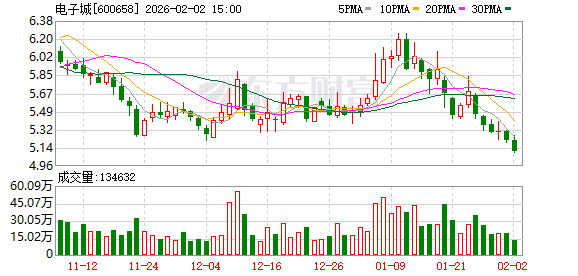
电子城:截至2026年1月30日股东户数39084户
Zheng Quan Ri Bao· 2026-02-02 11:41
Group 1 - The company, Electronic City, reported that as of January 30, 2026, the number of shareholders is 39,084 [2]


大行评级丨美银:维持恒隆地产“买入”评级 目标价10.4港元
Ge Long Hui· 2026-02-02 11:30
美银证券发布研报称,重申对恒隆地产(0101.HK)"买入"评级,目标价10.4港元。该行预期,2026财年核 心利润将轻微下跌1%,主要由于内地零售租金增长及发展物业利润改善(2025财年录亏损),被写字楼收 入下降及资本化利息显著减少所抵销。 ...

苏宁环球:公司剩余可开发建筑面积为155.66万平方米
Zheng Quan Ri Bao Wang· 2026-02-02 11:13
Core Viewpoint - Suning Universal (000718) reported that as of the 2025 semi-annual report, the company has a remaining developable building area of 1.5566 million square meters [1] Group 1 - The company has a total remaining developable area of 1.5566 million square meters [1]

告诉你一件怪事:一线城市二手房跌最狠,但房东们反而不慌了!
Sou Hu Cai Jing· 2026-02-02 11:10
Core Viewpoint - The real estate market in first-tier cities like Beijing, Shanghai, Guangzhou, and Shenzhen has entered a downward adjustment trend since 2023, with second-hand housing prices expected to continue declining after 2025, potentially at a faster rate than in lower-tier cities [1][13]. Price Trends - As of November 2025, the average price of second-hand residential properties in 100 cities decreased by 0.94% month-on-month and 7.95% year-on-year. Specifically, first-tier cities experienced a month-on-month decline of 1.15% and a year-on-year decline of 5.62%, while second-tier cities saw a decrease of 0.98% and third- and fourth-tier cities a decline of 0.81% [1]. Owner Sentiment - Despite significant price drops, property owners in first-tier cities are not in a hurry to sell. The increase in listings does not correlate with a rush to sell at lower prices, as many owners are withdrawing their properties from the market to wait for better conditions [3][4]. Perception of Price Bottoming - Many property owners believe that prices have reached a bottom, with some areas in Shanghai seeing price reductions of over 30% to 50%. This perception leads them to avoid panic selling [6][11]. Influence of Expert Opinions - Owners are influenced by expert opinions suggesting that core areas in first-tier cities are scarce resources, leading to a belief that prices will eventually rebound despite current declines [7][10]. Expectations of Policy Intervention - There is a prevailing belief among owners that government policies will intervene to stabilize or boost prices, particularly if declines continue. They anticipate that any future policy changes could lead to a rapid price rebound [8][10]. Financial Resilience of Owners - Some property owners are financially secure and view price fluctuations as normal. They prefer to hold onto their properties for potential future gains while collecting rental income in the meantime [11][13].
商品情绪弱势,钢矿承压下行:钢材&铁矿石日报-20260202
Bao Cheng Qi Huo· 2026-02-02 10:05
Report Industry Investment Rating No information provided in the report. Core Views - The main contract price of rebar weakened and declined by 1.56% daily, with volume contracting and positions increasing. Currently, rebar supply is running stably at a high level, while demand is weak. The fundamental situation continues to be weak. Coupled with weak commodity sentiment, steel prices are under pressure and running weakly in the off - season. Monitor inventory changes [5]. - The main contract price of hot - rolled coil weakened, with a daily decline of 1.24%, volume increasing and positions decreasing. Currently, both supply and demand of hot - rolled coils are at a high level, the fundamentals are running weakly. Coupled with poor commodity sentiment, hot - rolled coils are under pressure and running weakly. Be wary of the intensification of industrial contradictions caused by weakening demand, and monitor demand performance [5]. - The main contract price of iron ore fluctuated downward, with a daily decline of 1.26%, volume increasing and positions decreasing. Currently, the supply pressure of iron ore has not receded under the high - inventory situation, while the demand for iron ore is running weakly. The fundamentals of iron ore have not improved, and the ore price continues to be under pressure. The relative positive factor is the pre - holiday restocking. It is expected that the ore price will continue to fluctuate. Monitor the restocking situation of steel mills [5]. Industry Dynamics - In 2025, China's shipbuilding industry continued to lead the world in three major indicators. The shipbuilding completion volume was 53.69 million deadweight tons, a year - on - year increase of 11.4%, accounting for 56.1% of the global market; the new order volume was 107.82 million deadweight tons, accounting for 69% of the global market; as of the end of December, the holding order volume was 274.42 million deadweight tons, a year - on - year increase of 31.5%, accounting for 66.8% of the global market, reaching a new historical high [7]. - In January 2026, the total sales of the TOP100 real - estate enterprises were 19.052 billion yuan, a year - on - year decrease of 18.9%. The decline was basically the same as that of last year, indicating that the sales of real - estate enterprises continued the trend at the end of last year and remained stable [8]. - As of February 1, 12 steel enterprises, including Chengyu Vanadium and Titanium Technology Co., Ltd., carried out the publicity of ultra - low emission transformation and evaluation and monitoring progress. So far, 276 steel enterprises have been publicized on the website of the China Iron and Steel Association [9]. Spot Market - For rebar, the Shanghai price was 3,200 yuan, down 20 yuan; the Tianjin price was 3,170 yuan, unchanged; the national average price was 3,312 yuan, down 4 yuan. For hot - rolled coil, the Shanghai price was 3,160 yuan, down 10 yuan; the Tianjin price was 3,260 yuan, down 10 yuan; the national average price was 3,293 yuan, down 6 yuan. The price of Tangshan billet was 2,940 yuan, unchanged; the price of Zhangjiagang heavy scrap was 2,130 yuan, unchanged. The volume - screw spread was 60 yuan, up 10 yuan; the screw - scrap spread was 1,070 yuan, down 20 yuan [10]. - The price of PB powder at Shandong ports was 780 yuan, down 9 yuan; the price of Tangshan iron concentrate was 777 yuan, down 5 yuan; the Australian sea freight was 9.69 yuan, up 0.81 yuan; the Brazilian sea freight was 25.01 yuan, up 1.04 yuan; the SGX swap (current month) was 105.62, down 0.08; the iron ore price index (61% FE, CFR) was 103.20, down 0.95 [10]. Futures Market - The closing price of the rebar active contract was 3,098 yuan, a decline of 1.56%. The highest price was 3,139 yuan, the lowest price was 3,093 yuan, the trading volume was 1,134,404 lots, a decrease of 83,917 lots, and the open interest was 1,784,097 lots, an increase of 49,987 lots [14]. - The closing price of the hot - rolled coil active contract was 3,261 yuan, a decline of 1.24%. The highest price was 3,298 yuan, the lowest price was 3,260 yuan, the trading volume was 529,496 lots, an increase of 5,596 lots, and the open interest was 1,498,793 lots, a decrease of 30,859 lots [14]. - The closing price of the iron ore active contract was 783.0 yuan, a decline of 1.26%. The highest price was 793.5 yuan, the lowest price was 781.0 yuan, the trading volume was 304,564 lots, an increase of 26,268 lots, and the open interest was 520,684 lots, a decrease of 20,544 lots [14]. 后市研判 - Rebar: The supply - demand pattern continues to weaken, and the inventory increase has expanded. The production of construction steel mills has stabilized. The weekly output of rebar increased slightly by 0.28 tons. Supply is running stably at a high level, but considering that short - process steel mills will gradually stop production as the Spring Festival approaches, supply is expected to decrease. Monitor subsequent changes. At the same time, rebar demand continues to weaken, the weekly apparent demand and high - frequency transactions have decreased, and they are still at the low level of the same lunar period in recent years. The off - season weak demand pattern remains unchanged, which drags down steel prices. In summary, rebar supply is running stably at a high level, while demand is weak, the fundamental situation continues to be weak. Coupled with weak commodity sentiment, steel prices are under pressure and running weakly in the off - season. Monitor inventory changes [40]. - Hot - rolled coil: There are changes in both supply and demand, and the inventory reduction has narrowed. The production of plate steel mills has stabilized. The weekly output of hot - rolled coils increased by 3.80 tons, rebounded again and is at a relatively high level, and the inventory level is high, so the supply pressure has not receded. However, the demand for hot - rolled coils shows good resilience. The weekly apparent demand increased slightly, mainly due to the high output of downstream cold - rolled products, but we still need to be wary of the accumulation of contradictions. The corresponding external demand and exports are average, and the demand resilience needs to be tracked. Currently, both supply and demand of hot - rolled coils are at a high level, the fundamentals are running weakly. Coupled with poor commodity sentiment, hot - rolled coils are under pressure and running weakly. Be wary of the intensification of industrial contradictions caused by weakening demand, and monitor demand performance [40]. - Iron ore: The supply - demand pattern has not changed much, and the inventory continues to rise. The production of steel mills is weakly stable, and the terminal consumption of iron ore is running smoothly. The average daily hot - metal output and imported ore consumption of sample steel mills decreased slightly last week, and the contradictions in the off - season steel market are accumulating. Steel mills mainly conduct normal restocking before the festival, and the positive factors are limited. It is expected that the demand for iron ore will continue to run weakly. At the same time, the arrival of iron ore at domestic ports has rebounded from a low level, and the shipments of overseas miners have continued to increase. The overseas iron ore supply has stabilized, while the domestic ore supply is stable. Coupled with the high inventory, the supply pressure of iron ore has not receded. In short, the supply pressure of iron ore has not receded under the high - inventory situation, while the demand for iron ore is running weakly. The fundamentals of iron ore have not improved, and the ore price continues to be under pressure. The relative positive factor is the pre - holiday restocking. It is expected that the ore price will continue to fluctuate. Monitor the restocking situation of steel mills [41].
深度智联“地产AI先锋”招募计划,寻找AI时代行业“新物种”
克而瑞地产研究· 2026-02-02 09:54
Core Viewpoint - The "Real Estate AI Pioneer" recruitment plan initiated by Deep Intelligence aims to create a new ecosystem in the real estate industry by integrating AI into various roles, emphasizing collaboration and co-creation rather than traditional hiring methods [2][4][11]. Group 1: Recruitment Plan Overview - The recruitment plan is not a conventional hiring process but an invitation for industry professionals to co-create new AI roles, focusing on the evolution of human-machine collaboration in the real estate sector [2][4]. - Deep Intelligence seeks to build an elite organizational system comprising formal employees, channel partners, and ecological partners, allowing selected individuals to directly participate in product iteration and market expansion [4][11]. Group 2: New Roles Introduced - **GEO General Real Estate Cognitive Optimizer**: This role focuses on shaping AI's understanding of real estate brands and products, moving beyond traditional marketing to create a structured semantic asset matrix for better consumer engagement [5][6]. - **Digital Employee Recommendation Officer**: This position aims to enhance organizational efficiency by integrating digital employees into real estate teams, addressing high labor costs and low efficiency through innovative management processes [7][8]. - **OPC Human-Machine Collaboration Researcher**: This role targets real estate investment research experts who will leverage AI to enhance productivity, focusing on strategic decision-making and client engagement while automating repetitive tasks [9][10]. Group 3: Industry Context and Future Outlook - The real estate industry is undergoing significant transformation, with AI rapidly permeating every aspect of the sector, necessitating a shift in skills and capabilities among professionals [2][11]. - The recruitment plan is positioned as a response to the dual challenges of industry adjustment and technological innovation, aiming to foster a new breed of professionals who can thrive in an AI-driven environment [2][11][13].