
智能汽车

Search documents
华为坚定不走VLA路线,WA才是自动驾驶终极方案?
自动驾驶之心· 2025-08-29 16:03
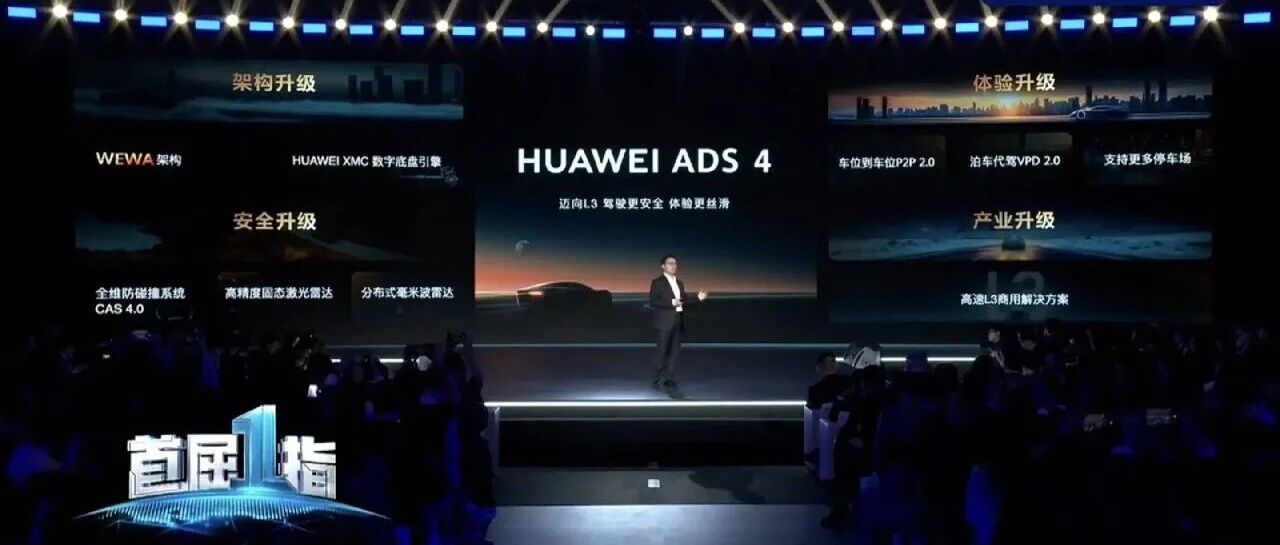
Core Viewpoint - Huawei's automotive business has achieved significant milestones, including 1 million vehicles equipped with its driving technology and over 100 million units of laser radar shipped, showcasing its long-term strategic vision in the automotive sector [3][4]. Group 1: Achievements and Strategy - As of July, 1 million vehicles have been equipped with Huawei's QianKun intelligent driving system, and the cumulative mileage for assisted driving has reached 4 billion kilometers [3]. - Huawei's automotive business has been investing since 2014, focusing on R&D rather than immediate commercialization, which has led to current profitability [4][5]. - The company has launched 28 models in collaboration with various brands, indicating a strong market presence [3]. Group 2: Technology Approach - Huawei prefers the World Action (WA) model over the Video Language Action (VLA) model for achieving true autonomous driving, believing WA is a more direct and effective approach [5][13]. - The WA model processes information directly from various inputs like vision, sound, and touch, bypassing the need to convert data into language [5][14]. - Huawei has developed the WEWA model based on the WA architecture, which will be deployed in ADS 4.0 [6]. Group 3: Business Model and Pricing - Huawei's CEO emphasizes that there is no such thing as a free service in the automotive industry; costs are often hidden or transferred [7][17]. - The company believes charging for assisted driving systems is justified due to ongoing costs for updates and maintenance throughout the vehicle's lifecycle [8][18]. - Huawei's approach to lifecycle management ensures that users receive continuous upgrades, enhancing their experience over time [18]. Group 4: Future Plans - Huawei aims to achieve L3 capabilities for highway driving and L4 pilot capabilities in urban areas by 2026, with plans for large-scale commercial use by 2028 [11]. - The company is also working on transforming the intelligent cockpit into a "digital nanny," integrating AI to enhance user experience [11]. Group 5: Safety and Technology Enhancements - Huawei's increase in sensor configurations, such as additional laser radars, is driven by a commitment to safety rather than merely increasing product pricing [19][20]. - The company focuses on enhancing the precision of its systems to prevent accidents and improve user safety in various driving scenarios [20][22].

解读华为2025半年报:研发创下新高,利润为什么减少了
第一财经· 2025-08-29 15:58
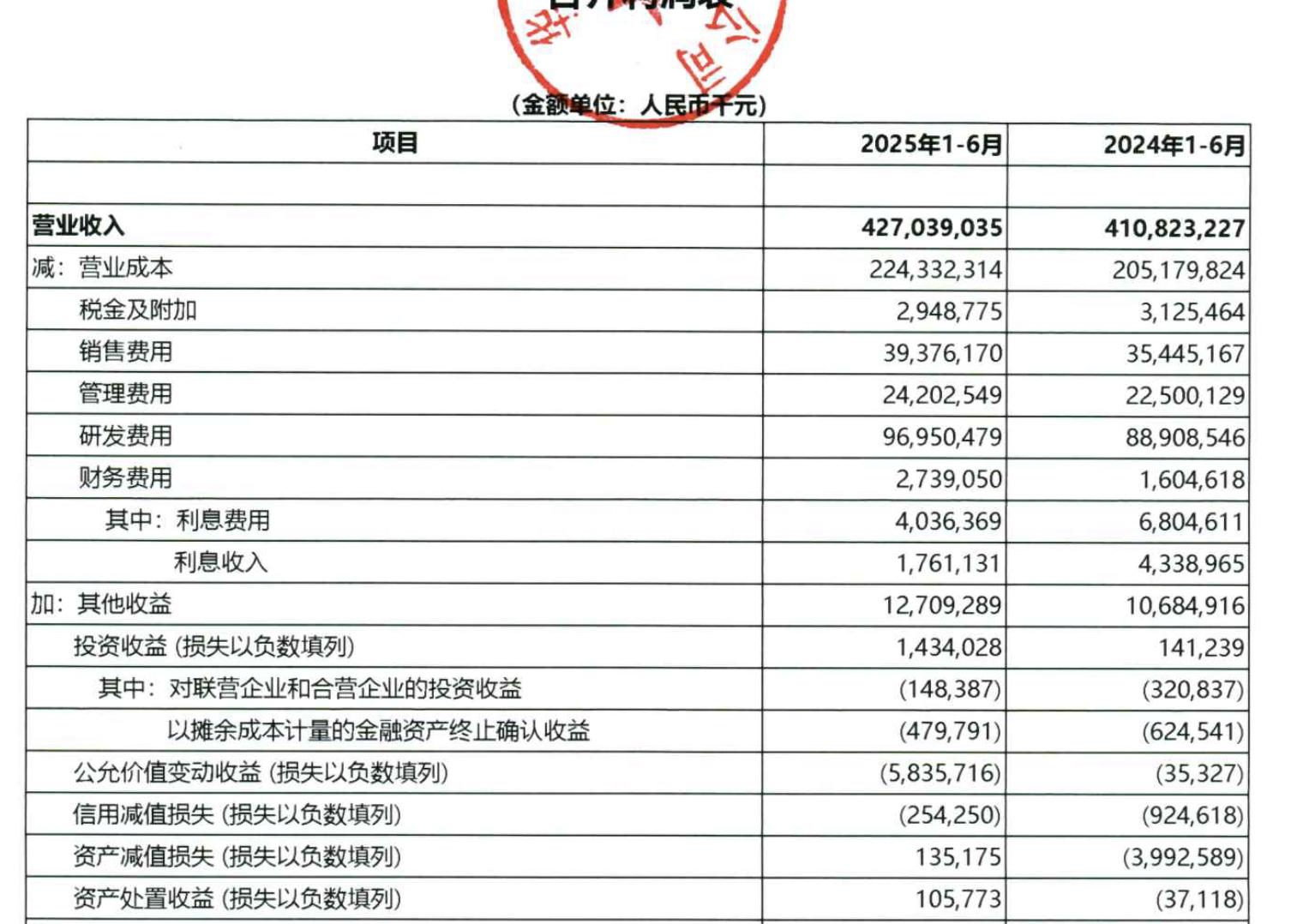
Core Viewpoint - Huawei's half-year report indicates a revenue increase of 3.95% year-on-year, reaching 427.04 billion yuan, while net profit decreased by 32% to 37.20 billion yuan, primarily due to rising costs and fluctuations in financial asset valuations [3][5][8]. Financial Performance - Huawei's revenue for the first half of 2025 was 427.04 billion yuan, compared to 410.82 billion yuan in the same period of 2024, marking a growth of 3.95% [7]. - The company's net profit for the first half of 2025 was 37.20 billion yuan, down from 55.10 billion yuan in 2024, reflecting a decline of 32% [5][7]. - Research and development (R&D) expenses reached 96.95 billion yuan, up 9.04% year-on-year, accounting for 22.7% of total revenue [3][7]. Cost Analysis - Operating costs for the first half of 2025 were 224.33 billion yuan, an increase of 9.33% from 205.18 billion yuan in 2024, indicating that cost growth outpaced revenue growth [8]. - Non-operating factors, such as a fair value change loss of 5.84 billion yuan, significantly impacted net profit [8]. Business Segments - Huawei's main business segments include ICT infrastructure, terminal business, cloud computing, digital energy, and intelligent automotive solutions, with the terminal and connectivity sectors being key revenue drivers [8][9]. - The automotive business saw significant growth, with a reported revenue increase of 4.7 times in 2024 and over 900,000 units delivered by August 2025 [9][10]. Market Position - Huawei regained the top position in China's smartphone market with a 18.1% market share in Q2 2025, selling 12.5 million units [10]. - The HarmonyOS ecosystem has over 12 million devices, with a goal to match the scale of Android and iOS ecosystems by the end of the year [10]. Strategic Focus - Huawei is focusing on artificial intelligence and computing technologies, with a recent organizational restructuring in its cloud division to enhance resource allocation towards AI and computing [11][12]. - The company aims to build a robust foundation in core technologies, emphasizing long-term growth over short-term gains [12].
解读华为2025半年报:研发创下新高,利润为什么减少了
Di Yi Cai Jing· 2025-08-29 15:14
Core Insights - Huawei aims to increase strategic investments in the next three years, countering economic trends and focusing on core technologies [1][9] - The company reported a revenue of 427.04 billion yuan for the first half of the year, a 3.95% increase year-on-year, while R&D expenses reached 96.95 billion yuan, up 9.04% [1][4] - Net profit decreased by 32% to 37.195 billion yuan, attributed to rising costs outpacing revenue growth and fluctuations in financial asset valuations [1][2] Financial Performance - Revenue for the first half of 2025 was 427.04 billion yuan, compared to 417.5 billion yuan in 2024 and 310.9 billion yuan in 2023, indicating a steady recovery in sales [2] - Net profit for the first half of 2025 was 37.195 billion yuan, down from 55.1 billion yuan in 2024, marking a 32% decline [2][5] - The increase in operating costs was 9.33%, reaching 224.33 billion yuan, which outpaced revenue growth [5] R&D and Strategic Focus - Huawei's R&D investment is projected to reach a historical high, with a focus on core technologies such as 5G-A, smart automotive components, and the HarmonyOS ecosystem [1][3] - The company is heavily investing in the Harmony ecosystem, with over 1,000 developers and significant annual R&D expenditures [3][7] - Huawei's cloud services are undergoing restructuring to focus on AI and computing capabilities, with plans to enhance the Ascend cloud and Pangu models [8][9] Business Segments - Huawei's main business segments include ICT infrastructure, terminal business, cloud computing, digital energy, and smart automotive solutions [6] - The automotive business saw significant growth, with over 900,000 vehicles delivered under the HarmonyOS brand by August 2025 [6] - Huawei regained the top position in the Chinese smartphone market with a 18.1% share, shipping 12.5 million units in Q2 2025 [7] Market Position and Challenges - Despite recent successes, Huawei faces challenges in the competitive Chinese electric vehicle market, where pricing pressures are increasing [6] - The company aims to expand the Harmony ecosystem internationally, as its global market share remains low at approximately 4% [7] - Huawei Cloud holds an 18% market share in China's cloud services, ranking second, indicating ongoing competitive pressures [8]
华为最新发布!上半年营收4270亿元,研发投入969.5亿元
券商中国· 2025-08-29 10:32
Core Viewpoint - Huawei's revenue increased slightly in the first half of 2025, but net profit declined significantly due to high R&D investments and market challenges [2][4][10]. Financial Performance - Huawei reported a revenue of 427.04 billion yuan in the first half of 2025, a 3.94% increase from 410.82 billion yuan in the same period of 2024 [4][5]. - The net profit for the first half of 2025 was 37.20 billion yuan, down 32.21% from 54.86 billion yuan in the previous year [4][5]. R&D Investment - R&D expenditure reached 96.95 billion yuan, marking a 9.04% increase year-on-year, accounting for 22.7% of total revenue [2][9]. - Huawei's long-term strategy emphasizes R&D, with cumulative investments over the past decade totaling 1.25 trillion yuan [9][10]. Market Position - In the Chinese smartphone market, Huawei achieved a market share of 18.1% in Q2 2025, leading with 12.5 million units shipped [6]. - Overall, Huawei's smartphone shipments in the first half of 2025 totaled 25.4 million units, securing the top position in the market [6]. Future Outlook - The company is set to launch new products, including the Huawei Mate XTs, and is expanding its presence in the smart automotive sector [7]. - High R&D investments are expected to strengthen Huawei's competitiveness in AI, cloud computing, and smart driving in the long term [10].

车展速递丨“华为系”新车扎堆发布,车BU今年进行高速L3试点商用
Mei Ri Jing Ji Xin Wen· 2025-08-29 06:22
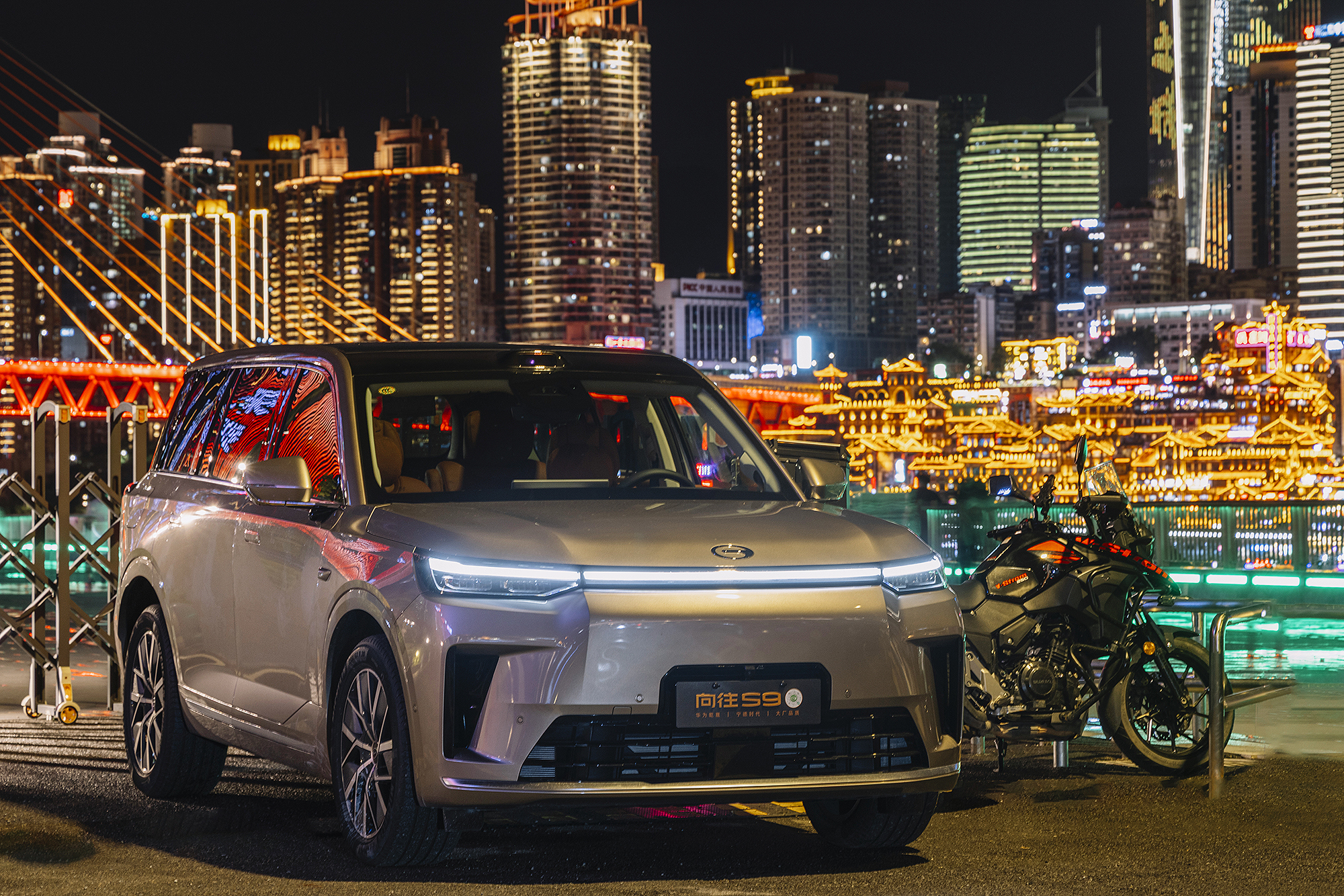
Group 1 - The 28th Chengdu International Auto Show opened on August 29, with significant attention on "Huawei-related" products [1] - Huawei's HarmonyOS Intelligent Driving unveiled multiple new models, including the new Zhijie R7 and S7, and the AITO M8 electric version, with more models expected in September [1] - GAC Trumpchi's new model, the Xiangwang S9, has started pre-sales with a price range of 259,900 to 289,900 yuan, set to launch in September [1] Group 2 - The Xiangwang S9 features Huawei's Kunlun ADS 4, which reportedly reduces end-to-end latency by 50%, improves traffic efficiency by 20%, and decreases heavy braking rates by 30% [2] - The new Lantu Zhiyin was launched on August 28, offering three configurations with prices ranging from 202,900 to 242,900 yuan, all equipped with Huawei's Kunlun ADS 4 and HarmonyOS cockpit [2] Group 3 - Currently, there are 28 models in the market equipped with Huawei's technology, covering various vehicle types and price ranges from 150,000 to over 1,000,000 yuan [3] - Huawei's cooperation with car manufacturers includes various models such as components, single intelligence, dual intelligence, and full-stack solutions, enhancing collaboration depth [3] - Over 1 million vehicles have adopted Huawei's Kunlun Intelligent Driving system, with over 10 million uses of the parking assistance feature and a total assisted driving mileage of 4 billion kilometers [3] Group 4 - Huawei's Kunlun Intelligent Driving aims to achieve platformization and ecological integration of autonomous driving technology, which encompasses data, algorithms, computing power, software, hardware, and vehicle chassis [4] - The company does not have a clear commercialization goal for the Kunlun Intelligent Driving technology, focusing instead on long-term profitability [4]
2025成都国际车展引爆行情——智能车ETF泰康(159720)上涨4.69%,一键把握智驾落地新机遇
Xin Lang Cai Jing· 2025-08-29 05:20
Core Viewpoint - The smart vehicle ETF from Taikang (159720) has shown significant growth, driven by the strong performance of the underlying index and key stocks in the smart electric vehicle sector, particularly highlighted during the Chengdu International Auto Show [1][4]. Group 1: Market Performance - As of August 29, 2025, Taikang's smart vehicle ETF rose by 4.69%, with a trading volume of 2.4294 million yuan [1]. - The underlying index, the CSI Smart Electric Vehicle Index (H11052), increased by 3.86%, with notable gains from component stocks such as QianDao Intelligent (300450) up 20.01%, BetterRay (835185) up 17.54%, and CATL (300750) up 11.21% [1]. Group 2: Industry Developments - The Chengdu International Auto Show has transitioned from a traditional car showcase to a platform for declaring the mass production of smart technologies, with major automakers unveiling next-generation flagship models that feature standard smart technologies [1]. - The event showcased advancements in smart driving technologies, particularly the "no-map" solutions, which have gained credibility through real-world demonstrations, reducing market uncertainties and increasing valuation premiums for related companies [3]. Group 3: Key Innovations - Huawei's luxury flagship sedan, the HUAWEI ADS 3.0, demonstrated advanced capabilities in complex urban environments, showcasing the maturity and versatility of its technology [2]. - Li Auto's new M9 SUV emphasizes its dual-energy strategy and advanced software capabilities, while Xpeng Motors introduced the MONA series, making high-end smart driving technology accessible in the mainstream price range [2]. Group 4: Investment Opportunities - The Taikang smart vehicle ETF covers critical segments of the smart driving industry, with the top ten weighted stocks accounting for 55.33% of the index, including leaders in battery technology and perception hardware [4][5]. - The ETF is positioned to benefit from the expanding Robotaxi operations and decreasing costs of smart driving hardware, creating a positive cycle of technological breakthroughs and commercial scaling [4][5].

华为云陈林:锚定AI与算力核心 推动智能汽车产业迈入新征程
Yang Guang Wang· 2025-08-29 02:59
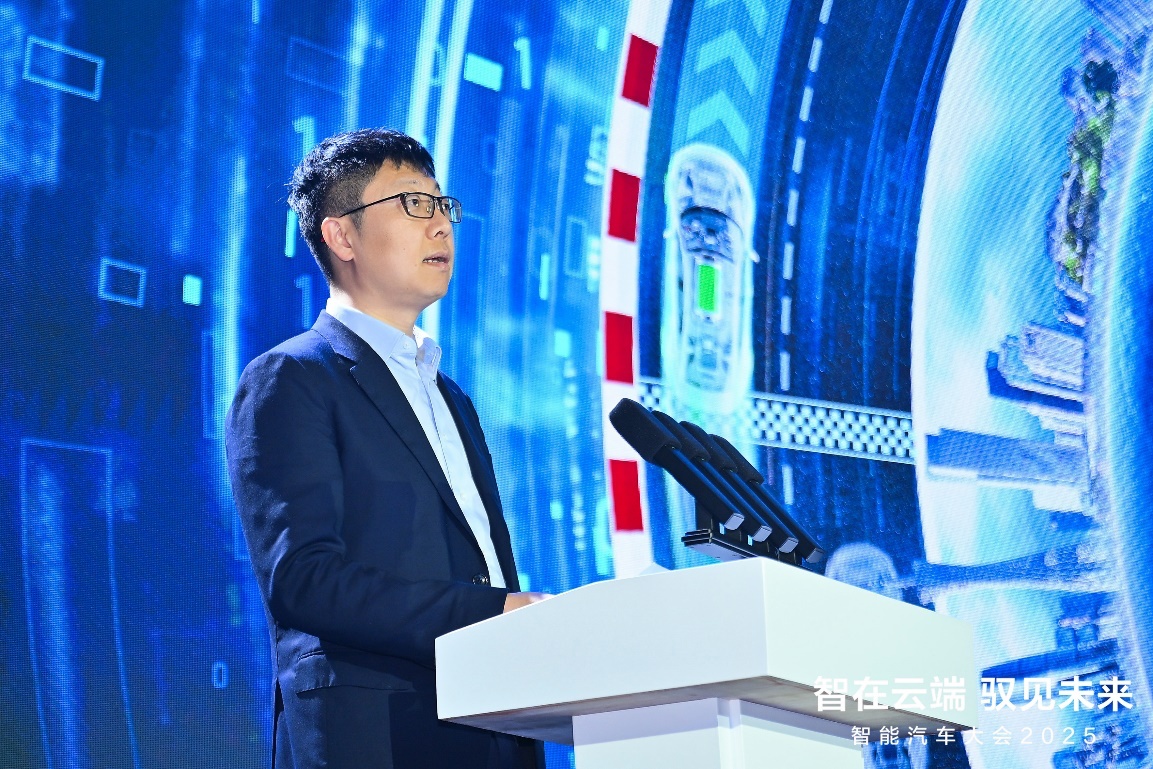
Core Viewpoint - The 11th China International Big Data Industry Expo featured the Smart Car Conference 2025, focusing on new business opportunities, technological breakthroughs, and ecosystem development in the smart automotive industry [1] Group 1: Huawei's Strategic Focus - Huawei Cloud emphasizes a strategy of "focusing on AI and saturating investment" to enhance cloud services and AI capabilities [2] - The company aims to create a "computing power network" to eliminate regional barriers and improve resource sharing [2] - Huawei's Ascend AI chip architecture is increasingly adopted by enterprises for AI applications, with a commitment to building a fully domestic computing power ecosystem [2] Group 2: Infrastructure Development - Huawei Cloud has established the world's largest data center in Guizhou, serving as a core digital infrastructure for the region and supporting the national "East Data West Computing" strategy [3] - The CloudMatrix 384 super node has been deployed over 40 times in Guizhou, providing essential computing power for the automotive industry [3] Group 3: Automotive Cloud Ecosystem - Huawei Cloud has launched automotive zones in Gui'an and Ulanqab, with plans for a third zone in Wuhu, creating a nationwide infrastructure for the smart automotive industry [4] - The collaboration among these three automotive zones aims to support innovation and enhance user experience for consumers [4] Group 4: Transformations in the Automotive Industry - The automotive industry is undergoing three major transformations: from function-driven to experience-driven, from experience-based to data-driven decision-making, and from regional focus to global collaboration [7] - Huawei Cloud aims to leverage its extensive experience in various technology fields to support automotive companies in their digital transformation [7]
吉利携阶跃星辰亮相WAIC2025:加速汽车向具身智能进化
Jin Tou Wang· 2025-08-29 02:17
Core Insights - The World Artificial Intelligence Conference (WAIC 2025) showcased Geely's advancements in the "full-domain AI" sector, highlighting a shift in the automotive industry from mechanical hardware to intelligent terminals [1] - Geely's Galaxy M9 SUV introduced a groundbreaking "emotional interaction" AI system, marking a significant evolution in in-car communication from mere command-response to human-like emotional engagement [2] - Geely's strategic partnership with Leap Motor and Qianli Technology has established a comprehensive "AI + vehicle" innovation model, enhancing the industry's collaborative capabilities [3][5] Technology and Product Development - Geely's "Intelligent Geely 2025" strategy emphasizes a robust technological foundation centered on high computing power, big data, and large models, positioning it as a leader in the automotive sector [3][4] - The "Xingrui Smart Computing Center 2.0" boasts a comprehensive computing power of 23.5 EFLOPS, making it the top performer among Chinese automotive companies [4] - The integration of Geely's AI models with Leap Motor's multimodal models has created a dual advantage in general capabilities and automotive-specific applications [4] Market Position and Competitive Advantage - Geely's full-stack approach to AI technology has created a unique ecological barrier in the competitive landscape, allowing for rapid iteration from demand to development to implementation [5] - The company's focus on "embodied intelligence" positions it as a frontrunner in transforming traditional automotive manufacturing into intelligent mobility services [6][7] - Geely aims to evolve its vehicles into "robotic nodes" that can autonomously handle complex scenarios, enhancing user experience and operational efficiency [7]

千里科技董事长印奇接手后业绩:上半年扣非由盈利转亏损
Sou Hu Cai Jing· 2025-08-29 01:55
Core Viewpoint - Chongqing Qianli Technology Co., Ltd. has released its first semi-annual report after rebranding from Lifan Technology, showing significant revenue growth but a concerning decline in net profit due to increased R&D expenses and other factors [1][3]. Financial Performance - In the first half of 2025, Qianli Technology reported a revenue of 4.184 billion yuan, representing a year-on-year increase of 40.04% [3]. - The net profit attributable to shareholders was 31.17 million yuan, up 19.00% year-on-year [3]. - The total sales volume reached 38,728 vehicles, a substantial increase of 61.62% compared to the same period last year [4]. Profitability Concerns - The company's net profit after deducting non-recurring items was a loss of 130 million yuan, a dramatic decline of 903.91% year-on-year [4]. - The decline in profitability is attributed to increased R&D investments in smart automotive cockpit operating systems, higher asset impairment losses, and increased deferred tax expenses [4]. - R&D expenses for the first half of 2025 amounted to 288 million yuan, reflecting a year-on-year increase of 59.67% [4]. Company Strategy and Leadership - Since taking office in November 2024, Chairman Yin Qi has focused the company's development on the AI sector and initiated the rebranding from Lifan Technology to Qianli Technology [4]. - The company is currently in a transitional phase, facing significant cash burn as it invests in new technologies [4]. Financial Position - As of June 30, 2025, Qianli Technology's total assets were approximately 22.396 billion yuan, with total liabilities of about 10.834 billion yuan, resulting in a debt-to-asset ratio of approximately 48.37% [4]. - The debt-to-asset ratio has increased by 7.45 percentage points compared to the same period last year, indicating a rise in financial leverage [4].

蓝思科技(300433):2Q25营收利润同比增长 毛利率环比提升
Xin Lang Cai Jing· 2025-08-29 00:46
Core Viewpoint - The company reported significant revenue and profit growth in the first half of 2025, driven by advancements in various business segments and a strong market position in emerging technologies [1][2][3]. Financial Performance - In 1H25, the company achieved revenue of 32.96 billion yuan, representing a year-over-year increase of 14.18% - The net profit attributable to shareholders was 1.143 billion yuan, up 32.68% year-over-year - In Q2 2025, revenue reached 15.897 billion yuan, reflecting an 18.91% year-over-year growth but a 6.83% quarter-over-quarter decline - The net profit for Q2 2025 was 714 million yuan, showing a year-over-year increase of 29.30% and a quarter-over-quarter increase of 66.43% - The gross margin improved to 15.75% on a quarter-over-quarter basis [1]. Business Segments - In 1H25, revenue from various business segments was as follows: - Smartphones: 27.2 billion yuan (YoY +13%) - Computers: 3.2 billion yuan (YoY +16%) - Smart automotive and cockpit: 1.6 billion yuan (YoY +15%) - Other smart terminals: 360 million yuan (YoY +128%) [1]. Market Position and Product Development - The company is a leading global supplier of ultra-thin flexible glass, with successful product development and capacity planning for new high-end smartphone models - The personal computer business benefited from a market demand recovery, with simultaneous increases in production, sales, and profitability - The smart automotive and cockpit business expanded its product matrix, achieving breakthroughs in core product lines and entering mass production phases for new models [2]. Global Expansion and Capital Utilization - The company went public in Hong Kong in 2025, raising funds to enhance technology reserves and production capacity for smart terminal components, automotive structural parts, and robotics - 30% of the raised funds will be allocated to smart terminal folding screen components, 8% to automotive parts, 5% to robotics, and 28% to expanding overseas operations - The company has achieved vertical integration across the entire supply chain, positioning itself as a one-stop precision manufacturing solution provider for smart terminals [3]. Investment Outlook - The company is expected to benefit from its vertical integration and global expansion strategy, with projected net profits for 2025-2027 of 5.146 billion, 6.434 billion, and 7.346 billion yuan, reflecting year-over-year growth rates of 42.0%, 25.0%, and 14.2% respectively - Corresponding price-to-earnings ratios are projected to be 29.9, 23.9, and 20.9 times [3].
