潮玩

Search documents
首发毛绒新品、打造沉浸式展区 tnt潮玩亮相北京潮玩展
Bei Jing Shang Bao· 2025-12-16 09:25
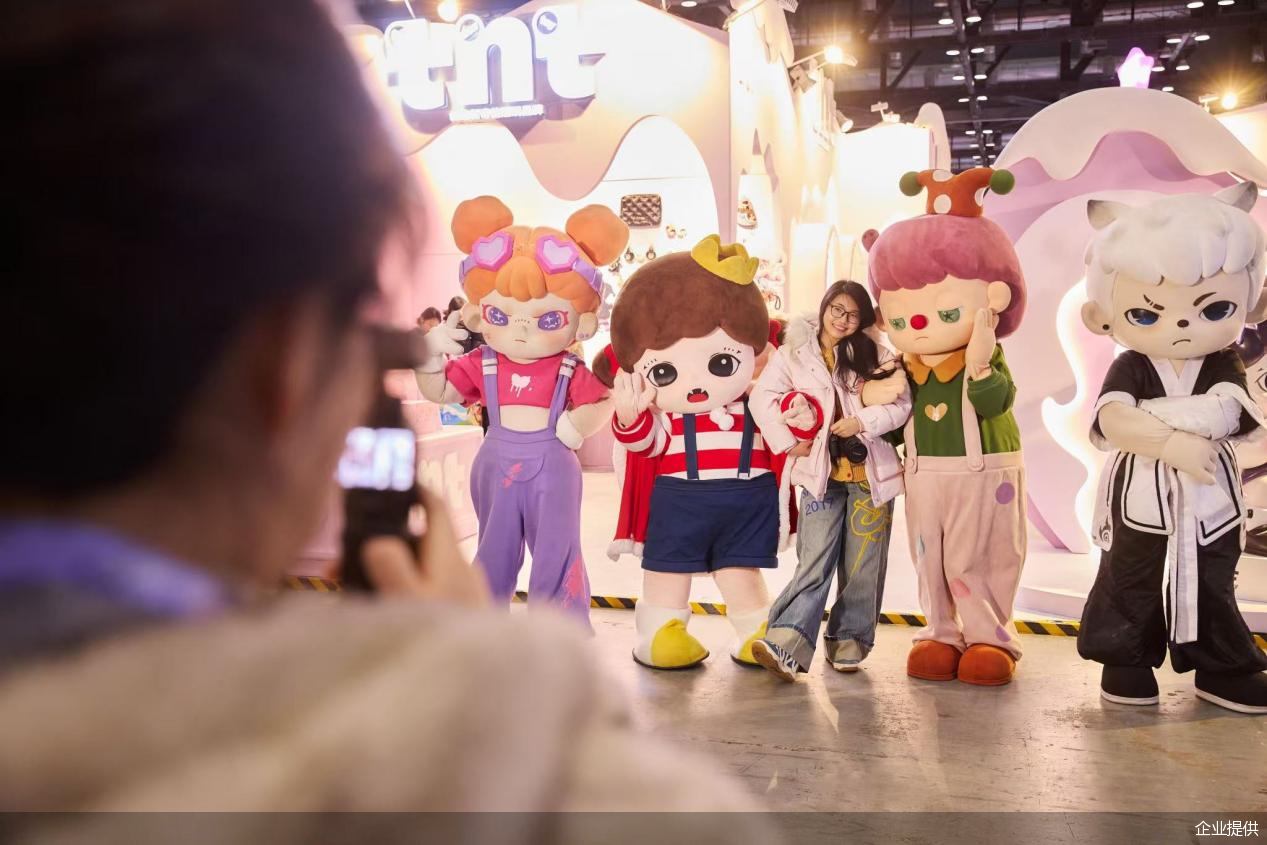
北京商报讯(记者赵述评)近日,潮玩头部品牌tnt潮玩(TNTSPACE)亮相第四届QDF×ADTS北京国际艺术设计玩具展览会(简称:北京潮玩展),旗下DORA、 Rayan、Zoraa等超人气IP的限量新品成为展会焦点。 在本次展会上,tnt潮玩首发新品DORA&Rayan毛绒系列,后续将开启线上预售。"Rayan下一回合""DORA粉雾特调"毛绒挂件采取新工艺,使用pvc制作脸 部,以细腻毛绒材质还原IP标志性造型,搭配可拆卸拳击手套、粉白双马尾等换装细节设计,吸引众多潮玩爱好者。此外,展会限定产品Rayan云上清茶、 Zoraa藏野小羊也备受欢迎。 作为国内潮玩赛道的创新力量,tnt潮玩以"IP+品牌"双驱动,本次展会不仅展现了其在产品设计上的实力,更通过毛绒新品、限定福利等内容,进一步强化 了IP与用户的情感联结。 tnt潮玩将展位打造成粉紫交织的冬日童话空间,DORA玻璃钢艺术装置、毛绒质感的心愿投递箱,成为现场拍照打卡的"网红点位";设置抓抓乐扭蛋、毛绒 挂链DIY等互动环节。 ...

上市路演中的52TOYS,能否成为潮玩市场的第二极?
3 6 Ke· 2025-12-16 06:12
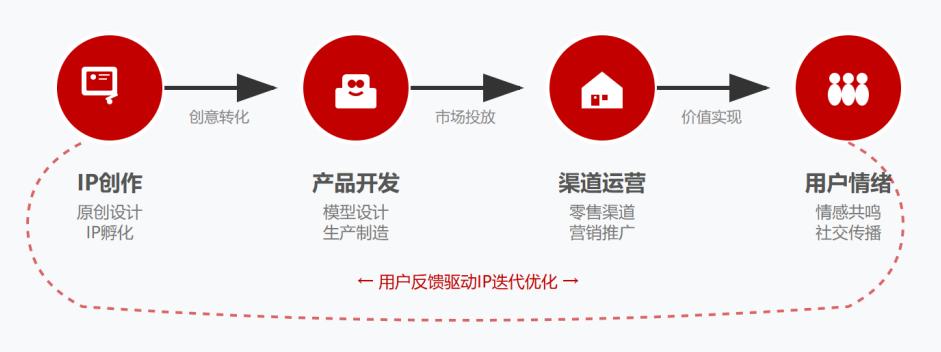
在Labubu引发的全球哄抢潮背后,中国潮玩市场的竞争维度正在发生深刻变化。作为曾经几乎以一己之力打开潮玩市场认知的泡泡玛特,如今正面对新 阶段的挑战。而在它的强光之外,52TOYS这样少有的"非泡泡玛特系"选手,正在用一套截然不同的打法试图在夹缝中突围:它强调IP孵化的原创性、重 仓自有模型体系、构建深度垂直的兴趣社群,与泡泡玛特所擅长的大众化盲盒路径形成鲜明对比。 从我们的研究结论来看,这种"非典型"的潮玩逻辑,并非只是一个小而美公司的另类路径,而可能是潮玩行业在穿越红利期、迈入新阶段中的关键变量。 在潮玩的"内容资产化"逐渐浮现、盲盒经济遭遇信任门槛的当下,52TOYS代表着一种更接近"内容消费基础设施"的尝试,其成败关乎的不只是一个品牌 的突围,更是行业底层逻辑的一次自我更新。 但我们也需承认,潮玩不是一个轻巧的赛道。无论是IP生命周期的不确定性、线下零售模型的高成本,还是"内容+产品"的商业逻辑实现资本价值, 52TOYS所面对的挑战并不亚于泡泡玛特曾经走过的那条路。甚至可以说,它的路径更为艰难,因为它无法复制泡泡玛特那种"盲盒红利+快渠道投放"的 组合拳,只能靠内容深耕和产品耐性,一步步打磨信任。 ...

从新需求×新供给看中国消费新格局:每一代人都有自己的Labubu
工银国际· 2025-12-16 05:59
Group 1: Macro Economic Insights - The new consumption pattern in China is driven by generational shifts, with each generation having its own cultural symbols, referred to as "Labubu" [1] - The "Implementation Plan" aims to enhance the adaptability of supply and demand, identifying three trillion-level and ten hundred-billion-level consumption hotspots to boost resource allocation efficiency [1] - The Chinese潮玩 market is expected to grow at a compound annual growth rate of approximately 24% from 2022 to 2026, reflecting a structural change in demand [3] Group 2: New Consumption Trends - Future consumption is shifting from purchasing goods to subscribing to experiences, influenced by spatial, temporal, and relational dimensions [2] - Consumers are evolving from mere buyers to co-creators of content and emotional transmitters, emphasizing community relationships and cultural identity [2] - The demand for children's products is transitioning from safety features to cognitive development and emotional growth, with a focus on AI-enabled interactive toys [6] Group 3: Supply-Side Innovations - The supply side is undergoing a structural transformation, with flexible production and rapid iteration becoming industry standards, allowing for quick responses to new consumer trends [8] - The "Implementation Plan" emphasizes differentiated supply for various consumer groups, moving from traditional age-based products to lifestyle-based solutions [8] - The silver economy in China is projected to grow from approximately 7 trillion yuan in 2023 to 30 trillion yuan by 2035, indicating a shift towards comprehensive lifestyle solutions for the elderly [7] Group 4: Investment Opportunities - The investment focus is on three trillion-level sectors (elderly products, smart vehicles, consumer electronics) and ten hundred-billion-level sectors (潮玩, outdoor products, pet supplies, smart wearables, and national trend clothing) [9] - Identifying the next "Labubu" involves assessing emotional needs, sustainable supply systems, and alignment with national development strategies [10]
重估东南亚市场:品牌出海的“第一关”,没有简单模式
创业邦· 2025-12-16 03:43
Core Viewpoint - Southeast Asia is viewed as a primary market for Chinese brands seeking international expansion, but the reality is more complex than it appears, with significant challenges that require a deep understanding of local markets and consumer behavior [5][8][9]. Market Characteristics - The Southeast Asian market is characterized by its diversity in religion, ethnicity, and language, leading to fragmented channels and varying consumer purchasing power [8][9]. - There is no unified market or "one-size-fits-all" approach; brands must adapt to local conditions and consumer preferences [8][9]. Consumer Behavior - Traditional shopping habits remain strong, with physical retail still holding significant sway over online shopping, particularly in Malaysia and Singapore [11]. - The convenience of shopping malls, which are prevalent in urban areas, often rivals online shopping experiences due to underdeveloped electronic payment systems [11]. Brand Presence - Successful Chinese brands in Southeast Asia are predominantly found in the food and beverage sector, with notable examples including Haidilao and various tea brands [12][15]. - Non-food brands are also expanding, with significant activity in the toy, apparel, and electronics sectors, showcasing a growing presence in physical retail spaces [15][17]. Challenges Faced by Brands - Despite a strong presence, many Chinese brands struggle with visibility and profitability, often using stores more as brand showcases than for actual sales [19][20]. - The majority of Chinese brands occupy less favorable retail locations, often in higher floors of shopping malls, limiting their exposure to potential customers [20][21]. Market Dynamics - The rapid turnover of brands in Southeast Asia resembles a "fast-growing rainforest," where many brands can quickly rise to prominence but also face swift declines [23][24]. - The high turnover rate is exacerbated by a lack of long-term strategic planning among many brands, leading to unsustainable growth patterns [24][26]. Competitive Landscape - Korean and Japanese brands dominate the market, often employing a more cohesive and strategic approach to brand building compared to their Chinese counterparts [27][28]. - Chinese brands frequently rely on low pricing strategies, which can lead to intense competition and diminished profitability [28]. Brand Recognition - Many Chinese brands struggle with brand identity and recognition in Southeast Asia, often failing to leverage their Chinese heritage effectively [30][31]. - Successful brands, like Skintific, have managed to establish themselves without overtly emphasizing their Chinese origins, focusing instead on local market integration [30][31]. Marketing Strategies - Innovative marketing strategies, such as "store broadcasting" and enhanced offline distribution channels, are emerging as key tactics for brands looking to establish a foothold in the market [33][36]. - The integration of online and offline sales strategies is crucial for maximizing brand exposure and consumer engagement [35][36]. Distribution Challenges - Entering retail channels in Southeast Asia can be challenging due to the closed nature of many distribution networks, particularly in larger retail chains [37][38]. - However, the relatively low complexity of establishing physical retail locations in Southeast Asia presents opportunities for brands willing to invest in local market strategies [38].

中企“出海”面临系统重构,调度与合规能力受考验
Di Yi Cai Jing· 2025-12-16 01:27
Group 1 - The core viewpoint of the articles emphasizes the transformation of Chinese companies' internationalization from low-value manufacturing to brand globalization, highlighting the need for compliance and adaptation to regional market differences [1][3][4] - Companies are shifting from a "single store output" model to a "platform-driven" approach, requiring enhanced data-driven decision-making and ecosystem collaboration to navigate complex overseas environments [2][3] - The essence of "going global" for Chinese enterprises is evolving from a focus on low-cost products to high-value brand and cultural integration, with an increasing reliance on local talent for operational efficiency [3][4] Group 2 - The report indicates that Chinese manufacturing is transitioning from merely exporting products to exporting brand culture, with a growing emphasis on local adaptation in various sectors, including food and beverage [4][5] - Companies face diverse challenges in different regions, such as regulatory compliance and cultural differences, which necessitate tailored management strategies and digital solutions to optimize supply chains [5][6] - In Southeast Asia, the low penetration of online ordering and electronic payments presents significant challenges for cross-border operations, highlighting the need for a unified digital management system to facilitate expansion [7][8]
泡泡玛特已成潮玩界「黑洞」
3 6 Ke· 2025-12-15 23:33
Core Insights - Bubble Mart has significantly increased its market share from 8.5% to 14% over five years, while its market value has surpassed HKD 250 billion, indicating a strong competitive position in the collectible toy industry [1] - The company has built a robust ecosystem that attracts users, creators, and market attention through its platform model, which focuses on artist discovery, IP incubation, and omnichannel operations [1][8] - The current landscape of the collectible toy industry shows that competitors like TOP TOY and 52TOYS struggle with IP dependency and lack core competitive advantages, leading to a challenging environment for smaller brands [1][8] Market Position - Bubble Mart's CEO Wang Ning has projected that the company can easily achieve revenue of RMB 30 billion by 2025, highlighting its dominant market position with few real competitors [2] - The company has shifted the focus from artist value to operational efficiency, which has allowed it to capitalize on market trends and consumer demand [4][8] - The average inventory turnover for Bubble Mart is 83 days, significantly better than the industry average of 180 days, reinforcing its operational efficiency [9] IP Strategy - Bubble Mart's IP operation capabilities have been enhanced, allowing it to create a standardized pipeline for artist signing, user research, and supply chain response, which can turn creative ideas into potential bestsellers in as little as six months [8][9] - The company has secured 14 out of 32 hot-selling collectible toy IPs for 2024, representing a 43% market share in that segment [9] - Bubble Mart's approach to IP management resembles that of a talent agency, focusing on nurturing top-tier IPs while also identifying emerging artists early [8][11] Industry Trends - The collectible toy market in China is increasingly defined by marketing-driven strategies that prioritize consumer engagement over artistic integrity, contrasting with more established markets like Japan, where cultural depth and storytelling are key [12][14] - Smaller brands in the Chinese market face significant challenges in competing with Bubble Mart's scale and efficiency, leading to a trend of reliance on short-term marketing tactics [11][12] - The potential for new entrants exists, but they must navigate a landscape where replicating Bubble Mart's success is nearly impossible due to high barriers to entry and established market dominance [14]

程实:每一代人都有自己的Labubu︱实话世经
Di Yi Cai Jing· 2025-12-15 12:46
Core Insights - The rise of Labubu is not coincidental but a result of generational aesthetics, emotional symbols, and identity expression [1][2] - The "Implementation Plan" provides a systematic framework for the new demand and supply dynamics, emphasizing the importance of capturing emotional trends and creating a sustainable supply chain [1][2][10] Generational Symbols - Each generation has its own Labubu, representing the spirit of the times, from Transformers for the 70s to digital IPs for Gen Z [2] - The changing emotional structures reflect new consumer demands in China, with the "Implementation Plan" targeting three trillion-level and ten hundred-billion-level consumption hotspots [2][4] New Consumption Trends - Future consumption is shifting from purchasing goods to subscribing to lifestyles, driven by demographic segmentation and interest-oriented consumption [3] - Changes in consumption dimensions include spatial (from traditional malls to immersive experiences), temporal (from one-time purchases to long-term relationships), and relational (from buyers to co-creators) [3] New Demand Dynamics - The demand for new products is shaped by collective choices across generations, with emotional needs such as identity recognition, emotional healing, and self-narrative being crucial [4][5] - The children's market is evolving towards cognitive development and emotional growth, while the elderly market is shifting from passive care to active quality of life improvements [6][5] New Supply Strategies - New supply-side structural reforms focus on leveraging technology and new models for precise supply-demand matching [7] - Flexible production and rapid iteration are becoming standard, with the ability to quickly respond to new consumer trends [7][8] Investment Opportunities - The investment landscape is becoming clearer with three trillion-level sectors (elderly products, smart vehicles, consumer electronics) and ten hundred-billion-level sectors (trendy toys, outdoor products, etc.) identified [9] - Key investment criteria include addressing unique emotional needs, having a sustainable supply system, and aligning with national strategic directions [9][10]
泡泡玛特:业绩狂飙,资本恐高
3 6 Ke· 2025-12-15 12:33
Core Insights - Apple CEO Tim Cook's visit to China, particularly to the Shanghai THE MONSTERS exhibition, symbolizes the intersection of tech giants and the collectible toy market, highlighting the cultural significance of this event in China's consumer history [1] - Despite impressive financial performance, Pop Mart's stock has seen a nearly 40% decline since its peak in August, indicating a disconnect between strong sales and investor sentiment [1][2] - The company's reliance on the Labubu IP raises concerns about sustainability and future growth, as it accounted for 34.7% of revenue in the first half of 2025, with a staggering growth rate of 668.4% [8][10] Financial Performance - In Q3 2025, Pop Mart reported a revenue growth of 245%-250% year-on-year, with overseas market revenue surging by 365%-370% [1][7] - The company's revenue for the first half of 2025 has already surpassed the total revenue for 2024, indicating robust sales performance [1] Market Dynamics - The collectible toy market has shifted towards lower-priced, instant gratification products post-pandemic, with Pop Mart capitalizing on this trend through its blind box offerings [3][5] - The initial hype around Labubu has begun to wane, with prices for hidden variants on secondary markets halving from their peak, reflecting a potential saturation of demand [1][7] Strategic Direction - Pop Mart aims to transition from a fast-fashion model to a luxury brand, seeking to position itself as a "Louis Vuitton" of the toy industry, with a focus on global expansion and premium branding [11][13] - The company has adopted a strategy of "sufficient scarcity," aiming to balance product availability with brand prestige, moving away from speculative pricing models [21][25] Consumer Behavior - The decline in speculative buying from resellers has led to a more stable consumer base, with Pop Mart focusing on genuine fans rather than speculative investors [20][25] - The company is implementing a product stratification strategy, ensuring that lower-tier products remain accessible while maintaining exclusivity for high-end offerings [23][24]

宁波海关查获万余只侵权玩偶 含《疯狂动物城》等热门IP
Zhong Guo Xin Wen Wang· 2025-12-15 11:05
Core Viewpoint - The recent crackdown by Ningbo Customs on counterfeit toys, including those related to popular IPs like "Zootopia," highlights the ongoing issues of intellectual property infringement and safety concerns in the toy industry [1][2]. Group 1: Customs Action - Ningbo Customs recently seized 10,710 counterfeit toys during a container inspection, which included characters from "Zootopia" and other popular IPs [1]. - The seized goods were confirmed as unauthorized counterfeit products by the intellectual property rights holders [1]. Group 2: Safety Concerns - Counterfeit toys not only infringe on the rights of legitimate owners but also pose potential safety hazards due to the use of inferior materials and non-compliance with national safety standards [2]. - Concerns were raised regarding the safety of chemical additives, filling materials, and the sturdiness of small parts in these illegally produced toys, which could threaten children's health [2]. Group 3: Statistics and Impact - From January to November of this year, Ningbo Customs has seized 1,021 batches of suspected counterfeit goods, totaling 28.39 million items with a value of 90.589 million yuan, leading the nation in both quantity and value [2].

“量子之歌”变身“奇梦岛” 靠Wakuku单挑Labubu
BambooWorks· 2025-12-15 09:57
Core Viewpoint - Here Group Ltd. (奇梦岛) has significantly increased its revenue through the expansion of its newly acquired toy business, with a quarterly revenue nearly doubling compared to the previous quarter, indicating strong growth potential in the collectible toy market [1][6]. Group 1: Business Transformation - The company announced the sale of its original adult education business and will now operate solely as a toy company, rebranding itself from "量子之歌" to "奇梦岛" effective November 11 [4]. - The transition appears cautious as the education sector has become increasingly sensitive to policy changes, unlike the more stable toy industry [4]. - The toy industry is characterized by rapid changes, requiring companies to continuously innovate and promote new intellectual properties (IPs) to maintain sales momentum [4]. Group 2: Financial Performance - For the quarter ending September, the company reported a revenue of 127 million yuan (approximately 18 million USD), with 97% of this revenue coming from three proprietary IPs, primarily the Wakuku series, which contributed 71% [5][6]. - The company expects revenue for the quarter ending December to rise to between 150 million to 160 million yuan, indicating continued growth but a projected quarterly growth rate slowdown to about 22% [7]. - The anticipated revenue for the fiscal year ending next September is projected to reach between 750 million to 800 million yuan, suggesting a significant increase in the second half of the fiscal year compared to the first half [8]. Group 3: Market Position and Valuation - The company's stock price has shown volatility, initially surging fivefold before experiencing a decline of over 60%, yet it remains more than double its value from the beginning of the year [8]. - In terms of valuation, the company currently has a price-to-sales (P/S) ratio of approximately 2.5, significantly lower than its competitor Bubble Mart's P/S ratio of 10.3, indicating potential for stock price appreciation if growth targets are met [8]. - The company has opened its first offline stores in Beijing and Chongqing, with plans for further expansion, while establishing a business foundation in 20 other markets for future global growth [9]. Group 4: Profitability and Margins - The gross margin for the toy business improved to 41.2% in the latest quarter, up from 34.7% in the previous quarter, although it remains below Bubble Mart's projected gross margin of 66.8% for 2024 [9]. - The company reported an adjusted operating net loss of 17.1 million yuan in the latest quarter, showing slight improvement from a loss of 19.3 million yuan in the previous quarter, indicating ongoing challenges in achieving profitability [9].