
计算机

Search documents
康冠科技:我们高度重视机器人与银发经济相结合所带来的发展机遇
Cai Jing Wang· 2026-01-20 08:52
Core Viewpoint - Kangguan Technology emphasizes its strong technical foundation and scalable manufacturing capabilities in the smart manufacturing sector, particularly focusing on the integration of robotics and the silver economy, with plans to develop products for elderly care and companionship [1] Group 1: Company Overview - Kangguan Technology operates in the computer, communication, and other electronic equipment manufacturing industry (C39), specializing in the research, manufacturing, sales, and services of smart interactive panels, professional display products, innovative display products, and smart TVs [1] - The company has obtained a total of 7 patents related to its focus areas [1] Group 2: Financial Performance - For the first three quarters of 2025, Kangguan Technology reported a revenue of 10.78 billion yuan, representing a year-on-year decline of 5.37% [1] - The net profit attributable to shareholders for the same period was 503 million yuan, down 9.92% year-on-year [1] - Revenue from smart interactive display products increased by 3.56% year-on-year, with a shipment growth of 6.04% [1] - Revenue from innovative display products saw a significant increase of 37.11% year-on-year, with shipments rising by 42.02% [1] - Conversely, revenue from smart TVs decreased by 17.33% year-on-year, with a shipment decline of 11.95% [1]
计算机行业今日跌1.94% 主力资金净流出107.82亿元
Zheng Quan Shi Bao Wang· 2026-01-20 08:49
Market Overview - The Shanghai Composite Index fell by 0.01% on January 20, with 20 industries experiencing gains, led by the oil and petrochemical sector with a rise of 1.74% and construction materials at 1.71% [1] - The telecommunications and defense industries saw the largest declines, with drops of 3.23% and 2.87% respectively [1] Capital Flow Analysis - The main capital outflow from the two markets totaled 95.72 billion yuan, with 11 industries seeing net inflows [1] - The banking sector led the net inflow with 1.47 billion yuan and a daily increase of 0.80%, followed by the real estate sector with a 1.55% increase and a net inflow of 627 million yuan [1] Computer Industry Performance - The computer industry experienced a decline of 1.94%, with a total net outflow of 10.78 billion yuan [2] - Out of 336 stocks in the computer sector, 48 rose, including one hitting the daily limit, while 281 fell, with two hitting the lower limit [2] - Notable net inflows were seen in stocks like Weining Health with 212 million yuan, followed by Langxin Technology and Zhuoyi Information with 101 million yuan and 92.8 million yuan respectively [2] Top Gainers in Computer Industry - The top gainers in the computer sector included: - Weining Health: -0.26% with a turnover rate of 10.85% and a main capital flow of 21.24 million yuan - Langxin Technology: +0.73% with a turnover rate of 6.08% and a main capital flow of 10.15 million yuan - Zhuoyi Information: +0.72% with a turnover rate of 6.36% and a main capital flow of 9.28 million yuan [2] Top Losers in Computer Industry - The top losers in the computer sector included: - Yanshan Technology: -0.83% with a turnover rate of 18.11% and a main capital outflow of 732.57 million yuan - Unisplendour: -3.85% with a turnover rate of 4.10% and a main capital outflow of 585.50 million yuan - Keda Xunfei: -3.96% with a turnover rate of 5.50% and a main capital outflow of 570.39 million yuan [4]



A股尾盘,多股逆势拉升封板!6股获巨额资金抢筹!
Xin Lang Cai Jing· 2026-01-20 08:47
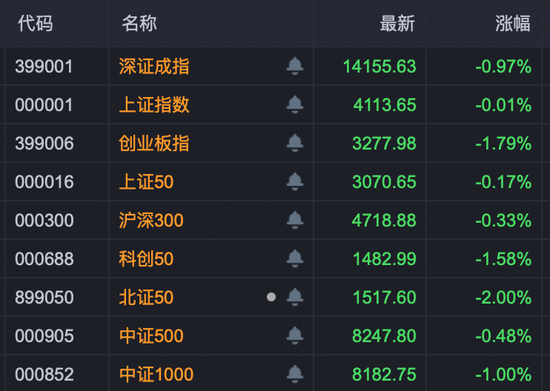
Market Overview - The A-share market experienced fluctuations with the Shanghai Composite Index barely holding above 4100 points, while the ChiNext Index fell below 3300 points. Major indices like the Shenzhen Component, CSI 300, and CSI 500 closed with small bearish candles, and the market turnover reached 2.8 trillion yuan [1][11]. Index Performance - The latest index performances are as follows: - Shenzhen Component: 14155.63 (-0.97%) - Shanghai Composite: 4113.65 (-0.01%) - ChiNext Index: 3277.98 (-1.79%) - CSI 300: 4718.88 (-0.33%) - CSI 500: 8247.80 (-0.48%) [2][12]. Sector Performance - The chemical, precious metals, real estate, and aviation sectors showed the highest gains, while aerospace equipment, photovoltaic equipment, communication devices, and glass fiber sectors faced the largest declines [2][12]. Fund Flow Analysis - The public utilities sector saw a net inflow of over 3.7 billion yuan, while the construction and decoration sector received over 3.6 billion yuan. Real estate, banking, basic chemicals, and building materials also attracted over 2 billion yuan each. In contrast, sectors like electronics, power equipment, and defense saw net outflows exceeding 10 billion yuan [3][13]. Notable Stocks - Key stocks with significant net inflows include: - China Xidian: 15.63 yuan (+8.84%) with a net inflow of 1.56 billion yuan - Shanzhi High-Tech: 5.42 yuan (+6.69%) with a net inflow of 1.42 billion yuan - Zhejiang Wenhu: 9.97 yuan (+10.04%) with a net inflow of 1.32 billion yuan [4][14]. Future Market Outlook - Yingda Securities suggests that the market is in a cooling phase, with the Shanghai Composite Index fluctuating around the 4100-point mark. This does not indicate a deep correction but rather a healthy consolidation after rapid gains. Investors are advised to take profits on overbought stocks while looking for value opportunities in underperforming sectors [5][15]. Long-term Projections - Zhongyin International forecasts that by 2026, the core broad-based index of the Chinese stock market could see an overall increase of over 40%, driven by nearly 20% profit growth and 20% valuation expansion. Key sectors expected to lead include technology manufacturing, biomedicine, and defense, while sectors like telecommunications and real estate may have potential for catch-up gains [5][15]. Precious Metals Market - The precious metals sector saw significant activity, with gold prices reaching a historical high of over 4700 USD per ounce. Domestic gold futures also surged, reflecting strong demand amid ongoing global economic uncertainties [6][16]. Chemical Industry Trends - The chemical sector is experiencing a global price surge, with major companies like BASF and Dow Chemical implementing price increases across various regions. Recent data indicates that 11 out of 16 monitored chemical products have seen price increases, with synthetic rubber rising by 11.7% [8][19]. Structural Investment Opportunities - Galaxy Securities highlights that new demand drivers are expected to accelerate a cyclical reversal in the chemical industry, suggesting a focus on structural investment opportunities as supply constraints emerge [20].

博时市场点评1月20日:两市继续震荡,市场风格切换
Xin Lang Cai Jing· 2026-01-20 08:41
Economic Overview - The core economic data for 2025 indicates a year-on-year GDP growth of 5.0%, with Q4 GDP growth at 4.5%, aligning with market expectations [1][7] - In December, the industrial added value increased by 5.2% year-on-year, while fixed asset investment showed a cumulative decline of 3.8% [1][7] - Retail sales growth in December was only 0.9%, highlighting weak domestic demand [1][7] - The economic environment is characterized by stronger supply than demand, with external demand outperforming internal demand [1][7] Policy and Strategic Initiatives - The National Development and Reform Commission (NDRC) plans to implement a strategy to expand domestic demand from 2026 to 2030, aiming to create new demand through new supply [2][9] - A national-level merger fund is being considered to promote industrial integration and optimize the competitive landscape [9] - The establishment of a unified national market is a long-term goal, which will enhance resource allocation efficiency and improve the market environment [9] Market Performance - On January 20, the A-share market saw declines across major indices, with the Shanghai Composite Index at 4113.65 points, down 0.01%, and the Shenzhen Component Index at 14155.63 points, down 0.97% [10][11] - The market turnover reached 28,044.27 billion yuan, showing a slight increase from the previous trading day [12] - The two financing balances reported a decrease to 27,231.75 billion yuan [12]
中国的斯坦福,快来了
3 6 Ke· 2026-01-20 08:14
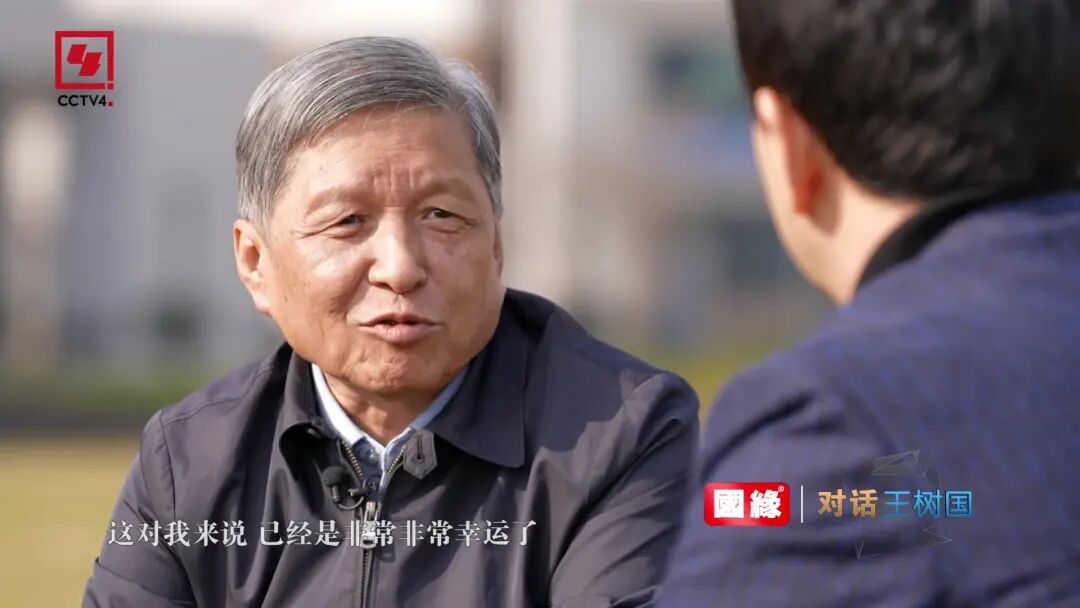
Core Idea - The establishment of Fujian Fuyao University, led by President Wang Shuguo, aims to emulate Stanford University’s educational philosophy, emphasizing innovation and industry collaboration [1][46]. Group 1: Historical Context of Stanford University - Stanford University was founded in 1891 with a mission to educate all children in California, inspired by the personal tragedy of its founders, Leland and Jane Stanford [3][7]. - The university's founding was supported by a donation of $40 million, equivalent to approximately $1.4 billion in 2024, and included 8,180 acres of land [7][8]. - Stanford's motto, "Let the wind of freedom blow," reflects its commitment to liberal education and innovation [5]. Group 2: Stanford's Influence on Silicon Valley - Stanford has played a crucial role in the development of Silicon Valley, particularly through the efforts of Frederick Terman, who encouraged students to pursue entrepreneurship [9][10]. - Terman facilitated the founding of Hewlett-Packard (HP) by supporting its founders with funding and connections, marking a significant moment in Silicon Valley's history [18][20]. - The university's culture of innovation has led to the establishment of over 1,200 companies by Stanford alumni, contributing to more than 50% of Silicon Valley's products [41][42]. Group 3: The Role of Key Figures - Frederick Terman's influence as a professor and administrator helped transform Stanford into a hub for technological innovation and entrepreneurship [10][13]. - William Shockley, a Nobel laureate, attempted to create a semiconductor company near Stanford, which ultimately led to the formation of Fairchild Semiconductor, a pivotal company in the tech industry [23][29]. - John Hennessy, Stanford's 10th president, further advanced the university's entrepreneurial spirit, supporting startups like Google and Yahoo, and securing significant donations for the university [40][42]. Group 4: Future Aspirations for Chinese Universities - The establishment of new universities in China, like Fujian Fuyao University, aims to replicate Stanford's model of integrating academic research with industry needs [46][48]. - There is a strong belief that with the right conditions, China can foster a similar environment for technological innovation as seen in Silicon Valley [49].



长城基金:市场震荡上行趋势有望延续
Xin Lang Cai Jing· 2026-01-20 08:00
Core Insights - The A-share market has seen a significant increase in financing transaction activity, with the financing balance reaching 2.68 trillion yuan, a new historical record, and financing transaction volume accounting for 11.3% of total market transactions as of January 14 [1][4]. Financing Margin Adjustment - On January 14, the Shanghai and Shenzhen Stock Exchanges announced an adjustment to the financing margin ratio, increasing the minimum margin requirement for investors from 80% to 100% when buying securities on margin [1][4]. - This adjustment is a key tool for regulatory authorities to conduct counter-cyclical adjustments, aimed at preventing excessive accumulation of systemic risks [2][5]. - Historical adjustments include a previous increase from 50% to 100% in November 2015 to curb rapid financing growth and a decrease from 100% to 80% in August 2023 to enhance market liquidity [1][2][4]. Impact on Market Dynamics - The core objective of raising the margin requirement is to maintain stable capital market operations and prevent excessive concentration of leveraged trading risks, reducing the leverage from 1.25 times to 1 time for new financing contracts [2][5]. - The policy will only apply to new financing contracts, while existing contracts will continue under the previous rules, reflecting a cautious regulatory approach to mitigate market impact and systemic risks [2][5]. Market Outlook - Short-term regulatory measures may not alter the upward trend of the market, with underlying support for continued market growth expected amidst fluctuations [2][5]. - Investment focus should be on policy initiatives and industry prosperity, particularly in technology growth sectors such as semiconductors, internet, electronics, media, and computing, as well as globally competitive sectors like power and machinery [2][5]. - Non-bank financial sectors are likely to benefit from increased demand for wealth management and capital market reforms, while cyclical sectors like tourism, hospitality, and consumer goods may present marginal improvement opportunities due to expanding domestic demand policies [2][5].
浙江立浙兴信息科技有限公司成立,注册资本1000万人民币
Sou Hu Cai Jing· 2026-01-20 06:50
Core Viewpoint - Zhejiang Lizhexing Information Technology Co., Ltd. has been established with a registered capital of 10 million RMB, fully owned by Ningxia Huadecheng Information Technology Co., Ltd. [1][2] Company Information - The legal representative of the company is Chen Yonggang [1][2] - The company is classified as a limited liability company with natural person investment or control [2] - The business scope includes retail and wholesale of computer hardware and software, technical services, and various manufacturing activities related to communication and information technology [1] Business Scope - The company engages in a wide range of activities including: - Retail and wholesale of computer hardware and software - Technical services, development, consulting, and transfer [1] - Manufacturing of mobile communication devices and network equipment [1] - Information technology consulting and system integration services [1] - 5G communication technology services and related repairs [1] Registration Details - The company is registered in Hangzhou, Zhejiang Province, with a business duration until January 19, 2026, and no fixed term thereafter [2] - The registration authority is the Hangzhou Market Supervision Administration [2]
金元证券每日晨报-20260120
Jinyuan Securities· 2026-01-20 06:31
Core Insights - The report highlights the performance of major stock indices, indicating a slight decline in the U.S. markets with the Dow Jones Industrial Average down by 0.17% and the S&P 500 down by 0.06% in the recent trading day [1] - The report also notes the international economic outlook, with the IMF raising China's economic growth forecast for 2025 to 5% and for 2026, reflecting resilience despite global uncertainties [12] - Significant developments in the electric vehicle sector are noted, with Germany reintroducing electric vehicle purchase subsidies ranging from €1,500 to €6,000, applicable to all manufacturers including Chinese brands [13] International News - The European Union is engaged in intensive discussions regarding countermeasures to U.S. tariff threats, with a special summit scheduled to address these issues [11] - The IMF's updated World Economic Outlook indicates a global economic growth rate of 3.3% for 2026, driven by improvements in major economies like the U.S. and China [12] Domestic News - The Chinese government emphasizes high-quality development and reform policy coordination in a recent meeting, aiming to address uncertainties in the development environment [15] - A preliminary report indicates that China's GDP is projected to grow by 5% in 2025, with significant contributions from the service sector and a decline in fixed asset investment [16] Company News - Micron Technology warns of an unprecedented shortage of memory chips due to surging demand from artificial intelligence infrastructure, which is expected to persist beyond 2026 [19] - Tesla is set to restart the development of its Dojo 3 supercomputer project, which is crucial for its autonomous driving and AI capabilities [19] - Cainiao reports a 32% year-on-year increase in order processing volume at its global overseas warehouses, with plans for further expansion in key markets [19] Industry Reports - The low-altitude economy sector is highlighted with Wuhan's release of a standard system construction guide, indicating growth potential in this emerging industry [20] - The computer industry report notes a 3.82% increase in the industry index, outperforming the broader market, with significant developments in AI healthcare applications [20]
信利高端显示取得一种mono显示屏及像素充电方法专利
Jin Rong Jie· 2026-01-20 06:01
声明:市场有风险,投资需谨慎。本文为AI基于第三方数据生成,仅供参考,不构成个人投资建议。 本文源自:市场资讯 天眼查资料显示,信利(仁寿)高端显示科技有限公司,成立于2017年,位于眉山市,是一家以从事计 算机、通信和其他电子设备制造业为主的企业。企业注册资本700000万人民币。通过天眼查大数据分 析,信利(仁寿)高端显示科技有限公司参与招投标项目263次,专利信息438条,此外企业还拥有行政 许可157个。 国家知识产权局信息显示,信利(仁寿)高端显示科技有限公司取得一项名为"一种mono显示屏及像素 充电方法"的专利,授权公告号CN117409746B,申请日期为2023年11月。 作者:情报员 ...
联想取得知识图谱摘要的确定方法及装置专利
Jin Rong Jie· 2026-01-20 05:48
Group 1 - Lenovo (Beijing) Co., Ltd. has obtained a patent for a method and device for determining a knowledge graph summary, with authorization announcement number CN113609300B, and the application date was June 2021 [1] - Lenovo (Beijing) Co., Ltd. was established in 1992 and is located in Beijing, primarily engaged in the manufacturing of computers, communications, and other electronic devices [1] - The registered capital of Lenovo (Beijing) Co., Ltd. is 565 million Hong Kong dollars [1] Group 2 - Lenovo (Beijing) Co., Ltd. has made investments in 107 companies and participated in 5,000 bidding projects [1] - The company has 1,744 trademark information entries and 5,000 patent information entries, along with 238 administrative licenses [1]
