
新能源

Search documents
政策市场双轮驱动 上市公司发力稳投资
Zhong Guo Zheng Quan Bao· 2026-02-03 21:56
Group 1: Infrastructure Investment - Major projects have been signed and construction has accelerated, focusing on infrastructure and high-end manufacturing, with traditional infrastructure steadily advancing while emerging industries become investment focal points [1] - China Railway announced winning bids for 8 railway projects, 3 highway projects, and 1 municipal project, with a total bid amount of approximately 43.292 billion yuan [2] - The National Development and Reform Commission has issued a list of early construction projects for 2026, totaling about 295 billion yuan, indicating strong policy support for infrastructure development [2] Group 2: Emerging Industries Investment - Emerging industries and future industries have seen a significant increase in project investment this year, driven by policy guidance and market demand [3] - In the integrated circuit sector, Shanghai Electric announced a project for high-density optical integrated circuit boards, expected to add an annual production capacity of 1.3 million pieces [3] - In the new materials sector, Baihehua plans to invest up to 100 million yuan in a project for 1,000 tons of PEEK materials, while Huafeng Chemical aims to invest 3.6 billion yuan in expanding production of low-carbon, intelligent spandex materials [3] Group 3: Investment Growth Outlook - Investment growth is expected to rebound as local governments focus on key areas and weak links to expand effective investment [4] - The 2026 early construction project list includes approximately 220 billion yuan for "two heavy" construction projects, a significant increase from 100 billion yuan in 2025 [4] - Manufacturing investment is projected to achieve a 4% overall growth in 2026, supported by new policy financial tools and a focus on high-tech industries [4][5]
吉林电力股份有限公司关于变更公司名称、证券简称暨完成工商变更登记的公告
Shang Hai Zheng Quan Bao· 2026-02-03 19:12
登录新浪财经APP 搜索【信披】查看更多考评等级 本公司及董事会全体成员保证信息披露的内容真实、准确、完整,没有虚假记载、误导性陈述或重大遗 漏。 特别提示: 1.吉林电力股份有限公司(以下简称"公司")中文名称已由"吉林电力股份有限公司"变更为"国电投绿色 能源股份有限公司",英文名称由"JILIN ELECTRIC POWER CO.,LTD."变更为"SPIC Green Energy Co.,Ltd."; 2.证券简称由"吉电股份"变更为"电投绿能",英文简称由"JEP"变更为"SPIC GECL",启用时间为2026年 2月4日; 3.公司证券代码"000875"保持不变。 一、变更公司名称及证券简称的说明 公司分别于2025年8月20日、2025年9月9日召开第九届董事会第三十四次会议和2025年第四次临时股东 会,审议通过了《关于变更公司名称及证券简称的议案》和《关于修订〈吉林电力股份有限公司章程〉 的议案》。具体内容详见公司于2025年8月22日、2025年9月10日在《中国证券报》《上海证券报》《证 券时报》及巨潮资讯网(http://www.cninfo.com.cn)披露的相关公告。根据 ...

“十五五”期间地区生产总值年均计划增长5%左右 江苏:奋力书写“强富美高”新篇章
Shang Hai Zheng Quan Bao· 2026-02-03 18:19
Core Insights - Jiangsu aims for an average GDP growth of around 5% during the "15th Five-Year Plan" period, with a focus on high-quality development and integration of technological and industrial innovation [6][7] - The province's GDP reached 14.2 trillion yuan during the "14th Five-Year Plan," with an average annual growth of 5.7% and significant contributions from manufacturing and service sectors [3][4] - Jiangsu plans to invest heavily in infrastructure, targeting 240 billion yuan in transportation, 45 billion yuan in water conservancy, and 170 billion yuan in energy by 2026 [7] Economic Performance - Jiangsu's GDP per capita reached 167,000 yuan, with public budget revenue exceeding one trillion yuan during the "14th Five-Year Plan" [3] - The manufacturing sector accounted for 33.5% of the GDP, while the service sector contributed 54% [3] - The province has maintained the highest level of new loans in the country for four consecutive years, with a strong presence in the stock market [3] Innovation and Technology - Jiangsu's R&D investment intensity reached 3.38%, with an average of 34.2 high-value invention patents per ten thousand people [3] - The province has established six national technology innovation centers and over 480 joint innovation centers with enterprises [3] - Plans for 2026 include the establishment of 10 provincial concept verification centers, 30 benchmark incubators, and 10 provincial manufacturing pilot platforms to enhance innovation [7] Industrial Development - Jiangsu has deepened the "1650" industrial system construction, with 14 national advanced manufacturing clusters and a strategic emerging industry fund exceeding 200 billion yuan [4] - The province aims to enhance the international competitiveness of its manufacturing base by focusing on high-quality development in key industries [4][8] - Future industries such as quantum technology, biomanufacturing, and hydrogen energy are prioritized for development [8]


砥砺奋进“十四五” 实干担当谱新篇
Xin Lang Cai Jing· 2026-02-03 17:46
Core Viewpoint - The "14th Five-Year Plan" period is crucial for the high-quality development of Taihu County, with the local government focusing on economic operation, project construction, industrial upgrading, institutional reform, and social welfare to drive development momentum [3] Economic Operation and Planning - The county's GDP reached 24.9 billion, with an average annual growth of 5.2% over five years, and fixed asset investment exceeded 44 billion, with an average annual growth of 10.8% [4] - The county's development plans include various policy documents aimed at enhancing urbanization, rural integration, green development, and carbon neutrality [4] Project Development - A total of 1,431 key construction projects were planned during the "14th Five-Year Plan," with a total investment of 295.512 billion [5] - The government service window processed 3,740 administrative service projects, achieving a 100% acceptance and completion rate, and secured 2.473 billion in project funding [6] Industrial Upgrading - The county added 26 new strategic emerging enterprises, totaling 58, with a target for these enterprises to account for 64% of the county's industrial output value by 2025 [7] - The high-tech manufacturing sector is growing, with 13 high-tech enterprises and an expected value-added growth of 23.6% by 2025 [7] Reform and Development Environment - The county is implementing management system reforms, including the transformation of state-owned enterprises and the integration of urban and rural public transport, resulting in a 30% reduction in overall ticket prices [8] - A comprehensive agricultural water price reform covering 596,700 acres has been completed [8] Social Welfare and Livelihood - The county has implemented 39 labor-for-relief projects with a total investment of 176.23 million, benefiting nearly 4,000 local workers [9] - The government has completed 155 key livelihood projects and established a price linkage mechanism for natural gas to stabilize essential commodity prices [9]
未来的机会在这里!任泽平带你看前沿科技
泽平宏观· 2026-02-03 16:06
以下文章来源于泽平宏观商学 ,作者泽平宏观商学 泽平宏观商学 . 前沿科技企业实战研学 读万卷书行万里路 2025 年 12 月 用心打造最有品质的实战研学。读万卷书,行万里路。把教室搬到世界上最优秀的企业, 请最优秀的企业家和科学家讲课。顺势而为,把握机遇。正心正念,坚持做长期正确的 事! 我们期待与更多的企业家朋友们携手同行,共赴 2026 实战研学之旅! 泽 ZEP 平 INGM 宏 ACR 观 O RE 商 SEAR 学 CH 1-6月日程安排 · 2月27日 北京 国内头部智驾科技企业 人形机器人 年研学安 型成 11月4日-11日 洛杉矶、拉斯维加斯、旧金山 CES、英伟达、特斯拉 谷歌、罗宾汉、playground 斯坦福大学、伯克利大学 3月27日-28日 苏州 追觅科技、魔法原子、灵猴机器人 闭门投研会-2026 Al 的中国力量(一) 3月29日 上海 长三角校友会 4月20日-21日 香港 2026 香港 Web3 嘉年华 复星财富、HashKey、港交所 5月22日-23日 1151 11:47:50 深圳 华为、新凯来、江波龙、莫界科技 闭门投研会—2026 Al 的中国力量(二) ...






广州发展:广州发展财务共享服务中心于2025年下半年启动建设,第一阶段将新能源业务板块纳入共享范围
Mei Ri Jing Ji Xin Wen· 2026-02-03 13:52
Core Viewpoint - The company is establishing a financial shared service center, set to begin construction in the second half of 2025, with the first phase focusing on the new energy business sector and expected to be operational by the second half of 2026 [1] Group 1: Financial Shared Service Center - The financial shared service center will be constructed through overall planning and phased implementation [1] - The first phase will include the new energy business sector within the shared service scope [1] - The initiative aims to support rapid business growth while promoting financial management transformation [1] Group 2: Digitalization and Automation - The company plans to leverage automation and intelligent tools in the financial shared service center [1] - A digitalization score on a scale of 0 to 10 has not been specified, but the goal is to establish an intelligent and forward-looking financial digital system [1]

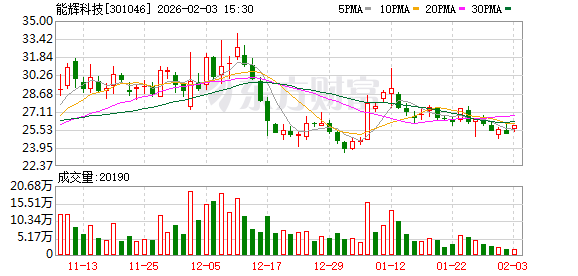
能辉科技:截至2026年1月30日股东总户数13066户
Zheng Quan Ri Bao· 2026-02-03 13:13
Group 1 - The core point of the article is that Nenghui Technology reported a total of 13,066 shareholders as of January 30, 2026 [2]

变压器全球爆单“带飞”特变电工,昌吉首富张新“分羹”盛宴
Xin Lang Cai Jing· 2026-02-03 13:03
Core Viewpoint - The recent surge in the stock price of TBEA Co., Ltd. is driven by the urgent need for North American power grid upgrades and the explosive demand for global AI computing centers, positioning the company as a key player in the transformer industry [1][2][10]. Group 1: Stock Performance and Market Dynamics - TBEA's stock price has increased by 146% over the past eight months, with a recent closing price of 29.3 yuan, marking a market capitalization of 148 billion yuan [2][11]. - The demand for transformers is significantly influenced by the aging North American power grid and the rapid growth of AI computing centers, leading to a surge in orders [2][11]. - The Chinese transformer industry is experiencing a boom, with TBEA being a central supplier, resulting in heightened market expectations for performance [1][10]. Group 2: Financial Performance - TBEA's revenue for 2022-2024 is projected to be close to 100 billion yuan annually, with 2025's first three quarters showing a revenue of 729.88 billion yuan, a year-on-year increase of 0.86% [3][12]. - The transformer business constitutes a significant portion of TBEA's revenue, accounting for 27.6% of total revenue in mid-2025, with a revenue of 133.66 billion yuan [3][12]. Group 3: Business Diversification and Capital Integration - TBEA has diversified its operations beyond transformers into coal and renewable energy sectors, with coal accounting for 18.2% and renewable energy for 13% of total revenue [3][12]. - The company has a history of strategic acquisitions and capital integration, including the purchase of Shenyang Transformer Co. and the transformation of Xinjiang Zhonghe into a high-end aluminum business [4][13]. - TBEA's capital operations have been pivotal in establishing its market leadership, with significant investments in renewable energy and power equipment [4][14]. Group 4: Leadership and Historical Context - The growth of TBEA is closely linked to the leadership of Zhang Xin, who transformed the company from a struggling factory into a market leader in the transformer industry [8][17]. - Zhang Xin's strategic decisions, including the establishment of TBEA as a publicly traded company and investments in high-voltage transformer technology, have been crucial to its success [18].


GDP首破6万亿元 福建锚定5%左右增速启“十五五”新程
Sou Hu Cai Jing· 2026-02-03 12:20
Core Insights - Fujian Province's GDP has officially surpassed 6 trillion yuan, with a target of approximately 5% annual growth over the next five years, aiming for per capita GDP to reach the level of moderately developed countries by 2030 [1][2][3] Economic Resilience - Fujian's GDP trajectory shows significant growth, crossing the 4 trillion yuan mark in 2020, 5 trillion yuan in 2022, and now entering the 6 trillion yuan club [2] - The province has demonstrated strong economic resilience despite complex international conditions and the impact of the pandemic, with the manufacturing sector contributing significantly to GDP and employment [2] Growth Target Justification - The 5% growth target is seen as both ambitious and realistic, taking into account global economic slowdowns and internal challenges such as the need for improved technological innovation and balanced regional development [3] - This target aligns with Fujian's strategic goals for the 14th Five-Year Plan, supporting the aim of reaching a per capita GDP comparable to that of moderately developed countries by 2030 [3] Multi-Dimensional Growth Support - Fujian's growth strategy includes a clear roadmap focusing on industrial development, digital economy, ecological transformation, and cross-strait integration [4] - The "555X" industrial cluster initiative aims to enhance traditional industries while fostering new sectors like renewable energy and intelligent technologies [4] - Digital transformation is emphasized, with plans to cultivate over 1,500 data enterprises and integrate advanced technologies across various sectors [4] Cross-Strait Integration - Fujian's unique advantage lies in its cross-strait integration, with plans to establish a demonstration zone for integrated development and enhance economic and cultural exchanges with Taiwan [5] - The province has consistently led in the establishment of Taiwanese enterprises and investment, which is expected to further invigorate the local economy [5] Social Welfare Focus - The growth target is closely linked to improving the well-being of residents, with a focus on employment, education, healthcare, and elderly care [6] - The planning includes initiatives to reduce disparities in income and regional development, aiming for a more equitable distribution of economic benefits [6] - The commitment to a comprehensive public service system reflects Fujian's determination to pursue common prosperity [6]
德州融绿新能源发展有限公司成立,注册资本200万人民币
Sou Hu Cai Jing· 2026-02-03 12:08
来源:市场资讯 经营范围含新兴能源技术研发;风力发电技术服务;储能技术服务;电池销售;智能输配电及控制设备 销售;电子产品销售;信息系统集成服务;工业设计服务;技术服务、技术开发、技术咨询、技术交 流、技术转让、技术推广;机械电气设备销售;通讯设备销售;普通机械设备安装服务;电子、机械设 备维护(不含特种设备)。(除依法须经批准的项目外,凭营业执照依法自主开展经营活动)许可项 目:供电业务。(依法须经批准的项目,经相关部门批准后方可开展经营活动,具体经营项目以相关部 门批准文件或许可证件为准) 企业名称德州融绿新能源发展有限公司法定代表人张礼彬注册资本200万人民币国标行业科学研究和技 术服务业>科技推广和应用服务业>技术推广服务地址山东省德州市陵城区前孙镇州承·尚禾水郡小区沿 街门市18号企业类型有限责任公司(自然人投资或控股的法人独资)营业期限2026-2-2至无固定期限登记 机关德州市陵城区市场监督管理局 天眼查显示,近日,德州融绿新能源发展有限公司成立,法定代表人为张礼彬,注册资本200万人民 币,由上海山海驭陵科技有限责任公司全资持股。 序号股东名称持股比例1上海山海驭陵科技有限责任公司100% ...