
石油开采

Search documents
“单筒双井”技术在海上成功应用
Qi Lu Wan Bao· 2025-08-17 21:34
Core Viewpoint - The successful drilling of the first "single-tube dual-well" production well, Chengbei 22H-16, by Shengli Oil Engineering Company marks a significant advancement in offshore drilling technology, enhancing oilfield development efficiency and quality [1] Group 1: Technology and Efficiency - The "single-tube multi-well" technology allows multiple wells to be drilled from a single borehole, significantly improving oil extraction efficiency [1] - Compared to traditional drilling methods, this new technology can reduce drilling costs by approximately 30% and optimize the utilization of limited platform space [1] Group 2: Project Implementation - The marine drilling company formed a specialized technical team to tackle the single-tube multi-well project, focusing on developing new tools and optimizing operational processes [1] - Continuous on-site guidance from the technical team ensured accurate operations during the drilling process, contributing to the successful completion of the well [1] Group 3: Future Prospects - The efficient drilling of Chengbei 22H-16 not only provides a technical foundation for broader application of the "single-tube multi-well" technology but also offers valuable experience for future exploration of "single-tube triple-well" implementations [1]

资产配置周报:美国PPI反弹与杰克逊霍尔会议预期,美元贬值及风险偏好提升-20250817
Donghai Securities· 2025-08-17 13:28
Group 1: Global Market Overview - Global stock markets continued to rise, while major commodity futures such as oil, gold, copper, and aluminum experienced declines[1] - The dollar index decreased by 0.42% to 97.8538, with non-US currencies appreciating[1] - The performance of major indices ranked from the highest to lowest: ChiNext Index > Sci-Tech 50 > Shenzhen Composite Index > Nikkei 225 > CSI 300 Index > CAC40 > Dow Jones > Shanghai Composite Index > Hang Seng Index > Hang Seng Tech Index > S&P 500 > DAX30 > NASDAQ > FTSE 100[1] Group 2: Domestic Market Insights - The average daily trading volume in the domestic equity market was 20,780 billion yuan, up from 16,748 billion yuan[2] - Among the 31 primary industries, 22 saw gains, with the top performers being communication (+7.66%), electronics (+7.02%), and non-bank financials (+6.48%)[2] - Conversely, the banking sector declined by 3.19%, steel by 2.04%, and textiles by 1.37%[2] Group 3: Interest Rates and Currency Trends - The 1Y and 10Y Chinese government bond yields rose by 1.59 basis points to 1.3665% and 5.74 basis points to 1.7465%, respectively[1] - The 2Y US Treasury yield fell by 1 basis point to 3.75%, while the 10Y yield increased by 6 basis points to 4.33%[1] - The Chinese yuan remained stable against the dollar, with the offshore yuan closing at 7.1891, reflecting a stable market expectation[2] Group 4: Economic Indicators and Expectations - The US Producer Price Index (PPI) rose by 0.9% month-on-month in July, marking the highest increase since June 2022[2] - The market anticipates a narrowing of the expected interest rate cut by the Federal Reserve in September, influenced by strong PPI and consumer spending data[2] - The upcoming Jackson Hole meeting is expected to provide insights into the Fed's monetary policy direction amidst ongoing inflation concerns[2]
石油化工行业周报:考虑OPEC+的进一步增产,EIA预计今年全球原油将有164万桶、天的供应过剩-20250817
Shenwan Hongyuan Securities· 2025-08-17 11:38
Investment Rating - The report indicates a positive outlook for the petrochemical industry, particularly for polyester and refining companies, suggesting potential investment opportunities in leading firms such as Tongkun Co. and Hengli Petrochemical [17][18]. Core Insights - The EIA forecasts a global crude oil supply surplus of 1.64 million barrels per day for the current year, with adjustments made to oil and natural gas price predictions [4][15]. - The IEA and OPEC have both revised their global oil demand growth estimates for 2025 and 2026, with IEA projecting increases of 680,000 and 700,000 barrels per day respectively, while OPEC expects increases of 1.29 million and 1.38 million barrels per day [8][44]. - The report highlights a recovery in the drilling day rates for offshore rigs, indicating a positive trend in the oil service sector [22][37]. Summary by Sections Supply and Demand - EIA expects global oil and liquid fuel consumption to rise by 980,000 barrels per day in 2025, reaching 103.7 million barrels per day, and by 1.19 million barrels per day in 2026 [46]. - Global oil supply is projected to increase by 2.28 million barrels per day in 2025, with OPEC+ contributing approximately 610,000 barrels per day to this growth [12][46]. Price Predictions - EIA has adjusted its forecast for 2025 average crude oil prices to $67 per barrel, down by $2 from previous estimates, and $51 per barrel for 2026, down by $7 [4][47]. - The report notes a decline in refining margins, with Singapore's refining margin dropping to $15.07 per barrel [51]. Industry Performance - The report emphasizes the recovery potential in the polyester sector, with expectations of improved profitability as supply and demand dynamics stabilize [17]. - Key companies in the refining sector, such as Hengli Petrochemical and Rongsheng Petrochemical, are highlighted as having favorable competitive positions due to lower operational costs and market conditions [17][18].


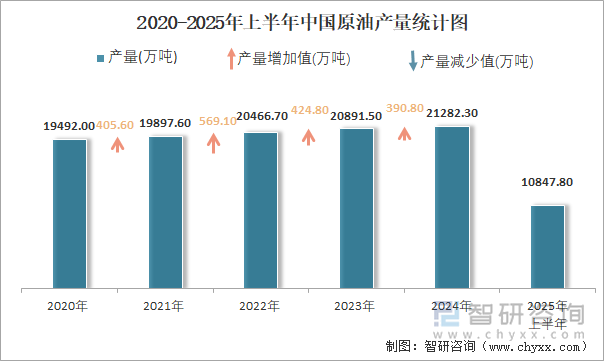
2025年上半年中国原油产量为10847.8万吨 累计增长1.3%
Chan Ye Xin Xi Wang· 2025-08-16 03:36
Group 1 - The core viewpoint of the article highlights the growth in China's crude oil production, with a reported output of 18.2 million tons in June 2025, reflecting a year-on-year increase of 1.4% [1] - In the first half of 2025, China's cumulative crude oil production reached 108.478 million tons, marking a cumulative growth of 1.3% [1] - The article references a report by Zhiyan Consulting that monitors market trends and forecasts for the Chinese crude oil industry from 2025 to 2031 [1] Group 2 - Listed companies mentioned include China National Petroleum Corporation (601857), China Petroleum & Chemical Corporation (600028), Daqing Huake (000985), Guanghui Energy (600256), Qianeng Hengxin (300191), and ST Haiyue (600387) [1] - Zhiyan Consulting is recognized as a leading industry consulting firm in China, providing comprehensive industry research reports and customized services [2]

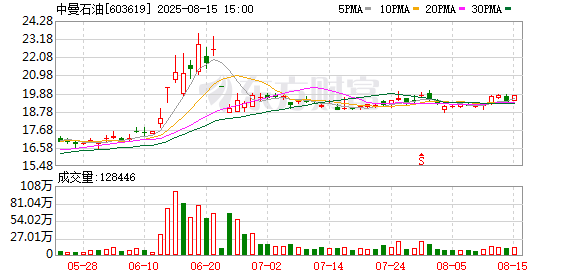
中曼石油:关于变更持续督导保荐代表人的公告
Zheng Quan Ri Bao· 2025-08-15 14:15
Core Viewpoint - Zhongman Petroleum announced a change in the designated sponsor representatives for its 2023 private placement project, ensuring continuity in supervision and compliance [2] Group 1 - Zhongman Petroleum received a notice from Guojin Securities regarding the replacement of the sponsor representative for its 2023 private placement project [2] - The original designated representatives, Yang Lu and Zhou Haibing, were responsible for the project until December 31, 2025 [2] - Due to Yang Lu's job change, he can no longer fulfill his duties, and Wang Yao has been appointed to take over the supervisory responsibilities [2]


8月15日摩根标普港股通低波红利指数C净值下跌0.64%,近1个月累计上涨2.25%
Jin Rong Jie· 2025-08-15 12:05
Core Viewpoint - The Morgan S&P Hong Kong Stock Connect Low Volatility Dividend Index C (005052) has shown a recent decline in net value, with a current value of 1.1781 yuan, down by 0.64% [1] Performance Summary - The fund's performance over the past month has yielded a return of 2.25%, ranking 1358 out of 1510 in its category [1] - Over the last six months, the fund has achieved a return of 18.84%, ranking 157 out of 1353 [1] - Year-to-date, the fund has returned 17.73%, ranking 386 out of 1322 [1] Holdings Overview - The top ten stock holdings of the fund account for a total of 27.13%, with the following allocations: - Far East Horizon: 3.85% - Chongqing Rural Commercial Bank: 3.76% - Hang Lung Properties: 3.30% - Postal Savings Bank of China: 2.76% - Zheshang Bank: 2.61% - PCCW: 2.33% - Henderson Land Development: 2.23% - China Petroleum & Chemical Corporation: 2.14% - Hang Seng Bank: 2.08% - China Construction Bank: 2.07% [1] Fund Details - The Morgan S&P Hong Kong Stock Connect Low Volatility Dividend Index C was established on December 4, 2017, and as of June 30, 2025, it has a total scale of 1.534 billion yuan [1] - The fund is managed by Hu Di and He Zhihao [1]
赓续红色基因 逐绿黄河“几字弯”
Zhong Guo Huan Jing Bao· 2025-08-15 11:47
Core Viewpoint - The article highlights the historical significance and ongoing commitment of Yanchang Oilfield to green development and ecological protection while continuing to extract and utilize valuable oil resources [1][2]. Group 1: Historical Background - Yanchang Oilfield has a rich history dating back to the Northern Song Dynasty, with the first oil well drilled in 1907, marking the beginning of China's oil industry [1]. - The establishment of the first party branch in the oil industry in 1935 and the reorganization into Yanchang Petroleum Group in 2005 are key milestones in its development [1]. Group 2: Green Development Initiatives - Yanchang Oilfield is actively implementing green development strategies in line with national ecological civilization goals, focusing on harmonious coexistence between industrial development and ecological protection [2]. - The company has adopted a dual approach of "investigation and remediation + technological innovation" to strengthen ecological defenses in the Yellow River basin [3]. Group 3: Carbon Capture and Utilization - The CCUS project at Yanchang Oilfield aims to capture and store 300,000 tons of CO2 annually, enhancing oil recovery efficiency by 8.1% and providing carbon sequestration equivalent to 12,000 acres of broadleaf forest [3][6]. - The CO2 injection project at the Anxichuan Oilfield is expected to achieve significant carbon reduction, equivalent to planting 3.24 million trees and saving 1.08 million cubic meters of water annually [6][8]. Group 4: Water Resource Management - Yanchang Oilfield has implemented a comprehensive wastewater treatment process, achieving zero discharge of wastewater and ensuring that all produced water meets industry standards [9]. - The company has constructed 213 wastewater treatment points, processing 1,060 cubic meters of domestic wastewater daily, contributing to improved water quality in oil-affected areas [9]. Group 5: Ecological Restoration and Green Infrastructure - The company has invested 25.87 million yuan in ecological construction, planting over 1.51 million trees and upgrading 256 clean well sites [12]. - Yanchang Oilfield has adopted a "one well, a hundred trees" approach, enhancing the ecological landscape around its operations and promoting a cleaner environment [10][12].
冠通每日交易策略-20250815
Guan Tong Qi Huo· 2025-08-15 11:26
Report Industry Investment Rating No relevant content provided. Core Views - **Copper**: Macroeconomic factors show the US PPI rising significantly, while the supply of copper concentrates is increasing, and the demand is weak. The copper price remains in a narrow - range fluctuation, waiting for market drivers [7]. - **Lithium Carbonate**: Due to the production reduction of CATL, the supply is expected to shrink, and the demand is in a small peak season. The price of lithium carbonate is expected to fluctuate at a high level in the short term [8][9]. - **Crude Oil**: Entering the end of the seasonal travel peak, the inventory of oil products is increasing. OPEC + plans to increase production in September, and the possibility of a cease - fire between Russia and Ukraine is rising. The medium - and long - term downward pressure on crude oil prices is increasing, and the short - term volatility is large [10]. - **Asphalt**: The supply is increasing, the demand is restricted by funds and weather, and the inventory is at a low level. It is recommended to close short positions temporarily [11][12]. - **PP**: The supply is increasing, the demand is weak, and it is about to enter the peak season. It is expected to fluctuate, and a 09 - 01 reverse spread is recommended [13]. - **Plastic**: The supply is increasing, the demand is in the off - season, and the inventory pressure is large. It is expected to fluctuate, and a 09 - 01 reverse spread is recommended [14][15]. - **PVC**: The supply is increasing, the demand is not improved, and the inventory is high. It is expected to fluctuate downward, and a 09 - 01 reverse spread is recommended [16]. - **Coking Coal**: After continuous price increases, the market sentiment cools down, and the price fluctuates at a high level [18]. - **Urea**: The demand is weak, the supply is expected to decrease, and the inventory is accumulating. The short - term trend is weak consolidation [19]. Summary by Relevant Catalogs Futures Market Overview - **Price Changes**: As of August 15, most domestic futures main contracts declined. Rapeseed meal dropped by over 3%, methanol and rapeseed oil by nearly 2%, and many others by over 1%. Polysilicon rose by over 4%, lithium carbonate by over 2%, and some others by over 1%. Stock index futures generally rose, while most treasury bond futures declined [4]. - **Fund Flows**: As of 15:07 on August 15, funds flowed into contracts such as CSI 1000 2509 and CSI 500 2509, and flowed out of contracts such as Shanghai Silver 2510 and Shanghai Gold 2510 [4]. Core Commodity Analysis Copper - **Macro**: The US PPI in July rose significantly, with a month - on - month increase of 0.9% and a year - on - year increase of 3.3%, both exceeding expectations [7]. - **Supply**: The Indonesian smelter's maintenance was extended, and China's copper concentrate imports in July increased by 18.24% year - on - year and 8.94% month - on - month. The TC/RC fees continued to rise, and the production enthusiasm of smelters was fair [7]. - **Demand**: Affected by high - temperature and rainy weather, the downstream demand was weak, and the terminal power grid performed well, while the real estate sector was a drag. The inventory in the Shanghai Futures Exchange did not show a significant increase, supporting the domestic copper price [7]. Lithium Carbonate - **Price**: The average price of battery - grade lithium carbonate was 82,700 yuan/ton, up 700 yuan/ton from the previous trading day; the average price of industrial - grade lithium carbonate was 80,400 yuan/ton, up 650 yuan/ton [8]. - **Supply**: CATL's mining end in Jianxiawo stopped production on August 10, with no short - term resumption plan. The monthly output of this mine accounted for 9% - 10% of the domestic lithium carbonate output, and the supply was expected to shrink [8]. - **Demand**: The demand in the power sector recovered with the return of subsidies, and the trading enthusiasm of traders increased [8][9]. Crude Oil - **Inventory**: The EIA data showed that the inventory of crude oil and diesel increased, and the gasoline inventory decreased slightly [10]. - **Supply**: OPEC + plans to increase production by 547,000 barrels per day in September, and the possibility of a cease - fire between Russia and Ukraine is rising, increasing the medium - and long - term downward pressure on prices [10]. - **Price**: Saudi Aramco raised the official selling price of Arab Light crude oil to Asia in September [10]. Asphalt - **Supply**: The weekly asphalt production rate increased by 1.2 percentage points to 32.9%, and the expected production in August decreased by 5.1% month - on - month and increased by 17.1% year - on - year [11]. - **Demand**: The downstream production rates mostly increased, but the demand was restricted by funds and weather. The national shipment volume decreased by 11.34% week - on - week [11][12]. - **Inventory**: The inventory - to - sales ratio of asphalt refineries increased slightly but remained at a low level in the same period in recent years [12]. PP - **Supply**: The production rate of PP enterprises decreased to about 83.5%, and the production ratio of standard - grade drawstring decreased to about 28.5%. New capacity is planned to be put into production in August, and the number of maintenance devices has increased slightly [13]. - **Demand**: The downstream demand was weak, and the new orders were limited. The downstream procurement was mainly for rigid needs, but the production rate of plastic weaving increased slightly [13]. Plastic - **Supply**: The plastic production rate dropped to about 87%, and new capacity was put into operation. The production rate decreased slightly recently [14][15]. - **Demand**: The downstream production rate increased slightly, but the agricultural film was still in the off - season, and the new orders decreased. The demand was mainly for rigid needs, and the inventory pressure was large [14][15]. PVC - **Supply**: The PVC production rate increased to 80.33%, and new capacity was put into production in August, with more planned in the future [16]. - **Demand**: The downstream production rate decreased slightly, and the demand was not improved. The real estate sector was still in the adjustment stage [16]. - **Inventory**: The social inventory continued to increase, and the inventory pressure was large [16]. Coking Coal - **Price**: The price in the Shanxi market remained unchanged, while the price of Mongolian 5 coking coal decreased by 44 yuan/ton [18]. - **Supply**: The supply data increased, the production of clean coal and raw coal increased, and the inventory of mine clean coal decreased [18]. - **Demand**: The profit of independent coking enterprises turned positive, the production of downstream coke increased, and the inventory decreased. However, the iron - making water production decreased, and the profitability of steel mills weakened [18]. Urea - **Supply**: Next week, many urea enterprises will conduct inspections, and the supply is expected to decrease [19]. - **Demand**: The production rate of compound fertilizer enterprises increased slightly, but the production rate of melamine decreased significantly, dragging down the domestic demand for urea [19]. - **Inventory**: The factory inventory increased, mainly due to the weak demand after the end of agricultural demand [19].
港股15日跌0.98% 收报25270.07点
Xin Hua She· 2025-08-15 11:08
(文章来源:新华社) 香港本地股方面,长实集团跌1.74%,收报37.34港元;新鸿基地产跌5.35%,收报92港元;恒基地产跌 4.63%,收报27.6港元。 中资金融股方面,中国银行跌1.98%,收报4.45港元;建设银行跌2.26%,收报7.8港元;工商银行跌 3.09%,收报5.96港元;中国平安跌0.52%,收报57.6港元;中国人寿涨3.13%,收报24.36港元。 石油石化股方面,中国石油化工股份跌1.12%,收报4.43港元;中国石油股份跌0.39%,收报7.68港元; 中国海洋石油跌0.47%,收报18.9港元。 新华社香港8月15日电香港恒生指数15日跌249.25点,跌幅0.98%,收报25270.07点。全日主板成交 3126.87亿港元。 国企指数跌89.84点,收报9039.09点,跌幅0.98%。恒生科技指数跌32.86点,收报5543.17点,跌幅 0.59%。 蓝筹股方面,腾讯控股涨0.34%,收报592港元;香港交易所涨0.05%,收报439.4港元;中国移动跌 0.17%,收报88.25港元;汇丰控股跌0.1%,收报100.3港元。 ...
阳光油砂:侯蕊珊获委任为公司秘书及授权代表
Zhi Tong Cai Jing· 2025-08-15 09:37
Group 1 - Sunshine Oilsands (02012) announced that Ms. Zhou Minyan has submitted her resignation as the company secretary and authorized representative, effective from August 15, 2025 [1] - Following Ms. Zhou's resignation, the board is pleased to announce that Ms. Hou Ruishan has been appointed as the company secretary and authorized representative, effective from August 15, 2025 [1]