稀土

Search documents
MP Materials盘前涨近10%
Ge Long Hui A P P· 2025-11-19 13:51
格隆汇11月19日|MP Materials盘前上涨近10%,此前该公司与美国政府宣布和一家沙特矿业公司合 作,共同开发稀土精炼厂合资企业。 ...
白宫宣布大胜,中方后退4步,话音刚落,美签下14亿美元稀土大单
Sou Hu Cai Jing· 2025-11-19 06:37
Group 1 - The article discusses the U.S. government's portrayal of a "major victory" in negotiations with China, highlighting four key commitments made by China, but questions the simplicity of this narrative [1][3] - The U.S. signed a $1.4 billion contract to build a rare earth magnet factory, primarily funded by the Department of Defense, indicating a need to reduce reliance on Chinese rare earths despite claims of victory [1][4] - The article suggests that the U.S. is anxious and insecure about its dependence on Chinese rare earths, as over 83% of refined rare earth products come from China, which are critical for U.S. military systems [4][5] Group 2 - The upcoming U.S. midterm elections are crucial for Trump, who needs a diplomatic "victory" to gain support, despite limited achievements in foreign policy [3][5] - The U.S. has made concessions in key areas, such as relaxing export restrictions on high-tech products to China and not imposing new tariffs, indicating a mutual compromise rather than a one-sided victory [3][4] - China's strategy in the rare earth market involves stricter export controls and investment in recycling technology, enhancing its influence while avoiding criticism for being overly aggressive [4][5] Group 3 - The U.S. faces significant challenges in establishing domestic rare earth processing facilities due to environmental regulations and political complexities, which may hinder its ability to catch up with China [5][7] - China's advancements in rare earth processing and technology, particularly in high-end applications like electric vehicles and robotics, position it favorably in the global market [5][7] - The article concludes that the U.S. government's narrative of victory is contradicted by its urgent investment in rare earth production, reflecting underlying anxiety rather than success [5][7]

马来西亚产出重稀土!西方突围,中国会失守全球98%的垄断地位吗
Sou Hu Cai Jing· 2025-11-18 18:02
Core Insights - Rare earth elements are essential in modern industry, particularly in defense and high-tech sectors, with heavy rare earths like dysprosium and terbium being crucial for manufacturing high-strength magnets and high-temperature alloys [2] - China dominates the global rare earth refining capacity, controlling over 90% of the market, especially in heavy rare earth separation, which is nearly 100% [2][6] - Western countries are attempting to diversify their rare earth supply chains due to reliance on China, but face significant technological and cost challenges [2][4] Group 1: China's Dominance - China's annual production of heavy rare earths exceeds 150,000 tons, far surpassing Lynas's output, which is only 1% of China's level [6] - China holds 439 patents related to refining processes, with purity levels consistently above 99% [6] - The Chinese government is expanding export controls on rare earths, adding five more elements to the list, indicating a strategic move to maintain its market position [15] Group 2: Western Efforts - Lynas Rare Earths has achieved a breakthrough in heavy rare earth separation at its plant in Malaysia, with plans to produce dysprosium oxide by May 2025 and expand to terbium [4] - The plant is designed to meet military demands, with an initial capacity of 1,500 tons of separated oxides, which will be increased to 5,000 tons by 2026 [4] - Western countries, including the US, EU, and Japan, are investing in overseas projects to reduce dependence on a single source, but face challenges in local regulations and training [7][11] Group 3: Technological Competition - China is advancing in technology, with research institutions reducing the development cycle for neodymium-iron-boron magnets to 17 months using quantum computing models [6] - The Chinese recycling system has achieved a 35% recovery rate, which helps alleviate pressure on mining resources [13] - Western companies are struggling with high costs and dependency on government subsidies, making it difficult to compete with China's established supply chain [11][15] Group 4: Future Outlook - The global rare earth competition is fundamentally a technological race, with China controlling the entire lifecycle from mining to recycling [18] - Western efforts to break free from dependence on China are expected to take a decade, with limited short-term impact [18] - The establishment of alliances, such as the BRICS rare earth alliance, aims to enhance resource security and increase production capacity [11][15]
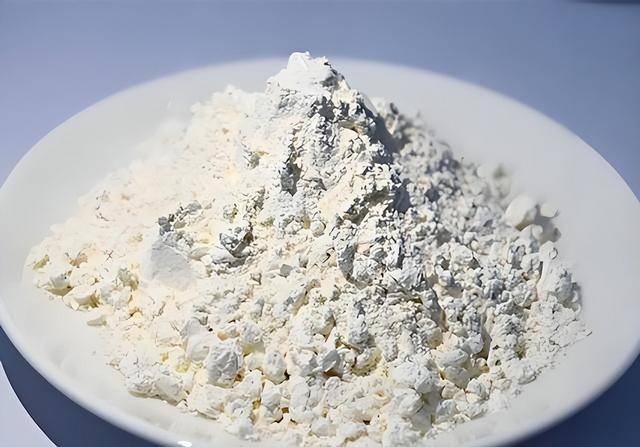
内行人大揭秘,“工业维生素”稀土的反常识真相
Sou Hu Cai Jing· 2025-11-18 17:12
Core Insights - Rare earth elements, often referred to as "industrial vitamins," are essential for various technologies despite their low usage in products [4][5] - China has established itself as a dominant player in the rare earth industry due to technological advancements and control over the entire supply chain [6] Group 1: Supply and Demand Dynamics - Global rare earth reserves are approximately 90 million tons, significantly higher than gold reserves of 0.064 million tons [4] - China's strict quota system has limited supply growth to only 5% last year, while demand from sectors like electric vehicles and wind energy is expected to grow at around 10% annually over the next 3-5 years [7] - The price disparity between domestic and international markets, with domestic praseodymium-neodymium oxide priced at approximately 547,000 CNY per ton compared to a proposed floor price of 789,000 CNY per ton in the U.S., further supports price increases [8] Group 2: Technological Advancements - China's success in rare earth extraction is attributed to the "cascade extraction technology" developed by academician Xu Guangxian, allowing for a purity level of 99.9999% (6N), surpassing the 99.99% (4N) achieved overseas [6] - China is the only country with a complete rare earth industry chain, making it difficult for other nations to rebuild their supply chains in the short term [6] Group 3: Investment Opportunities - Ordinary investors are encouraged to consider the rare earth ETF (159713), which includes over 40 stocks with nearly 50% exposure to both upstream and downstream segments of the industry [9]
厦门钨业子公司金龙稀土拟定向增发不超2668万股普通股
Zhi Tong Cai Jing· 2025-11-18 09:57
Core Viewpoint - Xiamen Tungsten Co., Ltd. announced that its subsidiary, Jinlong Rare Earth, has been listed on the National Equities Exchange and Quotations, planning to implement a targeted stock issuance scheme to raise funds for working capital [1] Group 1: Stock Issuance Details - Jinlong Rare Earth plans to issue up to 26.68 million ordinary shares at a price of 1.50 RMB per share, based on the audited net asset value for the year 2024 [1] - The expected total amount to be raised is not more than 40.02 million RMB [1] - All shareholders of Jinlong Rare Earth will subscribe to the new shares according to their respective shareholding ratios [1] Group 2: Subscription Amounts - The company and related parties, including Yekong Fund, Chuanghe Xincai, and Jiatai Green Energy, plan to subscribe amounts of 26.09 million RMB, 2.20 million RMB, 0.80 million RMB, and 0.80 million RMB respectively [1]

厦门钨业(600549.SH)子公司金龙稀土拟定向增发不超2668万股普通股
智通财经网· 2025-11-18 09:55
Core Viewpoint - Xiamen Tungsten Co., Ltd. announced that its subsidiary, Jinlong Rare Earth, has been listed on the National Equities Exchange and Quotations, planning to implement a targeted stock issuance scheme to raise funds for working capital [1] Group 1: Stock Issuance Details - Jinlong Rare Earth intends to issue up to 26.68 million ordinary shares at a price of 1.50 RMB per share, based on the audited net asset value for the year 2024 [1] - The expected total amount to be raised is not more than 40.02 million RMB [1] - All existing shareholders will subscribe to the new shares in proportion to their current holdings [1] Group 2: Subscription Amounts - The company and related parties plan to subscribe amounts of 26.09 million RMB, 2.20 million RMB, 0.80 million RMB, and 0.80 million RMB respectively [1]
惊天预警!前CIA特工曝美稀土困局:AI霸权竟被中国“卡脖子”?
Sou Hu Cai Jing· 2025-11-18 06:38
Core Viewpoint - The article highlights the strategic implications of the U.S. reliance on China for rare earth elements, particularly in the context of AI competition and national security concerns [1][3][5]. Group 1: Rare Earth Dependency - The U.S. is heavily dependent on China for rare earth elements, with China controlling 80% of global rare earth refining capacity and the U.S. lagging in separation technology [3][5]. - The F-35 fighter jet exemplifies the U.S. rare earth dilemma, as each jet requires 417 kg of rare earth permanent magnet materials, while the only U.S. processing plant can only support 120 jets annually [3][5]. Group 2: AI and Strategic Competition - China has transitioned from a "follower" to a "runner-up" in AI, making significant advancements in quantum computing, autonomous driving, and smart drone technology [3]. - The potential for China to set global AI standards poses a risk of creating a "digital rentier" system, similar to Boeing's historical dominance in the aviation industry [5]. Group 3: Economic Disparities - The article contrasts the booming AI sector on Wall Street with the struggles of the automotive industry in Detroit, highlighting a disconnect in the economy due to rare earth shortages [3]. - China's rare earth export certification system aims to ensure that rare earths are used for civilian technology rather than military applications, with 90% of exports to the EU directed towards green technologies [5]. Group 4: Global Alliances and Technological Advancement - China is forming a "rare earth + AI" ecosystem with countries like Brazil and Australia, utilizing proprietary ion adsorption methods that reduce energy consumption by 40% and enhance purity [5][7]. - The article emphasizes that true strength comes from collaboration and shared technological advancements rather than monopolistic practices, positioning China as a leader in global tech cooperation [7].

MP Materials, Rare Earth Stocks Fall—Again
Barrons· 2025-11-17 16:47
Core Viewpoint - Positive comments from D.A. Davidson analyst Matt Summerville did not prevent MP Materials shares from declining again early Monday [1] Group 1 - Analyst Matt Summerville provided positive comments regarding MP Materials [1] - Despite the positive outlook from the analyst, MP Materials shares continued to fall [1]


进步最快的百强市,慢了?
Mei Ri Jing Ji Xin Wen· 2025-11-17 14:46
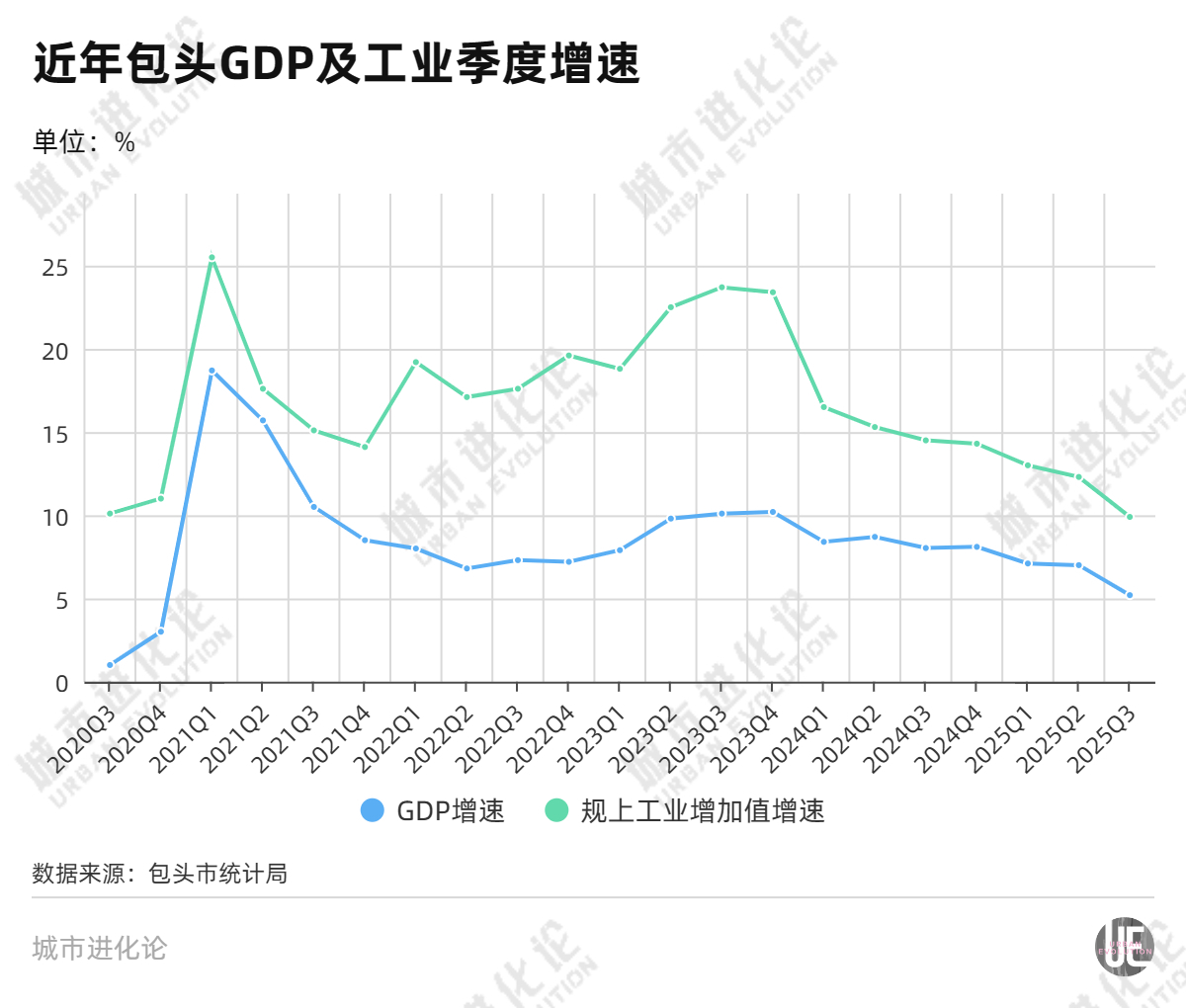
Core Insights - Inner Mongolia has released a significant document titled "Comprehensive Promotion of Beautiful Inner Mongolia Construction to Strengthen the Ecological Security Barrier in Northern China Planning Outline (2025-2035)" which emphasizes the development of Baotou as a key industrial city [1] - Baotou aims to enhance urban development, focusing on the construction of the Hohhot-Baotou-Ordos-Yulin urban cluster and the high-quality development of the Hohhot-Baotou-Ordos-Ulanqab region [1] - The city is set to develop a large-scale wind power base and become the largest rare earth new materials base in China, leveraging its rich resources [1] Economic Performance - In the first three quarters of this year, Baotou's industrial added value growth rate was 9.9%, marking the end of a 60-month streak of double-digit growth [2][5] - Baotou's GDP is projected to reach 457.51 billion yuan in 2024, with an 8.1% growth rate, continuing to lead among China's top 100 cities [2][3] - From 2020 to 2024, Baotou's GDP has increased from 276.97 billion yuan to 457.51 billion yuan, moving up in national rankings from outside the top 100 to 72nd place [2] Industrial Development - Baotou's industrial growth is primarily driven by its traditional heavy industries, including rare earths, polysilicon photovoltaic, steel, and aluminum, which are now valued at over 1 trillion yuan [2][10] - The rare earth industry in Baotou has seen a 19.7% increase in added value in the first three quarters, contributing significantly to overall industrial growth [12] - The city is also focusing on expanding its renewable energy sector, particularly in solar and wind power, to create a comprehensive industrial system [10][11] Infrastructure and Transportation - Baotou is prioritizing transportation infrastructure as part of its development strategy, with plans for high-speed rail connections to enhance regional integration [17][18] - The ongoing construction of the Baotou-Yinchuan high-speed rail is expected to improve connectivity and support industrial upgrades [18] - The establishment of a modern transportation network is seen as crucial for Baotou to leverage its industrial strengths and enhance its position within the urban cluster [18] Strategic Goals - Baotou has set a target to achieve a GDP of around 500 billion yuan by 2025, indicating ambitious growth plans despite current economic challenges [3][6] - The city aims to return to its historical peak GDP ranking, which was 41st in 2010, by addressing structural challenges and enhancing innovation capabilities [7][13] - The local government is focusing on integrating technological innovation with industrial development to strengthen its economic foundation [13]
美财长感恩节前急盼稀土协议,威胁中国不许变卦,美国底气何在?
Sou Hu Cai Jing· 2025-11-17 14:14
Core Viewpoint - The urgency expressed by U.S. Treasury Secretary Yellen for a rare earth supply agreement with China before Thanksgiving highlights the underlying anxiety regarding dependency on Chinese supply chains and the complexities of international trade dynamics [1][3][9] Group 1: U.S. Actions and Intentions - Yellen's recent activities, including inaugurating a rare earth processing center, signal a desire to reduce reliance on China while simultaneously seeking a contractual agreement to ensure supply stability [1][3] - The push for a supply agreement reflects a strategic move to create a safety net for the U.S. supply chain, allowing for a narrative of accountability in case of future disruptions [3][4] - The U.S. is concerned about potential supply chain disruptions, which is evident in its pursuit of additional agreements despite China's existing export control policies [4][9] Group 2: Global Context and Implications - The geopolitical landscape, particularly Japan's recent political developments, adds complexity to U.S.-China relations and the strategic resource allocation [6][9] - The interdependence of global supply chains means that any disruption in one area can have widespread effects, emphasizing the need for stable agreements [11] - The ongoing competition in technology and resource acquisition underscores the urgency for the U.S. to secure reliable sources of high-quality rare earth materials [9][11] Group 3: Market Dynamics and Future Outlook - Historical patterns of U.S.-China trade disputes suggest that effective resolutions require mutual respect for interests rather than aggressive posturing [8][11] - The current negotiations around rare earth supplies reveal a blend of anxiety and expectation, indicating that both parties are aware of the high stakes involved [11] - The complexity of the situation suggests that achieving a truly secure supply chain will require more than just contractual agreements; it necessitates a focus on enhancing communication and transparency [11]