
商业航天

Search documents
北京商业航天产业聚势起飞
Jing Ji Ri Bao· 2026-01-27 22:06
北京火箭大街竣工,打造商业航天创新枢纽;推进上下游协同,形成完整产业链条;系统性出台支持商 业航天发展政策……新年伊始,作为全球创新网络关键枢纽,北京已形成涵盖卫星制造、火箭研制等全 产业链生态体系,在筑梦星辰大海的征程上大步向前。 近日,北京火箭大街项目现场,迎来一次充满未来感的"交接仪式"—— 来自北京亦庄的人形机器人"天工"将由一辆无人驾驶乘用车运送至北京火箭大街现场的《项目竣工联合 验收通过意见书》,郑重交到建设方北京亦庄星箭科技产业发展有限公司负责人手中,转达"受经开区 行政审批局委托,向你公司颁发北京火箭大街项目竣工联合验收通过意见书"。这一刻,银河航天的新 型低轨宽带通信卫星正飞跃火箭大街上空,让机器人"天工"和一部小米手机与低轨宽带互联网卫星连 通,完成全球首次"天地人机"实时互联的场景展示。 至此,作为北京市商业航天领域标杆工程,北京火箭大街项目完成竣工备案,进入交付启用阶段。建设 方北京亦庄星箭科技产业发展有限公司相关负责人介绍,该项目总建筑面积14.5万平方米,是全国首个 商业航天共性科研生产基地。未来,将可提供星箭研发、试验、智能制造、空天地一体化运控、产业培 育和公共服务等10余项共 ...
加快打造首都南部新增长极
Bei Jing Ri Bao Ke Hu Duan· 2026-01-27 21:27
Group 1: Economic Development Initiatives - Daxing District aims to leverage the "14th Five-Year Plan" to enhance its role in the capital's development, focusing on industrial leadership and project-driven growth [1] - The district will target six key industries, including the air transport economy and biomedicine, and implement a "6+5+3" industrial development layout to accelerate new productivity [1] - Daxing plans to attract over 1,000 high-quality projects and establish at least 30,000 new business entities by 2026, fostering innovation and entrepreneurship [1] Group 2: Urban and Rural Development - Daxing will deepen the "central city + beautiful countryside + characteristic towns" urban-rural development pattern, aiming to build a high-quality modern plain city [2] - The district will promote the construction of garden cities and enhance the living environment, focusing on the development of specialty seedling industries and creating ideal living spaces [2] - Public service improvements will include the acceleration of hospital projects and the addition of 2,880 new school places, enhancing the overall quality of life for residents [2] Group 3: Integration and Collaboration - Daxing District will integrate into the Beijing-Tianjin-Hebei coordinated development and the modernization of the capital urban area, seizing opportunities for high-quality development [3] - The district is committed to showcasing greater contributions to the overall development of the capital, reflecting a strong determination to achieve a successful start to the "14th Five-Year Plan" [3]
探访天兵科技“天龙三号”首飞箭
Shang Hai Zheng Quan Bao· 2026-01-27 18:36
Core Viewpoint - The Chinese commercial aerospace sector is accelerating its development, with the "Tianlong-3" rocket set to make its maiden flight in 2026, showcasing significant advancements in technology and production capabilities [3][4]. Group 1: Company Developments - Tianbing Technology has announced that its self-developed "Tianlong-3" rocket is in a launch-ready state after completing pre-launch preparations in Jiuquan [3]. - The "Tianlong-3" rocket features a near-Earth orbit capacity of 17 to 22 tons, which is eight times that of the "Tianlong-2" rocket, addressing industry pain points related to insufficient launch capacity [5]. - The manufacturing base in Zhangjiagang is capable of assembling up to 50 rockets annually, with the assembly of a single rocket taking approximately two months [4][5]. Group 2: Technological Advancements - The "Tianlong-3" rocket incorporates over 50 new technological breakthroughs, including a launch thrust of nearly 900 tons and the largest lightweight carbon fiber fairing in the country [5]. - The successful completion of the "one rocket, 36 satellites" separation test will facilitate the large-scale deployment of low-Earth orbit satellite constellations while reducing costs by approximately 30% [5]. Group 3: Industry Trends - The commercial aerospace industry in Jiangsu is experiencing significant growth, with a projected annual compound growth rate of about 14% during the 14th Five-Year Plan period [8]. - Various projects, such as the Xinghe Power Aerospace Manufacturing Base in Nanjing and the first commercial aerospace-themed merger bond issuance in Wuxi, indicate a robust expansion of the industry [8]. Group 4: Financial Aspects - Tianbing Technology has raised over 6 billion yuan in funding, with a valuation nearing 22 billion yuan, primarily supported by state-owned capital [7]. - The company has initiated its IPO process, with CITIC Securities serving as the advisory institution [7].

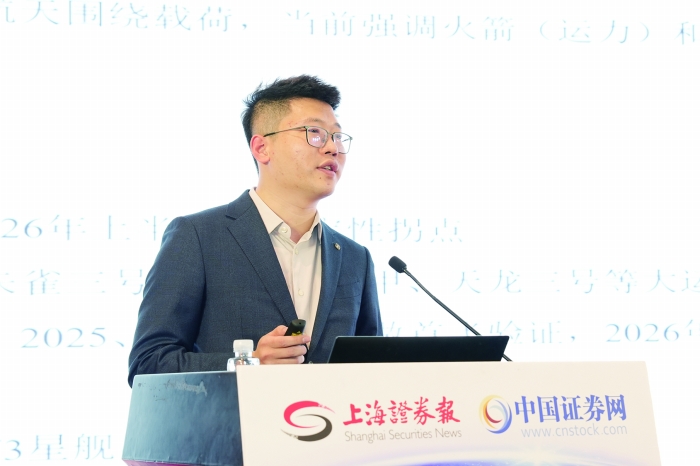
东吴证券研究所所长助理王紫敬:商业航天将是今年投资核心主线之一
Shang Hai Zheng Quan Bao· 2026-01-27 18:36
王紫敬 ◎张玮华 记者 刘怡鹤 商业航天板块自2025年末启动一轮火爆行情并延续至今。日前,东吴证券研究所所长助理、计算机首席 分析师王紫敬在"上证首席讲坛"发表演讲并接受上海证券报记者专访时表示,商业航天将在2025年底到 2026年上半年迎来决定性拐点,并成为贯穿2026年全年的投资核心主线之一。建议优选龙头标的,在火 箭、卫星、SpaceX供应链等投资方向上实现平铺,把握市场分歧与波动机遇。 多因素支撑商业航天行情 王紫敬认为,支撑商业航天本轮强势行情的重要逻辑是,我国在大型可回收液体火箭领域发生了"从0到 1"的质变,同时产业具有足够宏大的未来叙事。 王紫敬认为,上述头部企业一旦登陆资本市场,将有助于提高整个商业航天板块标的的质量,并扩大其 容量,以弥补当前优质标的的稀缺性。SpaceX若登陆资本市场,可能成为有史以来市值最大的上市公 司之一。这些都将进一步提升资本市场对商业航天领域的关注度,并提振整个板块的估值中枢。 产业方面,今年最主要的看点在于我国一批新型号火箭的首飞,及其在可重复使用技术、卫星互联网组 网方面的突破。 "今年国内预计将有近十发新型号火箭首飞,我对此充满信心,相信创造行业历史的时 ...

叶世阳:今年投资15亿元攻关航天数据、算力、算法
Xin Lang Cai Jing· 2026-01-27 16:54
叶世阳建议,优化海南商业航天产业投融资环境,尽快建立多元资金渠道,涵盖政府引导基金、社会资 本股权融资资金、商业银行的贷款资金和政策银行的贷款资金等。加大精准政策支持力度,包括对卫 星、火箭、发射、测控、数据等全产业链企业的支持力度,以加快产业聚集,尽快形成海南商业航天产 业协同发展格局。 2026年,文昌航天超算中心将投资15亿元,全面围绕航天数据、算力、算法开展攻关工作。 省人大代表,海南现代科技集团有限公司执行总裁,文昌航天超算智慧科技有限公司董事长叶世阳介 绍,文昌航天超算中心充分发挥海南自由贸易港国际数据跨境安全有序流动政策,和文昌国际航天城商 业航天促进政策的叠加优势,全力打造航天数据产业链。 目前,文昌超算1号、2号、3号卫星并网吉林一号星座高效运行,13座卫星地面站投入使用。建成海南 国际数据加工贸易区,实现航天数据加工贸易出口常态化运营,赋能海南数商企业发展。建成海南智算 创新发展研究院,引进21名专家院士,围绕航天数据的存算关键技术开展研究,相关成果获得海南省科 技进步奖。 ...
北京火箭大街六大共性服务平台启动
Xin Lang Cai Jing· 2026-01-27 16:54
据了解,北京火箭大街展示与运控中心作为商业航天测运控中心、商业航天公共服务平台的空间载体, 将为企业提供卫星运控服务和交流推介平台。经开区相关负责人介绍,此次推进会上发布的六大共性服 务平台,是精准把握商业航天加快创新发展需要,联合国内龙头单位,解决制约产业化发展上台阶的关 键问题,降低研发成本,缩短开发周期,将对统筹实现商业航天高质量发展与高水平安全,提升产业国 际竞争力发挥重要推动作用。 本报讯(记者 孙艳) 近日,第三届北京商业航天产业高质量发展推进会在北京经济技术开发区(以下 简称经开区)召开,会上启动商业航天测运控中心、共性试验平台、商业航天公共服务平台、商业航天 元器件及其应用支持一站式服务平台、时空信息服务平台、太空态势感知服务合作平台等六大共性服务 平台,进一步完善北京火箭大街产业发展引领支撑功能及科研生产服务体系。 (来源:劳动午报) 转自:劳动午报 目前,各个共性服务平台正全面落地。其中,商业航天测运控中心将在北京火箭大街展示与运控中心落 成,集成人工智能新兴技术,实现卫星任务规划、资源调度和态势监视的一体化智能运行,提供全球测 控服务,显著提升商业星座运控效能。 ...
除了太空打卡,还能监测楼盘施工进展
Qi Lu Wan Bao· 2026-01-27 15:43
Core Viewpoint - The rapid development of commercial space tourism and satellite technology is transforming the financial and agricultural sectors, with significant investments and advancements expected in the coming years [2][6][11]. Group 1: Space Tourism - Beijing's "Chuan Yue Zhe" company unveiled its manned spacecraft "Chuan Yue Zhe Yi Hao (CYZ1)" and has received over 20 reservations for space tourists, aiming for its first manned flight by 2028 [2][3]. - The initial list of space tourists includes notable figures such as academicians and entrepreneurs, indicating a broadening appeal of space travel beyond traditional demographics [2]. Group 2: Satellite Technology in Banking - The successful launch of satellites by China Merchants Bank and Shanghai Pudong Development Bank integrates them into China's first global low-orbit satellite IoT constellation, enhancing financial risk management [4]. - China Merchants Bank utilizes remote sensing technology for high-precision monitoring of construction projects, achieving over 95% accuracy in monitoring [4]. - Other banks, including Industrial and Commercial Bank of China and Bank of China, are also adopting satellite remote sensing for various applications, indicating a trend towards digital risk management in the banking sector [5]. Group 3: Commercial Space Industry Growth - The commercial space industry is experiencing rapid growth due to favorable policies, capital investment, and technological breakthroughs, with a projected industry financing total of 18.6 billion yuan in 2025, a 32% increase year-on-year [6][7]. - The establishment of dedicated regulatory bodies and supportive policies at both national and local levels is fostering the development of commercial space enterprises [6]. Group 4: Technological Advancements - 2025 is marked as the "Year of Reusable Rockets" in China, with 50 launches completed, accounting for 54% of the national total, indicating a significant shift towards operational efficiency in the industry [8]. - The development of large low-orbit satellite constellations is reducing manufacturing costs by approximately 30%, enhancing system reliability and service coverage [9]. Group 5: Challenges Ahead - The commercial space industry faces challenges in transitioning from concept to market viability, with questions about asset monetization and sustainable revenue generation [10]. - The industry is in a critical phase from 2025 to 2027, where establishing effective application scenarios and user willingness to pay will be essential for long-term success [10][11].


从“万亿之省”“万亿之城”拔节生长看中国经济发展之道
Xin Hua Wang· 2026-01-27 15:40
Core Insights - In 2025, China's economy reached a new milestone with a total GDP surpassing 140 trillion yuan, marking significant advancements in regional and urban economic scales [3] - Key cities and provinces have achieved notable GDP thresholds, including Shandong becoming a "10 trillion yuan province" and Beijing a "5 trillion yuan city," reflecting the resilience and growth of China's economy amidst complex environments [4][6] Economic Milestones - Beijing's GDP exceeded 5 trillion yuan, making it the second city in China to reach this level, with an economic increment of approximately 1.4 trillion yuan over the past five years [4] - Shandong's economy crossed the 10 trillion yuan mark, becoming the third province in China to achieve this, following Guangdong and Jiangsu, and the first in Northern China [4] - Dalian and Wenzhou have both surpassed the 1 trillion yuan threshold, bringing the total number of "trillion yuan cities" in China to 29 [6] Regional Economic Dynamics - The economic landscape of China is evolving, with a balanced development pattern emerging between the north and south, as well as east and west [10] - The "trillion yuan" threshold is seen as a recognition of comprehensive economic strength, with "10 trillion yuan provinces" ranking among the top fifteen global economies [10] - The economic growth in regions like Shandong and cities like Shenzhen's Nanshan District showcases a shift towards high-quality development and innovation-driven growth [14][24] Development Strategies - Different provinces and cities are adopting unique strategies for growth, such as Beijing's focus on reducing non-capital functions and enhancing high-quality development [13] - Shandong is transitioning from a traditional industrial base to a more advanced economic structure, with over 40% of its key industries now featuring advanced capacities [13] - Nanshan District in Shenzhen exemplifies high economic density and innovation, achieving a GDP of over 1 trillion yuan within a small geographical area [8][22] Innovation and Reform - Innovation is a key driver of economic growth, with Beijing maintaining a high R&D investment intensity and Dalian seeing a significant increase in high-value patents [16] - Reforms aimed at improving the business environment are crucial for the rise of "trillion yuan cities," with initiatives in Dalian and Wenzhou enhancing operational efficiency for businesses [16] - The focus on quality of life and public welfare is evident, with significant portions of fiscal spending in Shandong directed towards education, healthcare, and social services [18]

太空大战:技术与政策共振,商业航天需求高景气
材料汇· 2026-01-27 15:17
Group 1 - The article discusses the limited resources in low Earth orbit (LEO) and the accelerated competition among countries to secure these resources, particularly in satellite deployment and frequency bands [3][6][9] - Satellites are categorized into three types: scientific satellites, technology demonstration satellites, and application satellites, each serving distinct functions and applications [3][4] - The International Telecommunication Union (ITU) rules dictate a "first come, first served" approach for occupying orbital and frequency resources, leading to intensified competition among nations [9][10] Group 2 - The article highlights that the number of global rocket launches is on the rise, with the United States leading the growth, primarily due to SpaceX's advancements in reusable rocket technology [12][14] - SpaceX's Falcon 9 rocket has significantly reduced launch costs, enabling large-scale deployment of the Starlink satellite constellation [15][21] - SpaceX has deployed nearly 10,000 satellites, aiming for a total of 42,000, establishing a dominant position in the global low Earth orbit communication network [21][23] Group 3 - Other countries and companies are also accelerating their satellite constellation deployments, with projects like OneWeb and Amazon's Kuiper Project emerging as competitors to SpaceX [23][24] - China's satellite constellation plans are ambitious, with over 200,000 satellites applied for, indicating a strong commitment to participating in the space race [26][27] - The demand for satellite launches in China is expected to surge between 2026 and 2030, driven by the need to meet ITU deployment requirements [28][30] Group 4 - The commercial space market is projected to reach $800 billion by 2030, with a compound annual growth rate (CAGR) of approximately 10% from 2025 to 2030 [34] - The commercial space industry encompasses a full value chain from materials to end-user applications, including satellite manufacturing, launch services, and satellite applications [37][38] - Companies like Xingtu and Chuangyuan are leading in satellite management services and satellite communication testing, respectively, showcasing the growth of specialized firms within the commercial space sector [40][43]

加快培育新质生产力、布局人工智能产业,委员们这样说
Xin Jing Bao· 2026-01-27 14:52
Group 1: Government Initiatives and Proposals - The Beijing government aims to accelerate the construction of a global benchmark city for the digital economy and fully implement the "Artificial Intelligence +" initiative, establishing a national AI application pilot base [1] - Multiple committee members at the Two Sessions have proposed nurturing new quality productivity, suggesting the layout of pilot platforms, enhancing AI computing power utilization, and promoting the development of embodied intelligence industries [1] Group 2: Challenges in New Quality Productivity Development - There are existing issues in the development of new quality productivity, such as "pilot gaps," poor collaboration mechanisms, and insufficient financial support [2] - The lack of pilot facilities in cutting-edge fields hinders the rapid transformation of laboratory results into industrial capacity, with low local landing rates for key laboratory results [2] Group 3: Recommendations for Improvement - A proposal to establish a cross-field "pilot sharing alliance" to integrate resources from universities, research institutions, and leading enterprises, focusing on high-end chips, biomanufacturing, and robotics [2] - Suggestions include creating a talent directory in the new quality productivity sector and providing annual talent introduction quotas for specialized "little giant" enterprises [5] Group 4: Financial Support and Innovation - Recommendations to expand intellectual property pledge financing and provide interest subsidies for eligible private enterprises, along with establishing a venture capital fund focused on future industries like AI and commercial aerospace [5] - The establishment of a collaborative community for industry-university-research integration to address the disconnect between academic research and enterprise needs [4] Group 5: Enhancing AI and Embodied Intelligence - The importance of building a green intelligent computing power management system to address energy consumption bottlenecks and achieve carbon neutrality [6] - The rapid development of embodied intelligence is noted, with a focus on overcoming existing shortcomings in engineering verification platforms, standard testing systems, and regulatory mechanisms [7]