
渔业

Search documents
我国海水产品产量连续多年全球第一踔厉奋发新征程 | 耕海牧渔 丰富大国饭碗
Zhong Yang Ji Wei Guo Jia Jian Wei Wang Zhan· 2025-09-08 00:24
Core Insights - The report from the Ministry of Natural Resources highlights the solid progress in China's "blue granary" construction, with a 4.8% year-on-year increase in domestic marine aquaculture production in the first half of the year, enhancing food security from the sea [4] - The shift from traditional nearshore aquaculture to deep-sea, intelligent, and green practices is emphasized, with China's marine product output remaining the highest globally for several consecutive years [4][7] Group 1: Technological Advancements - The launch of the large mobile aquaculture vessel "Zhedai Yuyang 60001" marks a significant step in deep-sea aquaculture, capable of moving across oceanic regions and utilizing wave energy for water exchange [5] - The "Donghai 1" semi-submersible aquaculture platform employs a near-wild breeding model, allowing fish to feed naturally, resulting in superior quality due to the clean deep-sea environment [7] - The "Dinghaiwan 1" platform in Fujian utilizes IoT technology for real-time monitoring, achieving five times the yield and ten times the value of traditional aquaculture methods [8] Group 2: Supply Chain Innovations - The integration of drone technology for transporting fish from deep-sea platforms to urban markets significantly reduces logistics time to 90 minutes over a distance of 80 kilometers, ensuring freshness and lowering costs [9] - The development of a comprehensive supply chain from sea to table is highlighted, enhancing efficiency and product quality [9] Group 3: Sustainable Practices - The "Blue Diamond 1" ecological enclosure in Shandong showcases intelligent aquaculture technology with a closed-loop water system, emphasizing water conservation and waste reduction [10] - The trend towards green and low-carbon aquaculture is reinforced by government initiatives promoting sustainable practices across the industry [10][11] - The use of cold water from LNG facilities for aquaculture demonstrates a commitment to ecological protection while optimizing resource use [11] Group 4: Economic Impact - The total marine fishery output in Chaozhou reached 2.118 billion yuan, with a growth rate of 7% in the first half of the year, contributing to the "blue granary" initiative [17] - The transition from traditional wooden rafts to new environmentally friendly plastic cages has increased average production by 25% and average value by 33.3% [17]

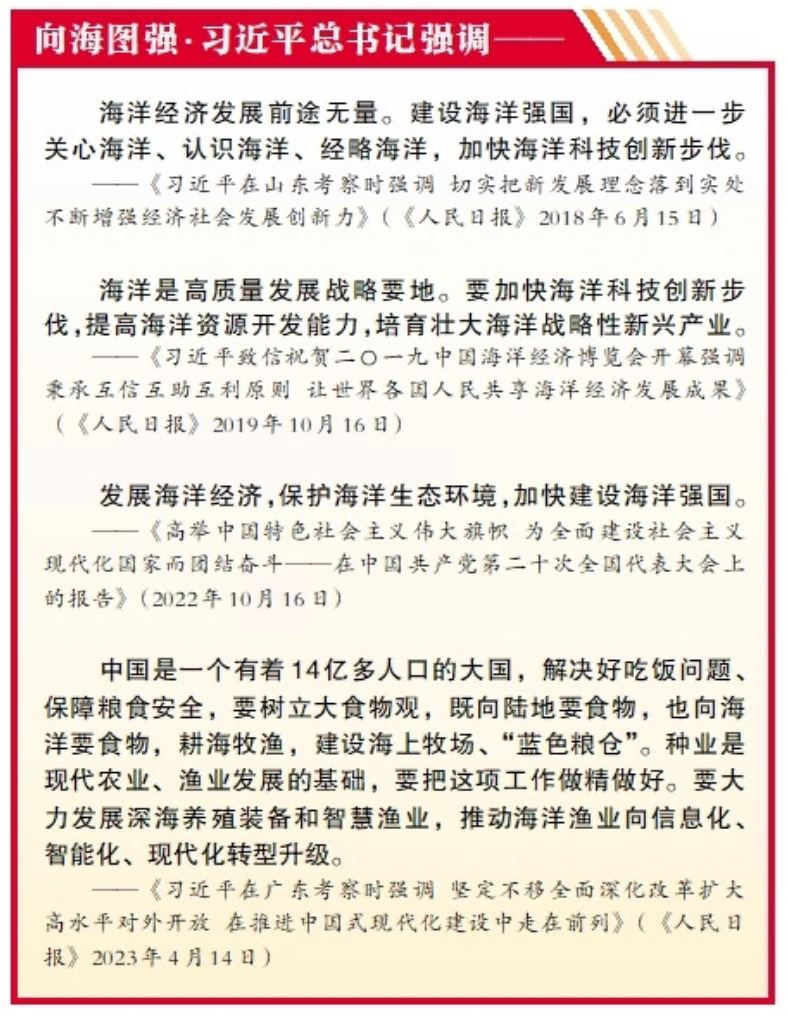
开渔期赶海忙 鲜活海产“游”进市场
Yang Shi Xin Wen Ke Hu Duan· 2025-09-07 14:16
Core Insights - The fishing resources in the Yellow and Bohai Seas have reached the highest density since 2015, following a four-month rest period for resource conservation [1] - The opening of fishing has led to a significant increase in catch volume, with fishermen reporting higher yields compared to previous years [2][3] - The seafood market is experiencing a surge in demand, with online and offline sales channels expanding rapidly [3][4] Group 1: Fishing Industry Developments - The Bohai and Yellow Seas have seen a notable recovery in fish stocks, prompting over 30,000 fishing boats to resume operations [1] - Fishermen are utilizing advanced techniques and equipment to maximize their catch, with reports indicating that a single net can yield around 10 pounds of seafood, which is higher than previous years [2] - The opening of the fishing season has resulted in a bustling market atmosphere, with local consumers eager to purchase fresh seafood [2][4] Group 2: Sales and Market Trends - In Zhoushan, the launch of the crab fishing season has led to a daily influx of nearly 2,000 tons of crabs, with peak days reaching 3,250 tons [4] - The online sales of seafood have seen a significant boost, with daily sales exceeding 4 million yuan in Zhoushan's international seafood market [4] - The logistics of seafood distribution have improved, with companies reporting an 80% reduction in transportation costs for shrimp from coastal areas to inland markets [5][6] Group 3: Aquaculture Innovations - The introduction of shrimp farming in saline-alkali land in Ningxia has shown promising results, with an expected production of 760 tons this year, marking a 40.7% increase [6] - The use of diluted saline water for shrimp farming has been identified as a key factor in enhancing the quality of the shrimp produced [5][6] - Future plans include the exploration of new aquaculture species suitable for saline-alkali conditions, such as large yellow croaker and salmon [6] Group 4: Consumer Behavior and Market Dynamics - The seafood consumption landscape is evolving, with a reported 18.8% increase in seafood shipping volumes from key provinces in August compared to July [7] - The overall transaction volume in national wholesale seafood markets reached 535.34 million tons in the first seven months of the year, reflecting a 3.36% year-on-year increase [7] - The demand for seafood is particularly strong in western regions, with significant growth in trading volumes reported in provinces like Sichuan and Yunnan [7]
西部海鲜消费暴增 生蚝卖爆了
Xin Lang Cai Jing· 2025-09-07 13:02
Core Insights - The seafood consumption in western regions has surged significantly following the fishing season, with logistics data indicating an 18.8% month-over-month increase in seafood shipment volumes from Guangdong, Guangxi, Fujian, and Zhejiang in August compared to July [1] Group 1: Seafood Market Performance - The peak season for seafood products has led to a notable increase in transportation volumes, particularly for oysters, fresh fish, live fish, and shellfish, with most logistics orders being short-distance within provinces [1] - From January to July, the total transaction volume in China's wholesale seafood markets reached 5.3534 million tons, reflecting a year-on-year increase of 3.36%, while the transaction value amounted to 156.265 billion yuan, up 3.23% year-on-year [1] Group 2: Regional Market Trends - In the western regions, including Sichuan, Chongqing, Yunnan, and Gansu, the wholesale seafood markets have also experienced year-on-year growth in transaction volumes [1]
每周股票复盘:开创国际(600097)股东减持4.5万股占总股本0.0187%
Sou Hu Cai Jing· 2025-09-06 22:53
Group 1 - The stock price of Kaichuang International (600097) closed at 11.28 yuan on September 5, 2025, up 0.18% from the previous week [1] - The highest intraday price reached 11.58 yuan on September 1, while the lowest was 10.94 yuan on September 4 [1] - The current total market capitalization of Kaichuang International is 2.718 billion yuan, ranking 5th in the fisheries sector and 4648th in the A-share market [1] Group 2 - On September 5, 2025, Kaichuang International announced that shareholder Beijing Yizhen Technology Development Co., Ltd. reduced its holdings by 45,000 shares, accounting for 0.0187% of the total share capital [2][3] - During the reduction period, the stock price increased by 13.71%, closing at 11.28 yuan on September 5 [2] - The report indicates that the combined shareholding of the concerted action group decreased from 10.0003% to 9.9816% after the reduction [2][3]

资源富足说智利
Jing Ji Ri Bao· 2025-09-06 22:11
Group 1: Economic Overview - Chile is referred to as the "long sock of South America" due to its elongated geography, stretching 4,352 kilometers north to south but only 97 kilometers at its narrowest point [1] - Chile's GDP per capita is projected to be approximately $17,000 in 2024, making it the highest in Latin America and a high-income country [1] - The country's economy is primarily supported by four key industries: copper mining, fruit exports, wine production, and fishing [1] Group 2: Copper Industry - Chile holds the world's largest proven copper reserves, accounting for over 30% of the global total, with reserves exceeding 200 million tons [1][2] - The Chilean Copper Commission (Cochilco) forecasts that copper prices will adjust to a range of $3.90 to $4.00 per pound in 2025, but will stabilize above $4.00 per pound in the long term [3] - The short-term price decline is attributed to supply-side challenges, including aging mines and water resource shortages, which affect copper production capacity [4] Group 3: Fruit Exports - Chile is the world's largest exporter of cherries, with an expected export volume of 60,000 tons in the 2024/2025 season, representing 55% of global cherry exports [5] - The country produces approximately 50,200 tons of cherries in the 2023/2024 season, ranking fourth globally [5] Group 4: Wine Production - Chile ranks second in South America and seventh globally in wine production, with an annual output of 1.1 to 1.2 billion liters [6] - Approximately 75% of Chile's wine production is exported, with over 800 million liters expected to be shipped globally in 2023 and 2024 [6] Group 5: Fishing Industry - Chile has a coastline exceeding 10,000 kilometers, providing rich fishing resources [8] - The export of Chilean salmon to China has surged, with total export value surpassing that of lithium, making it the second-largest export product after copper [8] Group 6: Industry Development - Chile has focused on extending its industrial chain and promoting green transformation in traditional industries [8] - The country is optimizing its export policies and expanding into emerging markets, particularly in China [8]
阳江海关搭建供港“快车道”,助力“开渔第一鲜”直达香港餐桌
Sou Hu Cai Jing· 2025-09-06 18:53
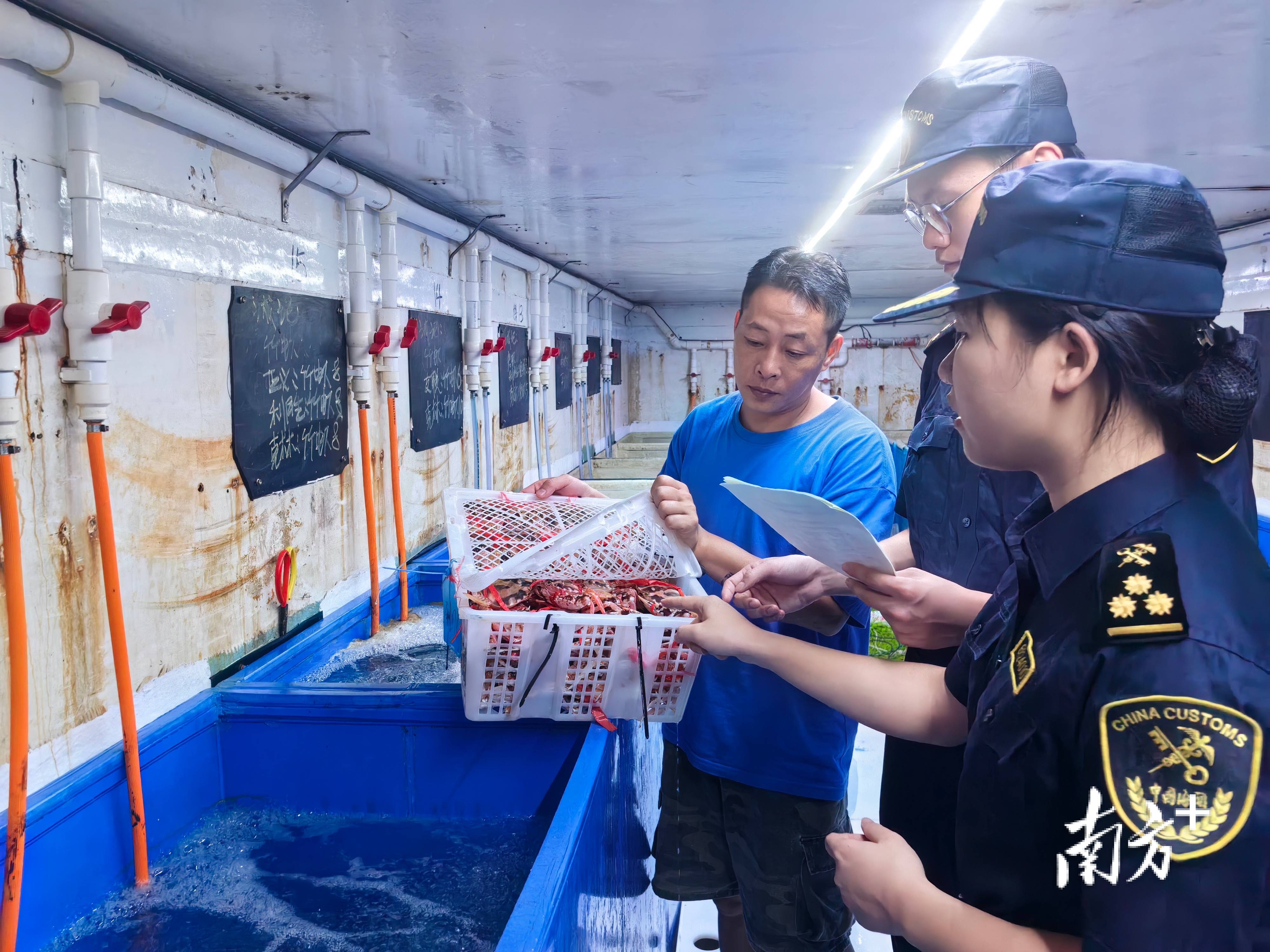
Core Viewpoint - The reopening of the South China Sea fishing grounds after a three-and-a-half-month fishing moratorium has led to a surge in seafood exports, particularly to the Hong Kong market, highlighting the importance of efficient customs clearance for perishable marine products [1][4]. Group 1: Seafood Export Operations - The Yangjiang Dongyang Biotechnology Co., Ltd. emphasizes the urgency of transporting freshly caught seafood to Hong Kong markets to ensure good prices, as live aquatic animals cannot withstand prolonged exposure to high temperatures and low oxygen [1]. - Yangjiang Customs has established a "green channel" for perishable agricultural products, providing services such as appointment-based document review and inspection to expedite the customs process for seafood exporters [4]. Group 2: Customs Efficiency and Quality Control - Yangjiang Customs has implemented measures to reduce waiting times for seafood inspections, achieving a survival rate of over 95% for shrimp, crabs, and fish during the customs process [5]. - The customs authority conducts rigorous safety risk monitoring for seafood, testing for drug residues and heavy metals, and utilizes a smart program to establish a traceability system for transportation, ensuring that every batch of seafood exported to Hong Kong is traceable and controllable in terms of risk [5]. Group 3: Export Data - In the first seven months of 2025, Yangjiang Customs supervised the export of 1,107.3 tons of live aquatic animals to Hong Kong, with a total value of 80.067 million yuan, representing year-on-year increases of 29.9% and 7.9%, respectively [6].
毛里塔尼亚在非洲跨境贸易博览会上展示发展愿景与资源潜力
Shang Wu Bu Wang Zhan· 2025-09-06 17:51
Group 1 - The fourth African Continental Trade Fair opened in Algiers, attracting over 2,000 exhibitors from approximately 140 countries, with expected transaction volume exceeding $44 billion [1] - Mauritania aims to leverage its abundant natural resources and strategic location to drive shared prosperity in Africa, with a goal of achieving an average annual economic growth of over 7% and reducing poverty rates to 20% [1][2] - The country is focusing on industrial diversification to reduce reliance on raw material exports and transition towards more competitive local processing and manufacturing [1][2] Group 2 - In the resource sector, mining accounts for 20% of GDP and 76% of exports, with plans to increase annual production to 35 million tons and enhance local processing of gold and copper [2] - The Grand Tortue Ahmeyim gas project is expected to produce 2.5 million tons of LNG annually, with plans to double output in the coming years, aiming for 10 million cubic meters by 2030 [2] - Mauritania plans to increase the share of renewable energy in its energy mix to 70% by 2030 and promote green hydrogen development [2] Group 3 - The fishing industry has a production potential of 1.8 million tons, with a focus on enhancing local processing to increase employment and local value addition [2] - The agricultural sector aims for a 50% self-sufficiency rate in food by 2030 [2] - To support industrialization and regional connectivity, Mauritania is accelerating major infrastructure projects, including port and road expansions [2] Group 4 - Mauritania is improving its investment environment through legal reforms and public-private partnerships, collaborating with institutions like the African Export-Import Bank and the World Bank to provide financing support for SMEs and emerging industries [3] - The goal is to build a diversified industrial system, modern infrastructure, and a regional trade hub to contribute to African integration and economic transformation [3]
火焰山“游”出冷水鱼
Xin Hua She· 2025-09-06 08:54
Core Insights - The article discusses the development of cold-water fish farming in Turpan, Xinjiang, despite the region's extreme heat conditions, utilizing unique water resources from Karez wells and high mountain springs [1][2][3] Group 1: Industry Development - The cold-water fish farming industry in Turpan has established a mature supply chain, with over 210 tons of cold-water fish sold in the first half of the year, including species like rainbow trout and black bass [2] - The farming method employed is land-based water circulation, which allows for efficient use of water resources and enhances agricultural productivity by utilizing nutrient-rich water for irrigation [3] Group 2: Economic Aspects - The cost of raising black bass is approximately 35 yuan per kilogram, while the selling price can reach 55 yuan, indicating a profitable margin for producers [2] - The expected production of cold-water fish in Turpan is projected to reach 700 tons this year, with an anticipated increase to 300 tons in 2024 [3] Group 3: Farming Techniques - The land-based water circulation model allows for a shorter growth cycle for cold-water fish, reducing the time from fry to market size from three years to just 18 months [2] - The farming facilities maintain high water quality and oxygen levels, enabling a higher stocking density of fish compared to traditional natural ponds [2]
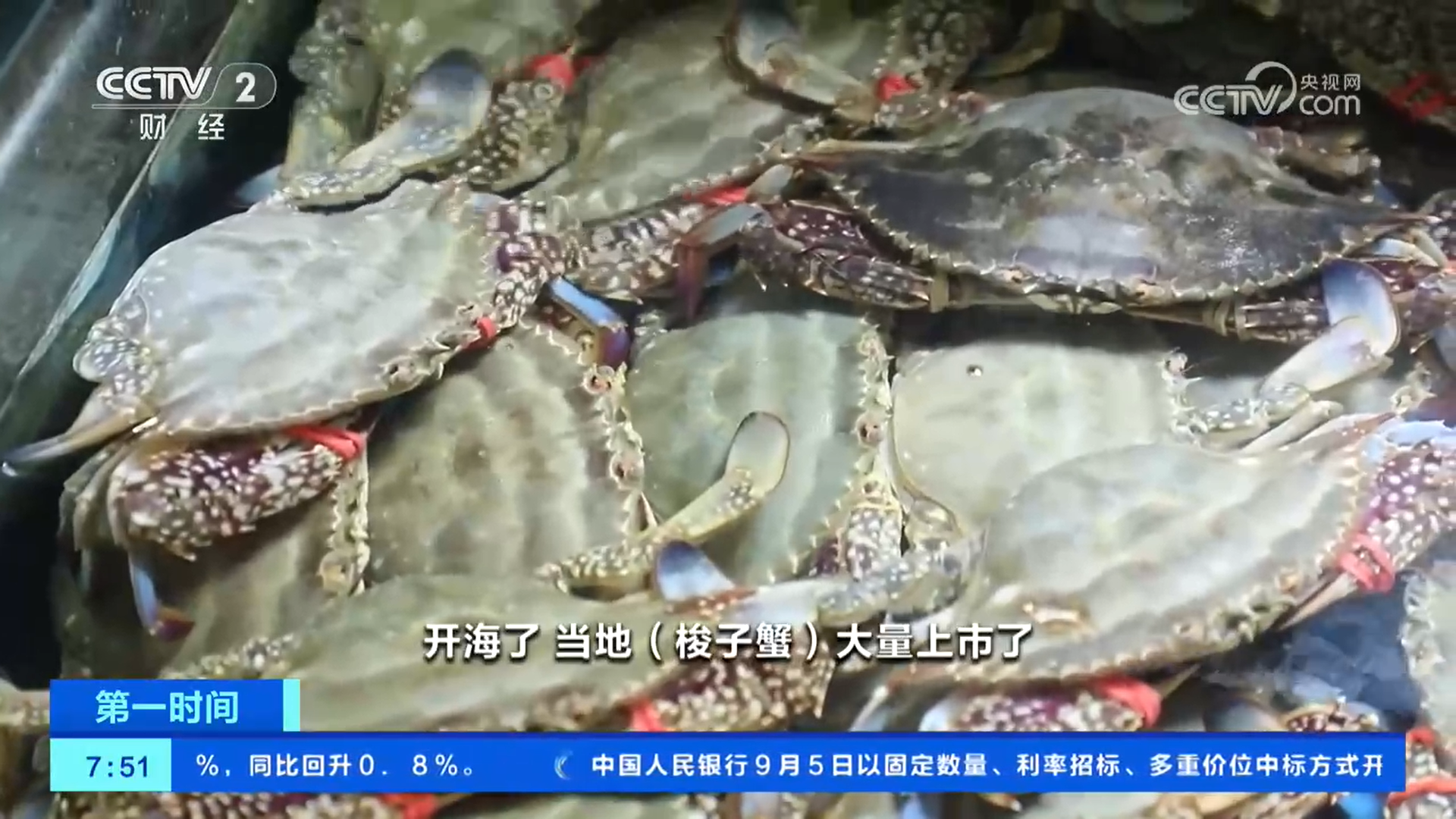
开海了 丰收了 海鲜水产品供应品类丰富、质优量大
Yang Shi Wang· 2025-09-06 04:08
Group 1: Seafood Market Dynamics - The Yellow Sea officially opened for fishing this month, leading to an increase in seafood variety and a price drop of approximately 30% compared to the closed fishing period [1][5] - In Qingdao's Li Village Seafood Market, large-sized sea-caught crabs and various fish species like blackhead fish and pomfret are prominently featured, indicating a robust supply [3][5] - The influx of seafood has attracted nearby restaurants for bulk purchases, with expectations of further price reductions as more fishing boats return [5] Group 2: Aquaculture Developments - In Gansu's Baiyin City, the harvest season for South American white shrimp has begun, showcasing the successful utilization of saline-alkali land for aquaculture [6][8] - The local aquaculture industry has improved through the introduction of quality species and enhanced farming techniques, transforming saline-alkali land into productive seafood sources [8] - In Sichuan's Luzhou City, the "double rice and double shrimp" model has been implemented, allowing farmers to harvest both rice and shrimp simultaneously, significantly increasing land utilization and income [9][11]
中水渔业:上半年实现利润总额1.4亿元 对标世界一流渔业企业
Zheng Quan Ri Bao Zhi Sheng· 2025-09-05 12:08
Core Viewpoint - Zhongshui Fisheries is focusing on high-quality development and innovation in the deep-sea fishing sector, aiming to enhance its operational efficiency and market influence in a complex international environment [1][2]. Group 1: Company Overview - Zhongshui Fisheries has maintained a core focus on deep-sea fishing since its listing, with operations covering deep-sea fishing, fishery services, and seafood processing and trade across global oceans and Antarctic waters [1]. - The company ranks among the top in asset scale within China's deep-sea fishing industry, indicating strong market influence and authority [1]. Group 2: Financial Performance - In the first half of 2025, Zhongshui Fisheries reported an operating income of 1.747 billion yuan, a decrease of 10.66% year-on-year [2]. - The total profit reached 140 million yuan, reflecting a year-on-year increase of 30.41% [2]. - The net profit attributable to shareholders was 86.31 million yuan, showing a growth of 22.12% compared to the previous year [2]. Group 3: Strategic Initiatives - The company is committed to building a modern industrial chain and enhancing its role as a leading enterprise in the deep-sea fishing sector [2]. - Zhongshui Fisheries aims to optimize the global seafood production and supply chain layout while adhering to national marine development strategies [2]. - The company is focused on transforming traditional industries and supporting national food security strategies through its operations [2].
