
养老服务等

Search documents
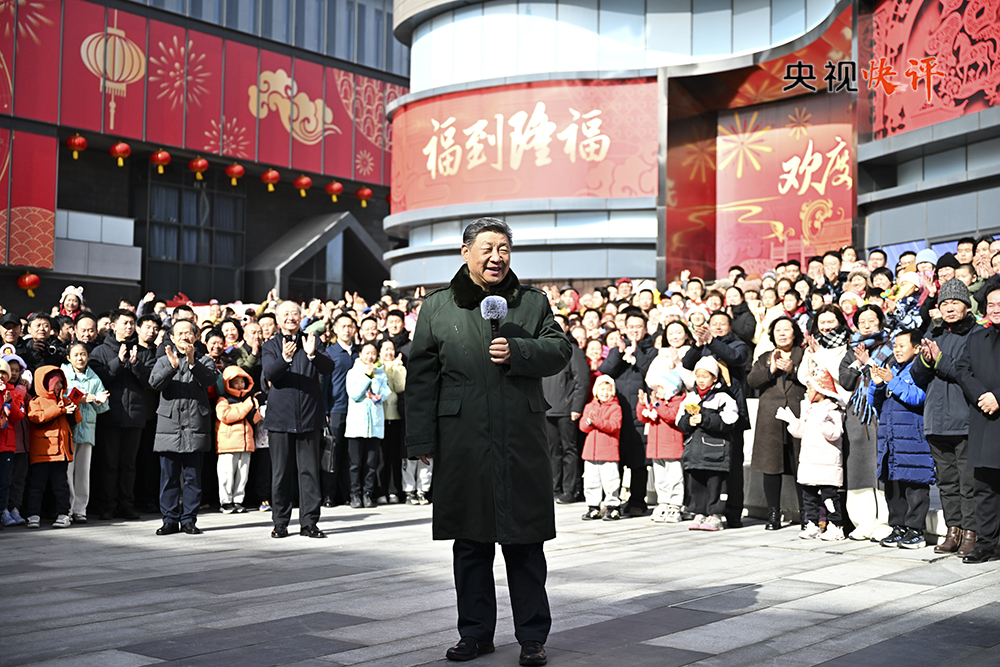
【央视快评】精准务实推动经济社会发展 努力在全国发挥示范作用
Yang Shi Wang· 2026-02-11 05:23
Core Viewpoint - Beijing is set to implement the spirit of the 20th Central Committee's Fourth Plenary Session, focusing on economic and social development to achieve significant progress in socialist modernization and serve as a national model [1][3]. Group 1: Economic Development - In 2025, Beijing's GDP is projected to reach 52,073.4 billion yuan, making it the second city in China to surpass 5 trillion yuan in GDP [3]. - The city is prioritizing high-quality development characterized by reduction in growth, leveraging technological innovation, and optimizing economic structure [3][5]. - Beijing aims to enhance its role as a political, cultural, international exchange, and technological innovation center, unlocking significant growth potential [5][7]. Group 2: Strategic Initiatives - The city will focus on the coordinated development of the Beijing-Tianjin-Hebei region, emphasizing collaborative innovation and industrial cooperation [7]. - There is a commitment to manage the reduction of non-capital functions in Beijing, balancing growth and resource allocation effectively [7]. - The city plans to deepen reforms and expand institutional openness, aiming to provide replicable experiences for the nation [7]. Group 3: Governance and Leadership - Beijing's leadership is encouraged to align actions with the directives from the General Secretary, emphasizing practical and effective measures for economic and social development [7]. - The city is tasked with setting high standards for urban governance, aspiring to build an internationally recognized harmonious and livable capital [7]. - There is a call for unity among the city's workforce to fulfill the responsibilities entrusted by the General Secretary, showcasing a proactive and diligent approach to modernization [7].

以法治强保障 聚奋进新力量
Xin Lang Cai Jing· 2026-02-04 23:41
Core Viewpoint - The city’s People’s Congress Standing Committee has made significant strides in legislative work and public service, ensuring the implementation of policies that support economic and social development while enhancing the quality of life for citizens [1][2][3]. Legislative Achievements - The Standing Committee approved modifications to 8 regulations and enacted 3 new laws, demonstrating a commitment to legislative quality and responsiveness to societal needs [1][6]. - A total of 32 special work reports were reviewed, and various forms of oversight were conducted, including 2 special inquiries and evaluations [1]. Economic and Social Development - The Committee has focused on promoting high-quality economic and social development, particularly through initiatives related to food security and optimizing the business environment [2][3]. - Efforts to support the private economy and enhance legal protections for businesses have been emphasized, including the implementation of a "white list" mechanism for construction enterprises [2]. Public Welfare Initiatives - The Committee has prioritized major public welfare issues, such as healthcare accessibility and community-based elderly care services, with specific projects aimed at improving service quality [3][4]. - A total of 100 community embedded elderly care service projects have been initiated, alongside the establishment of 45 community packages combining medical and convenience services [3]. Community Engagement and Representation - The Committee has strengthened connections with grassroots representatives, facilitating over 1,910 suggestions from more than 12,000 representatives, which have been instrumental in local governance [8]. - The establishment of 693 service stations has enhanced the efficiency of representative work, promoting cross-regional collaboration for cultural heritage initiatives [8]. Future Directions - The Standing Committee aims to continue enhancing its legislative and oversight functions, focusing on the integration of modern governance practices and the promotion of a democratic process that reflects the voices of the people [9].
人群精准适配 场景深度融合
Jin Rong Shi Bao· 2026-01-28 04:33
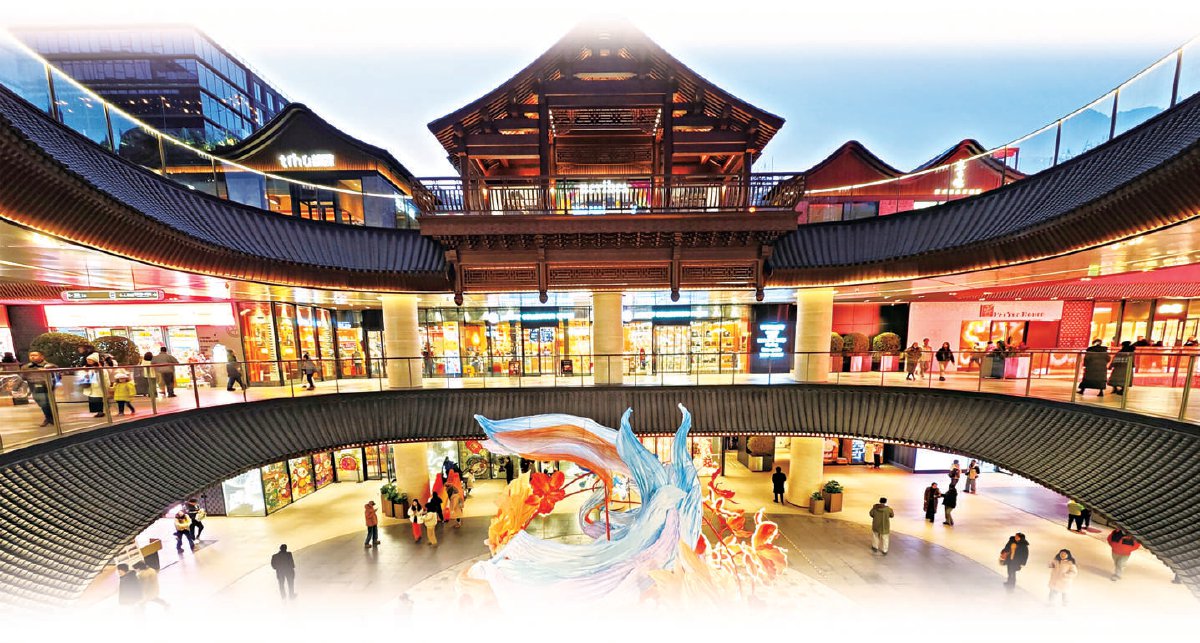
Group 1 - The service consumption market is experiencing significant growth, with projections indicating that by 2025, per capita service consumption expenditure will increase by 4.5%, accounting for 46.1% of total per capita consumption expenditure [1] - The focus of competition in the consumer goods and retail industry has shifted from "capturing market share" to "creating meaning," reflecting a more mature and rational consumer base that seeks emotional resonance and identity recognition [2] - The "performance economy" is expected to see 640,400 commercial performances in 2025, a 6.58% increase from 2024, with an audience of 194 million, indicating a strong demand for immersive and personalized experiences [2] Group 2 - Major cities like Beijing and Shanghai are actively promoting the opening of new stores, with Beijing expecting 1,068 new stores and Shanghai 848 new stores by the end of 2025, enhancing social engagement among younger consumers [3] - The "silver economy" is emerging as a new growth area, with policies aimed at optimizing elderly care services and products, reflecting a shift in elderly consumer needs towards quality and diversified service experiences [4] - Various regions are piloting exclusive services for the elderly, indicating a market shift towards high-quality, emotionally resonant consumption experiences for older demographics [4] Group 3 - Service consumption is evolving through cross-industry integration, with models like "culture + tourism" and "digital + night economy" breaking down barriers and creating a multi-dimensional consumption ecosystem [5] - The "Su Chao" consumption tracking report indicates that integrated service scenarios have generated 37.96 billion yuan in revenue, showcasing the potential of immersive experiences in service consumption [6] - Online retail is projected to reach 15.97 trillion yuan in 2025, growing by 8.6%, with physical goods online retail accounting for 26.1% of total retail sales, highlighting the importance of digital integration in enhancing service consumption [6] Group 4 - Analysts suggest increasing investment in public service sectors such as elderly care, childcare, culture, and tourism to meet diverse consumer needs, emphasizing the role of technology in creating new service offerings [7] - Financial services should adapt to the unique characteristics of family-oriented consumption, moving from standardized to customized financial solutions to enhance the overall service consumption experience [7]
全市地区生产总值5.2万亿元
Xin Lang Cai Jing· 2026-01-25 06:55
Economic Performance - The city's GDP reached 5.2 trillion yuan, growing by 5.4%, which is 0.4 percentage points higher than the national average [2] - General public budget revenue increased by 4.8%, while the urban survey unemployment rate stood at 4.1% [2] - Per capita disposable income of residents grew by 4.4%, with overall consumer prices remaining stable [2] Urban Development and Infrastructure - The city completed the 80th anniversary of the victory in the Chinese People's War of Resistance against Japanese Aggression with a high-efficiency command system and multiple drills [2] - A total of 1,225 old residential communities were renovated, and 1,411 backstreet alleys underwent refined management [4][5] - Three new subway lines were opened, adding 30 kilometers to the total operational length, which now stands at 909 kilometers, the highest in the country [4] Technological Innovation - 210 key core technologies achieved breakthroughs, with the city maintaining its position as the top global research city for nine consecutive years [2][3] - The city has seen a significant increase in digital, green, and health consumption, with service consumption growing by 5% [3] Environmental Sustainability - The proportion of green electricity reached 36%, and the number of days with good air quality exceeded 80% for the first time [3] - The annual average concentration of fine particulate matter was 27 micrograms per cubic meter, a decrease of 11.5% [3] Social Welfare and Employment - The city provided 112,000 job positions for college graduates and assisted 72,000 individuals facing employment difficulties [4] - New elderly care service centers were established, and 7,701 family care beds were added [4] - The city constructed 67,000 units of affordable rental housing and completed 100,000 units of various types of guaranteed housing [4]
中金:供给侧促消费的路径
中金点睛· 2025-12-23 23:36
Core Viewpoint - The article emphasizes the shift in consumption promotion policies towards supply-side measures, focusing on enhancing the supply of quality goods and services while also addressing demand-side strategies to stimulate consumption [2][5]. Group 1: Supply-Side Consumption Promotion - The central economic work conference in December highlighted the need to "expand the supply of quality goods and services" and "eliminate unreasonable restrictions in the consumption sector" to unleash service consumption potential [2][5]. - Supply-side consumption promotion will focus on two main areas: removing restrictions in the consumption sector and increasing the supply of quality consumption [2][5]. - An estimated market scale of approximately 3.9 trillion yuan (around 3% of GDP) may be affected by policy adjustments in 2024, with a potential 0.5 percentage point increase in final consumption growth for every 10% improvement in these areas [2][18]. Group 2: Policy Evolution on Consumption Restrictions - Recent years have seen a progressive evolution of policies aimed at clearing consumption restrictions, starting from the 2018 guidelines that emphasized stimulating consumption potential through systemic mechanisms [4][5]. - The focus has shifted to administrative restrictions, with the 2020 central economic work conference calling for the orderly removal of certain administrative restrictions on consumption purchases [4][5]. - In 2025, the removal of restrictive measures in the consumption sector became a key policy direction, with multiple meetings emphasizing the need to clear unreasonable restrictions in areas such as automobiles and housing [5][11]. Group 3: Key Areas of Policy Changes - In the automotive sector, significant changes include the cancellation of purchase restrictions in Hainan and the increase of purchase quotas for carless families in cities like Beijing and Tianjin [5][8]. - The real estate sector has seen cities like Beijing and Shanghai relax purchase conditions and eliminate limits on suburban housing [5][8]. - Cultural policies have also evolved, with an increase in the number of game licenses issued and the simplification of approval processes for touring performances [6][8]. Group 4: Increasing Quality Consumption Supply - The emphasis on increasing the supply of quality consumption is evident in the October "14th Five-Year Plan" which calls for expanding the supply of quality goods and services [14][15]. - Investment in consumption infrastructure and service functions is crucial, with support for projects in education, healthcare, and cultural tourism to address public service gaps [15][18]. - The article outlines specific consumer markets projected to reach significant scales by 2024, including elderly products (54 trillion yuan), smart connected vehicles, and consumer electronics [16][19]. Group 5: Market Scale and Growth Projections - The total market scale for various consumption sectors is estimated at around 3.9 trillion yuan, with significant growth expected in inbound tourism and other sectors [18][19]. - Specific sectors such as high-end medical services and childcare are projected to grow substantially, with the high-end medical market expected to reach 556.7 billion yuan in 2023 [19][20]. - The article highlights the importance of aligning supply-side policies with consumer demand trends to achieve a dynamic balance between supply and demand [18][19].

南京公布2025年政府补贴性职业技能培训目录
Xin Hua Ri Bao· 2025-04-23 23:24
Group 1 - The Nanjing Municipal Human Resources and Social Security Bureau has released a directory for government-subsidized vocational skills training for 2025, which includes 35 high-demand skilled occupations, 91 employment and entrepreneurship training projects, and 81 employee training projects [1][2] - The directory focuses on occupations that are most in demand in the job market, including roles such as artificial intelligence trainers and internet marketing specialists, with 80% of the listed occupations related to digital and manufacturing sectors [2] - Compared to last year, 12 new occupations have been added to the directory, while some saturated roles have been removed, indicating a shift towards emerging job markets [2] Group 2 - The subsidy standard for high-demand skilled occupations has been increased by 30% compared to the provincial benchmark, enhancing the financial support for training [3] - The 91 employment and entrepreneurship training projects aim to improve workers' capabilities, with a notable interest in new profession training, reflecting the changing labor market needs [4] - 38 companies have been supported to conduct skills enhancement training for their employees, with a focus on various skilled trades, indicating a collaborative effort between the government and businesses to upskill the workforce [5]