
中证红利低波动100指数

Search documents
金融工程专题:养老定投底仓选择:价值类SmartBeta指数的梳理与对比-20260331
BOHAI SECURITIES· 2026-03-31 07:29
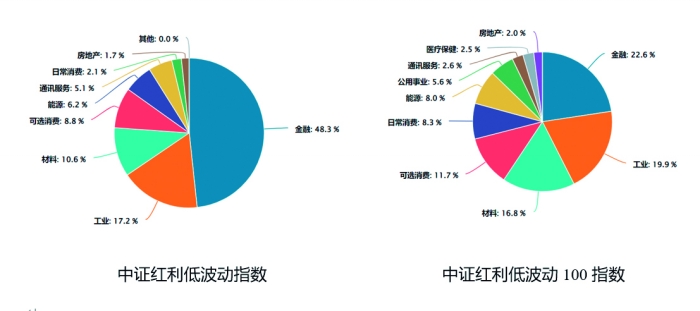
Quantitative Models and Construction Methods 1. Model Name: Dynamic Investment Strategy Based on Valuation (PE Dynamic Investment Model) - **Model Construction Idea**: This model dynamically adjusts investment amounts based on the valuation level of the index, aiming to optimize returns by increasing investment during low valuation periods and reducing it during high valuation periods [54] - **Model Construction Process**: - At the beginning of each month, calculate the five-year historical percentile of the index's current price-to-earnings (PE) ratio - Investment rules: - If PE percentile < 30%, invest 1000 CNY - If PE percentile is between 30% and 70%, invest 500 CNY - If PE percentile > 70%, invest 0 CNY [54] - **Model Evaluation**: The model shows significant improvement in returns for broad-based indices like CSI 300 but has limited incremental benefits for value-based Smart Beta indices due to their already strong performance [55][60] 2. Model Name: Dynamic Investment Strategy Based on Moving Averages (MA Dynamic Investment Model) - **Model Construction Idea**: This model adjusts investment amounts based on the deviation of the index's current price from its 500-day moving average, aiming to capture market trends and optimize returns [54] - **Model Construction Process**: - At the beginning of each month, calculate the deviation: `(Current Index Price - 500-day Moving Average) / 500-day Moving Average` - Investment rules: - If deviation < -50%, invest 1000 CNY - If deviation is between -50% and -35%, invest 800 CNY - If deviation is between -35% and -20%, invest 600 CNY - If deviation is between -20% and 20%, invest 500 CNY - If deviation is between 20% and 35%, invest 400 CNY - If deviation is between 35% and 50%, invest 200 CNY - If deviation > 50%, invest 0 CNY [54] - **Model Evaluation**: Similar to the PE dynamic model, this strategy improves returns for broad-based indices but has limited impact on value-based Smart Beta indices [55][60] --- Model Backtesting Results 1. PE Dynamic Investment Model - **CSI 300 Index**: - 3-year XIRR: Average return improved from -0.06% (normal investment) to 2.16% [56][58] - 5-year XIRR: Average return improved from 0.67% (normal investment) to 3.25% [56][58] - **Value-Based Smart Beta Indices**: - Limited incremental benefits, with average XIRR improvements of less than 0.3% compared to normal investment [56][58] 2. MA Dynamic Investment Model - **CSI 300 Index**: - 3-year XIRR: Average return improved from -0.06% (normal investment) to 0.08% [56][58] - 5-year XIRR: Average return improved from 0.67% (normal investment) to 0.86% [56][58] - **Value-Based Smart Beta Indices**: - Similar to the PE model, incremental benefits were minimal, with average XIRR improvements of less than 0.5% [56][58] --- Quantitative Factors and Construction Methods 1. Factor Name: Dividend Yield - **Factor Construction Idea**: Select stocks with high and stable dividend yields to construct indices with strong income-generating potential [12][21] - **Factor Construction Process**: - Select stocks with at least three consecutive years of cash dividends - Rank stocks by average dividend yield over the past three years - Weight stocks by dividend yield or a combination of dividend yield and other factors (e.g., volatility) [21][23] - **Factor Evaluation**: Provides stable returns and lower volatility, making it suitable for defensive strategies [15][25] 2. Factor Name: Free Cash Flow - **Factor Construction Idea**: Focus on companies with strong free cash flow generation, which indicates financial health and value potential [12][21] - **Factor Construction Process**: - Select stocks with positive free cash flow over the past three to five years - Rank stocks by free cash flow yield - Exclude financial and real estate sectors - Weight stocks by free cash flow yield [21][23] - **Factor Evaluation**: Delivers higher average returns but with greater volatility compared to dividend yield factors [15][25] --- Factor Backtesting Results 1. Dividend Yield Factor - **Indices**: - CSI Dividend Index: 5-year XIRR average return of 9.01% [53] - CSI Dividend Low Volatility 100 Index: 5-year XIRR average return of 10.60% [53] - **Stability**: High stability with 100% profitability over 5-year periods [53] 2. Free Cash Flow Factor - **Indices**: - CSI Free Cash Flow Index: 5-year XIRR average return of 20.88% [53] - **Volatility**: Higher volatility compared to dividend yield indices, with a wider range of returns [53]
强势吸金!规模TOP6的A500ETF本月资金净流入额超972亿元
Ge Long Hui A P P· 2025-12-29 06:59
Core Insights - The CSI A500 Index has become a major attraction for capital inflow, with a total net inflow of 96.065 billion yuan in December alone, driven primarily by institutional investors [1][5]. Group 1: Fund Inflows - The top six A500 ETFs accounted for nearly all of the net inflow in December, with significant contributions from A500 ETF Southern (24.825 billion yuan), A500 ETF Huatai-PB (21.061 billion yuan), and A500 ETF Fund (18.196 billion yuan) [1][3]. - The total net inflow for the top six A500 ETFs reached over 97.2 billion yuan, highlighting a concentration of capital in larger funds [1][3]. Group 2: Regulatory Changes - In December, regulatory adjustments reduced the risk factors for insurance companies' stock investments, effectively lowering capital costs and facilitating greater market participation from insurance funds [5]. - The adjustments specifically targeted core assets, including stocks in the CSI 300 Index and the CSI Dividend Low Volatility 100 Index, which are expected to release approximately 290 billion yuan in capital for potential market investment [5]. Group 3: Market Dynamics - The recent inflow into A500 ETFs is influenced by a seasonal "calendar effect," where historical patterns show increased inflows near quarter-end [6]. - The CSI A500 Index is favored for its balanced industry allocation and selection of leading companies, making it an attractive option for year-end investment strategies [6].


资金扫货宽基ETF!中证A500ETF本周净流入资金326亿元
Ge Long Hui· 2025-12-21 07:00
Core Insights - The article highlights a significant inflow of funds into the China Securities A500 ETF, with a net inflow of 32.6 billion yuan this week, accounting for nearly 70% of the total net inflow into stock ETFs during the same period [1]. Group 1: Fund Inflows and ETF Growth - The total market size of the A500 ETF has reached 243.8 billion yuan, with the Huatai-PineBridge A500 ETF surpassing 41.2 billion yuan, becoming the first A500 ETF to exceed 40 billion yuan in size within just one week [2]. - The Southern A500 ETF has also seen a net inflow of over 10 billion yuan in a single week, bringing its total size to 35.684 billion yuan [3]. - Other A500 ETFs from Huaxia, Guotai, and E Fund have all surpassed 26 billion yuan in size, indicating a strong trend in the A500 ETF market [4]. Group 2: Institutional Investment and Policy Support - The recent surge in A500 ETF inflows is likely driven by institutional investors, particularly insurance funds, following regulatory adjustments that lowered the capital occupation costs for insurance companies investing in stocks [4]. - The regulatory changes involve a reduction in risk factors for long-term holdings in the CSI 300 index and the STAR Market, potentially releasing around 19.8 billion yuan in capital, with a possible total incremental fund size of 72.6 billion yuan if fully allocated to stock investments [4]. Group 3: Market Environment and Investment Trends - The current market environment, characterized by declining interest rates and a shrinking pool of compliant and safe assets, is pushing institutional investors to increase their allocation to equity assets [5][6]. - Data shows that insurance funds have reached record high allocations in both bonds and stocks, with direct stock investment exceeding 3 trillion yuan for the first time [7]. - The advantages of ETFs, such as high liquidity, relatively controlled volatility, low costs, and strong transparency, are making them an important tool for insurance funds in equity allocation [7]. Group 4: A500 ETF as a Key Investment Vehicle - The A500 ETF is gaining recognition as a key vehicle for mainstream long-term funds to share in the benefits of China's economic transformation, supported by substantial capital inflows [8]. - The significant increase in holdings of the A500 ETF not only provides solid support for related assets but also indicates a re-evaluation and re-pricing of its investment value in the market [8].
A股低波红利指数及产品的投资价值与发展趋势
Shang Hai Zheng Quan Bao· 2025-12-15 19:19
Core Insights - The low-volatility dividend index demonstrates strong risk resistance, leading to increased market demand for related index products, particularly from long-term investors and financial institutions [2][8][9] Group 1: Characteristics of Low-Volatility Dividend Index - The low-volatility dividend index is based on high dividend and low volatility factors, with its first iteration launched in China in December 2013 [3] - The number of indices and related products has increased significantly, with 11 pure stock low-volatility dividend indices launched by the China Securities Index Company by Q1 2025 [4] - Investment scale in related products has surged, with passive index fund investments in major low-volatility dividend indices reaching 47.09 billion yuan in 2024, a 20-fold increase from 2022 [5] Group 2: Performance and Stability - The low-volatility dividend index has outperformed broad market indices and government bonds over the past three years, with a total return index nearly doubling in five years [5][6] - The index's volatility is lower than that of major market indices, with a significantly higher Sharpe ratio, indicating better risk-adjusted returns [6] - In extreme market conditions, the low-volatility dividend index has consistently outperformed the CSI 300 index, demonstrating its defensive characteristics [6] Group 3: Institutional Investor Engagement - Institutional investors hold a significant portion of low-volatility dividend products, with 85.53% of holdings attributed to them by the end of 2024 [7] - The introduction of new financial accounting standards has made it easier for insurance and brokerage firms to invest in low-volatility dividend equities [7] Group 4: Market Demand and Future Outlook - There is an anticipated increase in market demand for low-volatility dividend indices as long-term capital seeks stable investment options amid a low-interest-rate environment [9][10] - Financial institutions are increasingly viewing low-volatility dividend indices as a means to optimize asset allocation and enhance risk-adjusted returns [10] - Ordinary investors are also shifting towards more stable and long-term value investments, aligning with the characteristics of low-volatility dividend indices [10] Group 5: Limitations and Challenges - The sustainability of dividend yields and future performance is under scrutiny, particularly due to reliance on traditional cyclical industries [11] - There is a notable disparity in fund product performance, with smaller funds facing operational challenges and potential liquidation risks [12] - The index's reliance on short historical data may hinder its ability to adapt to market changes, affecting its long-term performance [12] Group 6: Recommendations for Development - It is recommended to encourage the creation and investment in low-volatility dividend indices and products, enhancing their market presence [13] - Increasing investor education and transparency regarding the benefits of low-volatility dividend indices is essential for broader adoption [14] - Optimizing the index compilation methodology to better reflect market trends and enhance its attractiveness is advised [15] - Improving the quality and governance of listed companies to ensure sustainable dividend practices is crucial for the long-term success of low-volatility dividend strategies [16]
红利“吸金”!近20日红利低波ETF天弘(159549)累计“吸金”近5亿、港股通央企红利ETF天弘(159281)累计“吸金”超1亿,机构:红利资产在...
2 1 Shi Ji Jing Ji Bao Dao· 2025-12-15 01:21
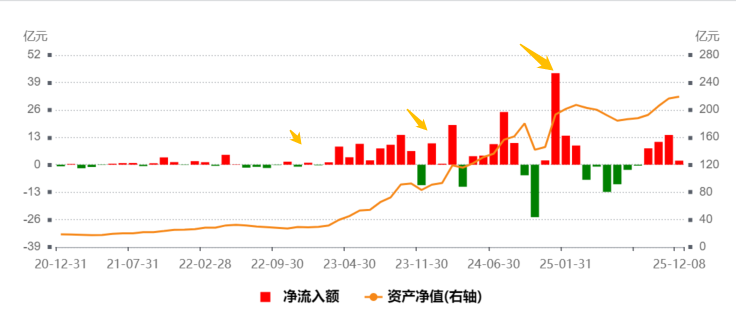
Group 1 - The market showed a rebound on December 12, with all three major indices closing in the green [1] - The Tianhong Dividend Low Volatility ETF (159549) saw a net subscription of 50 million units, with constituent stocks like Tebian Electric Apparatus, Shaanxi鼓动力, and Supor rising [1] - Over the past 20 trading days, the Tianhong Dividend Low Volatility ETF (159549) recorded net inflows on 18 days, accumulating nearly 500 million yuan [1] Group 2 - The Tianhong Central Enterprise Dividend ETF (159281) closely tracks the Central Enterprise Dividend Index (931233), which selects stable dividend-paying stocks from central enterprises within the Hong Kong Stock Connect [2] - The Tianhong Central Enterprise Dividend ETF (159281) had a trading volume exceeding 30 million yuan, with stocks like First Tractor Company, China Shipbuilding Leasing, and China Galaxy also rising [2] - Over the past 20 trading days, the Tianhong Central Enterprise Dividend ETF (159281) recorded net inflows on 17 days, accumulating over 100 million yuan [2] Group 3 - Huafu Securities indicated that the current macroeconomic activity and liquidity structure are recovering from the bottom, laying the foundation for future profit recovery and a market style shift towards dividends and low valuations [2] - Yuan Da Information noted that dividend assets are attractive to risk-averse funds in a low-interest-rate environment due to their stable high dividends and low valuation attributes [2] - The overall stability of the manufacturing PMI at 49.2% in November, along with improvements in both supply and demand, supports the appeal of dividend assets in the current economic context [2]

股市:四个字的出现,意义很大
Sou Hu Cai Jing· 2025-12-09 08:50
Group 1 - The core message of the recent high-level meeting emphasizes "domestic demand as the main driver," indicating potential government investment and increased consumer spending [2] - The "14th Five-Year Plan" draft suggests a significant increase in the household consumption rate, with domestic demand playing a crucial role in economic growth [2] - The stability of the stock market is seen as essential for boosting consumer confidence and spending, with ongoing regulatory support for the market [2] Group 2 - The National Financial Regulatory Administration has lowered the risk factors for insurance companies investing in certain stock indices, indicating a push for long-term capital inflow into the stock market [2] - The adjustment of risk factors for indices like the CSI 300 and the CSI 100 Low Volatility Index reflects a focus on these indices as stable investment options [2] - The CSI 500 Index is highlighted as an upgraded version of the CSI 300, offering better representation of high-growth sectors and potential for excess returns [4] Group 3 - The current bull market is characterized as a "technology bull" or a "China influence enhancement bull," driven by fundamental improvements and the shift of household asset allocation towards equities [5] - The shift in household asset allocation is expected to resonate with economic, policy, and industrial cycles, driving the bull market [6] - The CSI 500 Index is positioned as a better representative of the Chinese stock market, reflecting high-quality development and the increasing weight of the stock market in the economy [6]
[12月8日]指数估值数据(两大利好,推动市场上涨;保险机构喜欢哪些指数呢)
银行螺丝钉· 2025-12-08 14:01
Core Viewpoint - The market is experiencing a rotation in styles, with growth stocks performing strongly while value stocks are lagging behind. Recent regulatory changes are expected to facilitate more capital inflow into the market, particularly benefiting certain indices [3][5][12]. Group 1: Market Performance - The overall market is up, with a closing rating of 4.2 stars [1]. - All market caps (large, mid, and small) have seen similar increases [2]. - The growth style is particularly strong, with the ChiNext Index rising over 2% [3]. - However, there is a rotation in market styles, with growth outperforming value [4]. Group 2: Regulatory Changes - Two positive regulatory announcements were made last week: 1. Insurance institutions have lowered the risk factors for investing in the CSI 300 and the Low Volatility Dividend 100 indices [9][10]. 2. There is a relaxation of capital space and leverage restrictions for quality brokerage firms, enhancing capital efficiency [11]. - These changes are expected to encourage more funds to enter the market [12]. Group 3: Risk Factors and Investment Strategies - The risk factor is akin to a "capital occupation coefficient," which determines how much capital insurance companies must reserve for risky investments [14]. - The risk factors for specific indices have been adjusted: 1. For stocks held over three years in the CSI 300 and Low Volatility Dividend 100, the risk factor decreased from 0.3 to 0.27 [15]. 2. For stocks held over two years in the Sci-Tech Innovation Board, the risk factor decreased from 0.4 to 0.36 [16]. - This adjustment allows insurance companies to allocate more funds to these indices, which is a positive signal for these stocks [17][18]. Group 4: Investment Insights for Retail Investors - Different indices are assigned varying risk levels by institutional investors, which can guide retail investors in their choices [21][22]. - The risk hierarchy for insurance institutions is as follows: 1. Broad-based and value style indices (e.g., CSI 300) are considered lower risk [23][26]. 2. Growth style indices (e.g., ChiNext) have higher risk factors, leading to more cautious investment [29]. 3. Smaller individual stocks not included in major indices carry the highest risk [31][32]. - Observing the risk factors assigned by insurance institutions can help retail investors identify suitable investment options [33]. Group 5: Future Investment Trends - The first batch of indices to be included in personal pension accounts by December 2024 will primarily consist of broad-based indices and dividend-focused indices [34]. - Recently, new stock-bond constant ratio indices have emerged, focusing on broad-based and dividend indices [36]. - Broad-based and dividend products are increasingly being promoted by financial institutions for individual investors [37].

险资入市空间再释放!直接利好沪深300等指数
Mei Ri Jing Ji Xin Wen· 2025-12-08 04:33
Core Viewpoint - The adjustment of risk factors for insurance companies' related business is expected to enhance the investment capacity of insurance funds in the stock market, particularly benefiting core assets and contributing to market stability [1][2]. Group 1: Regulatory Changes - The National Financial Supervision Administration announced a reduction in risk factors for insurance companies' holdings of certain index stocks, decreasing from 0.3 to 0.27, a drop of 10% [1]. - This regulatory change is interpreted as a release of space for insurance capital to enter the market, reinforcing the "long money" and "ballast stone" attributes of insurance funds [2]. Group 2: Market Impact - The new regulation is expected to increase the stock investment scale by approximately 150 billion yuan, raising the anticipated insurance capital in the equity market to about 2.15 trillion yuan by 2026 [2]. - The adjustment is projected to directly benefit indices such as the CSI 300 and the CSI Low Volatility 100, becoming a significant driver for a "slow bull" market in 2026 [2]. Group 3: Financial Metrics - The adjustment is estimated to provide A-share listed insurance companies with an additional 78.9 billion yuan in stock allocation space, with a minimum capital optimization of 20 billion yuan [2]. - The average solvency adequacy ratio for core and comprehensive solvency is expected to improve by 1.5 and 2.1 percentage points, respectively, following the adjustment [2]. Group 4: Index Overview - The CSI 300 index, comprising the 300 most representative securities in the A-share market, is viewed as a core asset and a standard for individual investors [3]. - The current risk premium for the CSI 300 index stands at 5.33, slightly above the historical average of 5.15 since 2014, indicating that the index valuation remains within a reasonable range [3].
机构:红利等大盘指数迎重磅利好,长钱入市可期!中证红利ETF上周“吸金”近2200万元
2 1 Shi Ji Jing Ji Bao Dao· 2025-12-08 03:21
Core Viewpoint - Recent data indicates an increase in net inflows for dividend-themed ETFs, particularly around December, suggesting a trend of capital allocation towards these assets as the year ends [1][3]. Group 1: ETF Performance and Inflows - The China Securities Dividend ETF (515080) saw monthly net inflows of 745 million yuan in December 2023 and 1.119 billion yuan in December 2024 [3]. - In the first week of December 2023, the China Securities Dividend ETF (515080) recorded a cumulative net inflow of approximately 22 million yuan, with a total of 271 million yuan over the past 10 days [3]. Group 2: Regulatory Changes and Market Impact - On December 5, the National Financial Regulatory Administration announced a reduction in risk factors for insurance companies holding certain stocks, which is expected to enhance their solvency ratios and encourage long-term investments [3]. - The adjustment in risk factors could potentially increase the stock investment scale by approximately 150 billion yuan, raising the anticipated insurance capital inflow to the equity market to around 2.15 trillion yuan by 2026 [4]. Group 3: Market Trends and Predictions - Analysts suggest that the recent policy changes will favor indices like the CSI 300 and the China Securities Dividend Low Volatility 100, contributing to a "slow bull" market in 2026 [4]. - The insurance sector is expected to continue providing incremental capital to the equity market, with a long-term strategy of allocating about 30% of new premiums to A-shares [6]. - The end of the year is traditionally a significant period for insurance capital allocation, with expectations for renewed interest in dividend stocks [6]. Group 4: Investment Strategies and Sector Focus - Investment strategies are shifting towards low-valuation cyclical stocks and dividend assets, with a balanced market style anticipated as policy expectations rise and A-share earnings accelerate [5]. - Analysts recommend focusing on innovative sectors such as AI applications and high-dividend stocks, particularly as market conditions improve and liquidity increases [6][7].
风险因子下调或可释放千亿入市资金,红利低波ETF天弘(159549)上周持续“吸金”累超1.1亿元居同标的第一
2 1 Shi Ji Jing Ji Bao Dao· 2025-12-08 02:09
Core Viewpoint - The adjustment of risk factors for insurance companies' investments in certain indices is expected to release significant capital into the market, potentially enhancing the performance of low-volatility dividend stocks [1][2]. Group 1: Market Performance - On December 8, major indices opened higher, with the CSI Low Volatility 100 Index rising by 0.06% [1]. - Among the constituent stocks, Fujian Expressway increased by over 2%, with other stocks like Central South Media, Yili, Solar Energy, and Guizhou Tire also showing gains [1]. - The Tianhong Low Volatility ETF (159549) experienced a net inflow of over 110 million yuan last week, ranking first among similar funds [1]. Group 2: Regulatory Changes - On December 5, the Financial Regulatory Authority announced a reduction in risk factors for insurance companies holding stocks from the CSI 300 and CSI Low Volatility 100 indices for over three years, from 0.3 to 0.27 [1][2]. - This adjustment is based on the weighted average holding period over the past six years [1][2]. Group 3: Capital Market Implications - According to estimates, the reduction in risk factors could release approximately 100 billion yuan into the market, with a static release of at least 32.6 billion yuan in capital if insurance funds increase their allocation to stocks [2]. - If this capital is fully allocated to CSI 300 stocks, it could correspond to an influx of 108.6 billion yuan into the stock market [2]. - The adjustment is expected to strengthen the trend of long-term capital entering the market, benefiting patient capital growth [2].
