
主题投资基金

Search documents
近300家上市公司预喜,如何抓住“预增”主题投资机会?
Sou Hu Cai Jing· 2026-01-23 07:11
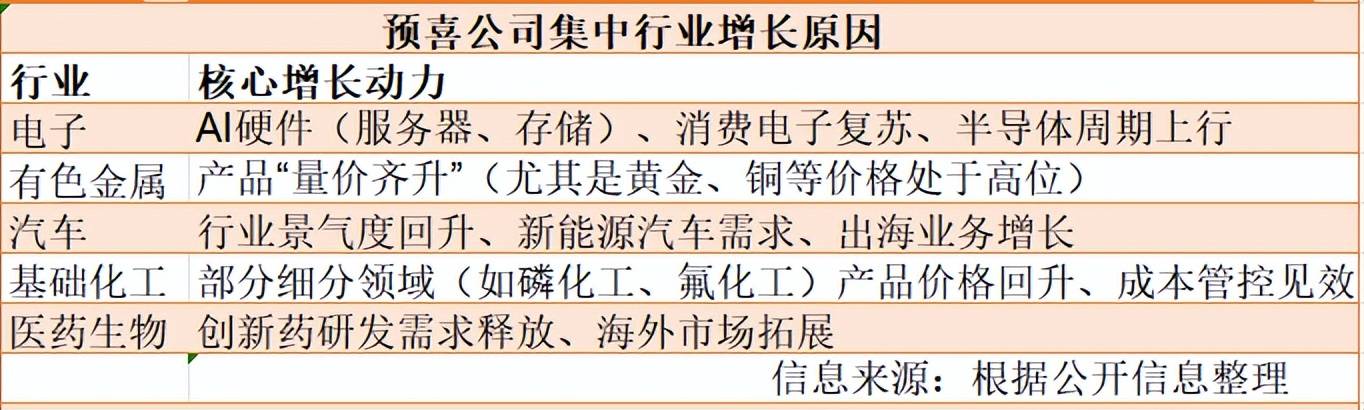
Core Viewpoint - As of January 21, 2025, over 50% of the 587 listed companies in A-shares have positive earnings forecasts, indicating a favorable outlook for many sectors in the market [1]. Group 1: Industries with Positive Earnings Forecasts - The top five industries with positive earnings forecasts are electronics, basic chemicals, automotive, pharmaceutical and biotechnology, and machinery equipment, accounting for nearly 56.6% of the total positive forecasts [1]. - High positive forecast rates are observed in the non-ferrous metals, steel, automotive, home appliances, and basic chemicals sectors [3]. - The investment of 4 trillion yuan by the State Grid during the 14th Five-Year Plan period has made power equipment and nuclear power companies market hotspots [3]. Group 2: Investment Strategies - Investors are advised to focus on cyclical and technology sectors during the annual report season, as these areas are expected to attract capital due to their positive earnings outlook [3]. - It is crucial to understand the profit distribution within the industry chain and avoid buying the wrong companies even if the industry is performing well [4]. - Investors should be cautious of high valuations in popular companies, as significant price increases may have already priced in future earnings [5]. Group 3: Selecting Theme Funds - Investors should identify 1-2 themes within the positive earnings sectors that align with their long-term investment logic before searching for relevant funds [7]. - When selecting funds, factors such as fund size, management fees, and historical performance should be considered to ensure effective investment [7]. - It is important to review the latest financial reports of selected funds to understand changes in holdings and the fund manager's investment strategy [8]. Group 4: Investment Timing and Strategy - Assessing the overall market environment is essential to determine the right entry point for investments [11]. - Investors should decide on their investment approach, whether through systematic investment or lump-sum investment, and set clear profit-taking and stop-loss levels [11].

政策双周报(1106-1121):保持合理的利率比价关系,财政力度要给足-20251121
Huachuang Securities· 2025-11-21 15:23
Report Industry Investment Rating No information provided regarding the report industry investment rating. Core Viewpoints of the Report The report focuses on the policy trends from November 6th to November 21st, 2025, covering macro - economic, fiscal, monetary, financial regulatory, and real - estate policies. It emphasizes the importance of promoting private investment, developing new - quality productivity, ensuring sufficient fiscal strength, maintaining reasonable interest - rate parity, and optimizing financial regulations and real - estate policies [1][2][3][4]. Summary by Directory Macro - economic Tone - The State Council issued policies to stimulate private investment, including 13 targeted measures such as encouraging private capital participation in key projects and removing unreasonable restrictions [1][8]. - The State Council Executive Meeting proposed enhancing the adaptability of consumer supply and demand to release consumption potential and promote economic circulation [1][9]. - Developing new - quality productivity was emphasized, with an article in "Qiushi" magazine highlighting its strategic position in the "15th Five - Year Plan" period [1][10]. Fiscal Policy - The fiscal policy should be sufficient in strength, precise in implementation, and coordinated in policy. The Ministry of Finance plans to use various tools and strengthen cooperation with finance to support public services and private investment [2][12]. - The investment scope of the securities settlement risk fund was expanded to include key - term treasury bonds [2][13]. - The Ministry of Finance successfully issued 4 billion euros of sovereign bonds in Luxembourg, with strong international investor participation [2][13]. Monetary Policy - The third - quarter monetary policy report adjusted the policy tone to "cross - cycle and counter - cycle adjustment". There is limited space for significant liquidity loosening [3][16]. - Maintaining a reasonable interest - rate parity is crucial for the smooth transmission of monetary policy, and financial industry "involution - style competition" should be restricted [3][17]. - There may be new liquidity management tools, and the rapid issuance of government bonds may replace loans in the short term [3][19]. Financial Supervision - The Asset Management Association of China drafted a guidance on the style management of thematic investment funds, and the CSRC optimized the ETF registration process [4][21]. - The National Financial Regulatory Administration will release a revised "Administrative Measures for Commercial Bank Merger and Acquisition Loans", and the first joint - stock bank financial asset investment company was established [4][22]. - Many large - scale insurance companies launched "Good Start" products, with a focus on dividend - type insurance [4][22]. - CICC plans to merge Dongxing Securities and Cinda Securities [4][22]. Real - estate Policy - The central bank aims to implement financial policies for affordable housing and improve the basic real - estate financial system [5][26]. - Beijing completed its 2025 affordable housing construction and acquisition tasks [5][26]. - Guangzhou plans to increase the acquisition of existing commercial housing, with relaxed requirements for eligible properties [5][27].
【利得基金】监管新规严控基金风格漂移
Sou Hu Cai Jing· 2025-11-19 15:22
Group 1: Regulatory Changes - The China Fund Industry Association has issued guidelines to regulate the style drift of thematic investment funds, clarifying management norms for fund managers and custodians [1] - The guidelines define thematic investment funds as those investing over 80% of non-cash assets in specific investment directions, excluding index funds from these regulations [1] Group 2: Fund Performance - "Fixed Income +" funds have shown significant growth, with a total scale reaching 2.5 trillion yuan, an increase of over 770 billion yuan since the end of last year [2] - The average net value growth rate for 1,795 "Fixed Income +" products is 5.57% year-to-date, with 244 funds increasing over 10% [2] - The "Fixed Income + Growth" strategy has outperformed, particularly those with higher allocations to technology growth assets [2] Group 3: Investor Suitability Regulations - The new draft regulations on investor suitability management emphasize detailed requirements for risk assessment frequency and fund risk rating [3] - Special attention is given to the sale of high-risk funds to investors over 65, requiring fund managers to implement more cautious sales processes [3] Group 4: Market Outlook - The Hong Kong stock market has experienced a bull run, with the Hang Seng Index up 29.15% and the Hang Seng Tech Index up 32.23% in the first ten months of the year [4] - Despite valuation expansion driving market gains, there is an upward revision in profit expectations for many companies, indicating a positive outlook for the market [4] Group 5: Sector Analysis - AI is becoming a key driver in the Hong Kong internet sector, with cloud revenue growth accelerating and higher profit margins for AI cloud products compared to traditional ones [5] - The configuration value of Hong Kong's dividend stocks remains high, with a focus on the price-to-earnings ratio during periods of improvement [5] Group 6: Investment Strategies - The strategy for the upcoming year includes focusing on technology growth and cyclical sectors, with an emphasis on AI software applications and resource price increases [6] - The investment approach suggests a balanced allocation between growth sectors and cyclical recovery opportunities [6]
破解“风格漂移”!大动作来了 最新解读
Zhong Guo Ji Jin Bao· 2025-11-16 13:46
Core Viewpoint - The introduction of the "Guidelines for Theme Investment Style Management of Publicly Offered Securities Investment Funds" aims to address issues of "style drift" and "misleading themes" in theme funds, promoting high-quality development in the public fund industry [2][6][11]. Group 1: Regulatory Framework - The guidelines establish clear requirements for fund contracts, management styles, and custodial supervision to prevent style drift [3][18]. - A "style library" will be created, with specified update frequencies to ensure compliance and transparency in fund operations [20][22]. Group 2: Industry Response - Multiple institutions have begun adjusting their systems, processes, and personnel in anticipation of the guidelines, indicating a proactive approach to compliance [4][5]. - The guidelines are seen as a complex but necessary evolution, with a transition period provided by regulators to facilitate adaptation [4][5]. Group 3: Impact on Fund Management - The guidelines are expected to enhance the stability and transparency of fund investment behaviors, reducing the likelihood of misleading practices [8][17]. - Fund managers will be required to align their investment strategies closely with the declared themes, thereby improving investor trust and decision-making efficiency [19][24]. Group 4: Long-term Industry Development - The guidelines are anticipated to shift the focus of the public fund industry from scale to quality, emphasizing compliance and long-term value creation [9][12]. - By establishing a clear framework, the guidelines aim to foster a culture of accountability and transparency within the industry, ultimately benefiting investors [8][14].
破解“风格漂移”!大动作来了,最新解读
Zhong Guo Ji Jin Bao· 2025-11-16 13:40
Core Viewpoint - The introduction of the "Guidelines for Theme Investment Style Management of Publicly Offered Securities Investment Funds" aims to address issues of "style drift" and "misleading themes" in theme funds, promoting high-quality development in the public fund industry [2][8][10]. Summary by Sections Regulatory Framework - The guidelines establish clear requirements for theme investment funds regarding contract stipulations, management style, and supervision by custodians, including the creation of a "style library" with defined update frequencies [4][9][30]. Industry Adjustments - Multiple institutions have begun adjusting their systems, processes, and personnel in response to the guidelines. For instance, a medium-sized fund company in North China has created a theme library managed by its equity research department, ensuring compliance with investment goals and styles [5][6]. Compliance and Monitoring - The guidelines require fund managers to implement comprehensive monitoring of theme funds, ensuring adherence to contractual agreements and preventing potential "style drift" through systematic checks and balances [5][12][27]. Impact on Fund Management - The guidelines are expected to enhance the stability and transparency of fund investment behaviors, with a focus on aligning fund names with actual investment strategies, thereby reducing ambiguity and improving investor trust [10][12][24]. Long-term Industry Development - The guidelines are seen as a significant step towards correcting the "pseudo-theme" phenomenon in the industry, fostering a return to contract adherence and enhancing the overall quality of public fund management [9][10][13]. Investor Benefits - By emphasizing clarity and consistency in fund operations, the guidelines are anticipated to improve investor decision-making efficiency, allowing for better identification of fund investment directions and reducing risks associated with information asymmetry [21][22][24]. Style Library Implementation - The establishment of a style library, with a minimum of one update per year, is designed to standardize investment processes and ensure that fund managers remain focused on long-term value rather than short-term market trends [29][31][32].
买主题基金怕“开盲盒”?监管新规让基金不能再“挂羊头卖狗肉”
Di Yi Cai Jing· 2025-11-11 07:53
Core Viewpoint - The recent issuance of the "Guidelines for the Management of Theme Investment Style of Publicly Raised Securities Investment Funds" aims to address the long-standing issue of theme fund style drift, promoting a return to long-term investment and standardized development in the industry [2][4]. Group 1: Regulatory Changes - The China Securities Investment Fund Industry Association has introduced new guidelines that require fund companies to submit feedback by November 15, with the guidelines set to be officially implemented in 2026 [2][4]. - The guidelines will impose systematic regulations on theme funds across various aspects, including product design, investment operations, risk control, and custody supervision [2][4][6]. Group 2: Definition and Scope - The guidelines clarify the definition of theme investment funds, specifying that they must invest over 80% of non-cash assets in a specific investment direction, distinguishing them from other fund types [4][5]. - The guidelines mandate that fund names must clearly indicate investment directions and align with contractual agreements to prevent misleading representations [5][6]. Group 3: Management and Supervision - A comprehensive supervision system is established, involving active management by fund managers, oversight by custodians, and self-regulation by the association to prevent deviation from investment objectives [6][7]. - Fund managers are required to implement a full-chain system from product design to compliance management, with specific roles assigned to research, compliance, and fund management personnel [6][7]. Group 4: Performance Assessment - The guidelines emphasize the importance of stability in investment style as part of fund manager assessments, with penalties for significant deviations from investment directions [7][8]. - Custodians are tasked with rigorous oversight of fund contracts and must report any discrepancies to regulatory authorities [7][8]. Group 5: Transition Period - A transition period of 24 months is provided for existing theme investment funds to comply with the new requirements, allowing for necessary adjustments to fund contracts and prospectuses [8].
监管新规让基金不能再“挂羊头卖狗肉”
第一财经· 2025-11-11 07:04
Core Viewpoint - The article discusses the recent regulatory changes aimed at addressing the issue of "style drift" in theme-based mutual funds in China, which has led to confusion and losses for investors due to discrepancies between fund names and actual holdings [3][4]. Group 1: Regulatory Changes - The China Securities Investment Fund Industry Association has issued a draft guideline titled "Guidelines for the Management of Theme Investment Style of Publicly Raised Securities Investment Funds," which aims to standardize the investment behavior of theme funds [4][7]. - The guidelines will require funds to clearly define their investment direction, ensuring that fund names align with their actual investment strategies, thus preventing misleading representations [8][9]. - The new regulations are set to be implemented in 2026, with a 24-month transition period for existing funds to comply with the new requirements [13]. Group 2: Issues with Theme Funds - The phenomenon of "style drift" has been a persistent issue in the mutual fund industry, driven by factors such as market style changes, fund manager shifts, and performance pressures [6][7]. - Many fund managers have been observed to frequently switch between different market styles, leading to significant volatility in fund performance and investor losses [11][12]. - The guidelines aim to clarify the definition of theme funds, stipulating that at least 80% of non-cash fund assets must be invested in a specific direction, thereby reducing ambiguity in fund positioning [6][8]. Group 3: Management and Supervision - The guidelines establish a comprehensive supervision system involving fund managers, custodians, and self-regulatory measures to prevent deviations from stated investment styles [10][12]. - Fund managers are required to implement robust internal controls and risk management practices, while custodians must enhance their oversight responsibilities [12][13]. - The guidelines also emphasize the importance of maintaining investment style stability in the performance evaluation of fund managers, with penalties for significant deviations [12].

基金“风格漂移”将迎最强监管
财联社· 2025-11-11 01:49
Core Viewpoint - The recent reforms in public fund performance benchmarks aim to enhance the regulation and management of theme investment funds, addressing issues such as style drift and misalignment between fund names and actual investment strategies [1][5][11]. Summary by Sections Regulatory Framework - The China Securities Regulatory Commission (CSRC) released a consultation draft on October 31, 2023, focusing on the internal and external management of performance benchmarks for public funds [3]. - The China Securities Investment Fund Industry Association (AMAC) is seeking feedback from fund companies by November 15, 2023, on the newly proposed guidelines [2]. Theme Investment Style Management Guidelines - The guidelines establish a "style library" system for theme investment funds, which includes clear naming constraints, quantitative standards, and enhanced responsibilities for fund managers and custodians [4][6]. - The guidelines specify that theme investment funds must invest over 80% of their non-cash assets in specific investment directions, which can include market capitalization, industry, theme, or geographic focus [5][7]. Naming and Disclosure Requirements - Fund names must clearly indicate the investment direction and align with the fund contract, avoiding vague or misleading terms [7]. - The guidelines require that the investment style and direction be quantifiable and recognizable, ensuring that the fund's name accurately reflects its investment strategy [6][8]. Style Library and Monitoring - The style library must be updated at least once a year, with a maximum of twelve updates, to maintain stability and avoid frequent changes that could lead to style drift [10]. - Fund managers are required to monitor the stability of their theme funds and make timely adjustments if significant deviations from the investment direction occur [12]. Custodian Responsibilities - The role of custodians has been strengthened, requiring them to actively supervise the investment style and ensure compliance with the fund's investment direction [14][15]. - Custodians must verify the style library within five trading days and report any discrepancies to the fund manager and regulatory authorities [17]. Transition Period for Existing Funds - A 24-month transition period has been established for existing theme investment funds to comply with the new guidelines, allowing for necessary adjustments to fund contracts and prospectuses [18].

剑指基金“风格漂移” 主题投资规范性文件来了
Zheng Quan Shi Bao· 2025-11-10 23:52
Core Viewpoint - The rapid rotation of sectors has led to increased attention on thematic funds, but the "style drift" phenomenon has emerged as fund managers shift allocations to popular sectors under performance and scale pressure [1][2]. Group 1: Thematic Fund Management Guidelines - The Asset Management Association of China has drafted the "Guidelines for Thematic Investment Style Management of Publicly Raised Securities Investment Funds" to standardize thematic fund management [2][3]. - The guidelines require that the names of thematic funds clearly indicate their investment direction and align with the investment direction specified in the fund contract [2][3]. Group 2: Style Library Establishment - Thematic funds are required to establish a "style library" that includes securities meeting specific investment directions [3][4]. - The guidelines specify that if the investment direction is based on market capitalization, specific thresholds must be set for inclusion in the style library [3][4]. Group 3: Monitoring and Compliance - Fund managers must establish approval procedures for the inclusion and exclusion of securities in the style library and ensure compliance with the fund contract [5][6]. - Compliance and risk control personnel are tasked with reviewing the securities in the style library and ensuring they meet legal and contractual requirements [6][7]. Group 4: Responsibilities of Fund Custodians - Fund custodians are required to implement a supervision mechanism for thematic funds and review the style library to ensure compliance with the fund contract [8][9]. - Custodians must verify the securities in the style library within five trading days of receipt and notify fund managers of any discrepancies [8][9].
剑指基金“风格漂移”,主题投资规范性文件来了
Zheng Quan Shi Bao· 2025-11-10 23:09
Core Viewpoint - The rapid rotation of market sectors has led to increased attention on thematic funds, prompting the drafting of guidelines to regulate their investment styles and ensure compliance with stated objectives [1][2]. Group 1: Thematic Fund Management Guidelines - The guidelines require thematic funds to clearly indicate their investment direction in their names, ensuring consistency with the fund contract [2]. - Fund managers must allocate over 80% of non-cash assets to specific investment directions and define investment styles and standards in a quantifiable manner [2][3]. - Thematic funds are mandated to establish a "style library" to manage securities that align with their specific investment directions [3]. Group 2: Style Library and Investment Standards - The style library must include securities based on specific market capitalization or industry classifications from reputable third-party sources [3]. - The frequency of updates to the style library should be at least once a year, with a maximum of twelve updates, considering market fluctuations and other relevant factors [4]. - Fund managers are required to implement strict approval processes for securities entering or exiting the style library, ensuring compliance with legal and contractual obligations [5][6]. Group 3: Monitoring and Compliance - Fund managers must enhance monitoring of investment behaviors and ensure the independence of research and compliance personnel [6]. - Any significant deviations from the investment direction must be promptly addressed, and fund managers are responsible for timely updates to the style library [6][7]. - Fund custodians are tasked with supervising the style library and ensuring that the investment direction and standards are clearly defined and adhered to [8].