交易所交易基金(ETF)

Search documents
道富银行推进数字资产战略并更新投资管理品牌
Jing Ji Guan Cha Wang· 2026-02-11 21:12
Group 1: Company Project Advancement - State Street Bank announced the launch of a digital asset platform on January 19, 2026, focusing on the development of tokenized money market funds (MMFs), exchange-traded funds (ETFs), and cash products such as tokenized deposits and stablecoins [1] - The platform aims to support the development of tokenized products across jurisdictions, marking a strategic shift from traditional custody services to direct participation in the digital asset issuance market [1] Group 2: Brand Market Activities - At the end of 2025 and the beginning of 2026, State Street Bank will rename its asset management business brand from "State Street Global Advisors (SSGA)" to "State Street Investment Management" to unify its visual identity and enhance focus on investment solutions [2] - This brand update involves global business line adjustments, including collaboration with Galaxy Digital to advance tokenized fund projects [2]

慧研智投线上线下联动,积极开展岁末年初投教活动
Sou Hu Wang· 2026-02-10 10:24
Core Viewpoint - Huiyan Zhito Technology Co., Ltd. is enhancing public financial risk awareness through a series of educational initiatives aimed at improving investor literacy, particularly during the year-end period [1][3]. Group 1: Investor Education Initiatives - The company has been committed to investor education since its establishment in 1995, focusing on public welfare, professionalism, and uniqueness [3]. - The investor education base has expanded its outreach by conducting offline activities in communities and campuses, responding to the call for increased financial literacy [3][4]. - A recent collaboration with multiple community departments in Wuhan resulted in a public legal education event that combined constitutional knowledge with practical financial skills, such as identifying financial fraud [3]. Group 2: Engagement with Youth - Huiyan Zhito organized an "ETF Knowledge Lecture" at Shanxi University, in collaboration with the Shanxi Securities Association and the Shanghai Stock Exchange, to educate students about exchange-traded funds (ETFs) [4]. - The lecture covered the operation, classification, and risks of ETFs, emphasizing the importance of rational investment and risk awareness among students [4]. - The interactive session demonstrated students' strong interest in investment practices and personal financial planning, highlighting the effectiveness of the educational approach [4].



精准逃顶后,富达国际明星基金经理放话:金价再跌5%-7%将大举抄底
Zhi Tong Cai Jing· 2026-02-04 08:16
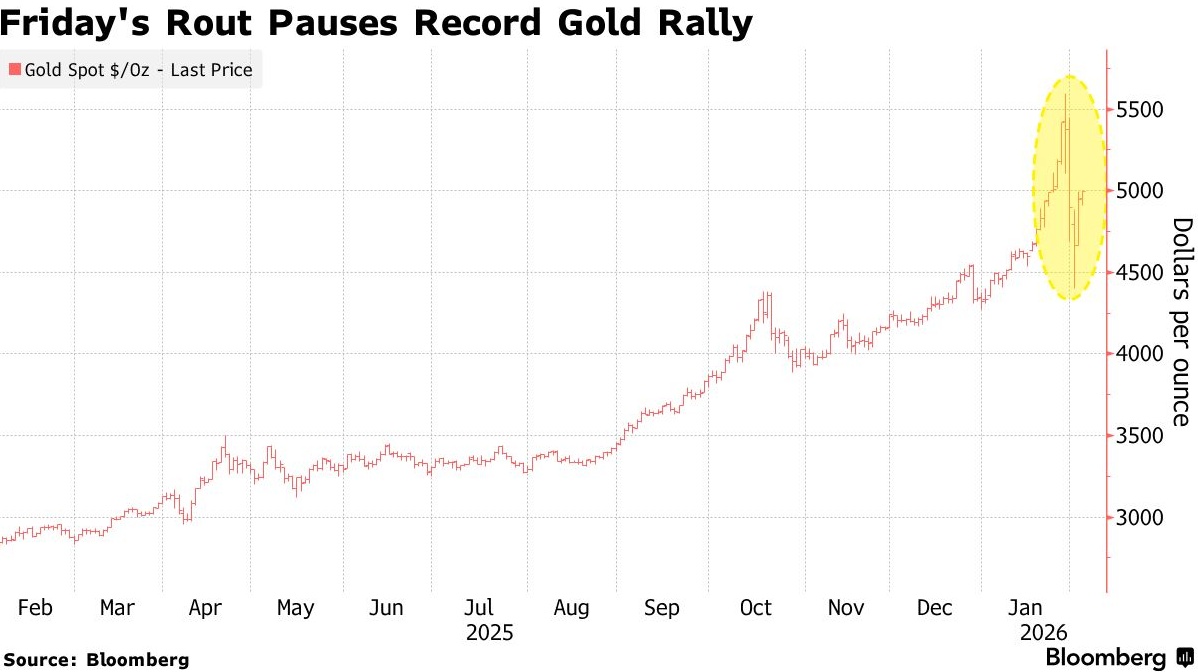
Core Viewpoint - The recent volatility in the global gold market has prompted Fidelity International's fund manager George Efstathopoulos to significantly reduce his gold holdings before a major price drop, but he plans to buy back in if the market experiences a 5% to 7% correction, believing that the medium-term structural uptrend for gold remains intact [1]. Group 1: Market Analysis - Efstathopoulos manages a portfolio of approximately $3 billion and noted that the core factors driving gold prices to historical highs have not dissipated, including persistent inflation and a weakening dollar [1]. - A recent survey by the Official Monetary and Financial Institutions Forum indicated that over half of the central banks surveyed plan to increase their gold reserves in the next 12 months to enhance risk resilience, which is expected to sustain demand for gold as a hedging tool [1]. Group 2: Fund Performance and Strategy - The fund managed by Efstathopoulos achieved a 20% return last year, with gold exposure constructed through diversified channels such as ETFs, ETCs, and gold mining stocks [2]. - Efstathopoulos plans to increase the gold allocation in his fund back to approximately 5%, aiming to strategically build positions during market corrections [2]. - Following a record gold price of $5,595.47 per ounce, Efstathopoulos reduced the gold allocation from 5% to about 3% due to market volatility related to potential Federal Reserve leadership changes, successfully avoiding a severe market correction [2]. Group 3: Future Outlook - Efstathopoulos is among the first prominent global fund managers to express optimism about gold's prospects following the recent price drop, with Deutsche Bank and other institutions maintaining a bullish outlook, predicting gold could reach $6,000 per ounce [5]. - Major Wall Street investment banks, including UBS and JPMorgan, have also expressed optimism for gold's future performance, with UBS forecasting a potential price of $6,200 per ounce by 2026 and JPMorgan setting a target of $6,300 [5].
日本央行宣布下周起出售ETF持仓 以“百年节奏”护航市场平稳过渡
智通财经网· 2026-01-16 11:35
Core Viewpoint - The Bank of Japan will begin gradually selling its holdings of exchange-traded funds (ETFs) and real estate investment trusts (J-REITs) starting next week, aiming to do so in a manner that avoids market disruption [1] Group 1: Bank of Japan's Actions - As of the end of September, the Bank of Japan held ETFs valued at 83 trillion yen (approximately 525 billion USD), with potential for further valuation increases due to recent stock market highs [1] - The central bank plans to reduce its holdings at a pace of 3.3 trillion yen annually (275 billion yen monthly), which would take approximately 112 years to complete if maintained [1] - The Bank of Japan aims for this reduction to be "almost unnoticed" by the market, similar to the gradual divestment of bank shares that took about ten years to complete [1] Group 2: Market Context and Implications - The Nikkei 225 index reached a historical high earlier this week amid expectations of increased fiscal spending by Prime Minister Fumio Kishida's government [1] - Over the past three years, the Japanese stock market has more than doubled, contributing to the rapid increase in the value of the Bank of Japan's assets [1] - The current government is striving to maintain an expansionary fiscal policy despite Japan's public debt burden being the highest among developed countries [2] Group 3: Historical Context - The Bank of Japan initiated its ETF and J-REITs purchasing program in December 2010 as part of its monetary easing policy, significantly expanding the purchase scale after implementing ultra-loose monetary policy in 2013 [2] - The asset purchase program is set to officially terminate in March 2024 [2]
伯恩斯坦拉响警报:流动性泛滥催生“全面泡沫“,AI仅是冰山一角
美股IPO· 2026-01-09 00:22
Core Viewpoint - Richard Bernstein Advisors (RBA) warns that excess liquidity is driving asset prices far beyond fundamental support levels, leading to a "broad-based frenzy" in the market, extending beyond artificial intelligence (AI) [1][3] Group 1: Market Conditions - The current market is described as being in a "full-blown bubble," affecting not only AI but also cryptocurrencies, meme stocks, SPACs, investment-grade bonds, and high-yield bonds [3] - The loose monetary and fiscal policies are identified as the primary causes of this disconnection from fundamental valuations [3] Group 2: Concerns in Credit Investments - The AI boom raises particular concerns for credit investors, as they cannot share in the excess returns if AI succeeds, and will bear losses if it fails [4] - Major tech companies are expected to invest approximately $440 billion in AI infrastructure over the next year, with a 34% increase in capital expenditures [4] Group 3: Investment Strategy Adjustments - RBA has completely exited the corporate bond market, having previously been overweight in this area, due to the relative value proposition no longer being valid when spreads fall below 90 basis points [4] - As of now, the U.S. high-grade credit risk premium has risen to 78 basis points, remaining below 90 basis points since May of the previous year [4] Group 4: Future Outlook - There is a warning that if the Federal Reserve's rate cuts do not meet market expectations, credit spreads may widen further this year [5] - RBA is shifting focus towards collateralized loan obligations (CLOs), mortgage-backed securities (MBS), high-grade floating-rate debt, and European equities, which are seen as more attractive due to fiscal stimulus and supportive monetary policy [5]

伯恩斯坦拉响警报:流动性泛滥催生“全面泡沫“,AI仅是冰山一角
智通财经网· 2026-01-08 23:40
Core Viewpoint - Richard Bernstein Advisors (RBA) warns that excess liquidity is driving asset prices to levels far beyond fundamental support, indicating a "broad-based bubble" in the market [1] Group 1: Market Conditions - The current market bubble extends beyond artificial intelligence (AI) to include cryptocurrencies, meme stocks, SPACs, investment-grade bonds, and high-yield bonds [1] - The RBA's Deputy Chief Investment Officer, Mike Kantoropoulos, attributes this valuation frenzy to loose monetary and fiscal policies [1] Group 2: Concerns Regarding AI - Kantoropoulos expresses particular concern for credit investors regarding the AI boom, noting that if AI succeeds, bondholders cannot share in the excess returns, and if it fails, investors will incur losses [1] - The market is increasingly focused on the hundreds of billions of dollars that tech giants are committing to AI infrastructure, much of which will be raised through the U.S. debt market [1] - Major tech companies like Microsoft, Alphabet, Amazon, and Meta are expected to increase capital expenditures by 34% to approximately $440 billion over the next year [1] Group 3: Investment Strategy - RBA has completely exited the corporate bond market, having previously been overweight in this area a year ago [1] - Kantoropoulos questions the rationale behind investors' willingness to finance potentially outdated technology for up to 40 years [1] Group 4: Credit Market Insights - As of Wednesday, the U.S. high-grade credit risk premium rose to 78 basis points, remaining below 90 basis points since May of the previous year [2] - Kantoropoulos warns that if the Federal Reserve's rate cuts do not meet market expectations, credit spreads may widen further this year [2] - Given the thin levels of corporate bond spreads, RBA is shifting its focus to collateralized loan obligations (CLOs), mortgage-backed securities (MBS), high-quality floating-rate debt, and European equities [2] - Kantoropoulos highlights the attractiveness of high-quality European stocks due to fiscal stimulus, supportive monetary policy, and accelerating earnings growth [2]
银价“跳水”金价下跌 贵金属回调风险累积
Zhong Guo Xin Wen Wang· 2025-12-29 07:32
Core Viewpoint - The recent sharp decline in silver prices, which fell nearly 5%, alongside gold prices dropping below $4,500 per ounce, indicates a profit-taking trend among speculative investors, suggesting increased volatility in silver prices [1] Group 1: Price Movements and Trends - Precious metal prices have risen significantly this year, driven by central bank purchases, inflows into exchange-traded funds (ETFs), and three consecutive interest rate cuts by the Federal Reserve [1] - Year-to-date, silver has increased over 150%, while gold has risen approximately 70%, with silver's gains outpacing gold [1] - The price surge in silver is attributed to strong industrial demand, low global inventories at a ten-year low, and its classification as a critical mineral [1] Group 2: Supply and Demand Dynamics - Major silver-producing countries, Mexico and Peru, have seen a reduction in output this year, while the growth in silver recycling has been insufficient, leading to an overall supply shortage [1] - Silver's market is characterized by its smaller size and shallower depth compared to gold, which contributes to its more pronounced price volatility [1] Group 3: Market Risks and Speculation - The influx of funds into the silver market has resulted in more extreme price fluctuations due to its speculative nature, with historical instances of significant price swings [2] - Analysts warn that the current market sentiment is overly heated, leading to irrational trading and significant deviations from actual net values of silver-related funds, posing substantial risks [2] - Concerns have been raised about the high premiums on silver funds, which, combined with multiple uncertainties, could lead to a valuation correction, as any bubble detached from fundamentals is likely to burst [2]
“老人”抛售,“新钱”萎缩,比特币迟迟找不到支撑
Hua Er Jie Jian Wen· 2025-12-18 00:13
Core Insights - Long-term Bitcoin holders are selling off their assets at an accelerated pace, leading to a supply-demand imbalance that is causing a slow and steady decline in the cryptocurrency market [1][3][4] - Bitcoin has dropped nearly 30% since reaching a historical high of $126,000 in January, currently hovering around $85,000 without finding effective support [1][3] Group 1: Market Dynamics - Data from blockchain analytics indicates that early Bitcoin holders are cashing out at the fastest rate in recent years, with 1.6 million Bitcoins, valued at approximately $140 billion, being sold since the beginning of 2023 [3][5] - The demand that previously absorbed selling pressure has diminished, as ETF fund flows have turned negative, derivative trading volumes have significantly decreased, and retail participation has notably declined [3][4] Group 2: Selling Pressure and Market Liquidity - The market is experiencing a slow bleed characterized by persistent selling pressure meeting weak buying liquidity, making it harder to reverse the downward trend compared to leveraged-driven crashes [4][6] - The recent sell-off is among the largest in history, with the reactivation of dormant Bitcoins not driven by altcoin trading or protocol incentives, but rather by deep liquidity from U.S. ETFs and institutional demand [5][6] Group 3: Future Outlook - Despite the heavy selling pressure, there are indications that the sell-off by long-term holders may soon come to an end, as approximately 20% of Bitcoin supply has been reactivated over the past two years [7] - It is anticipated that the selling from long-term holders will taper off by 2026, as Bitcoin transitions to net buyer demand amid deeper institutional integration [7]
跟上新风口!Coinbase(COIN.US)代币化股票与预测市场功能或在下周上线
Zhi Tong Cai Jing· 2025-12-12 09:12
Group 1 - Coinbase Global plans to announce the launch of prediction markets and tokenized stocks on December 17, aiming to expand its offerings in the financial market [1] - The tokenized stocks will be launched internally rather than through partnerships, indicating a strategic move to enhance its product portfolio [1] - The company aims to become a "universal app" by providing access to a wide range of assets and markets, keeping pace with competitors who are diversifying their services [1] Group 2 - Tokenized stocks have seen a 32% increase in monthly transaction volume over the past 30 days, reaching $1.45 billion, indicating growing interest in this financial product [2] - Prediction markets have gained significant popularity over the past year, attracting interest from both traditional financial exchanges and crypto platforms [2] - Despite a sharp sell-off in the crypto market in October, Coinbase's stock price has increased by 8.3% year-to-date, reflecting resilience in its market position [2]

聚焦数字资产合规机遇,Finternet 2025亚洲数字金融峰会核心议程重磅前瞻
Cai Fu Zai Xian· 2025-10-22 06:27
Core Insights - The Finternet 2025 Asia Digital Finance Summit aims to establish Hong Kong as a leading global digital finance hub, bridging the gap between Web2 and Web3 [2][3] - The summit's theme is "Bridge Ideas with Solutions," focusing on transforming innovative industry concepts into actionable market solutions [2] - The event will gather global financial institutions, technology leaders, regulatory representatives, and Web3 innovators to discuss key industry topics [3][4][5] Group 1: Summit Objectives - The summit's primary goals include serving the real economy, building a global platform, and connecting the Web3 world [2] - It aims to create a compliant network that facilitates efficient collaboration among ecosystem partners, allowing capital to flow freely like information [3] Group 2: Key Topics of Discussion - Regulatory Dialogue: The summit will explore compliance pathways for digital assets, inviting regulatory representatives and market experts to discuss innovative regulatory approaches [3] - Institutional Participation: The agenda will cover the increasing involvement of mainstream institutions in digital assets, including discussions on ETFs and the evolution of new asset management models [4] - Application Scenarios: The summit will focus on the practical applications of digital finance, particularly how stablecoins can reshape cross-border trade and global business payments [5] Group 3: Event Format and Engagement - The summit will feature keynote speeches, high-level discussions, and various thematic panels to analyze industry trends from multiple perspectives [5] - It aims to foster an open and professional dialogue atmosphere, enabling participants to gain insights and inspire deep thinking about the future of digital finance [5]