
人工智能数控系统

Search documents
八部门发文:2027年我国人工智能产业规模稳居世界前列
Yang Zi Wan Bao Wang· 2026-01-12 11:11
Core Viewpoint - The integration of artificial intelligence (AI) with the real economy is accelerating, significantly transforming manufacturing production models and economic forms. The Chinese government has issued a joint implementation opinion aimed at enhancing AI capabilities in the manufacturing sector by 2027 [1]. Group 1: Implementation Goals - By 2027, key AI technologies in China are expected to achieve secure and reliable supply, with the industry scale and empowerment level remaining among the world's top [1]. - The plan aims to promote the deep application of 3-5 general large models in manufacturing, launch 1,000 high-level industrial intelligent entities, create 100 high-quality data sets in industrial fields, and promote 500 typical application scenarios [2]. - The initiative includes cultivating 2-3 globally influential leading enterprises and a number of specialized small and medium-sized enterprises, as well as establishing a global leading open-source ecosystem [1][2]. Group 2: Focus Areas for Development - The opinion emphasizes accelerating the empowerment of key manufacturing sectors such as raw materials, equipment manufacturing, consumer goods, electronic information, and software services [2]. - It highlights the importance of intelligent auxiliary design, software code assistance, and drug research and development to create personalized, low-cost, and efficient new research and design models [2]. - The plan encourages leading enterprises and state-owned enterprises to pioneer the application of industrial intelligent entities and explore new models of AI empowerment in manufacturing [2]. Group 3: Technological Advancements - The initiative calls for the acceleration of intelligent equipment iterations, including the application of intelligent entities in industrial mother machines and robots, and the development of new-generation AI numerical control systems [2]. - It aims to promote the integration of AI technologies into the research, manufacturing, and operation of major technical equipment such as large aircraft and ships, as well as the development of intelligent low-altitude equipment like drones [2]. - The plan also includes testing and safety evaluations for smart connected vehicles equipped with autonomous driving functions [2]. Group 4: Ethical and Transparency Measures - The opinion requires enhancing AI transparency and explainability through measures such as the identification of generated synthetic content [3]. - It emphasizes the implementation of ethical management services for AI technology and the strengthening of industry self-regulation to improve enterprises' ability to prevent ethical risks associated with AI [3].
工信部等八部门:加快人工智能赋能工业母机、工业机器人
Cai Jing Wang· 2026-01-08 08:58
Core Viewpoint - The Ministry of Industry and Information Technology, along with eight other departments, has issued the "Implementation Opinions on the Special Action of 'Artificial Intelligence + Manufacturing'" to promote the integration of AI in manufacturing processes [1] Group 1: AI Empowerment in Manufacturing - The initiative aims to accelerate the iteration of intelligent equipment, focusing on enhancing the capabilities of industrial mother machines and industrial robots through AI [1] - Development of next-generation AI numerical control systems is emphasized to improve autonomous decision-making, analysis, and execution capabilities [1] Group 2: Smart Connected Vehicles - The plan includes conducting tests and safety assessments for smart connected vehicles equipped with autonomous driving features [1] - It aims to systematically advance product access and trial operations for these vehicles on public roads [1]

利好突袭!600215,一分钟涨停
Zhong Guo Ji Jin Bao· 2026-01-08 03:46
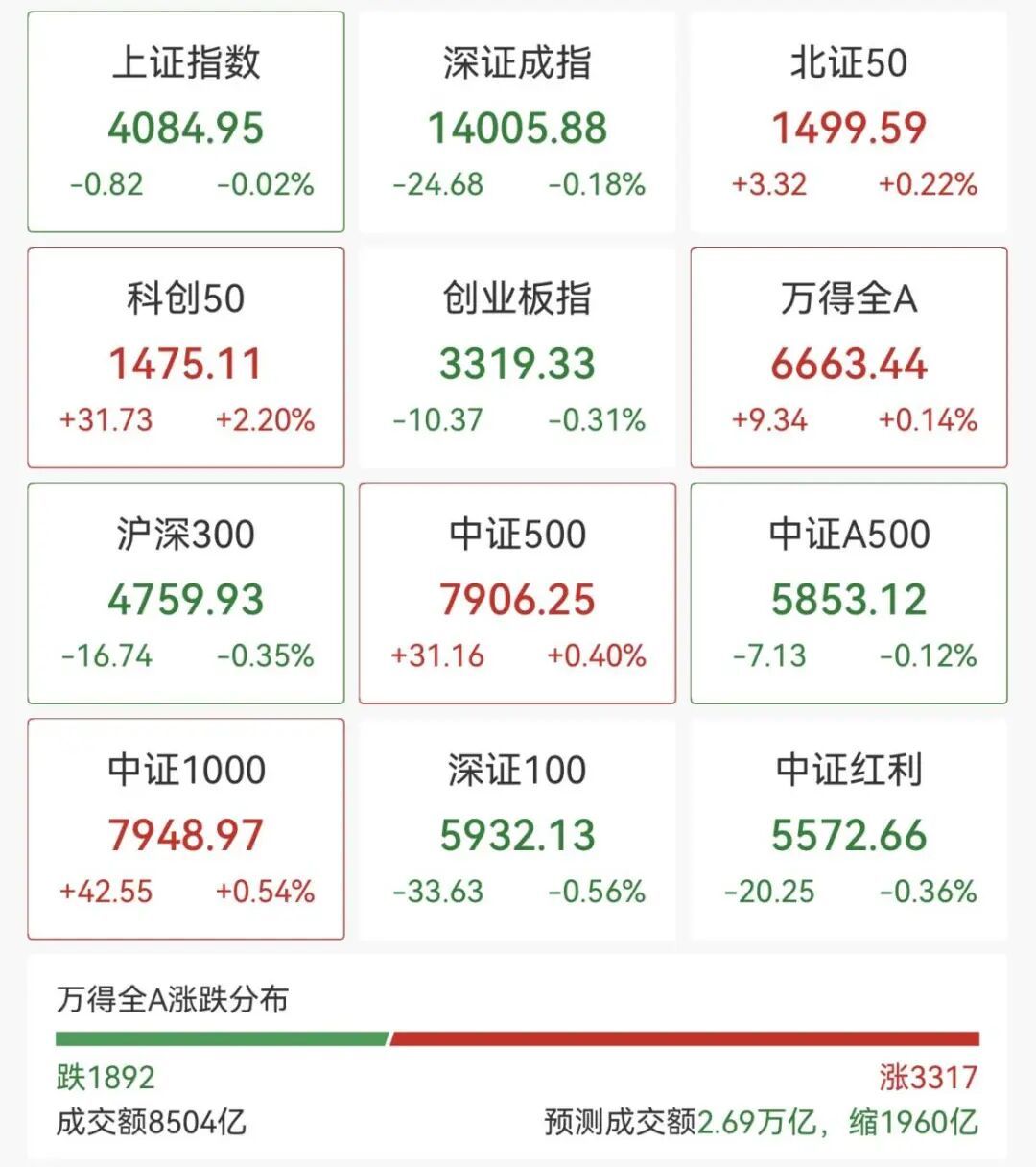
Market Overview - On January 8, the A-share market experienced fluctuations, with the ChiNext Index initially dropping over 1% before recovering slightly [1] - The Shanghai Composite Index closed at 4084.95, down 0.82% [2] - The ChiNext Index closed at 3319.33, down 0.31% [2] Sector Performance - The controllable nuclear fusion concept stocks continued to show strength, with companies like China First Heavy Industries and China Nuclear Engineering hitting the daily limit [7] - The industrial machinery sector saw gains, with stocks such as Shaoyang Hydraulic and East China Numerical Control reaching their daily limits [8][10] - Conversely, sectors like insurance, brokerage, and automotive experienced declines [3][4] Key Stock Movements - Notable declines were observed in major companies such as Lenovo Group (-4.62%), China Life Insurance (-3.27%), and Baidu Group (-3.24%) [6] - The industrial machinery stocks showed significant increases, with Shaoyang Hydraulic rising by 20.01% and other companies like Changfu Co. and Weihong Co. also posting gains [10] Nuclear Fusion Sector Developments - Recent breakthroughs in controllable nuclear fusion technology were reported, with the EAST experiment confirming the existence of a density-free zone, providing important physical evidence for high-density operation [7] - The upcoming 2026 Nuclear Fusion Energy Technology and Industry Conference is expected to accelerate funding and technological cooperation in the nuclear fusion industry [7] Policy and Industry Trends - The Ministry of Industry and Information Technology and other departments issued a directive to promote the integration of artificial intelligence in manufacturing, focusing on intelligent equipment and robotics [10]



八部门启动“人工智能+制造”专项行动
Zheng Quan Ri Bao· 2026-01-07 17:06
Core Viewpoint - The "Implementation Opinions" released by the Ministry of Industry and Information Technology and other departments aim to accelerate the integration of artificial intelligence (AI) technology in the manufacturing sector, enhancing new industrialization through comprehensive and high-level empowerment [1] Group 1: Key Objectives - By 2027, China aims to achieve secure and reliable supply of key AI technologies, maintaining a leading position in industry scale and empowerment levels globally [1] - The plan includes promoting 3-5 general large models in deep applications within manufacturing, creating specialized industry models, and developing 100 high-quality industrial data sets [1] - The initiative targets the establishment of 2-3 globally influential ecosystem-leading enterprises and a number of specialized small and medium-sized enterprises, along with the identification of 1,000 benchmark enterprises [1] Group 2: Specific Measures - The "Implementation Opinions" emphasize strengthening AI computing power supply, supporting the development of intelligent chips, AI servers, and high-speed interconnects [2] - It outlines the need for a national integrated computing network monitoring and scheduling platform to enhance efficient utilization of computing resources [2] - The initiative includes the establishment of an AI application docking platform to facilitate precise matching of supply and demand in key manufacturing sectors [2] Group 3: Equipment and Innovation - The plan promotes the iteration of intelligent equipment, including industrial robots and AI-based control systems, to enhance autonomous decision-making and execution capabilities [3] - It encourages the development of intelligent medical equipment and the integration of AI technologies in major technical equipment like aircraft and ships [3] - The initiative supports the testing and safety evaluation of smart connected vehicles with autonomous driving features [3] Group 4: Enterprise Development - The plan aims to support enterprises in increasing innovation investment and undertaking significant national tasks, fostering globally influential ecosystem-leading companies [3] - It includes the development of AI incubators and support plans for small and medium-sized enterprises, promoting the growth of specialized "little giant" enterprises and unicorns [3] - Local governments are encouraged to provide support such as "computing power vouchers" to enhance public services for SMEs [3] Group 5: Open Source and Collaboration - The initiative calls for the establishment of a high-level AI open-source community and the implementation of quality open-source projects [4] - It promotes the organization of developer conferences and activities to spread open-source culture and support the development of open-source tools [4] - The plan emphasizes the need for a collaborative mechanism among departments and industries to prevent "involution" competition and to guide enterprises in differentiated development [4]
利好!八部门联合发布
中国基金报· 2026-01-07 12:28
Core Viewpoint - The article discusses the implementation of the "Artificial Intelligence + Manufacturing" initiative, aiming to enhance the integration of AI technologies in the manufacturing sector, thereby driving industrial upgrades and reshaping the global landscape by 2027 [2][4]. Overall Requirements - The initiative is guided by Xi Jinping's thoughts and aims to promote innovation-driven development, focusing on technology supply, application scenarios, and market leadership while ensuring safety and openness [5]. Innovation Foundation - Strengthening AI computing power supply through the development of advanced chips and cloud computing platforms [7]. - Developing high-performance algorithm models tailored for the manufacturing sector, enhancing real-time and reliable applications [7][8]. Application Expansion - Accelerating AI empowerment in key manufacturing sectors such as raw materials, equipment manufacturing, and consumer goods, while promoting benchmark solutions [9]. - Systematically transforming the entire manufacturing process, from design to production, using AI technologies to enhance efficiency and reduce costs [10][11]. Product Breakthrough - Promoting the iteration of intelligent equipment, including industrial robots and AI-driven medical devices, to enhance decision-making and operational capabilities [14]. - Supporting the development of smart terminals and software applications that integrate AI functionalities to improve user experience and operational efficiency [15]. Main Body Cultivation - Encouraging the growth of influential AI enterprises and supporting small and medium-sized enterprises in their digital transformation efforts [16]. - Establishing innovation centers and laboratories to enhance the supply of key technologies and foster industry collaboration [16]. Ecological Expansion - Strengthening standards and promoting open-source initiatives to build a globally influential AI ecosystem [18]. - Enhancing talent development in AI to meet industry needs and improve overall skill levels [19]. Safety Assurance - Improving safety capabilities in AI applications, focusing on data security and ethical management [20]. - Establishing governance mechanisms for AI safety, including risk monitoring and emergency response protocols [20]. International Cooperation - Encouraging enterprises to tailor AI products for different international markets and participate in global AI discussions [21][22]. Support Measures - Implementing a collaborative mechanism among departments to support the development of AI technologies and applications in manufacturing [23].

工信部等八部门印发《“人工智能+制造”专项行动实施意见》:到2027年我国人工智能关键核心技术实现安全可靠供给
Jin Rong Jie· 2026-01-07 11:14
Core Viewpoint - The implementation of the "Artificial Intelligence + Manufacturing" special action plan aims to ensure the safe and reliable supply of key AI technologies in China by 2027, positioning the country at the forefront of the global AI industry in terms of scale and empowerment levels [1][2]. Group 1: AI Technology Development - By 2027, China aims to achieve a safe and reliable supply of key AI technologies, with a focus on deep application of 3-5 general large models in manufacturing [1][2]. - The plan includes the creation of 100 high-quality industrial data sets and the promotion of 500 typical application scenarios [1][2]. - The initiative seeks to cultivate 2-3 globally influential ecosystem-leading enterprises and a number of specialized small and medium-sized enterprises [1][2]. Group 2: AI Infrastructure and Resources - The plan emphasizes strengthening AI computing power supply through the development of intelligent chips and key technologies such as high-end training chips and AI servers [1][2]. - It aims to establish a national integrated computing network monitoring and scheduling platform and promote the deployment of industrial cloud computing resources [1][2]. Group 3: Algorithm and Model Innovation - The initiative supports the development of high-performance algorithm models tailored to the real-time, reliability, and safety characteristics of the manufacturing industry [3]. - It encourages the creation of a "cloud-edge-end" model system and the lightweight deployment of models in industrial applications [3]. Group 4: Intelligent Equipment and Robotics - The plan promotes the integration of AI into industrial mother machines and robots, aiming to develop next-generation AI numerical control systems [3]. - It also focuses on accelerating the innovation and clinical application of intelligent medical equipment [3]. Group 5: Investment and Policy Support - The initiative calls for a collaborative mechanism among departments and encourages local governments to formulate policies that guide enterprises in differentiated development [4]. - It aims to leverage the National AI Industry Investment Fund to attract more social capital for investment in AI-related technologies [4]. Group 6: AI Terminal and Product Development - The plan supports the upgrade of intelligent terminals, including smartphones, computers, and smart home devices, while focusing on the commercialization of new types of terminals [5]. - It aims to establish a humanoid robot benchmark production line and promote the application of humanoid robots in typical manufacturing scenarios [5]. Group 7: Open Source and Global Collaboration - The initiative emphasizes the construction of a high-level AI open-source community and the implementation of open-source projects to create a globally influential open ecosystem [5]. - It encourages enterprises to customize AI products and solutions based on the characteristics of different countries and regions [6].
利好来了!刚刚,八部门重磅发布!
券商中国· 2026-01-07 11:04
Core Viewpoint - The article discusses the implementation of the "Artificial Intelligence + Manufacturing" initiative by eight government departments in China, aiming to enhance the integration of AI in manufacturing and achieve significant advancements in technology and industry scale by 2027 [1][2][5]. Group 1: AI and Manufacturing Integration - By 2027, China aims to achieve reliable supply of key AI technologies, maintaining a leading position globally in industry scale and empowerment levels [5]. - The initiative plans to promote the deep application of 3-5 general large models in manufacturing, create specialized industry models, and develop 100 high-quality industrial data sets [5]. - The focus is on supporting the development of intelligent chips and key technologies such as AI servers and cloud operating systems [2]. Group 2: Industrial Internet and AI Fusion - The "Action Plan" aims to significantly enhance the integration of industrial internet and AI by 2028, with a target of transforming at least 50,000 enterprises through new industrial network upgrades [6]. - The plan emphasizes the need for new industrial networks that meet high throughput, low latency, and high reliability requirements [6][7]. - It encourages the deployment of edge computing and intelligent gateways to improve real-time data processing capabilities [7]. Group 3: AI in Various Sectors - The initiative promotes the acceleration of AI applications in sectors such as industrial robots, medical equipment, and autonomous vehicles [3]. - It aims to enhance traditional software products by integrating AI to improve user experience and operational efficiency [4]. - The development of intelligent systems and solutions is encouraged, with a focus on creating a robust ecosystem of AI service providers [8]. Group 4: Support for Enterprises - The plan includes the establishment of national innovation centers for AI in manufacturing to enhance the supply of common technologies [5]. - It aims to cultivate specialized small and medium-sized enterprises and unicorns in the AI sector, providing support through initiatives like "computing power vouchers" [4][5]. - The initiative seeks to foster a collaborative environment among industrial enterprises, AI companies, and software providers to develop integrated solutions [8].

利好来了!刚刚,八部门重磅发布!
Zheng Quan Shi Bao Wang· 2026-01-07 11:00
Core Insights - The Chinese government aims to enhance the integration of artificial intelligence (AI) and manufacturing, with a target for key AI technologies to achieve reliable supply by 2027, maintaining a leading position globally in terms of industry scale and empowerment levels [5][6] - The initiative includes the development of 3-5 general large models for deep application in manufacturing, the creation of 100 high-quality industrial data sets, and the promotion of 500 typical application scenarios [5][6] Group 1: AI and Manufacturing Integration - The Ministry of Industry and Information Technology (MIIT) and seven other departments released the "AI + Manufacturing" implementation plan, focusing on the collaborative development of smart chips and key technologies [2][3] - The plan emphasizes the establishment of a robust AI model training and inference framework tailored for the manufacturing sector, promoting lightweight model deployment and application in industrial scenarios [2][3] Group 2: Industrial Internet and AI Fusion - The "Industrial Internet and AI Fusion Empowerment Action Plan" aims to significantly enhance the integration level of industrial internet and AI by 2028, targeting the upgrade of at least 50,000 enterprises with new industrial networks [7][8] - The action plan includes the development of a nationwide integrated computing network and encourages the deployment of edge computing devices to improve real-time data processing capabilities [8][9] Group 3: Support for Enterprises - The initiative supports the cultivation of small and medium-sized enterprises (SMEs) specializing in AI, encouraging local governments to provide resources such as "computing power vouchers" to reduce development costs [4][6] - The plan aims to establish a national manufacturing innovation center in the AI field to enhance the supply capacity of key common technologies and promote the development of specialized service providers in industrial data and models [4][9]
利好!事关AI,八部门重磅发布!
Zheng Quan Shi Bao· 2026-01-07 10:50
Group 1 - The core viewpoint of the news is the implementation of the "Artificial Intelligence + Manufacturing" special action plan by eight departments, aiming for significant advancements in AI technology and its application in the manufacturing sector by 2027 [1] - By 2027, China aims to achieve a secure and reliable supply of key AI core technologies, maintaining a leading position in industry scale and empowerment levels globally [1] - The plan includes the deep application of 3-5 general large models in manufacturing, the creation of 100 high-quality industrial data sets, and the promotion of 500 typical application scenarios [1] Group 2 - The initiative supports breakthroughs in high-end training chips, edge inference chips, and other key core technologies to enhance AI computing power supply [2] - It emphasizes the development of intelligent chip hardware and software, and the establishment of a national integrated computing network monitoring and scheduling platform [2] - The plan aims to improve the supply capacity of intelligent computing resources through the deployment of edge computing servers and industrial cloud computing [2] Group 3 - The focus is on promoting lightweight model deployment and accelerating the application of AI in industrial scenarios [3] - It supports the innovation of model training and inference methods, developing high-performance algorithm models tailored to the real-time, reliability, and safety characteristics of the manufacturing industry [3] - The initiative encourages the integration of AI technology into major equipment manufacturing, such as large aircraft and ships, and the development of intelligent low-altitude equipment like drones [3] Group 4 - The plan aims to accelerate the industrialization and commercialization of new terminals such as AR/VR wearable devices and brain-computer interfaces, focusing on key scenarios like industrial inspection and remote medical care [3] - It supports breakthroughs in edge models and application toolchains, fostering the development of AI terminals like smartphones, computers, and smart home devices [3] - The initiative promotes the innovation of embodied intelligent products and the establishment of humanoid robot pilot bases and training grounds [3]
八部门:加快人工智能赋能工业母机、工业机器人
3 6 Ke· 2026-01-07 10:15
Core Viewpoint - The Ministry of Industry and Information Technology, along with seven other departments, has issued the "Implementation Opinions on the Special Action of 'Artificial Intelligence + Manufacturing'" to accelerate the integration of artificial intelligence in various industrial sectors [1] Group 1: AI in Manufacturing - The initiative aims to enhance the capabilities of industrial mother machines and robots through AI, focusing on the development of next-generation AI numerical control systems that improve autonomous decision-making, analysis, and execution [1] - There is a push to accelerate the development of surgical robots and intelligent diagnostic systems, promoting innovation in smart medical equipment and its clinical application [1] Group 2: AI in Major Equipment - The plan encourages the integration of AI technologies in the research, development, manufacturing, and operation of major technical equipment such as large aircraft and ships [1] - The development of intelligent low-altitude equipment, including drones, is also a focus area [1] Group 3: Smart Vehicles - The initiative includes conducting tests and safety assessments for smart connected vehicles equipped with autonomous driving features, with a structured approach to product access and road testing trials [1]