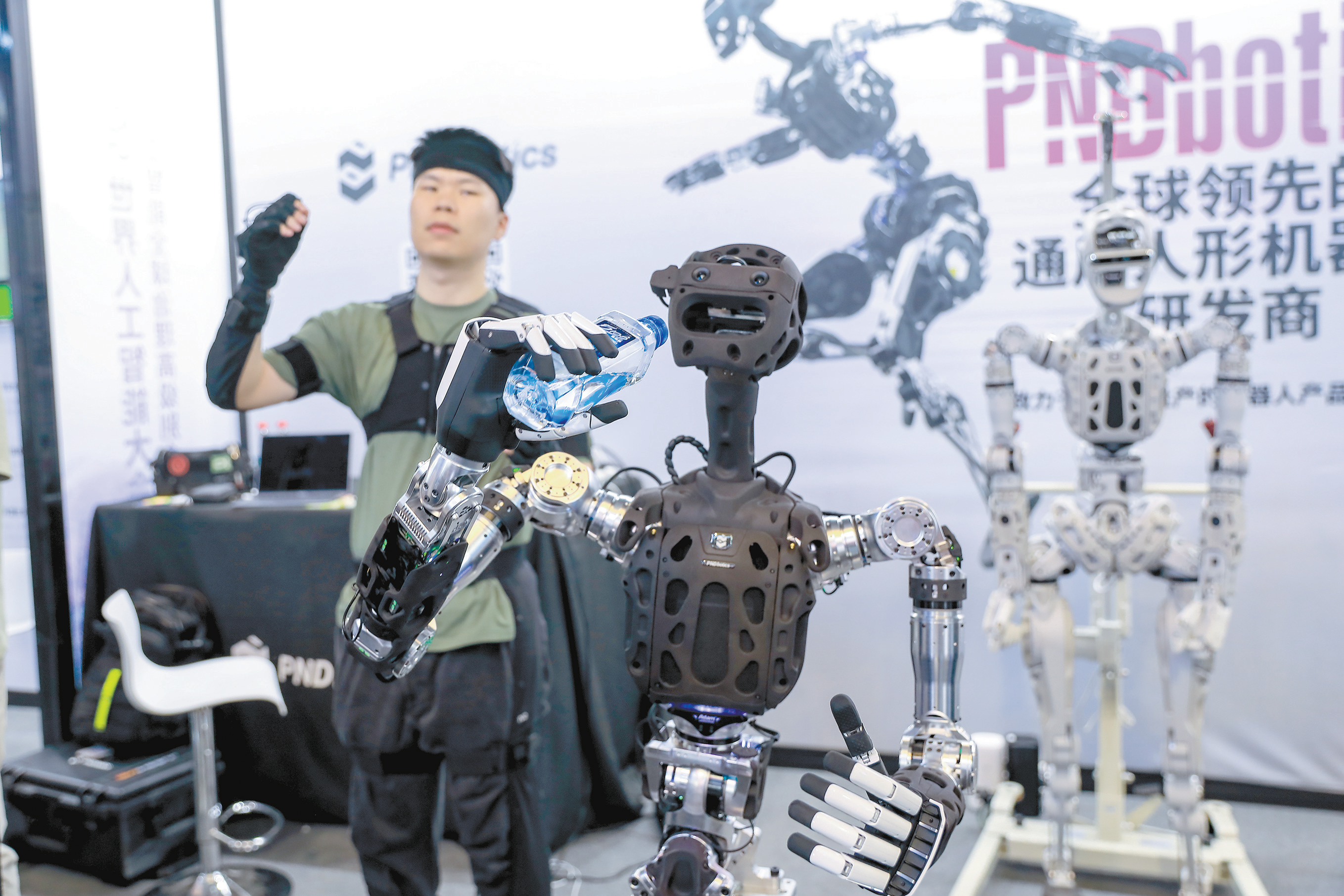
人形机器人AEON

Search documents
机器人行业周报:宇树科技发布新款机器狗,宝马欧洲工厂即将部署人形机器人
Southwest Securities· 2026-03-02 04:30
Investment Rating - The report maintains an "Outperform" rating for the machinery equipment industry as of March 1, 2026 [1]. Core Insights - The robotics index underperformed the market, with the Zhongzheng Kexin Robotics Index dropping by 4.3%, lagging behind the Shanghai Composite Index by 3.8 percentage points and the CSI 300 Index by 4.3 percentage points [4][11]. - BMW plans to deploy humanoid robots named AEON at its Leipzig factory in Europe, which will begin large-scale pilot testing in summer 2026. These robots are expected to enhance production efficiency, having previously supported the production of 30,000 BMW X3 vehicles in the U.S. [15][16]. - Yushu Technology launched its fourth robotic dog, Unitree As2, which boasts performance capabilities twice that of its predecessor, Go2, with a peak torque of 90N.m and a maximum speed of 5m/s. The company anticipates that 80% of its robotic dogs will be used in research, education, and consumer sectors by 2024 [18][19]. - Qianxun Intelligent, a leading company in embodied intelligence, completed two rounds of financing totaling nearly 2 billion yuan, with plans to invest in developing large-scale models and expanding technology applications across various sectors [19]. Summary by Sections Market Review - The robotics index experienced a decline of 4.3% from February 23 to March 1, 2026, underperforming compared to major indices [4][11]. Industry Dynamics - BMW's deployment of humanoid robots in its Leipzig factory marks a significant step in integrating AI-based robotics into its European production system, leveraging successful experiences from its U.S. operations [15][16]. - Yushu Technology's new robotic dog, Unitree As2, features enhanced performance metrics and aims to capture a significant share of the global market for quadruped robots [18]. - Qianxun Intelligent's recent funding rounds reflect strong investor confidence and a strategic focus on scaling technology across multiple applications [19].


人形机器人进入宝马工厂,合作方为瑞典公司Hexagon;大船天津30.7万吨LNG双燃料船开工丨智能制造日报
创业邦· 2026-03-02 03:49
Group 1 - The construction of the 30.7 million tons LNG dual-fuel oil tanker T300K-113 has commenced, marking the second vessel in this series and demonstrating the shipyard's capability for large-scale shipbuilding [2] - BMW Group has introduced humanoid robots into its Leipzig factory, collaborating with Swedish company Hexagon, aiming to integrate this technology into existing production lines and explore applications in battery and component manufacturing [2] - The AI and hardware company, Artificial Productivity, has completed its angel round financing with investment from Zhiyuan Huilian, focusing on enhancing the core capabilities of smart hardware through AI integration [2]


2025年中国国际进口博览会媒体舆情传播报告
Sou Hu Cai Jing· 2025-12-07 03:00
Core Insights - The 2025 China International Import Expo (CIIE) successfully concluded with a theme of "New Era, Shared Future," attracting 4,108 overseas exhibitors from 155 countries and regions, covering an exhibition area of over 430,000 square meters. The total number of attendees reached 922,000, with an intended transaction amount of $83.49 billion, representing a 4.4% increase from the previous year [1][30]. Group 1: Event Overview - The CIIE serves as a significant platform for high-level international trade and innovation, showcasing China's commitment to opening up its market [1][30]. - The event featured over 400 new products, technologies, and services making their global or Asian debuts, highlighting advancements in various sectors including medical devices, industrial robotics, and smart agriculture [3][16]. Group 2: Technological Integration - The expo emphasized "technology empowerment" with the introduction of humanoid interactive robots as "AI volunteers" for guiding and consulting, enhancing the visitor experience [2][12]. - A comprehensive media ecosystem was established, integrating large screens, small screens, and outdoor displays to maximize outreach and engagement [2][15]. Group 3: Innovation and Sustainability - Green and low-carbon technologies were prominently featured, with GE Vernova showcasing a 100% hydrogen-powered generator and Schneider Electric presenting energy efficiency solutions, aligning with China's dual carbon goals [3][20]. - The event also highlighted products targeting the aging population, with companies like Boston Scientific and Omron presenting innovations in health monitoring and rehabilitation [3][28]. Group 4: Cultural Exchange and Global Collaboration - The expo included unique cultural exchange activities, such as the "Twin City Exhibition," which promoted deep integration of products and regional cultures [4][23]. - Participation from countries along the Belt and Road Initiative increased by 23.1%, reflecting enhanced global economic resilience discussions [4][25]. Group 5: Sector-Specific Highlights - The medical device sector focused on comprehensive health management, with major companies like Medtronic and Pfizer showcasing their latest products [5][34]. - The consumer goods sector emphasized personalization and sustainability, featuring brands like L'Oréal and Uniqlo [5][34]. - The automotive sector presented innovations in localized R&D, including self-developed chips and autonomous driving technologies from companies like Volkswagen and Toyota [5][34].
辛识平:中国市场强大“磁吸力”从何而来
Xin Hua Wang· 2025-11-12 14:57
Core Insights - China's market exhibits strong "magnetic attraction" due to its vast scale and potential for cooperation and mutual benefit with global partners [1][2][3] Group 1: Market Size and Opportunities - The China International Import Expo (CIIE) showcased 461 new products, technologies, and services, with over 200 being global debuts, highlighting the country's innovation capacity [1] - The Canton Fair attracted over 310,000 foreign buyers from 223 countries and regions, with nearly a 10% increase in buyers from Belt and Road Initiative countries [1][2] - China's retail sales of consumer goods are expected to exceed 50 trillion yuan this year, reinforcing its position as the world's second-largest consumer and import market [2] Group 2: Foreign Investment and Business Environment - In the first nine months of the year, China established 48,921 new foreign-invested enterprises, marking a 16.2% year-on-year increase, indicating a robust foreign investment climate [3] - The reduction of the negative list for foreign investment and the expansion of visa-free travel for foreign businesses reflect China's commitment to creating a favorable business environment [3] Group 3: Global Cooperation and Future Growth - The ongoing collaboration between China and global businesses is seen as a pathway to shared opportunities and growth, with many foreign companies expressing confidence in the Chinese market [3][4] - Major foreign investment projects have been successfully launched in China this year, demonstrating the country's appeal as a destination for international business [3]
第八届进博会|首发将超3000项!进博会成展现中国高水平对外开放“大舞台”
Xin Hua Wang· 2025-11-05 12:22
Core Points - The 8th China International Import Expo (CIIE) showcases 461 new products, technologies, and services, with total first-time releases since 2018 expected to exceed 3,000, highlighting China's high-level opening-up [1] - Notable first-time exhibits include Turkish coffee, Ecuadorian red bananas, and advanced technologies like controllable expansion vascular stents and humanoid robots, demonstrating China's market appeal [1] - The expo features participation from 155 countries and regions, with 4,108 foreign enterprises, covering over 430,000 square meters, and includes 290 Fortune 500 companies [4] - The event aims to share opportunities with the world, expanding its international network and promoting multilateral cooperation through various forums [4] - The participation of African enterprises has increased by 80% this year, reflecting efforts to enhance engagement with the least developed countries [4][5] Group 1 - The CIIE serves as a platform for companies to launch new products and expand into the Chinese market, with significant orders reported by participants [1] - The expo is recognized as the world's first national-level exhibition focused on imports, running from November 5 to 10 [5] Group 2 - The event's scale has reached new heights, with approximately 450,000 registered attendees expected [4] - Medtronic's global chairman highlighted the importance of China as a key market for medical technology innovation, showcasing several new products at the expo [4]
科技新品亮相“首秀舞台”,跨国高管热议市场潜力,进博会透视中国“科技消费”新图景
Huan Qiu Shi Bao· 2025-11-04 22:53
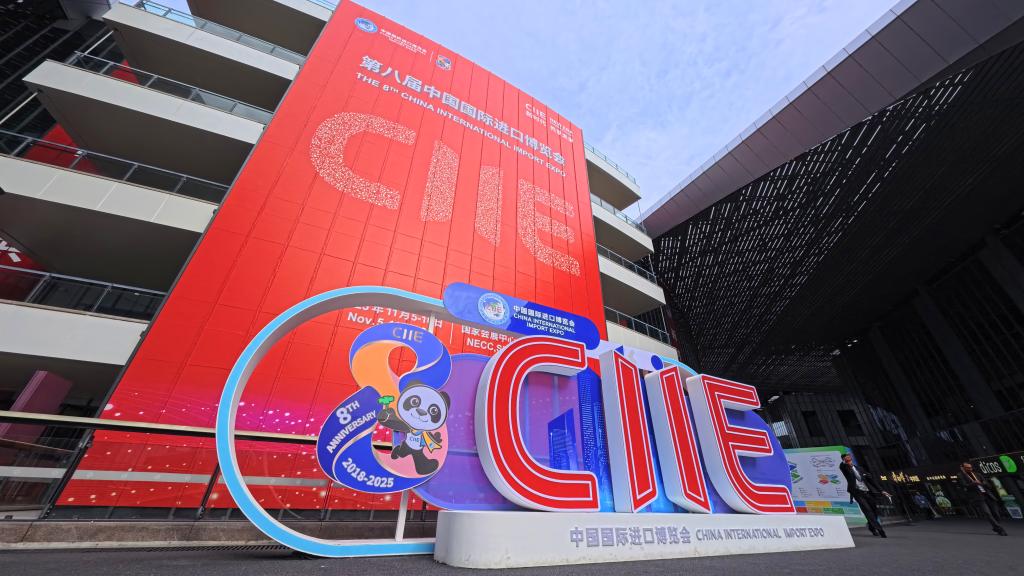
Core Insights - The 8th China International Import Expo (CIIE) is being held in Shanghai from November 5 to 10, showcasing technological innovations across various consumer sectors such as agriculture, healthcare, and automotive [1][3] - The expo features participation from 155 countries and regions, with 4,108 foreign enterprises exhibiting, marking a record exhibition area of over 430,000 square meters [3] Industry Trends - The CIIE serves as a global launch platform for new products and cutting-edge technologies, with 461 new products, technologies, and services displayed [3] - China has entered the top ten of the global innovation index for the first time during the 14th Five-Year Plan period, highlighting its significant role in global technological innovation [4] Company Strategies - Siemens has established over 20 digital innovation and empowerment centers in China, collaborating on more than 880 research projects with local universities and research institutions, viewing China as both a sales market and a source of innovation [5] - Panasonic aims to leverage the Chinese market for global product distribution, emphasizing the unique AI-driven consumer environment in China that supports innovation [5] Product Highlights - Shift Robotics showcased the "Moonwalker" smart shoes, designed for the Chinese market with a price point 30% lower than similar products in the U.S., indicating the potential of the Chinese consumer market [6][7] - Japanese company ViXion Inc. introduced the AI glasses ViXion01S, targeting the elderly demographic in China, reflecting the trend of foreign brands focusing on niche markets within China [7][8]
放眼全球,谁在跨界做具身智能?
Huan Qiu Shi Bao· 2025-09-13 03:30
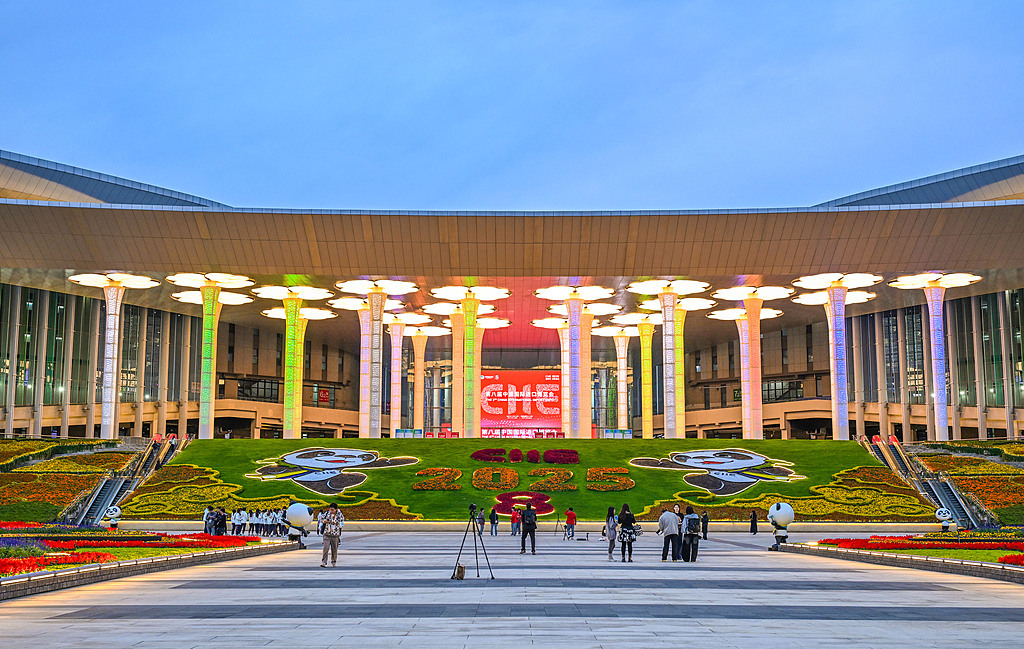
Core Insights - The article discusses the rise of embodied intelligence, highlighting its integration across various industries such as automotive, manufacturing, and the internet, driven by both established giants and emerging startups [8][11][12] - The competition in embodied intelligence is characterized by a lack of established templates, requiring continuous experimentation and deep engagement with practical scenarios to navigate the future landscape [8][11] Industry Trends - Embodied intelligence is seen as a key area for growth, with significant investments from companies like BYD and partnerships like the one between Bosch and Beijing Galaxy General Robotics focusing on smart manufacturing and robotics [9][10] - The automotive sector is identified as a major application area for embodied intelligence, with companies like Xpeng showcasing humanoid robots in manufacturing settings [9][10] Technological Developments - The development of humanoid robots is a focal point, with companies like Hexagon and Tesla leading innovations in hardware and AI integration, which are crucial for overcoming supply chain and manufacturing challenges [10][15] - The emergence of platforms like Nvidia's Isaac GR00T N1 model aims to accelerate the development of humanoid robots, indicating a trend towards open-source and customizable solutions [15] Market Dynamics - The market for embodied intelligence is expected to grow significantly, with estimates suggesting it could become a trillion-dollar industry, similar to previous technological revolutions [11][18] - Companies are entering the embodied intelligence space for various reasons, including seeking new growth avenues, strategic positioning against technological disruption, and addressing internal efficiency needs [11][12] Challenges and Barriers - The implementation of embodied intelligence faces several challenges, including the need for robust digital infrastructure and high-quality data for effective training of AI systems [12][13] - The complexity of integrating various technologies and ensuring effective collaboration among hardware and software components is a significant hurdle for companies [13][14] Future Outlook - The future ecosystem of embodied intelligence may consist of a few dominant platform giants alongside numerous application-focused companies, creating a complex and dynamic market landscape [19][20] - The potential for embodied intelligence to transform various sectors, from manufacturing to healthcare, is immense, with predictions of a collaborative future between humans and robots [18][21]
【环时深度】放眼全球,谁在跨界做具身智能?
Huan Qiu Wang· 2025-09-12 22:49
Core Insights - The article discusses the rise of embodied intelligence, which is creating a convergence across various industries such as automotive, manufacturing, and the internet. Companies are engaging in cross-industry strategies to capture new growth opportunities and position themselves in the AI-physical world integration race [1][2]. Industry Trends - Embodied intelligence is defined as a system-level intelligence that relies on the interaction between "bodies" and their environments, forming a closed loop of perception, decision-making, and action. The most notable application of embodied intelligence by 2025 is humanoid robots, which are already being utilized in smart manufacturing [2][5]. - The automotive industry is identified as a key application area for embodied intelligence technology. Companies like Xiaopeng Motors are showcasing humanoid robots in manufacturing settings, highlighting the shared technological foundations between autonomous driving and robotics [5][6]. - Internet giants are also entering the embodied intelligence space, with companies like JD.com announcing significant investments in smart robotics. This trend reflects both short-term market potential and long-term strategic positioning in the AI landscape [6][21]. Cross-Industry Collaborations - Major manufacturing firms are forming partnerships with robotics companies to enhance their capabilities. For instance, Bosch Group has established a joint venture focused on complex assembly and intelligent quality inspection [5][6]. - In the agricultural sector, companies like XAG are overcoming barriers to implement embodied intelligence, emphasizing the need for foundational digital agricultural infrastructure [9][11]. Technological Challenges - The development of embodied intelligence faces several challenges, including the need for high-quality and diverse data for training AI systems. Companies are exploring innovative solutions like spatial generation technology to create realistic training environments for robots [13][14]. - The integration of various technologies, such as multi-modal perception and hardware collaboration, is essential for advancing embodied intelligence. This requires a collective effort from multiple companies rather than relying on a single entity [14][22]. Future Ecosystem - The future ecosystem of embodied intelligence may consist of a few dominant platform giants alongside numerous application-focused companies. These giants will control critical components like computing power and sensors, while application companies will create diverse value across industries [21][22]. - The article suggests that the commercial potential of embodied intelligence extends beyond manufacturing and services, potentially transforming various sectors and creating significant business opportunities [21][24].