
伊斯兰债券

Search documents
财经观察:东盟国家推进金融中心建设,竞争区域话语权
Huan Qiu Shi Bao· 2025-10-14 22:58
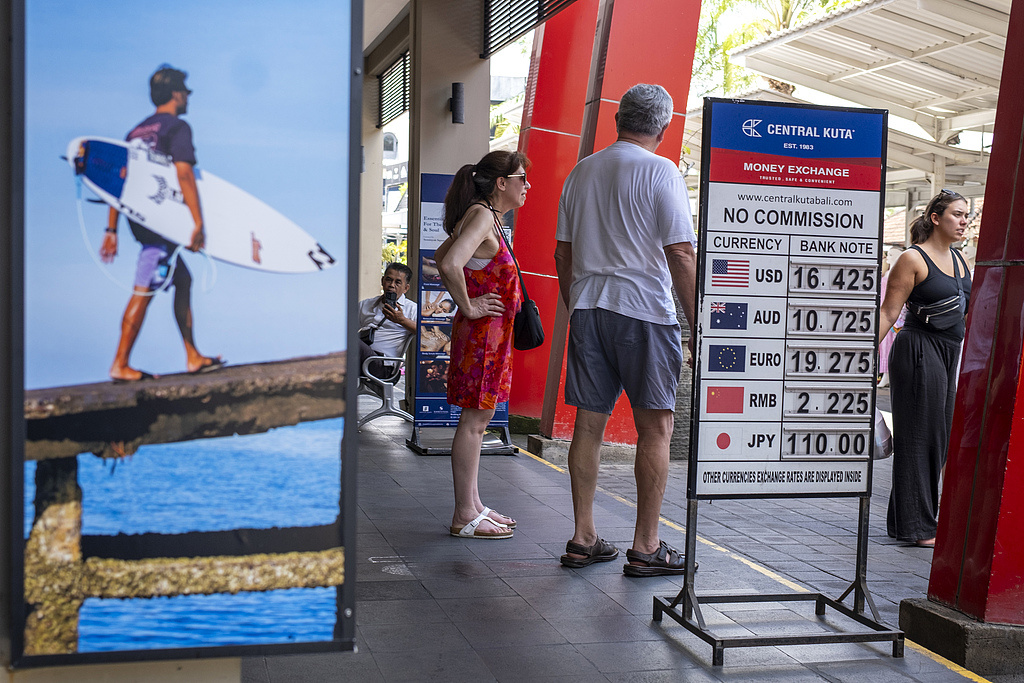
Core Viewpoint - Southeast Asian countries are competing to establish financial centers, aiming to attract international capital and enhance their economic positions in the global financial landscape [1][10]. Indonesia's Financial Center in Bali - Indonesia plans to develop Bali into a financial center to attract international banks, asset management firms, and private equity companies, although the government has not officially announced the plan yet [2][4]. - The initiative is supported by President Prabowo and is modeled after India's GIFT City and Dubai International Financial Centre, offering tax and regulatory exemptions and simplified approval processes [4][5]. - The Indonesian government aims to create a transparent financial center to support economic development, with expectations that it will connect global capital with local entities [5][6]. - The plan is seen as a catalyst for economic diversification and attracting larger international investments, especially in light of declining consumer confidence and investment [5][11]. - Indonesia's economic growth rate is projected to slow to 4.9% in 2025, with a goal of achieving 8% growth by 2029, necessitating $784 billion in direct investment over the next four years [5]. Vietnam's Dual-City Financial Center - Vietnam is working on creating a dual-city financial center in Da Nang and Ho Chi Minh City, inspired by Dubai's Palm Islands, to attract foreign investment and achieve double-digit growth [7][8]. - Ho Chi Minh City will focus on comprehensive financial services, while Da Nang will target green finance and offshore financial services [7][8]. - The goal is to improve the global ranking of the dual-city financial center from 95th in 2023 to 75th by 2035 and 20th by 2045 [8]. - Vietnam's efforts to establish an international financial center have faced challenges, including regulatory uncertainties and regional competition, but recent political will and clearer legal frameworks have accelerated progress [9][11]. Regional Competition and Development - Southeast Asian countries are intensifying their efforts to build attractive financial centers, with Singapore currently leading but facing challenges from emerging cities like Bangkok, Jakarta, and Kuala Lumpur [10]. - Bangkok's capital market expansion and Kuala Lumpur's focus on Islamic finance are enhancing their positions as regional financial hubs [10]. - The push for financial centers is driven by both domestic needs for upgraded financial services and international factors such as trade wars and the need for regional supply chain support [11].

沙特阿美因油价下跌而重返国际债务市场
Sou Hu Cai Jing· 2025-09-11 02:51
Group 1 - Saudi Aramco plans to re-enter the debt market by issuing US dollar-denominated Islamic bonds, marking its second debt issuance this year and the third for Saudi Arabia within a week [1][2] - The company is set to issue five-year and ten-year Islamic bonds, following a previous issuance of $5 billion in May, which included five-year, ten-year, and thirty-year US dollar-denominated international bonds [1] - The decline in oil prices has significantly reduced cash flow for Saudi Aramco, leading to a larger drop in cash flow and profits in the second quarter compared to the first quarter [1] Group 2 - Saudi Arabia's recent bond issuance activity indicates increasing fiscal pressure due to falling oil prices, with the country's budget deficit growing as oil prices remain below the $90 per barrel needed for budget balance [2] - The Public Investment Fund (PIF) of Saudi Arabia recently sold $2 billion in ten-year US dollar bonds to fund part of its investment plans, highlighting the urgency for financing amid budgetary constraints [2]
沙特阿美重返国际债市 为沙特发债潮“添把火”
智通财经网· 2025-09-10 07:03
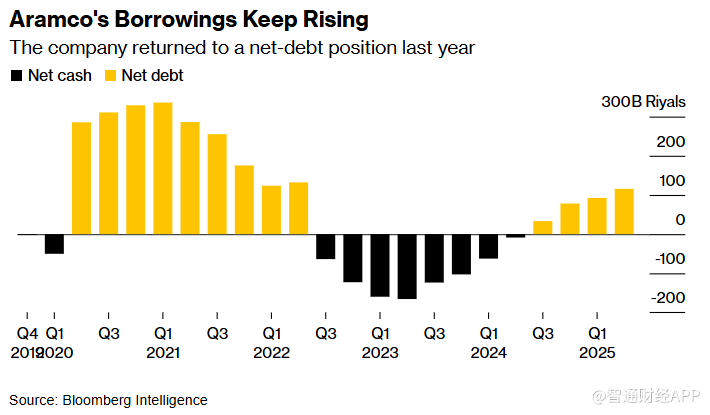
Group 1 - Saudi Aramco is issuing bonds in the international market for the second time this year, with a focus on 5-year and 10-year dollar-denominated Islamic bonds, priced approximately 105 and 115 basis points above U.S. Treasuries respectively [1] - The company has raised nearly $20 billion through dollar and euro-denominated bonds this year, approaching the record set in 2017, making it one of the most active bond issuers in emerging markets [1] - As of June 30, the company's net debt increased from $24.7 billion to $30.8 billion, while profits have declined for the tenth consecutive quarter due to falling oil prices [1] Group 2 - The company's debt ratio rose from 5.3% three months ago to 6.5% in the second quarter, although this remains lower compared to major Western oil companies like Shell, which has a debt ratio of 19% [3] - Saudi Aramco plans to remain active in the bond market and is considering new types of bond products, including commercial paper, and issuing bonds in various currencies or locations [3] - The Saudi government is increasing its borrowing efforts to offset budget deficits caused by low oil prices and significant expenditures related to Crown Prince Mohammed bin Salman's economic diversification projects [3]
全球债市“冰火两重天” :一边热烈认购,一边疯狂抛售
Jin Shi Shu Ju· 2025-09-03 06:36
Group 1 - The global bond market is experiencing significant fragility and volatility, with many governments forced to finance heavily in a high-debt and high-interest environment, leading to a paradox of strong short-term demand for high-yield products while long-term risks loom [1] - On Tuesday, European bond markets saw a record single-day issuance, with 28 issuers planning to raise at least €49.6 billion (approximately $57.7 billion), potentially surpassing the previous record of €47.6 billion set earlier this year [2] - The UK successfully raised £14 billion through a record 10-year government bond issuance, attracting over £140 billion in orders, with international buyers accounting for 40% of the allocation [2] Group 2 - Despite rising borrowing costs, banks and corporations are actively entering the market, driven by a surge in investment funds flowing into bond funds during the summer [3] - Saudi Arabia attracted approximately $15 billion in orders for its planned issuance of five-year and ten-year Islamic bonds to cover fiscal deficits and support its "Vision 2030" diversification plan [3] - The global bond market is under pressure from ongoing inflation concerns, fiscal discipline issues, and heavy government bond issuance, leading to rising yields and declining bond prices [4] Group 3 - Long-term bond yields have surged to high levels, with Japan's 20-year government bond yield reaching its highest level since 1999, and the UK’s 30-year bond yield climbing to its highest since 1998 [4] - The recent sell-off reflects traders' concerns over high government spending and its potential inflationary impact, with significant corporate bond issuance and ongoing doubts about the independence of the Federal Reserve adding to market pressure [4] - The Bloomberg Global Bond Index fell by 0.4% on Tuesday, marking the largest single-day decline since June 6, indicating ongoing caution in holding long-term debt [5]
国际宏观资讯双周报-20250731
Zhong Cheng Xin Guo Ji· 2025-07-31 08:44
Economic Insights - The Bank of Korea lowered the benchmark interest rate by 25 basis points to 2.5%, the lowest since August 2022, amid a significant downgrade of GDP growth forecast from 1.5% to 0.8% for 2025[10] - Canada's GDP grew by 2.2% in Q1 2025, exceeding market expectations and driven by strong exports, particularly in the mining and financial sectors[14] - Mexico's central bank drastically cut its GDP growth forecast for 2025 to 0.1%, down from 0.6%, citing domestic economic weakness and uncertainties from U.S. trade policies[15] Financial Developments - South Africa's budget update revealed a projected GDP growth of only 1.4% for 2025, down from a previous estimate of 1.8%, with debt-to-GDP ratio expected to peak at 77.4%[26] - Saudi Arabia issued $16 billion in Islamic bonds, with its holdings of U.S. Treasury securities rising to $131.6 billion as of March 2025[28] - Egypt's central bank cut interest rates by 100 basis points, indicating a shift to a more accommodative monetary policy as inflation pressures ease[21] Political and Social Context - Italy's Prime Minister Meloni reached a preliminary agreement with the EU to reduce the fiscal deficit below 3% of GDP by 2027, focusing on public spending cuts and tax compliance[31] - The Philippines' midterm election results showed President Marcos' coalition winning 6 out of 12 contested Senate seats, impacting future political dynamics[37] - Turkey's President Erdogan announced a "Family Decade" initiative to address declining birth rates, emphasizing traditional family values[53]
中东资金分层级涌向香港
36氪· 2025-06-19 09:10
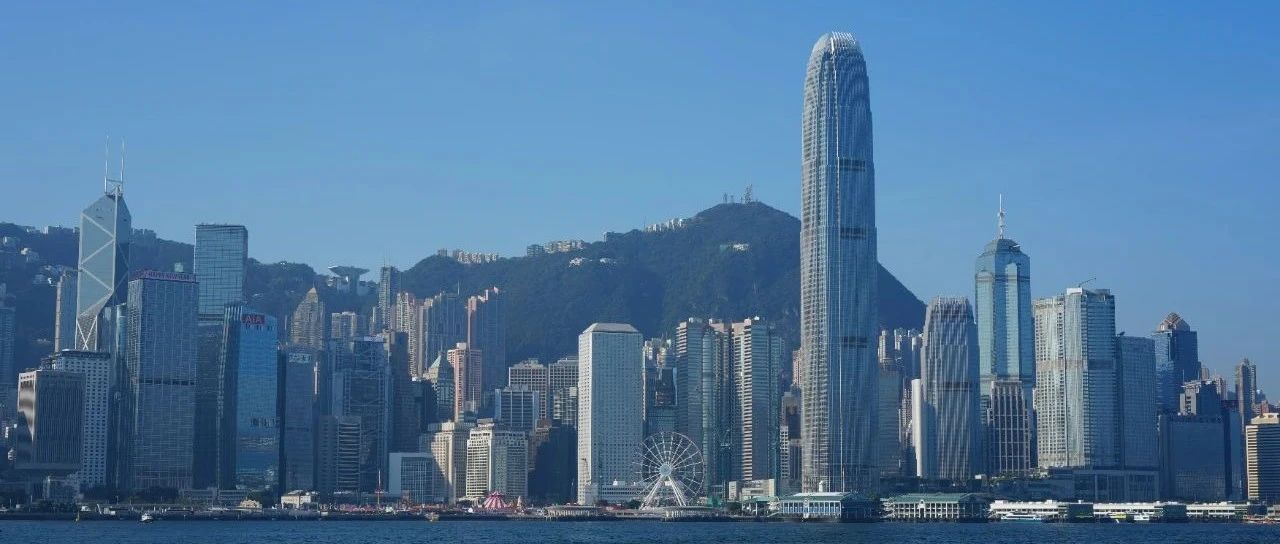
Core Viewpoint - Hong Kong is projected to become the world's largest cross-border asset and wealth management center by 2027, driven by geopolitical dynamics, technological transformation, and green transition [4][8]. Group 1: Hong Kong's Role as a Capital Gateway - Hong Kong is increasingly recognized as a strategic capital gateway between the Middle East and Asia, particularly China, due to its close ties with mainland China [3][4]. - Middle Eastern capital is entering the Asian market through three levels: primary market cooperation, pre-IPO and private equity investments, and family office capital strategies [5][6]. Group 2: Financial Market Developments - The Hong Kong Stock Exchange (HKEX) has integrated with the Saudi Stock Exchange and other Middle Eastern markets, enhancing product and capital flows [6][7]. - In 2024, two ETFs tracking Hong Kong stocks will be listed on the Saudi Stock Exchange, indicating product innovation and deeper market connections [6][9]. Group 3: Growth of Family Offices - Over 2,700 family offices have established headquarters in Hong Kong, with half managing assets exceeding $50 million, reflecting the city's appeal for international family capital [8][10]. - Middle Eastern family offices are increasingly interested in investing in mainland China, with 18% planning to increase their investments there [10]. Group 4: Economic and Trade Relations - The number of Middle Eastern companies in Hong Kong increased by over 20% year-on-year in 2024, supported by strong trade relations and mutual economic benefits [7][9]. - Bilateral trade between Hong Kong and the Middle East has grown approximately 48% over the past five years, reaching about HKD 188.1 billion [9]. Group 5: Islamic Finance Opportunities - Hong Kong has been proactive in developing Islamic finance, issuing $3 billion in various Islamic bonds since 2007, and is looking to attract more Middle Eastern investments [12][13]. - The integration of Islamic finance principles with sustainable development goals is becoming a focus for Middle Eastern family offices, with about one-third practicing Islamic finance [11].
5月25日电,沙特阿拉伯将发行价值约603亿里亚尔的新伊斯兰债券。
news flash· 2025-05-25 09:47
Group 1 - Saudi Arabia plans to issue new Islamic bonds valued at approximately 603 billion riyals [1]
沙特阿拉伯将发行价值约603亿里亚尔的新伊斯兰债券。
news flash· 2025-05-25 09:47
Core Viewpoint - Saudi Arabia is set to issue new Islamic bonds valued at approximately 603 billion riyals [1] Group 1 - The issuance of the new Islamic bonds is part of Saudi Arabia's broader financial strategy [1] - The bonds are expected to attract significant interest from both domestic and international investors [1] - This move reflects Saudi Arabia's ongoing efforts to diversify its economy and reduce reliance on oil revenues [1]