
关键材料

Search documents
辽宁:对低空飞行器整机等项目 按照贷款本金年化利率1.5%给予贴息支持
Sou Hu Cai Jing· 2026-02-24 00:42
Core Viewpoint - The Liaoning Provincial Government has issued a series of policy measures aimed at promoting economic growth and transformation, focusing on key industries, technological innovation, and financial support for various sectors [4]. Group 1: Financial Support for Key Industries - Annual funding support of up to 2 million yuan is available for enterprises, universities, and research institutions in key industries for purchasing computing power services [5][6]. - Interest subsidies for loans at an annual rate of 1.5% are provided for projects related to low-altitude aircraft and key components, with a maximum annual subsidy of 1 million yuan per project and 5 million yuan per enterprise [6]. - Financial support of up to 200,000 yuan is available for projects that integrate modern services with advanced manufacturing [6]. Group 2: Technological Innovation and Development - Special funds are allocated to support the digital transformation of enterprises, including free diagnostic services and tailored transformation plans [5]. - Funding support is provided for artificial intelligence development, including computing power usage and application scenarios, with a maximum of 2 million yuan for eligible projects [5][6]. - Support for the establishment of technology innovation platforms and specialized verification platforms is available, with funding up to 300,000 yuan for cutting-edge technology research projects [8]. Group 3: Support for Emerging Industries - The government encourages the establishment of national and provincial quality inspection centers, with funding support of up to 100,000 yuan for expanding industrial scale and service capabilities [2]. - Financial support is available for new agricultural business entities, with interest subsidies for loans related to grain and oil planting, modern facility agriculture, and marine fishing vessel upgrades [7]. - Support for cross-border e-commerce development includes funding for platform entry, marketing, and independent site construction, with a maximum of 300,000 yuan per enterprise [10]. Group 4: Infrastructure and Logistics - The government is implementing differentiated toll policies for transportation vehicles, offering discounts for those using ETC systems [7]. - Efforts to reduce port fees and streamline transportation permit processes are underway to enhance logistics efficiency [7]. - Support for the mining industry includes facilitating exploration and development of mineral resources, with a focus on green approval processes [8]. Group 5: Policy Implementation and Evaluation - The policies are effective from the date of issuance, with a general execution period of one year, and specific implementation details will be clarified by the provincial development and reform commission [13]. - Continuous evaluation of policy effectiveness will be conducted, with adjustments made to policies that do not yield significant results [13].
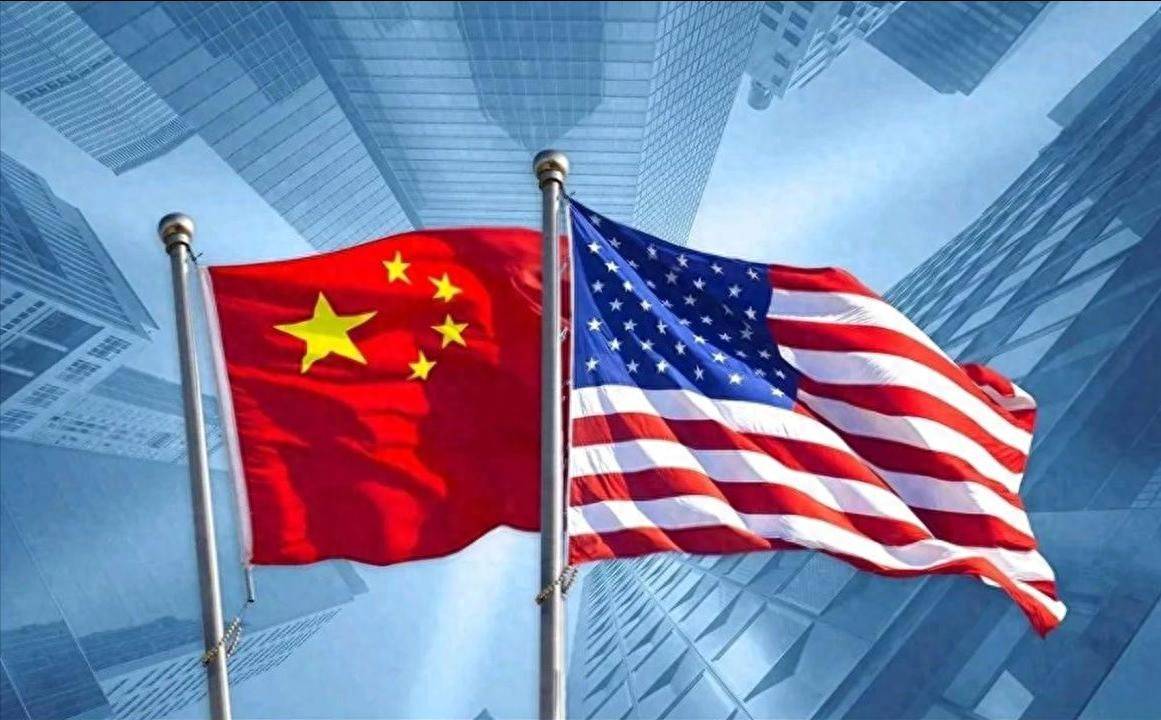
中美关系其实并不复杂:要么是中国交出财富,要么是美国放弃霸权
Sou Hu Cai Jing· 2026-02-19 03:35
Group 1 - The essence of the US-China relationship is a structural conflict over growth dividends and global order, where the US seeks control and China aims for development autonomy [1][2] - The US's advantages lie in finance, technology, rules, and alliances, while China's strengths are in manufacturing, scale, market, and depth of the supply chain [2][6] - The US does not oppose China being a large market or global factory but aims to prevent it from becoming a technology source or rule-maker [6] Group 2 - The US's recent actions, including suspending some tech restrictions and discussing arms sales to Taiwan, indicate a strategy of risk control while increasing leverage in negotiations [2][4] - China emphasizes the importance of self-reliance and the need to manage key variables such as supply chain autonomy, market diversification, and technological investment [7] - The future of US-China relations is likely to involve a mix of negotiation and confrontation, with both sides engaging in long-term competition and selective cooperation [4][7]

美国危机加剧!特朗普发文呼吁,政府停摆创纪录,盯上中国赚钱!
Sou Hu Cai Jing· 2026-02-02 05:03
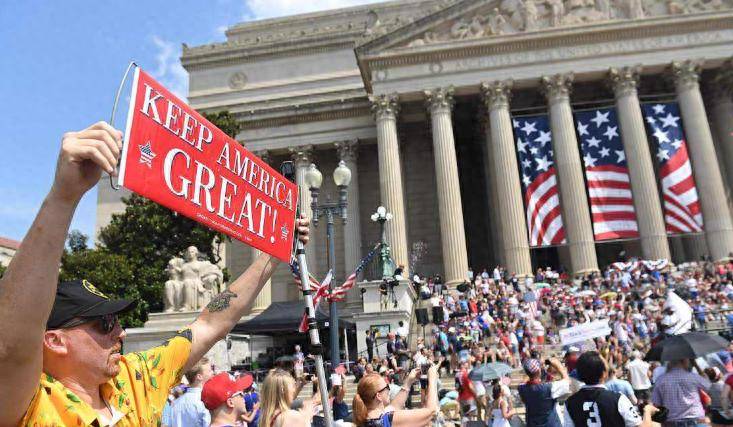
Group 1 - The article highlights the increasing domestic pressure on the U.S. government, with Trump focusing on China amidst a looming government shutdown and Supreme Court decisions, suggesting a strategy to create a sense of urgency domestically [1] - Trump's comments appear to be a self-defense mechanism aimed at delaying internal crises by portraying China as a bargaining chip in the ongoing U.S.-China rivalry [1][3] - The capital markets have begun to react to the U.S. government's challenges, with European pension funds adjusting their investments in U.S. debt, indicating a loss of confidence in U.S. financial stability [3][5] Group 2 - The U.S. debt is expanding rapidly, and the burden of interest payments is becoming unsustainable, leading to a reassessment of risk in the capital markets [5][7] - The U.S. is shifting its strategy to a more aggressive financial approach, including controlling monetary policy and creating expectations for interest rate cuts to alleviate domestic pressures [7][9] - Energy has re-emerged as a critical lever for the U.S., with efforts to raise energy prices to impact other countries' costs and maintain U.S. economic stability [9][11] Group 3 - The U.S. is not seeking to completely sever ties but aims to make it more expensive for competitors, particularly China, to operate by increasing energy costs and imposing tariffs through allies [11][13] - The U.S. strategy involves targeting key logistical and financial nodes to exert pressure without direct confrontation, which may ultimately undermine U.S. credibility and international relations [13][15] - In contrast, China is adopting a long-term strategy, diversifying its trade relationships and focusing on stable and reasonable pricing, indicating a shift away from reliance on the U.S. market [15][17] Group 4 - The article notes that seemingly minor retaliatory measures in critical materials and technologies could have significant impacts, highlighting the interdependence between the U.S. and China [17][18] - Trump's preemptive actions before negotiations with China are seen as strategic positioning to create leverage, but the effectiveness of such tactics is questioned given the changing dynamics of the global landscape [18]
深圳即将举办“湾芯展” 上半年产业规模超1400亿
2 1 Shi Ji Jing Ji Bao Dao· 2025-10-10 07:48
Core Insights - The semiconductor and integrated circuit industry is a strategic high ground for global technological competition and a core engine for industrial upgrading [1] - Shenzhen is making significant progress in optimizing its semiconductor ecosystem, aiming to become a globally influential innovation hub [1] Industry Growth - The semiconductor and integrated circuit industry in Shenzhen is projected to reach a scale of 256.4 billion yuan in 2024, representing a year-on-year growth of 26.8% [1] - In the first half of 2025, the industry is expected to maintain rapid growth, reaching 142.4 billion yuan, with a year-on-year increase of 16.9% [1] - The industry structure has become more balanced, with all sub-sectors, including manufacturing, testing, and equipment, doubling in scale from 2020 to 2024 [1] Policy Support - Shenzhen has introduced several action plans and measures to foster the development of the semiconductor and integrated circuit industry from 2023 to 2025 [2] - The recently released measures focus on increasing financial support for R&D, particularly in high-end chips, core equipment, and advanced packaging [2] - Subsidies for chip design and manufacturing are provided, covering 30% of the costs for wafer fabrication, with maximum support reaching 3 million yuan for certain projects [2][3] Industry Events - The "2025 Bay Area Semiconductor Industry Ecosystem Expo" will take place from October 15 to October 17, featuring over 600 exhibitors and more than 60,000 pre-registered attendees [3] - The expo aims to facilitate direct connections between major projects and participating companies, inviting over 5,000 professional buyers from leading firms [3][4] - A 5 billion yuan investment fund will be launched at the event to support the semiconductor industry, promoting a healthy interaction between technology, industry, and finance [4]