农水产品

Search documents
商务部:对部分加拿大进口商品取消加征关税的反歧视措施
Shang Wu Bu Wang Zhan· 2026-02-27 09:24
Core Viewpoint - The Ministry of Commerce of China has announced adjustments to the anti-discrimination measures against Canada, following changes in Canada's tariffs on imports of steel and aluminum products from China, effective from March 1, 2026, to December 31, 2026 [2][3][4]. Group 1: Anti-Discrimination Investigation - The Ministry of Commerce initiated an anti-discrimination investigation on September 26, 2024, regarding Canada's imposition of tariffs on electric vehicles and steel and aluminum products imported from China [2]. - On March 8, 2025, the Ministry announced anti-discrimination measures, imposing tariffs on certain imported goods originating from Canada due to these discriminatory practices [2]. Group 2: Adjustment of Measures - The anti-discrimination measures can be adjusted, suspended, or canceled under specific conditions, including if the investigated country adjusts or cancels the discriminatory measures, provides compensation for damages, or reaches a consensus through negotiations [3]. - Recent developments indicate that Canada has officially announced adjustments to its tariffs on steel and aluminum products imported from China, which aligns with the conditions for adjusting China's anti-discrimination measures [3]. Group 3: Announcement Validity - The announcement regarding the adjustment of anti-discrimination measures is valid from March 1, 2026, to December 31, 2026 [4]. Group 4: Official Statements - The Ministry of Commerce emphasized the importance of the consensus reached by the leaders of both countries and expressed a commitment to promoting healthy, stable, and sustainable development of China-Canada economic and trade relations [5].
商务部新闻发言人就调整对加拿大反歧视措施答记者问
Shang Wu Bu Wang Zhan· 2026-02-27 08:44
Group 1 - Canada has adjusted its tariffs on Chinese steel and aluminum products, which aligns with China's announcement of adjustments to its anti-discrimination measures against Canada [1] - The Ministry of Commerce of China initiated an anti-discrimination investigation against Canada on September 26, 2024, and announced additional tariffs on March 8, 2025 [1] - From March 1, 2026, to December 31, 2026, China will not impose anti-discrimination tariffs on certain imported goods from Canada, following the recent adjustments by the Canadian government [1] Group 2 - Both countries aim to resolve trade issues in sectors such as electric vehicles, steel, aluminum, and agricultural products, based on the consensus reached by their leaders [1] - China is committed to promoting healthy, stable, and sustainable development of economic and trade relations with Canada [1]
2025年韩自华直购激增
Shang Wu Bu Wang Zhan· 2026-02-15 15:45
Core Insights - In 2025, South Korea's overseas online direct purchase amount is expected to exceed 85 trillion KRW for the first time, marking a historical high [1] - While direct purchases from the US are slowing down, those from China are rapidly expanding, reaching 55.7 trillion KRW and accounting for 65.5% of the total, an increase of 5.5 percentage points from 2024 [1] E-commerce Trends - The total online shopping transaction amount in South Korea for 2025 is projected to be 272.04 trillion KRW, reflecting a year-on-year growth of 4.9% [1] - Mobile transactions are expected to reach 211.14 trillion KRW, with a growth rate of 6.5%, surpassing the overall growth rate [1] Category Performance - Significant growth is observed in the food service (12.2%) and food and beverage (9.5%) categories [1] - Conversely, categories such as electronic vouchers (-27.5%), bags (-11.1%), and footwear (-4.5%) are experiencing notable declines due to decreased consumer confidence and previous e-commerce platform settlement issues [1] Overseas Direct Sales - South Korea's overseas direct sales are projected to reach 30.2 trillion KRW in 2025, marking a year-on-year increase of 16.4% [1] - Growth is seen across major markets including the US, EU, Japan, and China, with cosmetics, food and beverages, and audiovisual products performing particularly well [1] - However, sales in categories such as communication devices, agricultural products, and clothing remain relatively sluggish [1]
商务部:对加拿大油菜籽反倾销措施案调查期限已延长至3月
Sou Hu Cai Jing· 2026-02-14 11:30
Group 1 - The Ministry of Commerce held a regular press conference on February 12, where questions were raised regarding the adjustment of tariffs on Canadian canola and related agricultural products [1] - The spokesperson for the Ministry of Commerce, He Yadong, indicated that during the Canadian Prime Minister's visit to China in January, both sides made specific arrangements to address trade issues in various sectors, including electric vehicles, steel and aluminum products, and canola [3] - The investigation period for the anti-dumping measures on Canadian canola has been extended until March 9, 2026, with a final ruling to be announced before that date, taking into account Canada's reasonable requests based on facts and evidence [3]

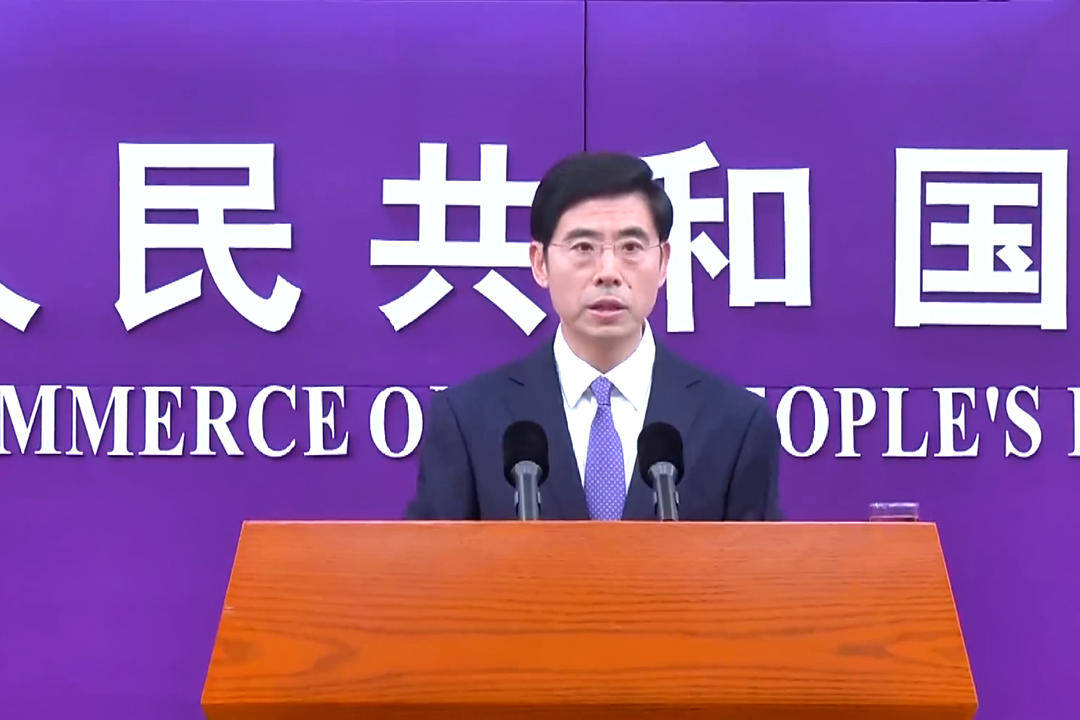
商务部回应何时对加拿大油菜籽关税作出调整
Qi Huo Ri Bao Wang· 2026-02-12 16:21
Core Viewpoint - The Chinese Ministry of Commerce has extended the investigation period for anti-dumping measures on Canadian canola seeds until March 9, 2026, indicating the complexity of the case [1] Group 1: Trade Relations - During Canadian Prime Minister Carney's visit to China in January, both countries agreed to address trade issues in electric vehicles, steel and aluminum products, canola seeds, and agricultural products [1] - Canada is expected to make positive adjustments regarding unilateral measures taken against Chinese electric vehicles and steel and aluminum products [1] Group 2: Regulatory Framework - The Ministry of Commerce will consider Canada's reasonable requests within the regulatory framework and will make an objective and fair final ruling based on facts and evidence [1]
商务部:加拿大油菜籽反倾销案案情复杂 调查期延长
Nan Fang Du Shi Bao· 2026-02-12 09:23
Group 1 - The Chinese Ministry of Commerce held a press conference addressing the anti-dumping case regarding Canadian canola imports, with spokesperson He Yadong providing updates on the situation [1][3] - During Canadian Prime Minister Trudeau's visit to China in January, both countries agreed to address trade issues in various sectors, including electric vehicles, steel and aluminum products, canola, and agricultural products [3] - The investigation period for the anti-dumping measures on Canadian canola has been extended to March 9, 2026, due to the complexity of the case, with a final ruling to be announced by the Ministry of Commerce before this date [3]
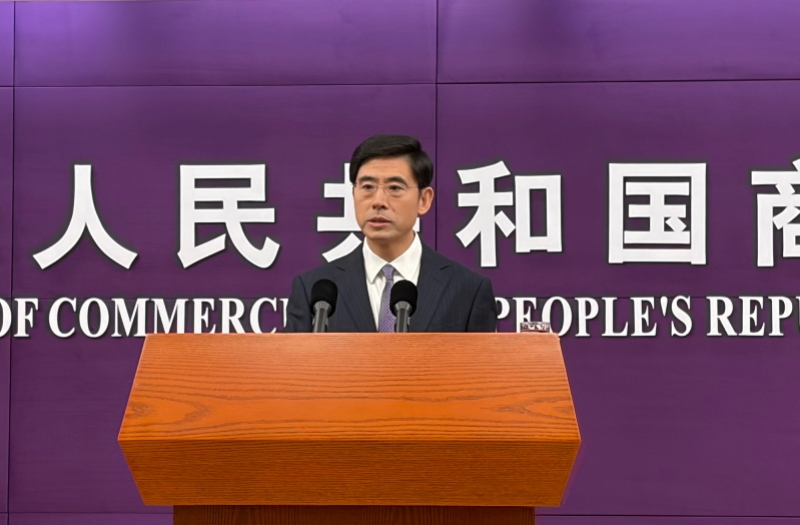
商务部:将在2026年3月9日前发布对加油菜籽反倾销调查终裁公告
Xin Hua Cai Jing· 2026-02-12 08:39
Group 1 - The core viewpoint of the article highlights the recent arrangements made between China and Canada to address trade issues in sectors such as electric vehicles, steel and aluminum products, canola, and agricultural products [1] - Canada will actively adjust its unilateral measures against Chinese electric vehicles and steel and aluminum products [1] - China will also adjust its anti-discrimination measures against Canada based on relevant laws and regulations [1] Group 2 - The investigation period for the anti-dumping measures on Canadian canola has been extended to March 9, 2026, due to the complexity of the case [1] - The Ministry of Commerce will issue a final ruling before the extended deadline, considering Canada's reasonable demands within the framework of rules [1] - The final decision will be made objectively and fairly based on facts and evidence [1]
连遭美国“极限施压”,加拿大总理卡尼为与中国经贸共识辩护
Huan Qiu Shi Bao· 2026-01-26 22:41
Core Viewpoint - The article discusses the escalating tensions between the United States and Canada following Canada's recent trade agreement with China, with U.S. officials threatening to impose significant tariffs on Canadian goods if Canada continues to engage with China [1][3]. Group 1: U.S. Response to Canada-China Agreement - U.S. Treasury Secretary Mnuchin indicated that Canada's agreement with China represents a "180-degree turn" and warned that Canada could face 100% tariffs on goods entering the U.S. if it signs a free trade agreement with China [1][3]. - President Trump criticized the Canada-China agreement, labeling it as "bad" and threatening to impose tariffs on all Canadian goods entering the U.S. [3][4]. - The U.S. is concerned that the Canada-China agreement could undermine its efforts to maintain a trade blockade against China, prompting increased pressure on Canada [4]. Group 2: Canada's Position - Canadian Prime Minister Trudeau downplayed U.S. threats, asserting that the agreement with China regarding electric vehicles and agricultural products aligns with the USMCA (United States-Mexico-Canada Agreement) [1][5]. - Trudeau emphasized that Canada has no intention of entering into a free trade agreement with China, aiming to maintain compliance with USMCA obligations [5]. - Canadian officials, including the Minister of Natural Resources, are actively pursuing trade diversification efforts, including upcoming visits to India to discuss cooperation in critical minerals and liquefied natural gas [7]. Group 3: Broader Implications - The article highlights the geopolitical implications of Canada's actions, suggesting that Canada is attempting to position itself as a leader among middle powers, distancing itself from U.S. influence [4]. - The upcoming review of the USMCA in 2026 is seen as a critical moment for negotiations, with the U.S. using tariff threats as leverage in discussions with Canada [4].
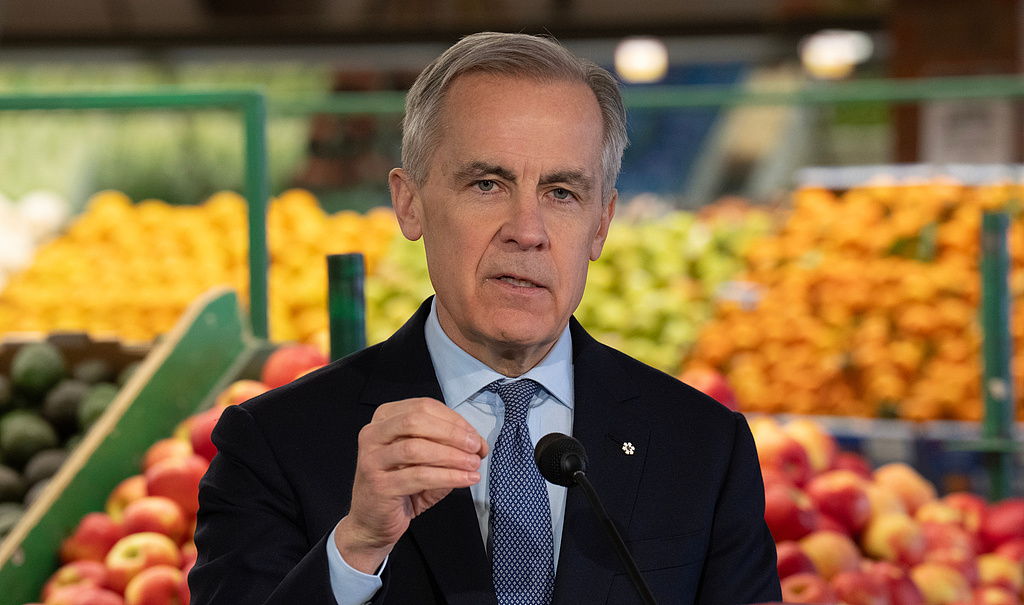
台北代表跳出来:中方不是加拿大解药,看看我们吧
Guan Cha Zhe Wang· 2026-01-20 00:57
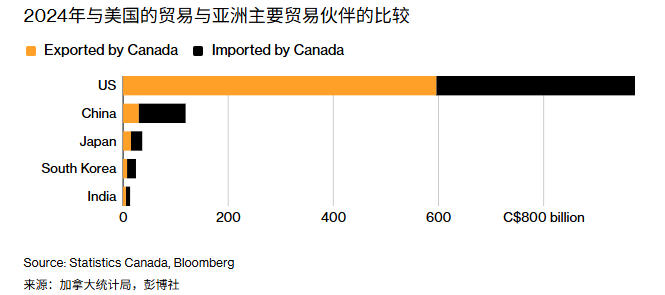
Group 1 - Canadian Prime Minister Carney's recent visit to China resulted in a trade agreement aimed at reducing trade barriers and rebuilding bilateral relations [1][4] - The agreement includes specific arrangements for addressing trade issues in sectors such as electric vehicles, steel, aluminum, and agricultural products [4][6] - In 2024, the bilateral trade volume between Taiwan and Canada is projected to be 6 billion CAD (approximately 30 billion RMB), while trade with mainland China is expected to reach 117.444 billion CAD (approximately 591.8 billion RMB) [3] Group 2 - The Carney government is seen as recalibrating Canada's trade relations with China, moving away from the previous administration's approach that prioritized alignment with U.S. policies [6][7] - A recent poll indicated that 54% of Canadians support the trade agreement with China, with over 60% favoring the complete removal of tariffs on Chinese electric vehicles [6] - The agreement has been positively received by Canadian financial analysts, who view it as a correction of the previous government's approach that often prioritized moral posturing over business interests [6][7]
中加关系解冻,美方闻着味就来了,高官警告:有加拿大后悔的时候
Sou Hu Cai Jing· 2026-01-18 09:32
Group 1 - Canadian Prime Minister Carney's visit to China marks a thaw in Sino-Canadian relations, with both countries seeking renewed cooperation [1] - On January 16, China and Canada signed the "China-Canada Economic and Trade Cooperation Roadmap," allowing Canada to export 49,000 electric vehicles to China annually, benefiting from a 6.1% most-favored-nation tariff rate [1] - Canada will eliminate the 100% additional tariff on Chinese vehicles, with annual quotas set to increase gradually [1] Group 2 - U.S. officials, including Transportation Secretary Sean Duffy and Trade Representative Greer, expressed strong opposition to Canada's agreement with China, warning that Canada may regret its decision [3] - Greer emphasized that Chinese electric vehicles entering Canada would not be allowed to access the U.S. market, indicating a protective stance towards American interests [3] - In contrast, former President Trump viewed the agreement positively, suggesting it was a normal diplomatic action and beneficial for Canada [5] Group 3 - The differing reactions from U.S. officials may stem from their roles, with Greer being more sensitive due to his direct involvement in trade negotiations [7] - Trump's upcoming visit to China in April may also influence his more lenient stance, as maintaining commitments to China could foster better U.S.-China relations [7] - Despite warnings from U.S. officials, immediate extreme measures against Canada seem unlikely, as the annual quota of 49,000 vehicles represents only about 3% of Canada's annual production [9] Group 4 - Canada's decision to engage with China reflects a strategic choice that aligns with its long-term interests and highlights China's growing influence in the global economy [9] - The situation illustrates the complexities of international relations, where countries must navigate their own interests while considering the broader geopolitical landscape [9]