北京二锅头酒

Search documents
让IP活起来 北京博物馆之城破圈
Bei Jing Shang Bao· 2026-01-28 16:20
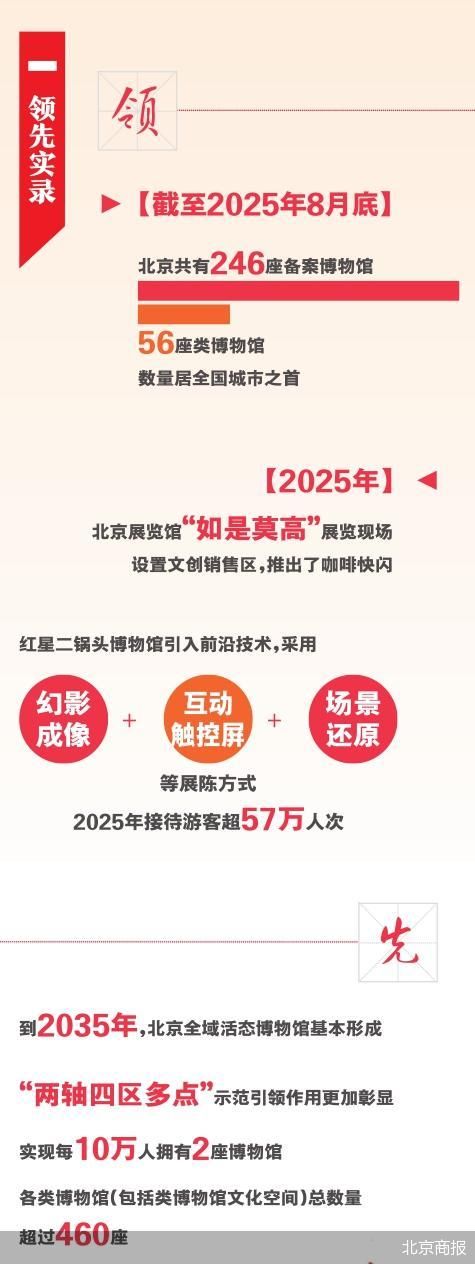
Core Insights - Beijing is witnessing a significant transformation in its museum landscape, focusing on quality enhancement and cultural integration to drive economic growth [1][10][12] Group 1: Museum Development - The number of museums in Beijing has reached 246, leading the nation, with a focus on quality improvement alongside quantity [4][12] - The emergence of niche museums, such as the Dongsi Hutong Museum, showcases unique themes and immersive experiences, attracting a diverse audience [5][13] - Museums are evolving from traditional roles to become vital engines for economic development, enhancing consumer engagement and cultural tourism [1][10] Group 2: Commercialization Strategies - Many museums are exploring commercial pathways, including customized tours and educational programs, to generate revenue while maintaining public service [8][9] - The integration of technology and immersive experiences is becoming a key focus for museums, enhancing visitor engagement and satisfaction [7][8] - Cultural IP is increasingly recognized as a crucial element for museums to connect with audiences and sustain operations, shifting from mere exhibition to experiential engagement [9][13] Group 3: Cultural and Economic Impact - The integration of museums with surrounding commercial and tourism sectors is essential for creating sustainable consumption scenarios and enhancing the cultural economy [10][12] - High-quality museums contribute significantly to urban cultural landmarks and economic vitality, driving tourism and creating job opportunities [12] - The development of a comprehensive museum ecosystem is projected to continue, with plans for over 460 museums by 2035, enhancing Beijing's status as a cultural center [12]

安徽省黄山市市场监督管理局关于公布2026年第1期食品安全监督抽检信息的通告
Zhong Guo Zhi Liang Xin Wen Wang· 2026-01-09 09:23
Core Points - Huangshan Market Supervision Administration conducted a food safety inspection, testing 114 samples, with 112 passing and 2 failing [2] Summary by Category Food Safety Inspection Results - A total of 114 samples were tested, with 112 samples meeting the food safety standards and 2 samples failing [2] - The failed samples included: - Longan with a sulfur dioxide residue of 0.126 g/kg, exceeding the standard limit of 0.05 g/kg [2] - A bowl from a restaurant with an anionic synthetic detergent residue of 0.021 mg/100 cm², which was not allowed [2] Actions Taken - Local market supervision departments have initiated investigations and actions regarding the non-compliant food products [2] Compliant Products - The report lists various compliant food products, including: - Beijing Erguotou liquor from Beijing Erguotou Distillery Co., Ltd. [2] - Longkang edible vegetable oil from Hunan Changkang Industrial Co., Ltd. [2] - Various agricultural products such as scallions, eggplants, and peppers from local vendors [2][3]
首批北京市非遗工坊名单发布
Xin Jing Bao· 2025-11-19 07:13
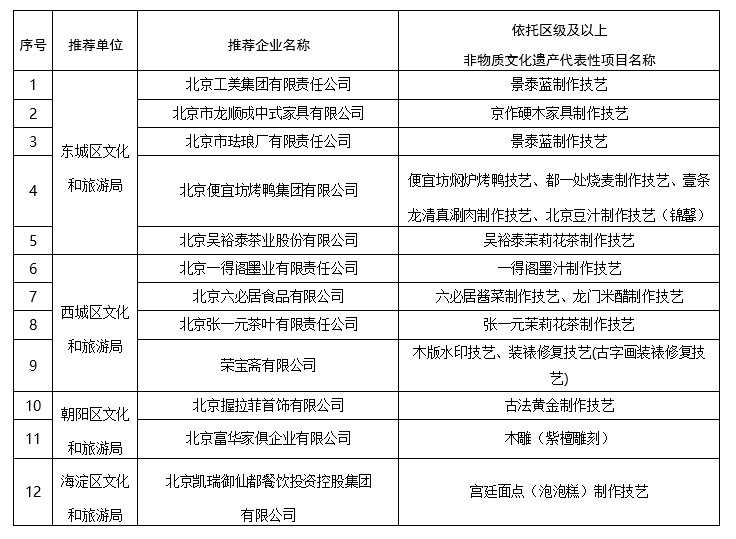
Core Points - Beijing Cultural and Tourism Bureau has recognized the first batch of 25 non-heritage workshops in Beijing, including Beijing Gongmei Group Co., Ltd. and Beijing Shiguang Great Wall Homestay Co., Ltd. [1] - The recognized workshops are encouraged to explore innovative development paths under the "non-heritage +" initiative, with local cultural and tourism departments providing guidance and support [1] Summary by Categories Non-Heritage Workshops - The first batch includes 25 workshops, such as: - Beijing Gongmei Group Co., Ltd. focusing on Jingtailan craftsmanship [2] - Beijing Longshun Cheng Chinese Furniture Co., Ltd. specializing in Beijing hardwood furniture making [2] - Beijing Yuyatai Tea Co., Ltd. known for producing Yuyatai Rongli flower tea [2] - Beijing Wuyutai Tea Co., Ltd. recognized for its traditional tea-making techniques [3] Cultural and Employment Impact - The initiative aims to enhance the cultivation of non-heritage talent, skill transmission, and employment promotion [1] - Local cultural and tourism departments are tasked with strengthening support for these workshops to ensure they serve as models in their respective areas [1]
2025服贸会|北京红星原副总经理吴佩海:在博物馆建设上,要提高文化引领力、聚焦核心竞争力、打造持续经营能力
Bei Jing Shang Bao· 2025-09-14 10:07
Group 1 - The core theme of the event is the exploration of how traditional brands can innovate while preserving cultural heritage, aiming for brand rejuvenation and leading the new trend of domestic consumption [1] - The event is guided by the Beijing Municipal Bureau of Commerce and organized by Beijing Business Daily and the Beijing Time-honored Brand Association, with Deep Blue Media Think Tank serving as the think tank platform [1] Group 2 - Beijing Red Star, a time-honored liquor brand, is leveraging museum initiatives to enhance its cultural and commercial appeal [4] - Red Star is recognized as the first state-owned brewery in Beijing and holds titles such as a time-honored brand and a famous Chinese trademark, along with being a national intangible cultural heritage entity [4] - The company operates multiple museums, each focusing on different aspects of the Beijing Erguotou liquor heritage, integrating modern technology and styles while maintaining traditional elements [4] - The dual attributes of cultural and commercial aspects in museums present both opportunities and challenges for time-honored brands in driving consumption innovation [4] - Red Star emphasizes the need to enhance cultural leadership, focus on core competitiveness, and develop sustainable operational capabilities in its museum initiatives [4]

江西省抚州市市场监督管理局2025年第8期食品安全监督抽检信息公告
Zhong Guo Zhi Liang Xin Wen Wang· 2025-09-04 14:58
Core Viewpoint - The announcement from Fuzhou Market Supervision Administration reveals the results of food safety inspections, indicating that out of 43 batches tested, 36 were compliant while 7 were found to be non-compliant, primarily concerning agricultural products [2]. Group 1: Inspection Results - A total of 43 batches were inspected, with 36 passing and 7 failing the safety standards [2]. - The non-compliant products mainly included agricultural items, with specific failures related to pesticide residues and microbial contamination [2]. - Consumers are encouraged to report any non-compliant products they encounter by calling the complaint hotline "12315" [2]. Group 2: Non-Compliant Products - The non-compliant products included: - Litchi with pesticide residue exceeding the limit (0.76 mg/kg vs. 0.5 mg/kg) [2]. - Chili pepper with cadmium levels above the permissible limit (0.080 mg/kg vs. 0.05 mg/kg) [2]. - Kiwi with chlorpyrifos residue exceeding the limit (0.16 mg/kg vs. 0.05 mg/kg) [2]. - Specific companies and locations of the non-compliant products were detailed, highlighting the need for improved quality control in food production [2]. Group 3: Compliant Products - The compliant products included various food items such as cucumbers, reusable dining utensils, and cooking oils, all passing safety inspections [3][4]. - The list of compliant products reflects a range of categories, including agricultural products, restaurant supplies, and condiments [3][4]. - The compliance of these products indicates a generally positive trend in food safety within the inspected categories [3][4].
辽宁省丹东市市场监督管理局关于食品安全监督抽检信息的公告(2025年第5期)
Zhong Guo Zhi Liang Xin Wen Wang· 2025-09-01 07:55
Summary of Key Points Core Viewpoint - The announcement from the Dandong Market Supervision Administration reveals the results of a recent food safety inspection, indicating that out of 53 batches of food tested, 50 were found to be compliant while 3 were deemed non-compliant, highlighting ongoing efforts to ensure food safety in the region [2]. Group 1: Inspection Results - A total of 53 batches of food were tested, with 50 passing and 3 failing the safety standards [2]. - The non-compliant items included 1 batch of catering food and 2 batches of condiments [2]. Group 2: Regulatory Actions - Relevant regulatory authorities have initiated investigations and actions regarding the non-compliant food products [2].

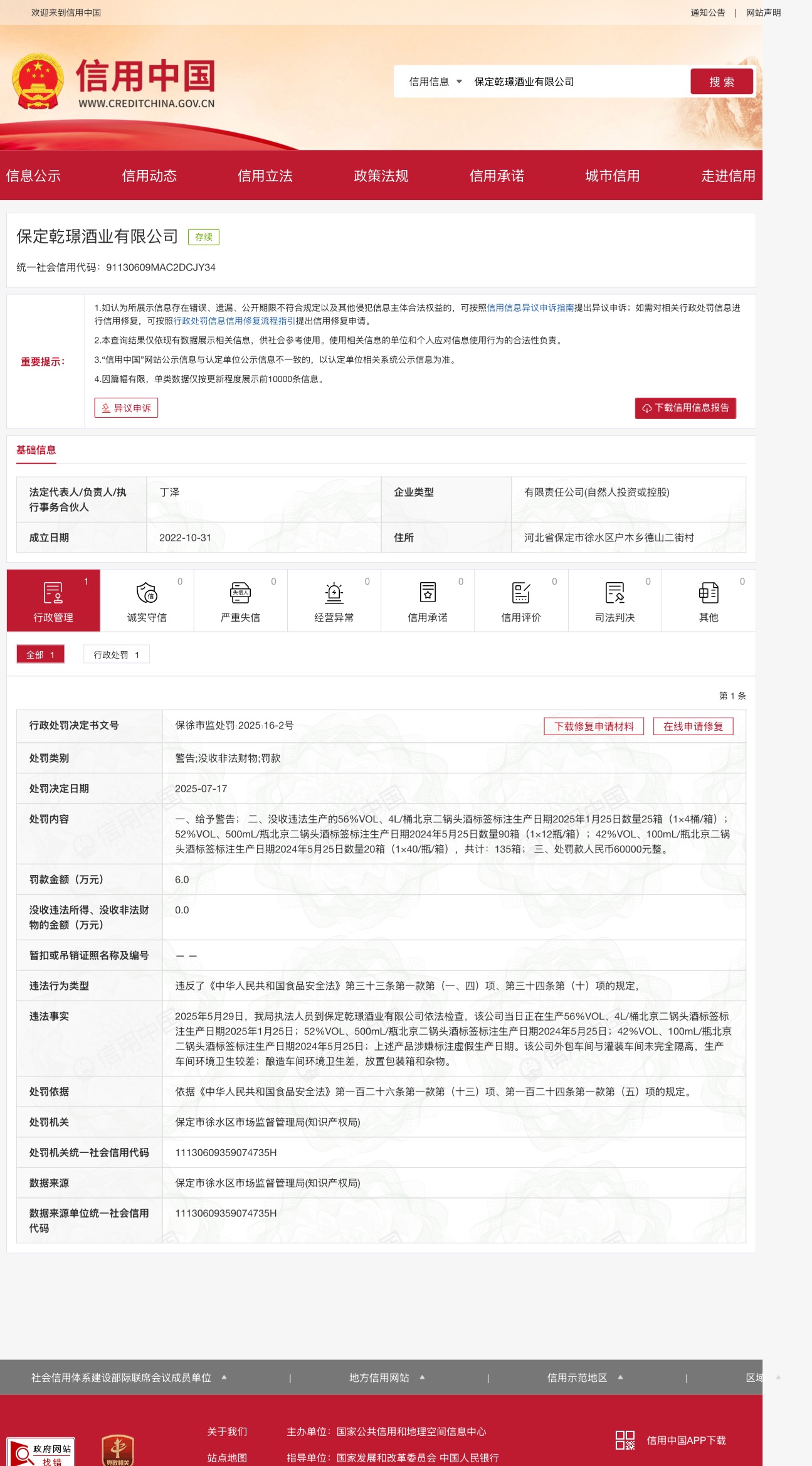
保定乾璟酒业因虚假标注生产日期及环境脏乱被罚没6万元
Qi Lu Wan Bao· 2025-07-25 03:28
Core Viewpoint - Baoding Qianjing Wine Co., Ltd. was penalized for serious violations of food safety regulations, resulting in a warning, confiscation of illegal products, and a fine of 60,000 RMB on July 17, 2025 [1][4]. Summary by Relevant Sections Violation Type - The company violated Article 33, Paragraph 1, Items (1) and (4), and Article 34, Item (10) of the Food Safety Law of the People's Republic of China [3]. Violation Facts - On May 29, 2025, inspectors found that the company was producing three types of "Beijing Erguotou" liquor with false production dates: - 56% VOL, 4L/barrel marked as produced on January 25, 2025 - 52% VOL, 500mL/bottle marked as produced on May 25, 2024 - 42% VOL, 100mL/bottle also marked as produced on May 25, 2024 [3][4]. Sanction Basis - The penalties were based on Article 126, Paragraph 1, Item (13) and Article 124, Paragraph 1, Item (5) of the Food Safety Law [3][4]. Penalty Details - The regulatory authority confiscated all involved products, including: - 25 boxes of 56% VOL, 4L/barrel (1×4 barrels/box) - 90 boxes of 52% VOL, 500mL/bottle (1×12 bottles/box) - 20 boxes of 42% VOL, 100mL/bottle (1×40 bottles/box) - A total of 135 boxes were confiscated, and a fine of 60,000 RMB was imposed [4]. Company Information - Baoding Qianjing Wine Co., Ltd. was established on October 31, 2022, with a registered capital of 490,000 RMB. The legal representative is Ding Ze, and the company is located in De Shan Er Jie Village, Xushui District, Baoding City, Hebei Province, operating in the liquor, beverage, and refined tea manufacturing industry [4].
黑龙江省集贤县市场监督管理局2025年第五期食品监督抽检信息公示
Zhong Guo Zhi Liang Xin Wen Wang· 2025-07-03 08:55
Summary of Key Points - The article reports on the food safety inspection results conducted by the Jixian County Market Supervision Administration for the year 2025, highlighting the number of samples tested and their compliance status [2][3] - A total of 40 batches of ordinary food were sampled, all of which passed the inspection, while 71 batches of agricultural products were tested, with 69 passing and 2 failing [2][3] - The report emphasizes the importance of these inspections in ensuring food safety and eliminating potential hazards in the food supply [2][3] Group 1: Inspection Results - 40 batches of ordinary food were tested, with a 100% pass rate [2][3] - 71 batches of agricultural products were tested, with 69 passing and 2 failing, indicating a compliance rate of approximately 97.2% [2][3] - The specific failures involved residues of agricultural chemicals exceeding the national safety standards [3] Group 2: Non-compliance Details - The two non-compliant agricultural products were found to have residues of chloramphenicol exceeding the maximum allowable limit of 0.3 mg/kg, with one sample showing 0.770 mg/kg and another showing 1.44 mg/kg [3] - The report provides detailed information about the non-compliant products, including the names of the producers and the specific locations where the samples were collected [3][4]
浙江省舟山市市场监督管理局食品安全监督抽检信息通告(2025年第8期)
Zhong Guo Zhi Liang Xin Wen Wang· 2025-07-01 08:53
Core Points - The article reports on the results of food safety inspections conducted on 209 samples across 18 categories of food products, revealing that 205 samples passed while 4 samples failed due to pesticide residue and food additive violations [3][4]. Food Safety Inspection Results - A total of 209 food samples were tested, with 205 passing and 4 failing the safety standards [3]. - The non-compliant samples included: - Pesticide residue exceeding limits in green peas sold by a local supermarket [3]. - Food additives exceeding limits in: - Yangmei sold by a local supermarket, where dehydroacetic acid and its sodium salt were found non-compliant [4]. - Yangmei sold by two fruit stores, where sweeteners were found non-compliant [4]. Regulatory Actions - Local market supervision departments have been instructed to take immediate actions such as removing the non-compliant products from shelves [4]. - The identified units are required to disclose their risk control measures within 7 days of the announcement and report their findings to the local market supervision bureau within 3 months [4].