
千帆

Search documents
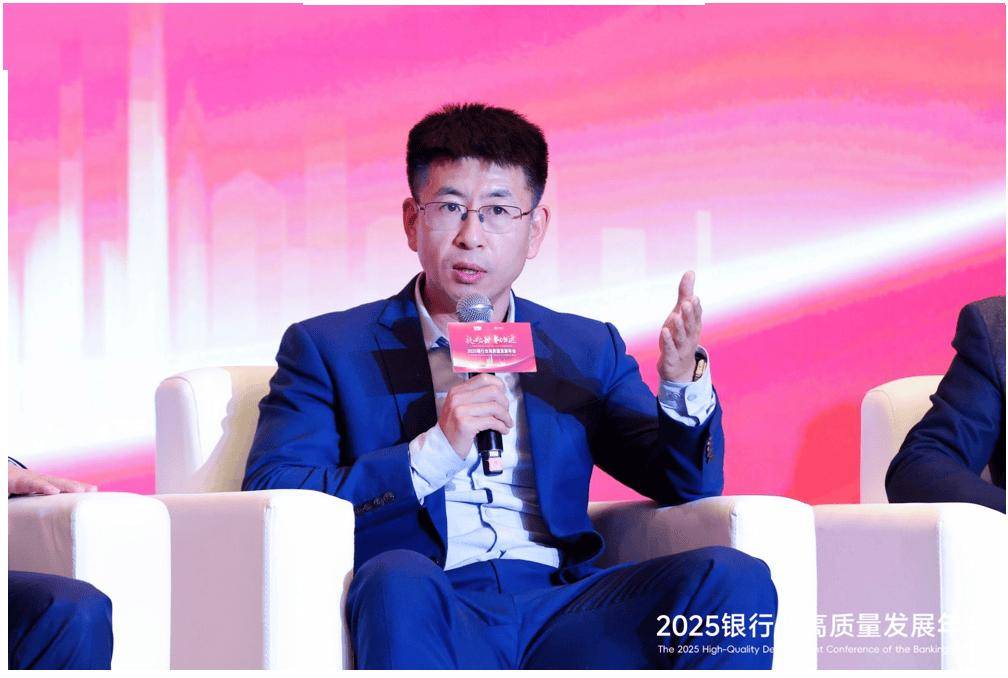
中信百信银行大数据部总经理周北春: AI在银行的落地场景已从新技术尝鲜步入业务流程重塑阶段
Sou Hu Cai Jing· 2025-12-30 04:34
Group 1 - The "2025 Banking Industry High-Quality Development Conference" was successfully held in Beijing, focusing on themes such as serving the real economy, digital transformation, AI+financial innovation, and risk prevention [1] - The conference gathered regulatory experts, academic elites, industry leaders, and representatives from technology companies to discuss strategies for high-quality development in the banking sector [1] Group 2 - The General Manager of the Big Data Department at Citic Baixin Bank, Zhou Beichun, shared insights on the application of AI in intelligent risk control during a roundtable forum [3] - Citic Baixin Bank aims to leverage financial technology to break physical boundaries in banking services, providing simple and convenient online financial services to a broader customer base [3] - The bank has developed a four-layer digital risk control system, which includes data, risk feature mining, model construction, and real-time risk operation, achieving a commendable industry standard [3] Group 3 - Zhou Beichun emphasized that AI has transitioned from being a new technology to a new productive force in banking, indicating that it is likely to replace junior employees [4] - Two main challenges in AI application within banks were identified: computational power and the need for a fundamental change in AI training models [4] - AI is viewed as a highly intelligent and capable junior employee, and it should be assigned appropriate tasks for continuous development, particularly in intelligent risk control [4]

8 个月 50 亿产值,非程序员用秒哒赚疯了?秒哒如何解决后端难、token 贵、屎山烦
AI前线· 2025-12-18 00:40
Core Insights - The article emphasizes that the most valuable opportunity in the industry currently lies in AI Coding, with the no-code tool "秒哒" (MiaoDa) generating significant value and user engagement globally [2] - The tool has been widely adopted, serving over 10 million users and creating more than 5 billion yuan in value across various application scenarios [2] User Demographics and Needs - 81% of MiaoDa's users are non-programmers, primarily from the workforce and academic sectors, highlighting the challenge of articulating complex application needs [3] - The team has designed a unique approach to address this issue, differentiating MiaoDa from similar products by enhancing the "demand communication phase" [4] Demand Communication and User Experience - MiaoDa employs a "Product Manager AI" to facilitate deeper conversations with users, transforming vague requests into structured product documentation [4][6] - This design significantly lowers the barrier for expression and reduces the risk of rework due to unclear requirements [6] Strategy and Development Focus - The current strategy prioritizes building a robust foundational capability to ensure a smooth user experience, with plans to develop vertical versions tailored to specific business needs in the future [7] - MiaoDa also offers a deep research mode for complex business requirements, integrating with mainstream AI platforms for enhanced functionality [7] Backend Challenges and Solutions - The article discusses the challenges in backend capabilities, leading to the emergence of the BaaS (Backend as a Service) concept, with MiaoDa being recognized as a leading player in this space [9] - Key challenges include ensuring stable and efficient cloud database operations, integrating AI with databases, and managing underlying resources effectively [9][10][11] Product Experience and User Accessibility - MiaoDa aims to simplify complex database capabilities into an easy-to-use product experience, achieving a significant advantage by allowing users to complete integrations in one conversation without external configurations [12] - The article highlights the importance of maintaining code quality and preventing "code bloat" through careful review and structured development processes [15] Competitive Landscape and Future Outlook - The article concludes that while China has started its Vibe Coding development 1-2 years later than abroad, the competitive gap is narrowing, with Chinese products expected to catch up rapidly [17] - The core competitive advantages in Vibe Coding products are identified as strong code generation capabilities and superior user experience [17]


中信百信银行携手百度伐谋探索银行智能风控创新解决方案
Zheng Quan Ri Bao Zhi Sheng· 2025-11-13 08:12
Core Insights - Baidu has officially launched the world's first commercially available "self-evolving" super intelligent agent, named Baidu Famo, during the 2025 World Conference [1] - The "AphaMo" intelligent risk control project by China CITIC Bank has integrated Baidu Famo, marking its first application in the financial sector, showcasing innovation in finance and inclusive finance in the AI era [1] Group 1 - The "AphaMo" project utilizes Baidu's advanced AI technologies, including Famo, Qianfan, and Wenxin large models, to create three types of risk control intelligent agents: digging, modeling, and strategy agents [1] - The "digging agent" has achieved significant progress, with a 100% increase in feature extraction efficiency and a 2.41% improvement in risk differentiation [2] - Baidu's founder, Li Yanhong, explained that Famo's concept is inspired by evolutionary algorithms, simulating millions of years of biological evolution to discover optimal solutions previously unknown to humans [2] Group 2 - The "modeling agent" has begun its work in model development, covering the entire modeling process from data preprocessing to model evaluation, and is being applied in various banking scenarios such as consumer finance and small microfinance [2] - The collaboration between Baidu and China CITIC Bank represents a new paradigm of deep integration of AI technology and intelligent risk control in banking, aiming to enhance the effectiveness of digital inclusive finance and promote high-quality development [3]
什么时候泡沫破了,什么时候商业航天就成了
3 6 Ke· 2025-09-30 03:37
Core Viewpoint - The commercial space industry is recognized as a trillion-dollar market, with significant developments and investments, yet it still faces challenges in achieving profitability and stability [1][2][3]. Group 1: Industry Development - The commercial space sector has seen the emergence of companies aiming for initial public offerings, with notable advancements in satellite internet and launch capabilities [2][3]. - The "Starlink" project has accelerated the pace of satellite launches, with a record of 38 satellites launched in a short period [2]. - The industry has experienced a shift in focus from "hard technology" to more immediate trends like smart driving, indicating a potential lack of excitement in commercial space developments [3]. Group 2: Investment Landscape - Significant funding has been raised in the commercial space sector, with companies like Xinghe Dynamics securing a record 2.4 billion in Series D financing [2]. - The overall financing scale for the industry exceeded 20 billion last year, marking a new high and indicating growing investor interest [21]. - The presence of numerous unicorns in the commercial space sector suggests a maturing investment landscape [21]. Group 3: Technological Advancements - The industry is witnessing breakthroughs in rocket technology, with 12 successful launches by private companies in 2023 [22]. - The focus on reusable rocket technology is critical for reducing launch costs, with several companies making progress in this area [22][30]. - The satellite internet initiative is gaining momentum, with significant projects like "Starlink" and "G60" pushing for rapid deployment and operational capabilities [26]. Group 4: Market Dynamics - The commercial space sector is increasingly targeting large clients and government contracts, with companies eager to integrate into supply chains [18]. - There is a notable shift towards providing comprehensive industry solutions rather than merely selling satellite data, indicating a more integrated approach to market needs [18][19]. - The industry is expected to undergo consolidation, with weaker players likely to exit the market, reflecting a maturation process [46][47].

百度集团-SW(09888.HK)季报点评:百度核心广告业务承压 萝卜快跑领跑ROBOTAXI行业
Ge Long Hui· 2025-09-04 03:57
Core Insights - Baidu Group reported Q2 2025 revenue of 32.713 billion yuan, a year-on-year decline of 3.59%, but a quarter-on-quarter increase of 0.80; net profit attributable to shareholders was 7.322 billion yuan, up 33.42% year-on-year; NON-GAAP net profit was 4.795 billion yuan, down 35% year-on-year [1] Group 1: Financial Performance - Baidu's core business revenue reached 26.251 billion yuan, a year-on-year decline of 2%; NON-GAAP net profit for the core business was 4.792 billion yuan, down 34% year-on-year [1] - The company repurchased shares worth 677 million USD in H1 2025, with a cumulative repurchase amount of 2.3 billion USD under the 2023 share repurchase plan [1] Group 2: Online Marketing Business - Baidu's core online marketing business revenue was 16.2 billion yuan, a year-on-year decline of 15%; despite a 5% year-on-year increase in Baidu APP MAU to 735 million, the online marketing business faced pressure due to new traffic primarily coming from AI search [2] - As of June, over 50% of mobile search result pages contained AI-generated content, up from 35% in April; by July, this figure rose to 64% [2] Group 3: AI Search Commercialization - Baidu is exploring AI search commercialization, developing more flexible and native advertising formats that integrate naturally into user experiences; AI search is expected to improve monetization efficiency in the long term, although it currently pressures revenue and profit margins [2] Group 4: Intelligent Cloud and Non-Online Marketing Revenue - Baidu's core non-online marketing revenue reached 10 billion yuan, a year-on-year increase of 34%, driven by growth in cloud intelligence business [3] - The growth is attributed to the expansion of Baidu's MaaS platform and the release of the open-source Wenxin 4.5 series models, which exhibit strong performance in instruction following and visual understanding [3] Group 5: Autonomous Driving Business - Baidu's "萝卜快跑" (Roborock) service saw order volume reach 2.2 million, a year-on-year increase of 148%; the service is expanding into international markets, covering 16 cities globally [4] - Strategic partnerships with Uber and Lyft aim to deploy thousands of fully autonomous vehicles in Asia, the Middle East, Germany, and the UK, with plans for further expansion across Europe [4] Group 6: Investment Outlook - The company is actively exploring AI search commercialization, while its intelligent cloud and autonomous driving businesses continue to grow rapidly; projected revenues for 2025-2027 are 123.38 billion yuan, 134.50 billion yuan, and 145.11 billion yuan respectively, with adjusted net profits of 18.875 billion yuan, 21.187 billion yuan, and 23.610 billion yuan [4]