
含权基金

Search documents
银行理财资产配置专题分析:固收+理财现状、竞争格局与配置策略
Hua Yuan Zheng Quan· 2026-01-16 10:31
Group 1 - The core viewpoint of the report emphasizes the significance of "Fixed Income+" wealth management products as a key strategy for banks to adapt to the changing asset management landscape, providing a balance of stable returns and moderate risk [5][6][10] - The report highlights that the market for mixed and equity wealth management products has been declining, with the combined scale dropping from 3.1 trillion yuan in 2021H1 to approximately 0.9 trillion yuan by 2025Q3, indicating a shift in investor preferences [7][10] - The report notes that as of 2025Q3, the scale of "Fixed Income+" wealth management products reached approximately 7.5 trillion yuan, reflecting a growth of about 0.4 trillion yuan from the previous quarter, with a significant portion of assets concentrated in fixed income [16][34] Group 2 - The competitive landscape shows that 16 wealth management companies have a "Fixed Income+" product scale exceeding 200 billion yuan, with a notable concentration among leading institutions such as China Merchants Bank Wealth Management and Agricultural Bank Wealth Management, which together hold a market share of 42.5% [29][34] - The report indicates that the asset allocation of wealth management companies has shifted, with a general reduction in equity asset allocation, decreasing from 2.4% in 2025H1 to 2.1% in 2025Q3, reflecting a cautious approach towards high-volatility assets [37][39] - The report details that the majority of "Fixed Income+" products have low equity positions, with 89% of assets concentrated in fixed income, indicating a conservative investment strategy among institutions [16][25]
“AI泡沫论”再起,公募岁末如何应对?新发基金提前布局
券商中国· 2025-12-24 06:44
Core Viewpoint - The article discusses the recent shifts in ETF fund flows, highlighting a net outflow from popular sectors like artificial intelligence and healthcare, while stable sectors such as dividend low volatility and free cash flow have attracted investment [1][3]. Fund Flow Analysis - Recent fund flows indicate a significant net inflow into broad-based ETFs like CSI 300 and CSI A500, with net inflows exceeding 1.2 billion and 30 billion respectively as of December 22 [3]. - Stable ETFs focusing on dividend low volatility and free cash flow have also seen net inflows, with the dividend low volatility category attracting over 1.5 billion [3]. - Conversely, popular sectors such as healthcare and innovative pharmaceuticals have experienced net outflows, with multiple AI-themed ETFs recording over 1 billion in net outflows since December [3][4]. Market Style Shift - The discussion around a potential style switch in the A-share market has gained traction, with a focus on the "high to low" transition in investment styles [4]. - Short-term style shifts may not be sustainable, with a continued emphasis on large-cap growth styles into early next year, while longer-term shifts may occur around the first quarter of next year [4]. - The 2026 market outlook suggests that valuation recovery may outpace earnings recovery, similar to the 2019-2020 market phase [4]. Investment Strategy Insights - The article emphasizes the importance of cash flow and stable growth in investment strategies, with a focus on high-quality assets that can withstand market fluctuations [7]. - The 2026 investment landscape is expected to see a shift from technology towards stable cash flow sectors, with core assets likely to attract significant investment [7]. - New fund launches indicate a preference for both technology and stable value-oriented products, reflecting a diverse investment strategy [8]. Future Opportunities - The article highlights two key investment opportunities: cyclical industries benefiting from supply constraints and high-end manufacturing firms expanding in global markets [9]. - The ongoing competition in AI investment is noted, with a focus on the foundational infrastructure needed for growth, suggesting a mix of opportunities and challenges ahead [6].


岁末年初,如何让投资不在波动中“失焦”?
Zhong Guo Zheng Quan Bao· 2025-12-22 22:45
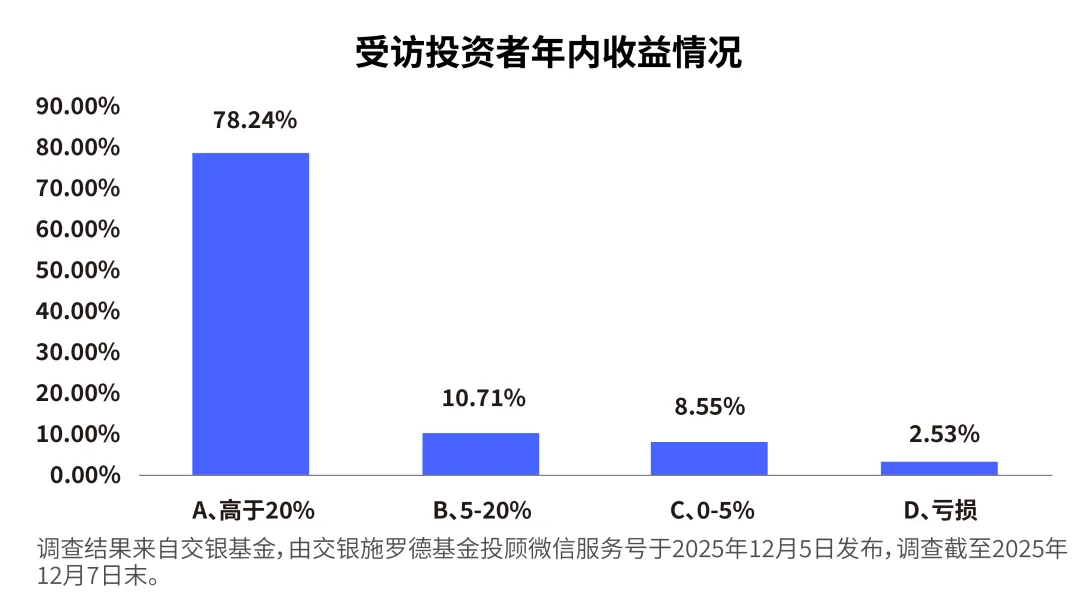
Core Insights - The public fund industry in 2025 is characterized by a "return to the original intention," emphasizing the importance of investor needs and experiences, driven by regulatory reforms and new product offerings [1][2][3] Industry Developments - The China Securities Regulatory Commission (CSRC) issued an action plan for high-quality development in the public fund industry, marking a clear direction for industry reforms [1] - The introduction of new floating fee rate funds aligns fund managers' interests with those of investors, breaking away from the traditional fixed income model [1] - The number of newly launched public fund products exceeded 1,370, with a total scale surpassing 1 trillion yuan, reflecting a year-on-year growth of nearly 35% [2] Performance Metrics - Active equity funds focusing on the equity market achieved an average return of 27.48%, significantly outperforming broad market indices [2] - The "fixed income plus" (固收+) products showed improved risk-return profiles, with a 2.3 percentage point increase in yield and a 0.5 percentage point reduction in maximum drawdown [2] Investor Sentiment - A survey indicated that 88.96% of investors achieved over 5% returns this year, fostering a positive feedback loop between performance and trust in fund managers [3] - Many investors expressed a desire for personalized asset allocation advice to navigate extreme market conditions [12] Asset Allocation Strategies - The "fixed income plus" strategy balances defensive and offensive positions, primarily investing in fixed income assets while also capturing equity opportunities [12][14] - The complexity of asset allocation requires professional management, as public "fixed income plus" products leverage expert teams to navigate market dynamics [13][14] Conclusion - The public fund industry aims to simplify investment for individuals, allowing them to benefit from professional management and diversified asset allocation strategies, thereby enhancing their investment experience as they approach 2026 [14]
中金-银行:理财2026年展望:存款搬家、资产配置新叙事
中金· 2025-12-15 01:55
Investment Rating - The report provides a positive outlook for the wealth management industry, projecting an 8% growth in 2026, with potential expansion to 36 trillion yuan, and possibly up to 37.4 trillion yuan if market conditions improve [12][14]. Core Insights - The wealth management industry is expected to benefit from the trend of deposit migration and the release of existing floating profits, leading to unexpected growth in 2025 [3][14]. - In 2026, wealth management institutions will have opportunities for multi-asset allocation and a further decline in household savings rates, but they will also face pressure from valuation adjustments [3][4]. - The report emphasizes the importance of understanding the changes in residents' risk preferences and the implications for asset allocation, indicating a shift towards more liquid deposits and asset management products [23][39]. Summary by Sections Resident Risk Preferences - The report suggests that in 2026, residents will have a slight increase in risk appetite, leading to a trend of liquid deposits and asset management products [4][23]. - The potential for increased allocation to rights products is noted, although the growth elasticity may not be significant at this stage [4][23]. Deposit Migration Trends - In 2025, the average decline in retail deposit rates was approximately 30 basis points, with a notable slowdown in the growth of fixed-term deposits [4][44]. - The report anticipates that in 2026, 32 trillion yuan of fixed-term deposits will mature, with a re-pricing range of 70-170 basis points, creating conditions for further deposit migration [4][45]. Fund Flow from Excess Savings - The report estimates that from 2020 to 2025, there will be a total of 14.4 trillion yuan in excess savings, with a potential additional 2-4 trillion yuan flowing into non-fixed deposit investment areas in 2026 [5][46]. - A decrease in the savings rate by 1 percentage point could lead to an additional 0.9 trillion yuan in new funds directed towards wealth management, funds, insurance, and real estate [5][46]. Wealth Management Asset Allocation Outlook - The report predicts that pure fixed-income wealth management products will grow by 7.5% to 24.9 trillion yuan in 2026, contributing significantly to the overall growth of the industry [13][14]. - The demand for public fund outsourcing, particularly for bond ETFs and rights funds, is expected to grow rapidly, driven by the need for enhanced returns [13][14]. Valuation Adjustment and Market Conditions - The report highlights that wealth management products will face "true" net value adjustment pressures starting in 2026, which may lead to increased product volatility [11][54]. - The need for wealth management institutions to effectively meet investor demands for stable value growth while managing expectations is emphasized as a key challenge [11][54].