
器官芯片

Search documents
器官芯片,守护人类健康的新选项
Xin Hua Ri Bao· 2026-02-10 21:49
Core Viewpoint - The U.S. Environmental Protection Agency (EPA) is accelerating its policy to end all mammal testing by 2035, shifting toxicology assessments from animal models to human cell-based methods, organ-on-a-chip technology, artificial intelligence, and high-throughput in vitro testing [1] Group 1: Organ-on-a-Chip Technology - Organ-on-a-chip technology is gaining attention as a non-animal testing method, with a notable team led by Gu Zhongze at Southeast University successfully commercializing their research over a decade [1][2] - The organ-on-a-chip system mimics human organ functions using human stem cells, allowing for the cultivation of miniaturized organs like "mini hearts" that can beat autonomously for over 180 days [2][3] - The accuracy of organ-on-a-chip technology in detecting drug hepatotoxicity exceeds 90%, compared to 50-60% for traditional animal testing, revolutionizing drug development processes [3] Group 2: Collaboration and Applications - The collaboration between Gu Zhongze's team and companies like Hengrui Medicine has led to the successful screening of over 120 compounds in just eight months, a feat difficult to achieve with animal models [3][4] - The technology also enables the cultivation of "mini tumors," providing personalized drug testing platforms for cancer patients, thus facilitating tailored treatment strategies [4] Group 3: Innovation and Industrialization - Gu Zhongze's team has established a cross-disciplinary approach to overcome challenges in biocompatibility, 3D microstructure processing, and long-term cell culture, leading to the formation of a domestic organ-on-a-chip technology system [5][6] - The establishment of the Southeast University Suzhou Medical Device Research Institute in 2017 has laid the groundwork for the industrialization of organ-on-a-chip technology, resulting in the creation of Aiweide Biotechnology Co., Ltd. [6] - Aiweide has formed partnerships with leading domestic pharmaceutical companies, providing organ-on-a-chip products and services to over 200 enterprises and research institutions [6] Group 4: Challenges and Future Directions - Despite advancements, the organ-on-a-chip industry faces challenges such as the need for continuous technological breakthroughs and the establishment of industry standards [8][9] - The complexity of constructing organ-on-a-chip systems requires specialized skills, and the lack of standardized methods hinders data comparability across different laboratories [9] - The Chinese government has recognized organ-on-a-chip technology as a strategic research direction, encouraging more investment and research in this field [9]
奉贤系统构建民营经济友好生态 启动“商行贤城”搭建深度协作平台
Jie Fang Ri Bao· 2025-12-04 01:36
Group 1 - The 2025 Xianshang Conference was held in Fengxian District, gathering nearly 450 entrepreneurs and representatives from various industries to celebrate achievements in the private economy [1] - Fengxian is one of the most active areas for private enterprises in Shanghai, with nearly 90% of the total number of enterprises being private, contributing over 60% of industrial output value, more than half of tax revenue, and over 60% of employment [1] - The conference highlighted both established companies and new entrants, showcasing their stories as examples of the resilience and vitality of Fengxian's private economy [1] Group 2 - Yaoshu Technology, focusing on organ-on-a-chip technology, has established its R&D center in Fengxian and has gained attention from major industry players, including multinational pharmaceutical companies and leading domestic firms [2] - The organ-on-a-chip technology simulates real organ structures and functions, providing a platform for drug development, especially in light of recent changes in regulations regarding animal testing [2] - The company was attracted to Fengxian due to its clear industrial planning and supportive policies, which align with the company's development direction [3] Group 3 - Established companies like Shanghai McLean Biochemical Technology Co., Ltd. have thrived in Fengxian, successfully localizing over 2,000 high-end reagents and significantly reducing research costs for domestic institutions [4] - The company received a low-interest loan of 10 million yuan from Fengxian during a challenging period, which helped it expand its product line and achieve sales exceeding 600 million yuan last year [4] - Shanghai Pudong Electric Wire and Cable Group is investing in a new high-end intelligent manufacturing plant in Fengxian, reflecting confidence in the region's industrial environment [4] Group 4 - The company aims to implement digital production management systems and AI detection to enhance its manufacturing capabilities, addressing traditional industry pain points [5] - The "Shanghang Xiancheng" project was launched to connect new and established businesses, providing customized services to facilitate collaboration [5] - Fengxian plans to deepen industrial collaboration, focusing on innovation in AI and biomedicine, and support the establishment of R&D centers in partnership with universities and research institutions [5]
美国大量实验用猴被迫“退休”?真相来了
第一财经· 2025-11-26 10:51
Core Viewpoint - The CDC has issued a directive to end all research projects involving the use of monkeys by the end of this year, marking a significant shift in animal research policy in the U.S. [3][4] Group 1: CDC Directive and Its Implications - The directive affects approximately 200 monkeys used primarily for infectious disease research, including HIV prevention and antiviral treatments [3]. - This is the first time a U.S. government agency has terminated non-human primate research since the NIH initiated a retirement plan for chimpanzees a decade ago [3]. - The future of these monkeys is uncertain, with possibilities including relocation to primate sanctuaries or euthanasia [3]. Group 2: New Methodologies in Research - Advocates for "new methodologies" such as organoids believe this marks the beginning of a "post-animal era" in research [3]. - The CDC's directive is seen as a potential model for transitioning to advanced alternative technologies, although achieving complete replacement of animal models is complex [4]. - The NIH still oversees nearly 7,000 non-human primates, indicating that the CDC's directive does not apply to all research institutions [4]. Group 3: Challenges of Replacement Technologies - Experts caution that while organoids and other new methodologies show promise, they cannot fully replicate the complexity of human diseases [4]. - The current state of recognized alternatives to animal testing remains limited, with few validated methods available [4]. - The debate continues on the extent to which organoids can replace animal models in biomedical research [4]. Group 4: Global Perspective and Future Directions - The focus should be on which countries can effectively implement alternative methodologies in translational medicine and drug evaluation [5]. - The CDC's decision highlights a growing contradiction in biomedical research: the need for new therapies while still relying on animal models for certain critical research areas [5]. - Addressing the balance between ethical considerations and scientific needs is essential for the advancement of both science and ethics [5].


美国大量实验用猴被迫“退休”?真相来了
Di Yi Cai Jing· 2025-11-26 05:56
Core Viewpoint - The CDC has issued a directive to end all research projects involving the use of monkeys by the end of this year, marking a significant shift in animal research policy in the U.S. [2] Group 1: Research and Policy Changes - Approximately 200 monkeys used for infectious disease research, including HIV and hepatitis, will be affected by the CDC's directive [2] - This is the first time a U.S. government agency has terminated non-human primate research projects since the NIH initiated a retirement plan for chimpanzees a decade ago [2] - The directive may lead to some monkeys being transferred to primate sanctuaries, while others may face euthanasia [2] Group 2: Alternative Research Methods - The announcement has sparked discussions among advocates of "new methodologies," suggesting a transition to a "post-animal era" in research [2] - The NIH still oversees nearly 7,000 non-human primates, indicating that the CDC's directive does not apply to all animal research in the U.S. [3] - Experts highlight that while the CDC's decision may be framed as a move towards advanced alternative technologies, fully replacing animal models is complex and not straightforward [3] Group 3: Global Perspective and Future Implications - The focus should be on which countries can develop solid results in alternative methodologies to gain a competitive edge in translational medicine and drug evaluation [4] - The termination of the monkey research program highlights a growing contradiction in biomedical research: the need for new therapies while determining when animal models are essential [4] - Responsible answers to the questions of when to use animals versus alternative methods are crucial for advancing both science and ethics [4]
江苏南京:“钢厨师”日做20万份米板 小芯片“种”出人体皮肤
Nan Jing Ri Bao· 2025-11-14 00:17
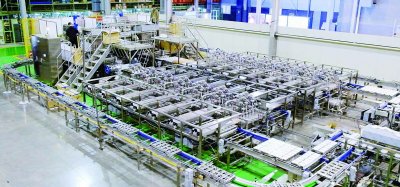
Core Viewpoint - The 2025 Young Industrial Technology Innovation and Green Development Conference in Nanjing showcased advancements in light industry, emphasizing the shift from traditional manufacturing to intelligent manufacturing driven by technological innovation [1][3]. Group 1: Technological Innovations - Nanjing's light industry is transitioning towards intelligent manufacturing, with companies like Le Ying Technology adopting high-pressure instant sterilization technology for rice production, achieving sterilization in just 45 seconds [3][4]. - Le Ying Technology's automated rice production line can produce 12,000 boxes of rice per hour, totaling 200,000 servings daily, with only six employees required for operation, significantly reducing labor costs compared to traditional methods [5]. - The company reported a 13.83% year-on-year increase in export revenue, with six production lines exported to Japan alone [5]. Group 2: Industry Growth - The number of large-scale light industry enterprises in China increased from 108,700 in 2020 to 140,000 by October this year, with an average annual growth rate of 6.4% [10]. - The average annual revenue growth for these enterprises stands at 4.22% [10]. Group 3: Product Development and Precision - Le Hui International's digital factory in Nanjing achieves a filling accuracy of less than 0.5 grams for bottled beverages, utilizing advanced technology for precise control [6][7]. - The introduction of automated welding robots has reduced welding time by 50% and decreased defect rates by over 70%, enhancing product quality and efficiency [7][8]. Group 4: Biotech Innovations - Jiangsu Aiwei Biotechnology's organ-on-a-chip technology allows for the cultivation of human skin tissue in a controlled environment, facilitating cosmetic safety evaluations and drug testing [9][10]. - This technology offers a cost-effective and standardized solution for drug development and precision medicine [9].

以数据见证专业:QYResearch 2025年9月行业数据引用案例精选
QYResearch· 2025-09-30 03:34
Group 1 - QYResearch is recognized for its authoritative industry analysis and customized reports, widely cited by numerous well-known domestic and international companies, securities firms, and media [1] - The ASIC design service market in China is projected to generate sales revenue of $1.503 billion in 2023, with expectations to reach $3.416 billion by 2030 [2] - The global servo system market is estimated to be $15.611 billion in 2023, with a compound annual growth rate (CAGR) of 4.73%, reaching $20.604 billion by 2029 [5] Group 2 - The global vehicle dashboard market is dominated by a leading domestic company, ranked first in China and eighth globally, according to QYResearch [7] - The global humidifier market is expected to grow at a CAGR of over 10% in the next five years, with integrated and smart products taking a leading position [10] - The market for osmotic laxatives in China is projected to exceed 7.313 billion yuan by 2029, capturing 33.65% of the total constipation medication market [12] Group 3 - The global high-speed connector market is anticipated to reach $21.6 billion by 2030, providing significant expansion opportunities for suppliers [15] - The directional drilling tools market is expected to exceed $9.42 billion in 2024 and surpass $26.88 billion by 2037, with a CAGR of over 8.4% [17] - The global optical switch market is projected to reach $2.02 billion by 2031, with a CAGR of 16.3% [20] Group 4 - The global semiconductor robot market is currently dominated by foreign manufacturers, holding over 90% of the market share in China [22] - The global automatic wafer testing probe market is estimated to be around $1.156 billion in 2024, characterized by high market concentration [24] - The global emergency kit market is expected to reach $1.061 billion by 2031, with a CAGR of approximately 7.3% [27] Group 5 - The global home wireless router market is projected to grow at a CAGR of 5.8% from 2025 to 2031 [29] - The global medical device market is expected to reach $635.8 billion by 2024 [32] - The global SD-WAN market is estimated to reach $51.8 billion by 2031, with a CAGR of 32.6% [35] Group 6 - The global organ-on-a-chip market is expected to grow at a CAGR of 31.2% from 2024 to 2030 [69] - The global automotive drive motor core market is projected to reach $4.678 billion by 2030, with a CAGR of 11.85% [62] - The global eSIM card market is entering a rapid expansion phase, particularly in the IoT and consumer electronics sectors [65]

释放融资需求超7亿元,“投成都”未来产业投资联盟首场活动举行
Sou Hu Cai Jing· 2025-09-26 12:50
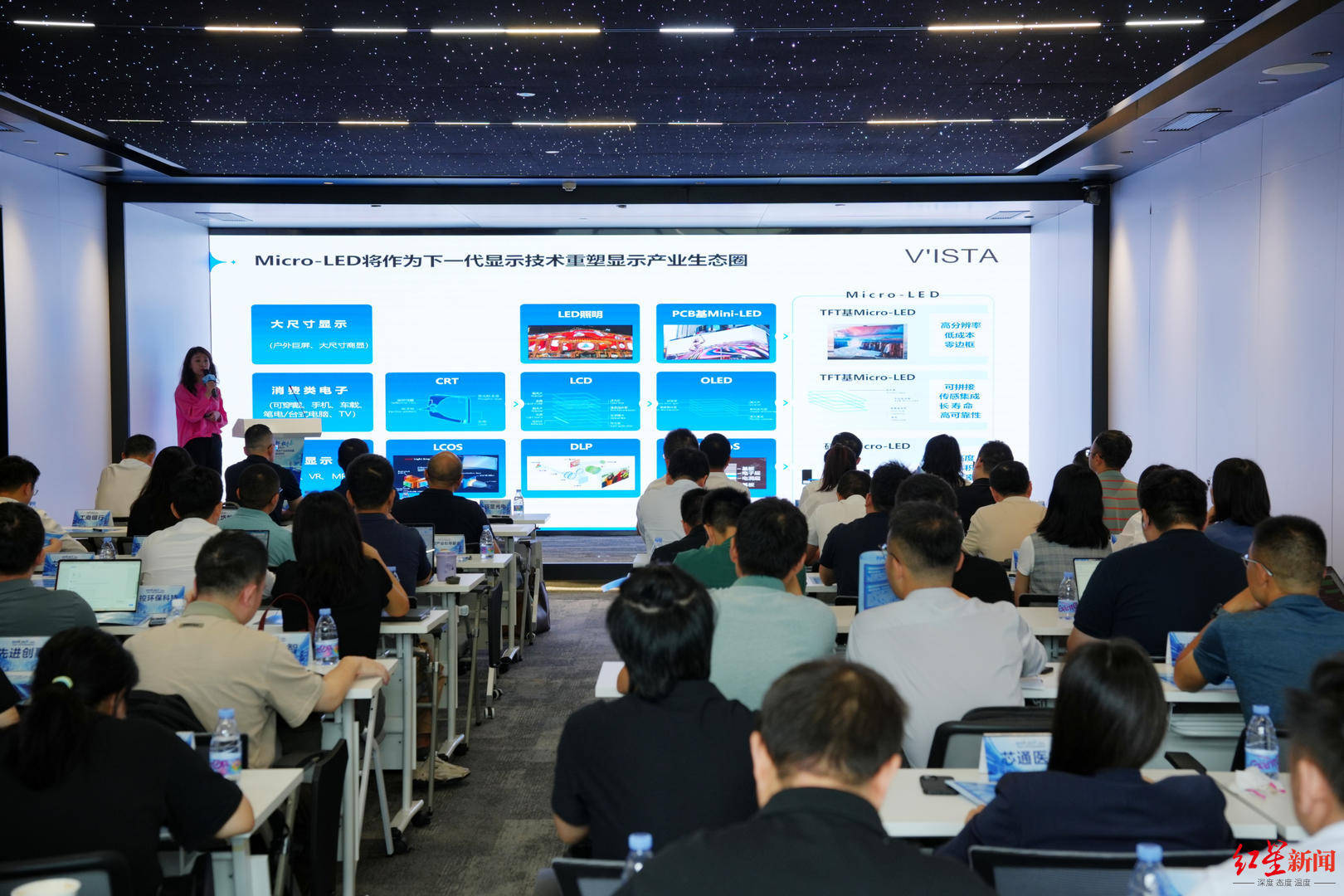
Core Insights - The "Invest Chengdu" Future Industry Investment Alliance held its first financing roadshow event, showcasing five high-quality companies from future industries with a total financing demand exceeding 700 million yuan [2][5] Group 1: Event Overview - The event took place on September 26 at the Chengdu Private Economy Development Promotion Center, focusing on future industries such as future energy, satellite communication, new displays, high-end equipment, and biotechnology [2][3] - The Chengdu government aims to strengthen the "Invest Chengdu" brand and establish a "tropical rainforest" fund ecosystem to support these industries [2] Group 2: Company Highlights - Chengdu Chenxian Optoelectronics Co., Ltd. presented its Micro-LED production line with a technology transfer yield of 99.995%, seeking 500 to 1,000 million yuan for production line construction and R&D [4] - Sichuan Rongxin New Energy Power System Co., Ltd. showcased its leading technology in high-power fuel cell hybrid systems, with applications in rail and road transportation [4] Group 3: Investment Engagement - Notable investment institutions such as Hillhouse Capital and Dongfang Fuhai participated, engaging in discussions on technology maturity, application scenarios, and market potential [5] - The event facilitated precise matching between investors and projects, with a total financing demand of over 700 million yuan reported [5] Group 4: Government Support and Future Plans - Chengdu's government has launched the "Tomorrow Star" initiative to support innovative companies with significant market potential and disruptive technologies [6] - The future industry fund aims to provide comprehensive capital services throughout the lifecycle of enterprises, focusing on seed, startup, and growth stages [10][11]
中国芯力量|在“芯片”上“种”器官
Xin Hua She· 2025-09-15 09:29
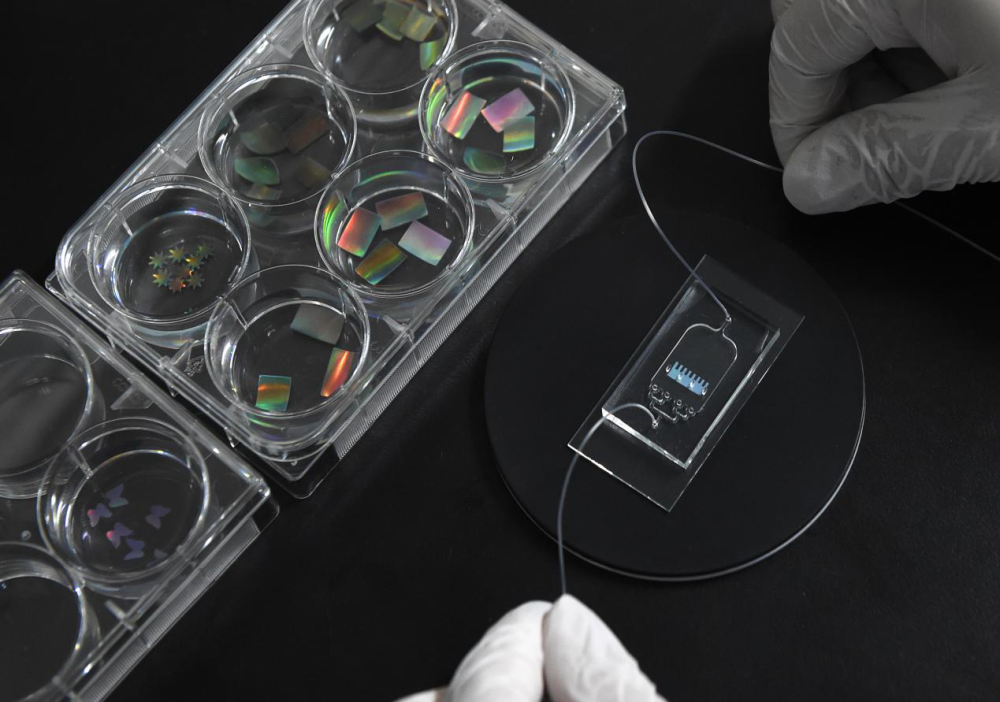
Core Concept - The emergence of organ-on-a-chip technology represents a significant advancement in biomedical research, offering a more accurate and ethical alternative to traditional animal testing methods [4][7]. Industry Overview - Organ chips are micro-engineered devices that simulate human organ functions using human cells, providing a platform for drug testing and disease modeling [2][3]. - The global organ-on-a-chip market is projected to grow at a compound annual growth rate (CAGR) of 31.2% from 2024 to 2030, indicating strong market potential [8]. Technological Advancements - Organ chips utilize microfluidic technology to create a controlled environment for cell growth, mimicking the physiological conditions of human organs [2][3]. - High-throughput organ chips can conduct thousands of tests simultaneously, significantly reducing the time and resources needed for drug development [5][6]. Advantages Over Traditional Methods - Organ chips can provide more accurate predictions of human responses to drugs compared to animal models, with studies showing accuracy improvements of 7 to 8 times in predicting drug-induced liver damage [4]. - The cost of using organ chips for drug testing is only 10% to 20% of that of traditional animal models, making it a cost-effective solution for pharmaceutical companies [7]. Applications in Drug Development - Organ chips can be used to test the efficacy and safety of drugs on patient-specific cells, allowing for personalized medicine approaches without risking patient health [7]. - The technology serves as a complementary tool to existing drug development processes, potentially shortening the research timeline and reducing costs [7].
中国芯力量丨在“芯片”上“种”器官
Xin Hua She· 2025-09-12 04:04
Core Concept - Organ chips represent a significant advancement in biomedical research, utilizing human cells to create miniaturized organ models for drug testing and disease research, offering a more accurate alternative to traditional animal models [4][6][7]. Group 1: Technology Overview - Organ chips are built on a foundation of microfluidic technology, integrating human cells and biological materials to simulate organ functions and responses [2][3]. - The first fully functional organ chip, the "lung chip," was developed around 2009, and research in this field has been ongoing for over a decade in China [3][5]. - These chips can replicate complex physiological environments, allowing for precise drug testing and disease modeling [3][6]. Group 2: Advantages Over Traditional Methods - Organ chips significantly reduce the reliance on animal testing, addressing ethical concerns and providing more relevant data for human biology [4][6]. - They offer a high-throughput capability, enabling extensive data analysis and reducing the time required for drug testing from 90-180 days to just 6 days for 100 compounds [6][7]. - The cost of using organ chips is only 10% to 20% of traditional animal models, making them a cost-effective solution for drug development [7]. Group 3: Market Potential - The global organ chip market is projected to grow at a compound annual growth rate (CAGR) of 31.2% from 2024 to 2030, indicating strong future demand for this technology [8]. Group 4: Challenges Ahead - Despite the promising potential of organ chips, the transition from scientific research to practical application faces challenges that need to be addressed [9].
破解“好项目缺资金”难题 金融支持为企业带来“及时雨”
Yang Shi Xin Wen· 2025-09-07 07:19
Group 1 - The People's Bank of China and seven other departments have introduced 18 financial measures to enhance financial support for new industrialization [1] - Financial institutions are integrating "bank counters" into laboratories and connecting "industrial chains" with "capital chains" to create a multi-dimensional ecosystem for financial empowerment [1] - The organ-on-a-chip technology is highlighted as a cutting-edge technology in biomedicine, but funding shortages pose significant challenges for commercialization [1] Group 2 - The "Achievement Transformation Loan" has been innovatively launched by the Jiangsu branch of the People's Bank of China to support research teams [2] - A research team received a credit support of 10 million yuan within two weeks, significantly accelerating the development process of the organ-on-a-chip project [3] Group 3 - In Zhejiang, financial institutions are providing funding support for enterprises undergoing transformation and upgrading through innovative financial products [4] - A high-tech enterprise in Wenzhou received a loan of 130 million yuan to introduce advanced production lines, increasing capacity by 30% [7] Group 4 - The scale of technology loans in Zhejiang has exceeded 4 trillion yuan, with a growth rate of over 15% [8] - Financial institutions are breaking traditional credit restrictions to support green and low-carbon transformations in traditional manufacturing [10] - A company in the aluminum industry received over 100 million yuan in funding support for its green transformation projects, aiming for a 10% reduction in carbon emissions by the end of the year [10]