
国泰海通君弘App

Search documents
证券类App,最新月活排名出炉
Zhong Guo Ji Jin Bao· 2026-01-19 08:28
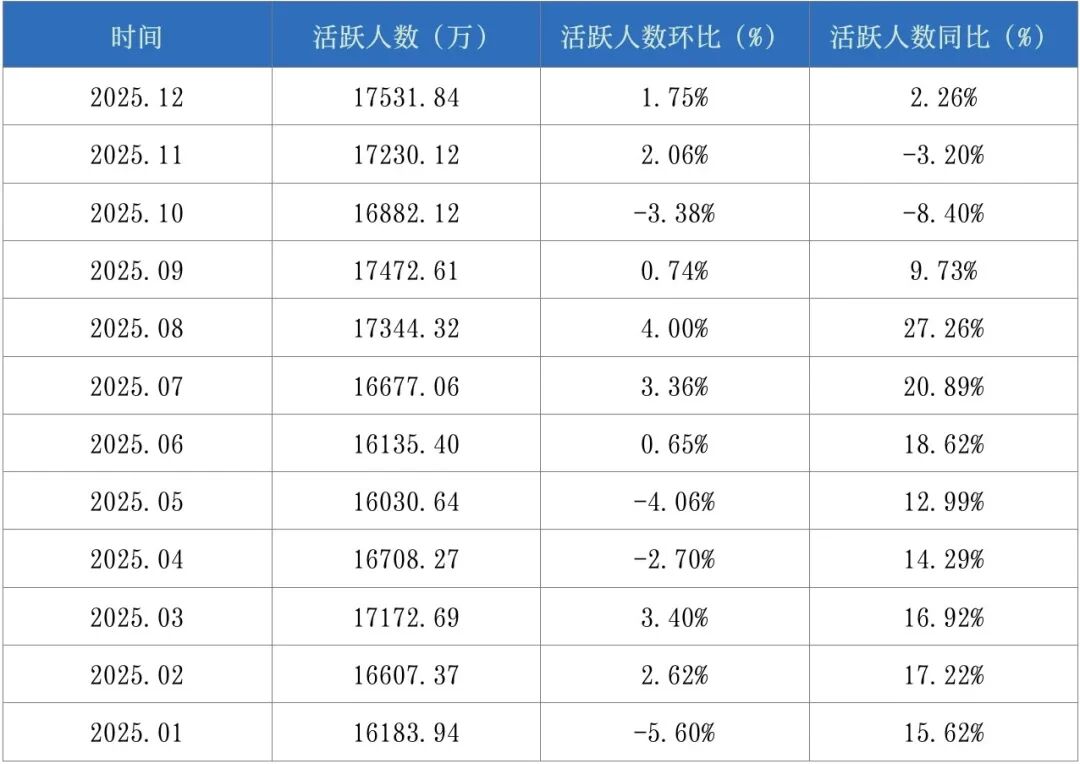
Core Insights - The monthly active users (MAU) of securities apps reached a record high of 175 million in December 2025, marking a 1.75% month-over-month increase and a 2.26% year-over-year increase, indicating a strong recovery in user engagement within the year [1][2]. User Engagement Trends - The year 2025 saw a fluctuating trend in MAU for securities apps, starting at approximately 161.84 million in January, peaking in December. The lowest point was in May, after which a recovery began, with notable rebounds in November and December [1][2]. - The monthly active user numbers for the months leading up to December were as follows: - January: 161.84 million - March: 171.73 million - May: 160.31 million (lowest point) - November: 172.30 million - December: 175.31 million [2]. Competitive Landscape - In December, third-party securities apps dominated the market, with Tonghuashun leading at 36.70 million MAU, followed by Dongfang Caifu at 18.22 million and Dazhihui at 12.97 million. Among brokerage apps, Huatai's Zhangle Wealth and Guotai Junan's Junhong surpassed 10 million MAU [2][3]. - The number of brokerage apps with an average monthly active user count exceeding 6 million increased to 14 in 2025, reflecting a growing concentration in the market [4]. AI Integration in Services - The application of AI technology in the securities industry has accelerated, with various brokerages launching intelligent tools across three core areas: intelligent research, trading, and advisory services. This aims to enhance user experience and service efficiency [6]. - Notable advancements include: - Upgrades in intelligent trading systems by Galaxy Securities, which automate price negotiations and order generation [6]. - The launch of AI advisory platforms by multiple brokerages, integrating comprehensive financial data to improve user decision-making [6]. Average Monthly Active Users - The average monthly active users for the top securities apps in 2025 were as follows: - Tonghuashun: 35.50 million - Dongfang Caifu: 17.43 million - Dazhihui: 12.10 million - Zhangle Wealth: 11.44 million - Guotai Junan Junhong: 9.88 million [5].



国泰海通君弘独家对话国际投资大师吉姆·罗杰斯
Zhong Guo Jin Rong Xin Xi Wang· 2025-12-18 13:54
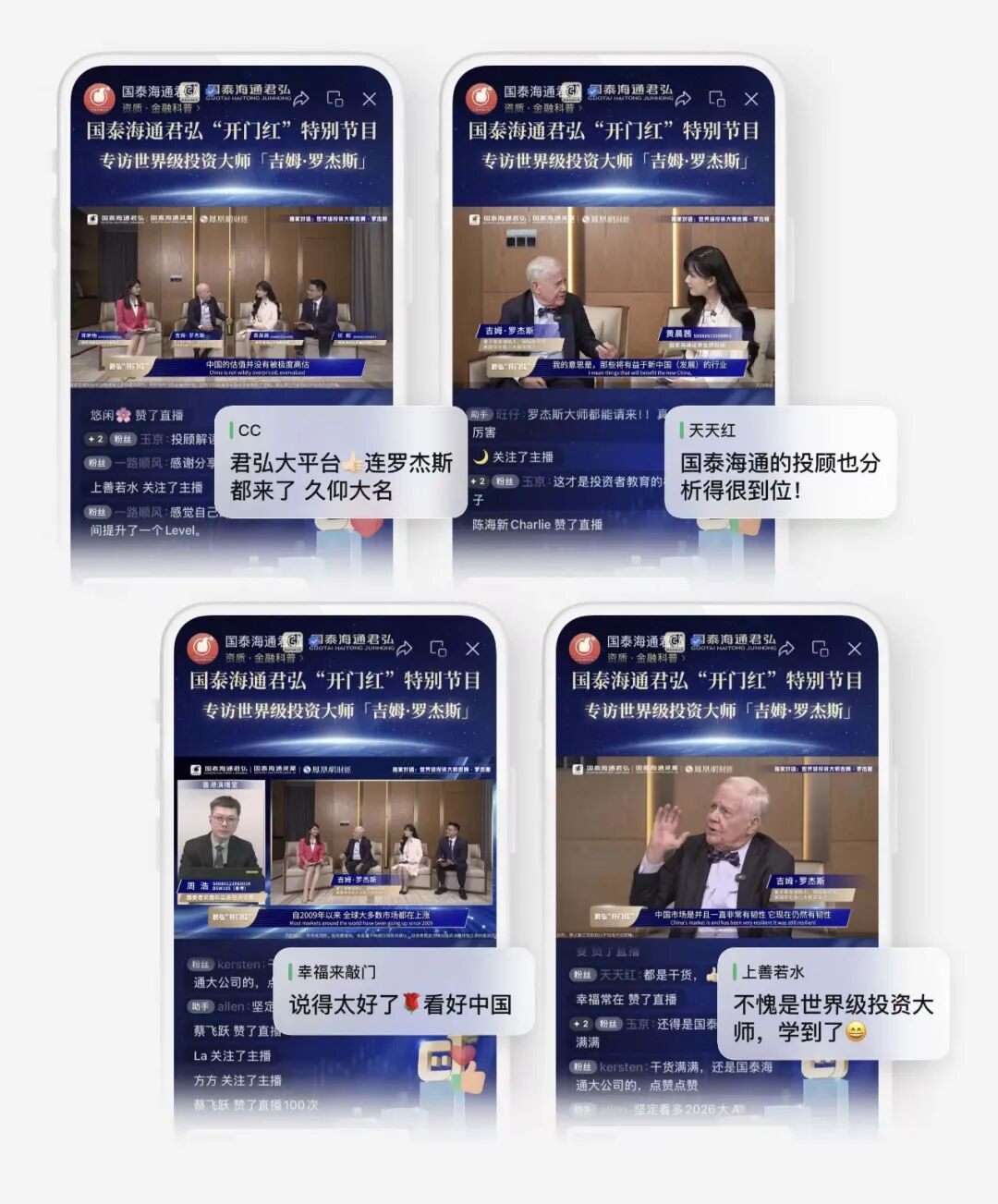
Core Insights - The article discusses the insights shared by international investment master Jim Rogers during a special live broadcast hosted by Guotai Junan, focusing on investment opportunities in China and the global economic landscape [1][2]. Investment Opportunities - Jim Rogers expresses a long-term optimistic view on the Chinese capital market, stating that he holds many Chinese stocks and believes China will become the world's most important economy in the next decade and century, presenting numerous opportunities [2]. - Specific sectors highlighted by Rogers include tourism, transportation, aviation, and undervalued agriculture, which are expected to benefit from China's development [2]. Market Resilience - Rogers emphasizes the resilience of the Chinese market, noting that while many global markets have faced downturns, China has remained stable. He expresses a desire to increase his holdings in Chinese assets during future market declines, anticipating a rebound [2]. Global Market Trends - The article notes that since 2009, most global markets have experienced a prolonged period of growth, which is historically rare. Rogers warns that when everyone is making money easily, it is essential to be cautious of potential risks [2]. AI Industry Perspective - Regarding the AI industry, Rogers acknowledges that new developments often lead to bubbles, but he believes that AI has not yet formed a bubble and that there is no immediate cause for concern [3]. Precious Metals Investment - Rogers maintains a long-term positive stance on precious metals, currently holding gold and silver. He indicates that while he will not increase his holdings at current high prices, he sees long-term value and plans to buy more if prices decline [3]. Investment Strategy Advice - Rogers advises investors to stick to areas they understand, avoid following popular trends, and not be swayed by media noise. He encourages young investors to focus on their strengths for long-term wealth accumulation [3]. Digital Investment Tools - Guotai Junan is enhancing its digital investment tools, such as the Guotai Junan Lingxi App, to provide intelligent investment strategies and support for investors, aiming to help them seize opportunities in the Chinese capital market by 2026 [4][5]. Service Innovation - The Guotai Junan Lingxi App has been upgraded to improve service efficiency, integrating professional capabilities with digital technology to become a comprehensive AI investment partner for users [5][9]. Comprehensive Service Approach - Guotai Junan is committed to providing a full-cycle investment service, utilizing a professional live broadcast matrix and various content offerings to enhance investor engagement and support [4].


看好中国!国泰海通君弘独家对话国际投资大师吉姆·罗杰斯,解码全球视野下的投资新机遇
Zhong Guo Ji Jin Bao· 2025-12-18 13:20
Group 1 - The core message of the news highlights the strategic goal of Guotai Junan to build a first-class investment bank while promoting inclusive finance and assisting investors in enhancing long-term investment success [1] - Guotai Junan invited international investment expert Jim Rogers for a special live broadcast to discuss opportunities in Chinese assets, global economic conditions, and underlying investment logic [1][2] - Jim Rogers, a prominent investor known for his optimistic view on the Chinese capital market, emphasized his continued investment in Chinese assets and identified sectors such as tourism, transportation, and agriculture as promising investment directions [2] Group 2 - Rogers acknowledged the resilience of the Chinese market, stating that it has remained stable while many other markets have collapsed, and expressed his intention to increase his holdings in Chinese assets during future market downturns [2] - Regarding the AI industry, Rogers noted that while bubbles can form in new sectors, he does not see an AI bubble currently and remains optimistic about long-term investments in precious metals like gold and silver [3] - The company is enhancing its investor services through the Guotai Junan Junhong App, which offers tailored investment strategies and tools to help investors seize opportunities in the Chinese capital market by 2026 [3][5] Group 3 - Guotai Junan is committed to providing professional investor services and has developed a range of high-quality content and interactive services through its platforms, including the "Chief is Here" and "Watch the Market" programs [5] - The Guotai Junan Lingxi App has been upgraded to integrate professional capabilities with intelligent technology, aiming to become a comprehensive AI investment partner for investors [7] - The app focuses on four core service areas: market monitoring, trading, dialogue, and live broadcasting, enhancing decision-making and trading efficiency for users [11]
看好中国!国泰海通君弘独家对话国际投资大师吉姆·罗杰斯,解码全球视野下的投资新机遇
中国基金报· 2025-12-18 13:16
Core Viewpoint - The article emphasizes the importance of global economic changes and market opportunities as a critical point for investors to determine their investment direction, highlighting the role of Guotai Junan in supporting investors to enhance their long-term investment success [1]. Group 1: Insights from Jim Rogers - Jim Rogers, a renowned investor, expresses a long-term optimistic view on the Chinese capital market, stating that he holds many Chinese stocks and believes China will become the most important economy in the world in the next decade [8]. - He identifies specific investment opportunities in sectors benefiting from China's development, such as tourism, transportation, aviation, and undervalued agriculture [8]. - Rogers notes the resilience of the Chinese market, stating that while many markets have collapsed, China has remained stable, and he is eager to increase his holdings in Chinese assets during future market downturns [8]. Group 2: Global Market Trends - Since 2009, most global markets have experienced a prolonged period of growth, which is historically rare, prompting caution regarding potential risks as easy profits may lead to complacency among investors [8]. Group 3: AI Industry Perspective - Rogers acknowledges that while the AI industry is likely to experience bubbles, he does not see an immediate bubble forming and advises against excessive concern in the short term [9]. Group 4: Investment Strategy and Advice - Rogers advises investors to focus on areas they understand, avoid following popular trends blindly, and maintain a disciplined approach to investing, particularly for younger investors [9]. - Guotai Junan's app aims to provide tailored investment strategies based on the insights shared during the live session, helping investors seize opportunities in the Chinese capital market by 2026 [9]. Group 5: Service Innovation and Digitalization - Guotai Junan is enhancing its investor services through a new AI-driven app, integrating professional capabilities with digital technology to support investors throughout their investment journey [14]. - The app focuses on four core scenarios: monitoring, trading, dialogue, and live streaming, aiming to improve service efficiency and provide a comprehensive investment experience [17].
看好中国!国泰海通君弘独家对话吉姆·罗杰斯,解码全球视野下的投资新机遇
Zhong Guo Zheng Quan Bao· 2025-12-18 13:04
Core Insights - The live broadcast by Guotai Junan focuses on investment opportunities in China and the global economic landscape, featuring renowned investor Jim Rogers [1][2] - Jim Rogers expresses a strong belief in the resilience of the Chinese capital market and maintains a positive outlook on Chinese assets [2][3] Investment Opportunities - Rogers highlights sectors such as tourism, transportation, aviation, and undervalued agriculture as key investment areas benefiting from China's growth [2] - He emphasizes the importance of understanding one's investment domain and cautions against following popular advice or market noise [3] Market Resilience - The Chinese market has shown remarkable resilience compared to other global markets that have faced downturns [2] - Rogers notes that since 2009, most global markets have experienced prolonged growth, which is historically rare, suggesting a need for caution [2] AI Industry Perspective - Rogers acknowledges the potential for bubbles in emerging sectors like AI but believes that the industry has not yet reached that stage, indicating no immediate concerns [2] Precious Metals Investment - Rogers maintains a long-term positive stance on precious metals, specifically gold and silver, and plans to increase holdings if prices decline [2] Service Innovation - Guotai Junan is enhancing its service offerings through the upgraded Guotai Junan Lingxi App, which integrates AI technology to improve investor interactions and decision-making processes [6] - The app focuses on four core areas: market monitoring, trading, dialogue, and live broadcasting, aiming to provide a comprehensive investment support experience [6] Professional Services - The company is committed to providing professional investment advice and services through various programs, including "Chief is Here" and "Watch the Market," to empower investors with insights [4] - The "Investment Advisor Dream Factory" project aims to enhance service reach and brand influence in digital wealth management [4]
看好中国!国泰海通君弘独家对话国际投资大师吉姆・罗杰斯,解码全球视野下的投资新机遇
Sou Hu Cai Jing· 2025-12-18 07:40
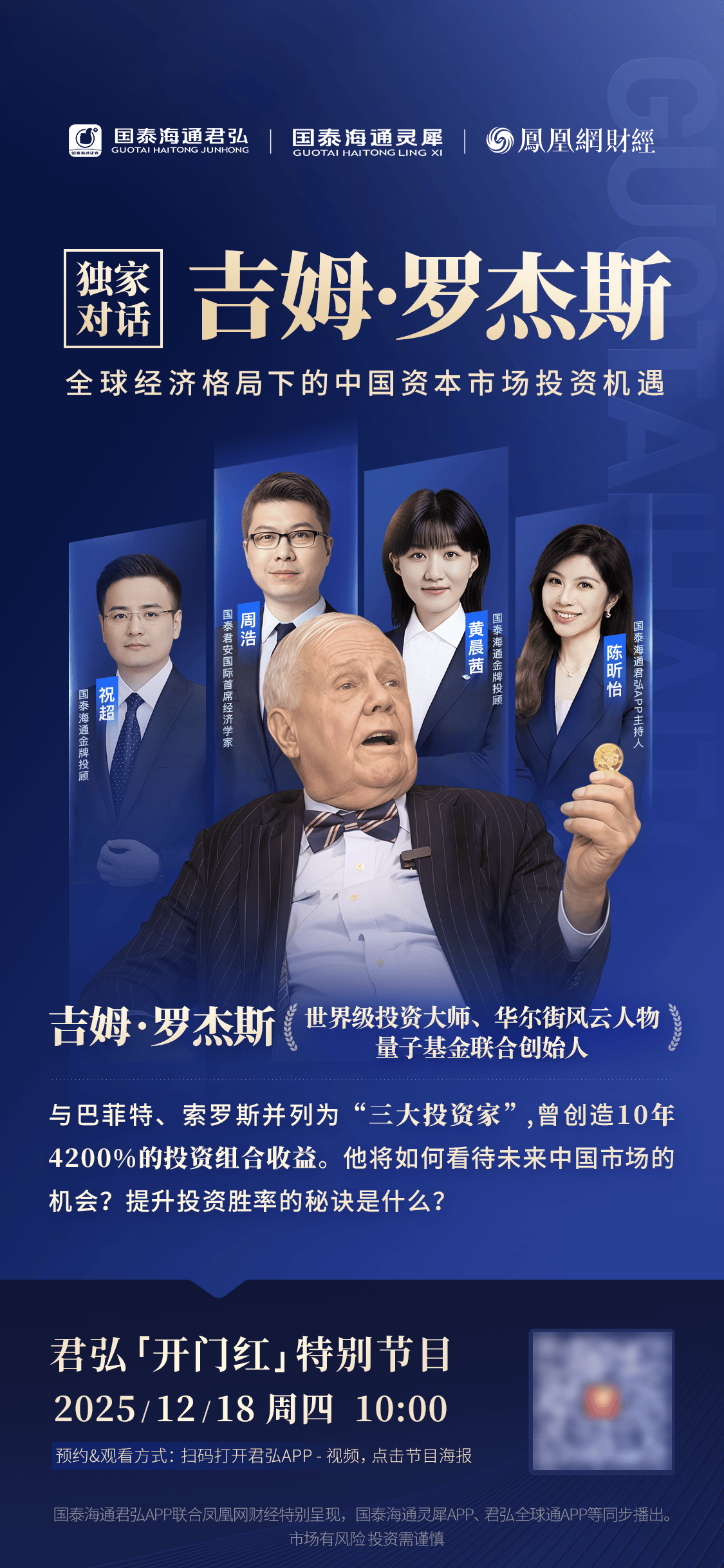
Core Viewpoint - The article emphasizes the importance of the end of the year and the beginning of the new year as a critical juncture for investors to identify investment directions amidst global economic changes and market opportunities [1][6]. Group 1: Event Overview - Guotai Junan launched a special live broadcast titled "Opening Red" on December 18, featuring international investment master Jim Rogers, who has a long-term bullish outlook on the Chinese capital market [1][5]. - The live broadcast was available on multiple platforms, including Guotai Junan Junhong App and Phoenix Finance, aiming to provide insights into Chinese asset opportunities and global economic conditions [5]. Group 2: Jim Rogers' Insights - Jim Rogers, a co-founder of the Quantum Fund, highlighted his optimistic view on China's future, stating that he holds many Chinese stocks and believes China will become the world's most important economy in the next decade [6]. - He identified sectors such as tourism, transportation, and agriculture as promising investment areas benefiting from China's development [6]. - Rogers expressed confidence in the resilience of the Chinese market, noting its stability compared to other markets that have faced downturns [6]. Group 3: Investment Strategies - Rogers advised investors to focus on areas they understand and to avoid being swayed by popular opinions or market noise [7]. - The Guotai Junan Junhong App aims to provide tailored investment strategies based on the insights shared during the broadcast, helping investors seize opportunities in the Chinese capital market by 2026 [7]. Group 4: Service Innovations - Guotai Junan is committed to enhancing investor services through a professional live broadcast matrix and various content offerings, such as "Chief is Here" and "Watch the Market" [8]. - The company is leveraging AI technology to upgrade its Guotai Junan Lingxi App, aiming to provide a more interactive and personalized investment experience for users [9][13]. - The app focuses on four core scenarios: market monitoring, trading, dialogue, and live broadcasting, enhancing service capabilities and decision-making processes for investors [13].
看好中国!国泰海通君弘独家对话罗杰斯,解码全球视野下的投资新机遇
券商中国· 2025-12-18 06:39
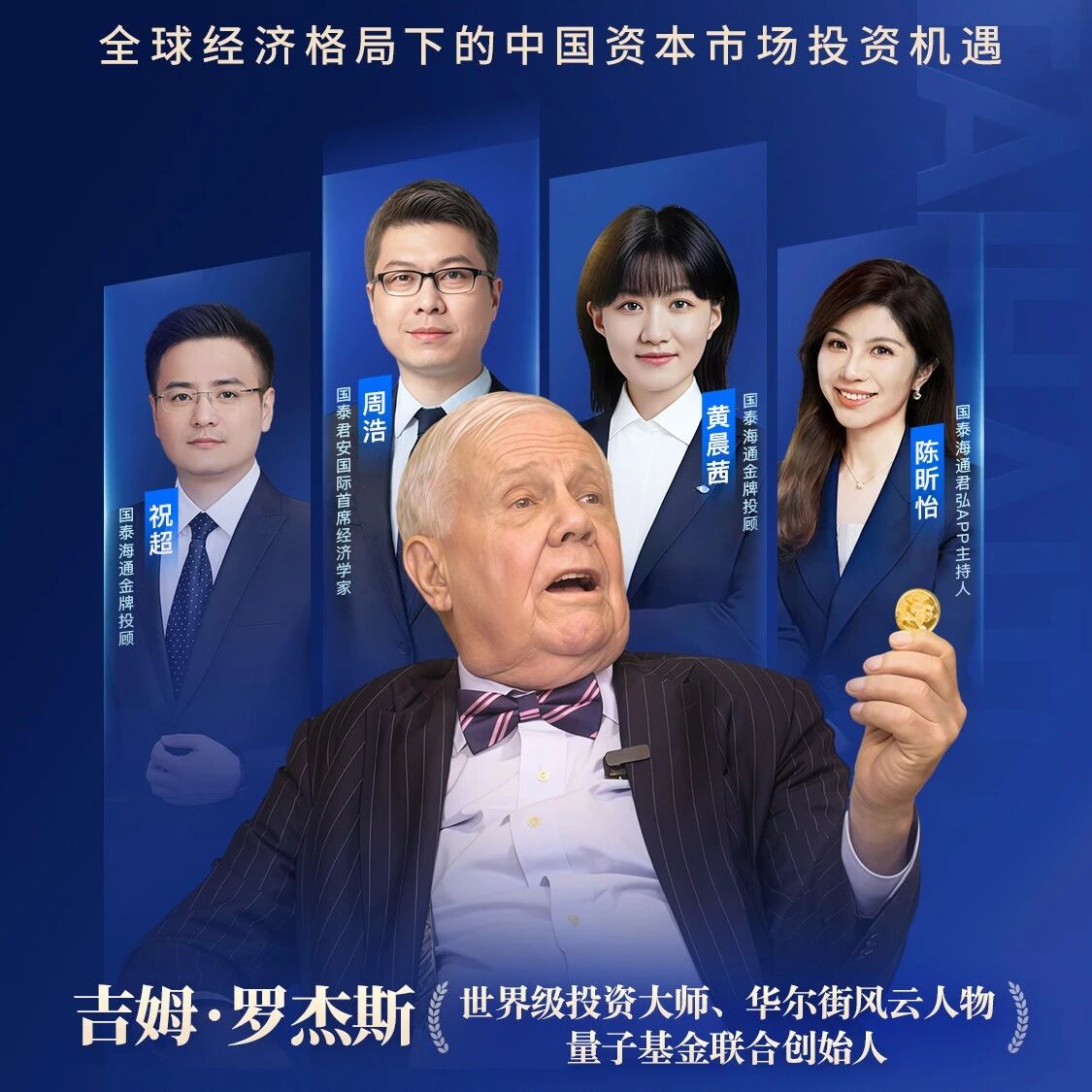
Core Viewpoint - The article emphasizes the importance of global economic changes and market opportunities as a critical point for investors to anchor their investment directions, highlighting the role of Guotai Junan in promoting inclusive finance and enhancing long-term investment success for investors [1]. Group 1: Event Highlights - On December 18, Guotai Junan launched a special live broadcast featuring international investment master Jim Rogers, who has a long-term bullish outlook on the Chinese capital market, discussing key topics such as opportunities in Chinese assets and global economic conditions [2]. - Jim Rogers, a co-founder of the Quantum Fund, is recognized as one of the "three great investors" alongside Warren Buffett and George Soros, having achieved a remarkable 4200% investment portfolio return over ten years [7]. Group 2: Investment Insights - Rogers expressed optimism about China's future, stating that he holds many Chinese stocks and believes China will become the world's most important economy in the next decade, presenting numerous opportunities [8]. - He highlighted sectors such as tourism, transportation, and agriculture as areas of investment interest, particularly those benefiting from China's development [8]. - Rogers noted the resilience of the Chinese market, stating that while many markets have collapsed, China has remained stable, and he plans to increase his holdings in Chinese assets during future market downturns [8]. Group 3: Investment Strategy and Tools - Rogers advised investors to focus on areas they understand and to avoid being swayed by popular advice or market noise, encouraging young investors to concentrate on their strengths for long-term wealth accumulation [9]. - Guotai Junan's app aims to provide Chinese investors with tailored investment strategies based on the insights shared during the live broadcast, helping them seize investment opportunities in the Chinese capital market by 2026 [9]. Group 4: Service Innovations - The special live broadcast reflects Guotai Junan's commitment to enhancing investor services and building a professional live broadcast matrix, showcasing their expertise in macroeconomic and asset allocation discussions [11]. - The Guotai Junan Lingxi App has been upgraded to integrate professional capabilities with smart technology, aiming to become a comprehensive AI investment partner for investors [13]. - The app focuses on four core scenarios: market monitoring, trading, dialogue, and live broadcasting, enhancing service capabilities and providing a seamless experience for users [16].

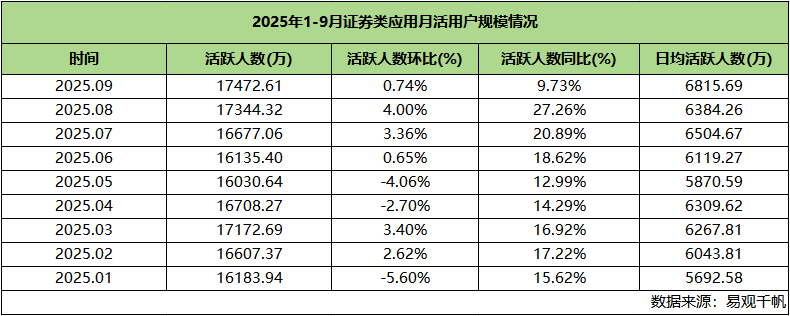
1.74亿人!9月证券服务类App月活再度刷新年内纪录
Shang Hai Zheng Quan Bao· 2025-10-20 23:46
Core Insights - The A-share market remains active, leading to a significant increase in the user base of securities service apps, with monthly active users reaching 174 million in September, a year-on-year increase of 9.73% [1][2]. User Growth - The number of new A-share accounts surged to 2.9372 million in September, marking a year-on-year growth of 60.73% and a month-on-month increase of 10.83%, continuing a trend of four consecutive months of growth [3]. App Performance - In September, the top securities apps maintained a stable ranking, with 11 apps exceeding 6 million monthly active users. Huatai Securities' "Zhangle Caifutong" app led with 11.9517 million users, followed by Guotai Junan's app with 10.2922 million users [4][5]. Third-Party App Landscape - The third-party app market shows significant concentration, with Tonghuashun, Dongfang Caifu, and Dazhihui leading the pack, each maintaining over 10 million monthly active users. Tonghuashun holds the top position with 37.2104 million users, reflecting a year-on-year growth of 8.78% [6][7]. AI Integration - The securities industry is increasingly adopting AI technologies, with several broker apps launching AI-driven features to enhance user experience. Notable examples include Guotai Junan's AI app and Huatai Securities' "AI Zhangle" app, aimed at improving investment advisory services [8]. User Experience Challenges - Despite advancements in AI, user feedback indicates that some features lack practical application and personalization, suggesting room for improvement in tailoring services to individual user needs [8][9]. Strategies for Engagement - Industry experts suggest enhancing app engagement through deeper AI integration, focusing on long-term customer value, and creating a seamless experience across online and offline channels [9].
9月证券服务类App月活再度刷新年内纪录
Shang Hai Zheng Quan Bao· 2025-10-20 23:25
Core Insights - The user base of securities service apps continues to grow, driven by the active A-share market and a significant increase in new account openings [1][2] User Growth and Market Activity - In September, the monthly active users of securities service apps reached 174 million, marking a year-on-year increase of 9.73% and a month-on-month increase of 0.74%, setting a new record for the year [2] - The number of new A-share accounts opened in September was 2.9372 million, representing a year-on-year growth of 60.73% and a month-on-month increase of 10.83%, achieving the fourth consecutive month of growth [2] App Performance and Rankings - The top tier of securities service apps remains stable, with 11 apps exceeding 6 million monthly active users. Huatai Securities' "Zhangle Caifutong" app leads with 11.9517 million users, followed by Guotai Junan's app with 10.2922 million users [2] - 20 brokerage apps saw a year-on-year increase in monthly active users exceeding 10%, with notable performances from smaller brokerages like Industrial Securities' "Yuli Bao," which grew by 35.95% [3] Market Dynamics and User Engagement - The active user growth among different securities service apps showed divergence in September, influenced by the overall market's high volatility and trading volume [3] - The concentration in the third-party app market remains significant, with Tonghuashun, Dongfang Caifu, and Dazhihui leading the pack, each maintaining millions of active users [3] Technological Integration - The securities industry is embracing technological transformation, with many brokerage apps undergoing functional iterations and integrating AI as a core strategy [6] - Several brokerages have launched AI-driven apps to enhance user experience, although there is still room for improvement in terms of practical application and personalization [6] Strategies for Improvement - Industry experts suggest that brokerages can enhance app engagement by deepening AI applications, shifting focus from short-term promotions to long-term customer value, and integrating online and offline services [7]
居民“存款搬家”仍处萌芽阶段 当前股市上行更多受活跃资金驱动
Xin Hua Cai Jing· 2025-08-24 14:50
Core Points - The Shanghai Composite Index has successfully broken through the 3,800-point mark, with trading volume in the Shanghai and Shenzhen markets reaching 2.55 trillion yuan on August 22, indicating a growing "bull market" sentiment and attracting new capital [1][2] - The phenomenon of "deposit migration" among residents is becoming a widely discussed topic, although it is still in its early stages. The recent market uptrend is primarily driven by active funds, with individual investors remaining cautious due to "fear of heights" and profit-taking sentiments [1][5] - The number of new individual investor accounts has surged, with 1.9636 million new accounts opened in July 2025, a year-on-year increase of 71% and a month-on-month increase of 19% [2][4] Market Trends - Since April 2025, the A-share market has entered a four-month upward trend, with the Shanghai Composite Index rising from around 3,360 points to surpass 3,600 points within a month [2] - The average daily trading volume in the A-share market has increased to approximately 2 trillion yuan in August, compared to 1.63 trillion yuan in July and 1.39 trillion yuan in the first half of the year, indicating a gradual improvement in individual investor sentiment [4] - The active user base of securities service applications reached 167 million in July, marking a month-on-month increase of 3.36% and a year-on-year increase of 20.89%, reflecting heightened engagement among investors [3] Investor Behavior - The influx of new accounts is not solely from inexperienced investors; rather, it is primarily driven by experienced retail investors who are familiar with trading processes and are actively seeking to optimize their trading conditions [3] - The trend of "deposit migration" is evidenced by a significant reduction of 1.11 trillion yuan in household deposits in July, while deposits in non-bank financial institutions increased by 2.14 trillion yuan, indicating a shift of savings towards financial markets [5][6] - Despite the trend of deposit migration, the current market uptrend is not predominantly driven by retail investors, as their activity levels remain lower compared to earlier in the year, suggesting lingering caution among this group [7]