多层次REITs市场

Search documents
【市场动态】保险资管ABS,最新成绩单出炉!
Xin Lang Cai Jing· 2026-02-26 10:27
Core Insights - The asset-backed securities (ABS) business of insurance asset management companies is steadily advancing, with five companies applying for a total of 20 ABS projects worth 32.053 billion yuan as of now [1][9] - In 2025, insurance asset management companies submitted nine ABS applications, with six being newly emerging holding-type real estate ABS, indicating a strong preference for this category [3][12] Group 1: ABS Applications and Approvals - As of the end of 2025, five insurance asset management companies have cumulatively submitted 20 ABS projects to the Shanghai and Shenzhen stock exchanges, totaling 32.053 billion yuan [2][10] - In 2025, nine ABS applications were approved or received feedback, amounting to 12.613 billion yuan, with Taibao Asset submitting five projects worth 6.809 billion yuan, Renbao Asset three projects worth 5.519 billion yuan, and Taikang Asset one project worth 0.285 billion yuan [2][10] - By the end of 2025, Taibao Asset led with nine submissions totaling 13.014 billion yuan, followed by Renbao Asset with five submissions totaling 12.049 billion yuan, and Taikang Asset with three submissions totaling 3.754 billion yuan [10][11] Group 2: Rise of Holding-Type Real Estate ABS - Insurance asset management companies have submitted a total of seven holding-type real estate ABS applications, with six submitted in 2025, accounting for two-thirds of the total ABS applications that year [3][12] - The first holding-type real estate ABS managed by an insurance asset management company was submitted by Renbao Asset in 2024, marking a significant innovation in the market [3][12] - The latest holding-type real estate ABS project, managed by Taibao Asset, was successfully established on February 13, 2025, with a scale of 1.1942 billion yuan, attracting diverse market investors [4][13] Group 3: Strategic Development and Market Positioning - Insurance asset management companies are focusing on the development of holding-type real estate ABS, which aligns with their long-term investment strategies and stable cash flow requirements [5][6] - The insurance asset management sector is characterized by a unique positioning that combines product management and investment allocation, allowing for a more integrated approach to ABS business [7][15] - The collaboration between insurance asset management and other business units within insurance groups enhances the effectiveness of ABS projects, leveraging the strengths of insurance capital as cornerstone investors [8][16]
2025年不动产ABS市场分析:发行持续活跃,资产类别多样化,多层次REITs市场稳步构建
Lian He Zi Xin· 2026-01-29 13:12
Investment Rating - The report indicates a stable investment rating for the real estate ABS market in 2025, highlighting a growth pattern in equity products and a steady performance in debt products [2]. Core Insights - The 2025 Chinese real estate ABS market is characterized by a stable growth in debt products and explosive growth in equity products, driven by the need to revitalize existing assets and reduce liabilities [2][8]. - The CMBS/CMBN and REITs continue to dominate the market, with a low issuance rate and an expanding asset matrix [2][8]. - The report emphasizes the importance of regulatory policies in constructing a multi-layered REITs market, enhancing due diligence standards, and improving transparency [4][5][6][7]. Market Issuance Situation - In 2025, CMBS/CMBN and REITs accounted for 9.57% of the total ABS issuance, with a total issuance scale of 217.88 billion, reflecting a 9.06% decrease year-on-year [9][12]. - The number of CMBS/CMBN issuances increased by 43.55% to 89 units, while REITs saw a 21.05% decrease to 60 units [12][11]. - The report notes a structural shift where CMBS/CMBN is favored due to its simpler transaction structure and quicker approval process, aligning with the needs of local government financing [13]. Asset Type Breakdown - The primary asset types in 2025 included infrastructure, office properties, mixed assets, and commercial properties, which together accounted for 84.56% of the issuance [21]. - Infrastructure assets, due to their large scale and stable cash flow, continue to be a significant contributor to the issuance volume [21]. Issuance Rates and Spreads - The average issuance rate for CMBS/CMBN was 2.55%, while for REITs it was slightly lower at 2.46% [25]. - The average issuance spread for CMBS/CMBN was 1.10%, and for REITs, it was 1.01%, indicating a stable risk premium for quality real estate ABS [25]. Actual Financing Entities - Local state-owned enterprises were the primary financing entities, accounting for 67% of the issuance, driven by the need to revitalize existing assets [30]. - The report highlights a significant concentration of issuance in major cities like Beijing, Shanghai, and Guangdong, indicating regional disparities in market activity [28]. Credit Performance - The credit ratings of newly issued products remained highly concentrated at AAAsf, with 97% of the new issuances falling into this category [31]. - The report notes a marginal improvement in overall credit risk, with a decrease in default amounts by 18.3% compared to 2024 [34]. Future Outlook - The report anticipates a continued focus on enhancing the multi-layered market system, with policies aimed at expanding asset boundaries and improving regulatory mechanisms [51]. - The growth of holding-type real estate ABS is expected to lead the market, serving as a key growth point and connecting private equity cultivation with public REITs [52]. - A shift from credit reliance to operational capability is expected, with an increasing participation of private enterprises and a more balanced issuer structure [53].
中信证券:予华润万象生活(01209)“买入”评级 红利成长兼备 规模效率双升
智通财经网· 2026-01-15 03:19
Core Viewpoint - CITIC Securities has issued a "buy" rating for China Resources Vientiane Life (01209), highlighting the company's ability to seize opportunities and expand its business model and profitability [1] Group 1: Business Growth and Projections - The company is expected to achieve an annualized revenue and performance growth rate (CAGR) of over 20% in its commercial management segment during the 14th Five-Year Plan period (2025-2030) [1] - Overall, the company is projected to realize an approximate 15% annualized performance growth during the 14th Five-Year Plan period, compared to an estimated CAGR of 37% during the 13th Five-Year Plan period (2020-2025) [1] Group 2: Market Position and Competitive Advantage - The company's historical returns on managed assets facilitate its ability to secure high-quality orders with favorable planning conditions [1] - The increase in market share within individual cities is positively correlated with same-store sales growth, creating a virtuous cycle [1] - As the company expands its management scale, it is likely that its same-store sales growth will outpace that of the retail sector [1] Group 3: Industry Environment - The commercial management industry is currently experiencing the most favorable policy environment in its history [1] - The development of a multi-tiered REITs market is expected to attract more potential clients to the industry [1]

REITs行业联盟秘书长王刚:上市规模超2100亿元,市场步入“扩容与提质”新阶段
Zhong Guo Jing Ying Bao· 2026-01-14 08:32
Core Viewpoint - The rapid development of China's REITs market since the first public REITs were launched in June 2021, with a total issuance scale of 213.5 billion yuan by the end of 2025, indicates a significant shift towards commercial real estate becoming a key component of the REITs framework [1][2]. Group 1: Market Development - As of the end of 2025, 78 public REITs have been issued, covering ten categories of assets, with a total issuance scale of 213.5 billion yuan [1]. - The inclusion of commercial real estate in the public REITs pilot program is expected to enhance the asset management and operational capabilities within the industry, transitioning from "holding assets" to "activating existing assets" [1][3]. Group 2: Potential Market Size - The potential market for commercial real estate REITs is substantial, with estimates suggesting that the stock of office buildings, retail, and hotels exceeds 40 trillion yuan; even a 5%-10% securitization could create a market space worth trillions [4]. Group 3: Institutional Investment - Institutional investors, including insurance funds and wealth management products, are increasingly allocating to REITs due to their stable rental income and cash flow, which align with the long-term liability profiles of these funds [6]. Group 4: Governance Mechanisms - Recommendations for improving governance mechanisms in public REITs include transitioning from external to internal management, establishing a decision-making structure similar to private equity funds, and allowing the formation of joint venture REIT management companies [7]. Group 5: Multi-tiered Market Structure - The development of a multi-tiered REITs market is crucial, encouraging the integration of various asset types and management capabilities to facilitate the entry of high-quality assets into the public REITs market [8].
申万宏源荣获“机构间REITs市场年度优秀投资机构”等多项荣誉
申万宏源证券上海北京西路营业部· 2026-01-09 05:22
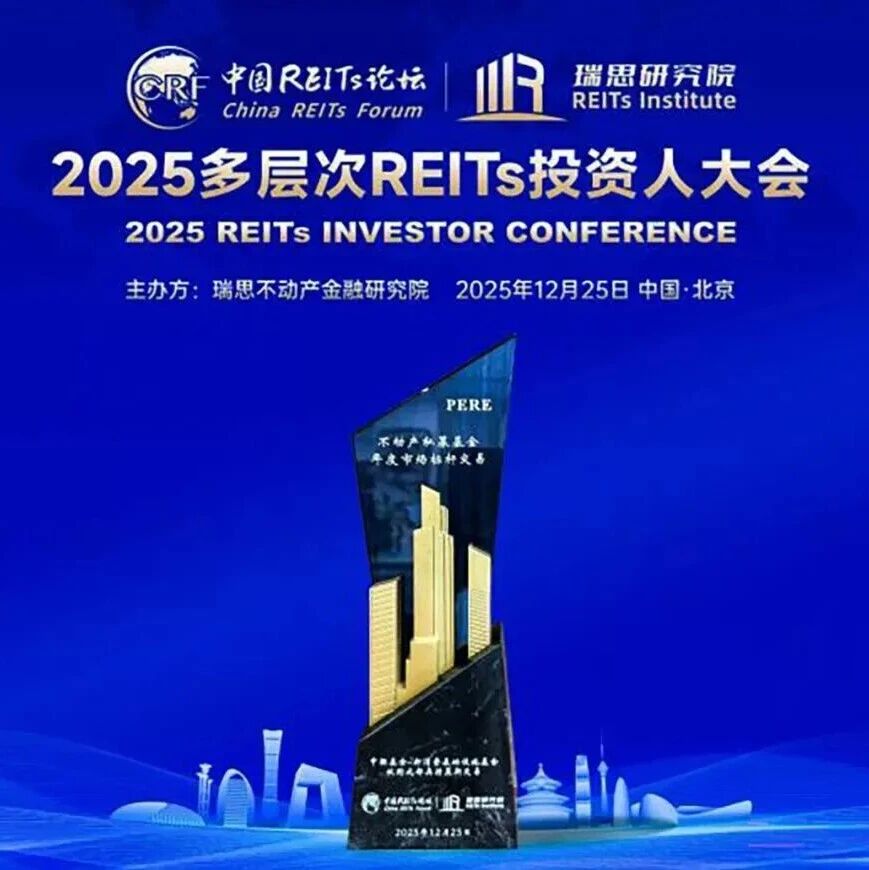
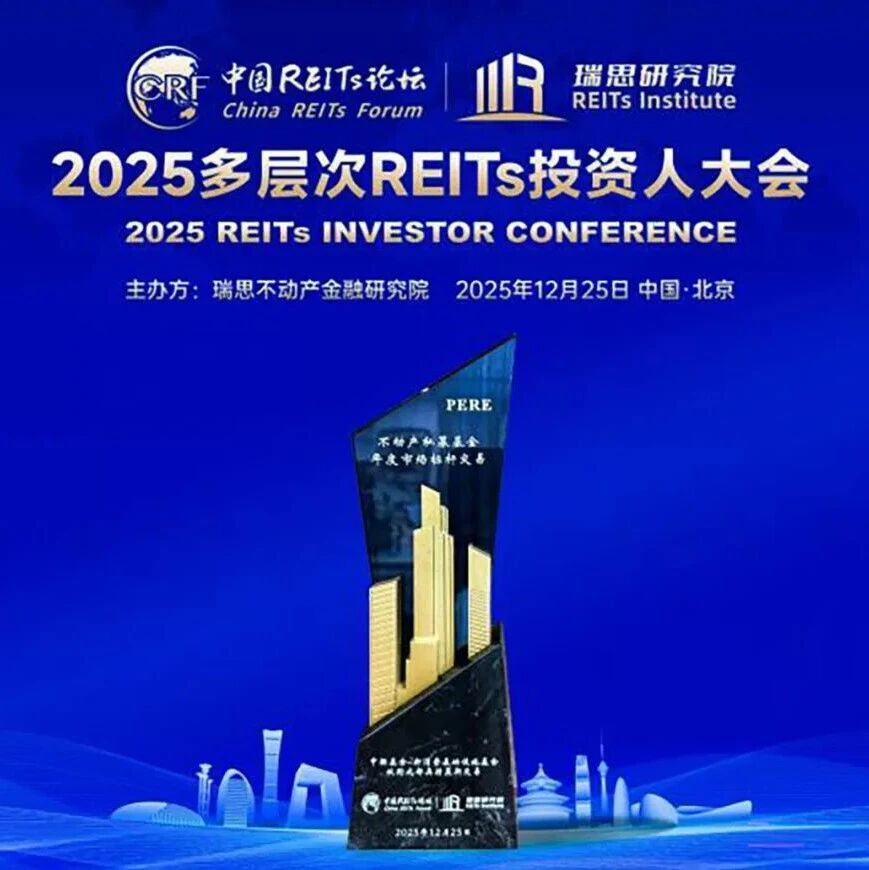
Core Viewpoint - The article highlights the achievements of Shenwan Hongyuan Securities and its subsidiary Hongyuan Huizhi at the "2025 Multi-level REITs Investor Conference Annual Meeting," emphasizing their recognition as leading institutions in the REITs market and their contributions to the development of the multi-level REITs market in China [2][4]. Group 1 - Shenwan Hongyuan Securities was awarded "Annual Excellent Investment Institution in Inter-Institutional REITs Market," while Hongyuan Huizhi received the title of "Annual Excellent Investment Institution in Real Estate Private Fund Market" [2]. - The "Zhonglian Fund - New Consumption Infrastructure Fund Acquisition of Chengdu Outlets Project," in which Hongyuan Huizhi participated, was recognized as the "Annual Market Benchmark Transaction in Real Estate Private Fund Market" [2]. - The evaluation was organized by the China REITs Forum and the Ruisi Real Estate Financial Research Institute, aimed at recognizing significant contributions in public REITs, inter-institutional REITs, and real estate private funds [4]. Group 2 - Shenwan Hongyuan has been deeply involved in the construction of China's multi-level REITs market, covering public REITs, inter-institutional REITs, and real estate private funds, leveraging its "investment + investment banking" synergy [4]. - Hongyuan Huizhi focuses on investing in core asset categories such as affordable rental housing, industrial plants, shopping centers (including outlets), and data centers, employing diverse strategies to enhance the defensive capability and value elasticity of its investment portfolio [5]. - Shenwan Hongyuan Securities' FICC division acts as a market maker for all public REITs and several inter-institutional REITs products, providing professional support to enhance market liquidity and reasonable pricing [5].


申万宏源获多项年度荣誉 多层次REITs市场投资能力受肯定
申万宏源证券上海北京西路营业部· 2026-01-08 02:49
Core Viewpoint - The article highlights the achievements of Shenwan Hongyuan in the multi-level REITs market, showcasing its recognition as a leading investment institution in various categories at the 2025 Multi-level REITs Investor Conference [1][4]. Group 1: Awards and Recognition - Shenwan Hongyuan's FICC division and Hongyuan Huizhi received multiple honors at the conference, including "Outstanding Investment Institution in the Inter-Institutional REITs Market" and "Outstanding Investment Institution in the Real Estate Private Fund Market" [1]. - The "Zhonglian Fund - New Consumption Infrastructure Fund's acquisition of Chengdu Outlets Project" was recognized as the "Benchmark Transaction of the Year in the Real Estate Private Fund Market" [1]. Group 2: Market Contribution - The evaluation was co-hosted by the China REITs Forum and the Ruisi Real Estate Financial Research Institute, aimed at recognizing significant contributions in public REITs, inter-institutional REITs, and real estate private funds [4]. - Shenwan Hongyuan has been deeply involved in the construction of China's multi-level REITs market, covering public REITs, inter-institutional REITs, and real estate private funds, leveraging its "investment + investment banking" synergy [4]. Group 3: Investment Strategy - In the real estate private fund sector, Hongyuan Huizhi focuses on core asset categories such as affordable rental housing, industrial plants, shopping centers (including outlets), and data centers, employing diverse strategies to enhance portfolio resilience and value elasticity [5]. - The FICC division acts as a market maker for all public REITs and several inter-institutional REITs products, providing professional support for market liquidity and pricing [5]. Group 4: Future Outlook - Looking ahead, Shenwan Hongyuan aims to implement major decisions from the central government, focusing on technology finance, green finance, inclusive finance, pension finance, and digital finance to support national development strategies [5].
中伦助力中信金石及华夏股权成功设立华润置地购物中心私募股权投资基金
Sou Hu Cai Jing· 2026-01-01 01:23
Group 1 - The core viewpoint of the news is the establishment of two funds, the Runying Jinshi Fund and the Runying Huaxia Fund, by CITIC Jinshi Fund Management Co., Ltd. and Huaxia Equity Investment Fund Management (Beijing) Co., Ltd. in collaboration with China Resources Land Holdings Co., Ltd., with a total fundraising scale of 3 billion RMB [2] - The funds are categorized as Pre-REITs strategy funds, focusing on investing in high-quality shopping center assets that are either operational or under construction under China Resources Land, with an emphasis on exiting through public REITs [3] - The project is supported by Zhonglun as the legal advisor, providing comprehensive legal services throughout the fund establishment and investment process, with a dedicated project team led by partners Wei Yidong, Liu Hongjiao, and Xue Yi [3][5] Group 2 - The collaboration aims to create a successful model of "private equity funds + leading industry players," contributing to the development of a multi-tiered REITs market in China [3] - The fund's investment strategy reflects a growing trend in the real estate sector towards innovative financing solutions and asset management approaches [3]

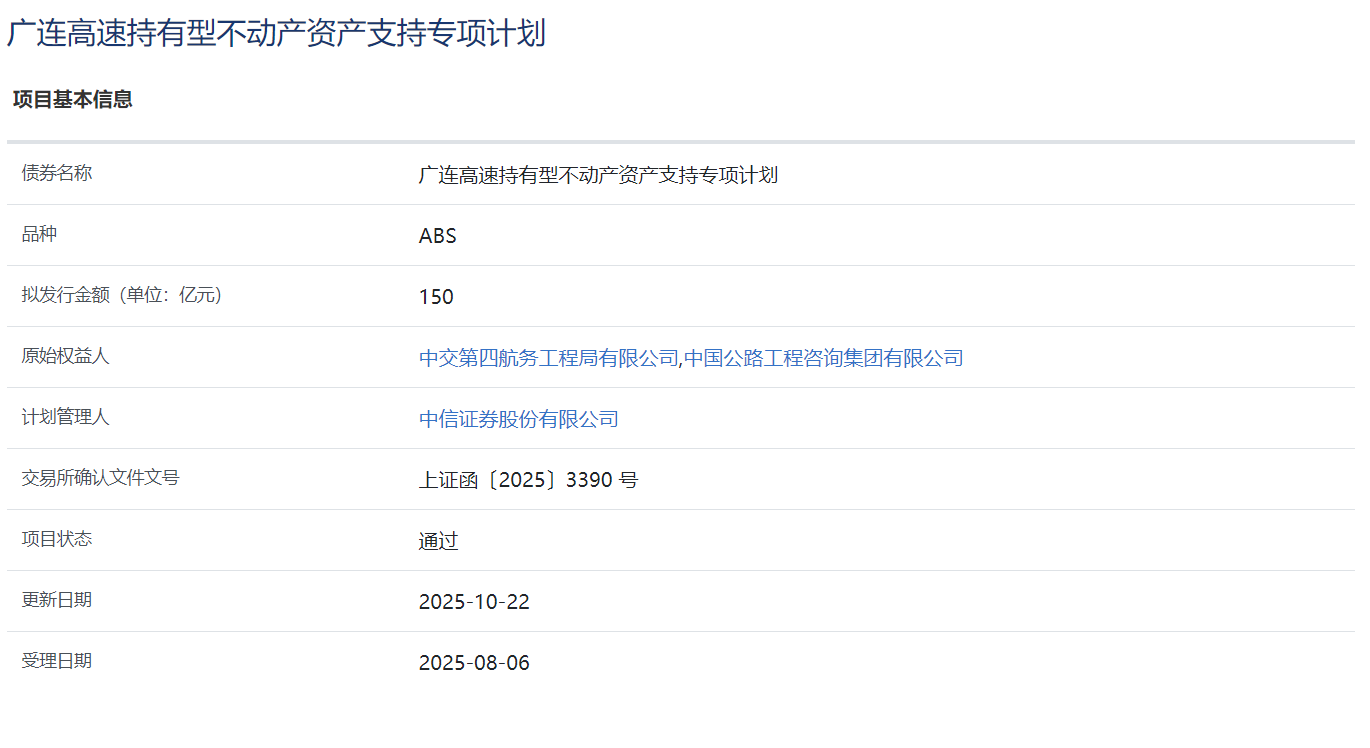
150亿广连高速项目!上交所发行全市场最大机构间REITs
2 1 Shi Ji Jing Ji Bao Dao· 2025-12-09 11:08
Core Viewpoint - The successful issuance of the Guanglian Expressway Real Estate Asset-Backed Securities (ABS) project, amounting to 15 billion yuan, marks a significant milestone as the largest single issuance and the first to receive approval from policy banks, showcasing a new paradigm for infrastructure financing in the Greater Bay Area [1][5][6]. Group 1: Project Overview - The Guanglian Expressway, connecting Guangzhou and Lianzhou, spans 231.7 kilometers and is a crucial part of Guangdong's highway network, enhancing strategic connectivity within the region [3]. - The project was officially accepted by the Shanghai Stock Exchange on August 6, 2025, and received approval on October 22, 2025, with CITIC Securities acting as the plan manager [3][4]. Group 2: Market Impact - The issuance of 15 billion yuan attracted over 10 core institutional investors, including insurance funds and asset management companies, indicating strong market confidence in the underlying asset quality [4]. - The project features an innovative performance assessment mechanism and liquidity support services, which are expected to enhance trading activity and pricing efficiency in the secondary market [4][5]. Group 3: Industry Trends - The market for holding-type real estate ABS has been expanding rapidly, with a total issuance of 22 projects amounting to 50.225 billion yuan by the end of November 2023, indicating a robust growth trajectory [8][9]. - The diverse asset classes within the ABS market, including commercial properties and infrastructure, provide a wide range of investment opportunities, contributing to the market's inclusivity [8][9]. Group 4: Future Outlook - Analysts believe that the holding-type real estate ABS market has significant growth potential, supported by favorable policies and a strong supply of quality projects, which could complement existing REITs structures [9].
从Pre-REITs到持有型不动产ABS:我国REITs产品的发展
新世纪评级· 2025-12-07 06:59
Group 1: Report Industry Investment Rating - There is no information about the report industry investment rating in the provided content. Group 2: Core Views of the Report - REITs are investment funds that pool capital through issuing shares or beneficiary certificates, with funds managed by specialized institutions and returns distributed to investors. Originating in the US in the 1960s, they have since expanded globally, providing ordinary investors access to the real - estate market [4]. - China's REITs market, initiated in 2014 with the first quasi - REITs product, has developed a multi - level market including Pre - REITs, quasi - REITs, infrastructure public REITs, and hold - type real - estate ABS, offering diverse investment options and meeting the needs of both financiers and investors [2]. - These REITs products share commonalities in tax planning, capital weakening structures, and financial statement optimization, but also have significant differences in product positioning, categories, rating roles, investor types, and underlying asset types [49][57]. - Looking ahead, China's multi - level REITs market will continue to develop, with infrastructure public REITs expanding through the expansion mechanism, quasi - REITs maintaining their characteristics, and hold - type real - estate ABS filling market gaps [65]. Group 3: Summary by Directory 1. Introduction - REITs are investment funds that pool capital from investors, managed by specialized entities, and distribute returns proportionally. They originated in the US in the 1960s and have grown globally after the 1986 tax reform [4]. 2. China's Multi - level REITs Market (1) Pre - REITs Products - Pre - REITs target infrastructure/real - estate assets that are not yet eligible for public or quasi - REITs but have potential for future development. They use private investment vehicles and aim to exit through public REITs or quasi - REITs [5]. - The development of Pre - REITs is driven by the strict entry requirements of public and quasi - REITs. For example, public REITs have requirements on asset ownership, cash - flow stability, and operator creditworthiness [6]. - The Huaxi Zhangjiang Guangdayuan project is a successful case where Pre - REITs achieved exit through public REITs. During the incubation period, the project adjusted tenant structure and increased revenue to meet public REITs requirements [8][9]. (2) Quasi - REITs Products - As of September 2025, 309 quasi - REITs worth 608.977 billion yuan were issued in China. They are important in the ABS market, with a common dual - SPV structure and can be classified into equity - biased and debt - biased types [14]. - The dual - SPV structure involves an asset - backed special plan and a private fund/trust. For projects with existing debt, the private fund acquires project company equity and repays the debt; for projects without debt, an additional SPV is introduced [15][19]. - Equity - biased and debt - biased quasi - REITs differ in product term, repayment method, LTV, location, and credit enhancement measures [21][24]. (3) Hold - type Real - estate ABS - Hold - type real - estate ABS fills the gap between quasi - REITs and infrastructure public REITs, targeting projects that do not meet public REITs criteria but can operate independently of the issuer's credit. As of September 2025, 14 such products worth 2.1381 billion yuan were listed [25][26]. - It emphasizes asset credit and equity attributes, with a simple transaction structure, long - term nature, and an open - exit mechanism. It also allows higher leverage and does not require mandatory credit rating [28][29]. (4) Infrastructure Public REITs - Since the launch of the first 9 infrastructure public REITs in 2021, as of September 2025, 75 public REITs have been listed in various infrastructure sectors [34]. - They adopt a "public fund + asset - backed security" dual - SPV structure, which inherits and develops from quasi - REITs. The public fund can invest 80% of its assets in infrastructure asset - backed securities and can borrow for project operations [35][36]. - The equity + debt structure can be constructed in multiple ways, including project company capital reduction, accounting policy adjustment, and deferred payment of equity transfer fees [37]. 3. Commonalities of Various REITs Products (1) Tax Planning - REITs product construction may incur additional tax costs, mainly during the real - estate restructuring phase. The state has issued policies to address major taxes such as land value - added tax, VAT, and corporate income tax [49][50]. (2) Capital Weakening Structure - REITs products use an equity + debt structure to achieve capital weakening and take advantage of tax shields. However, there are regulatory limits on the debt - to - equity ratio [54]. (3) Financial Statement Optimization - All REITs products have the potential to optimize financial statements. Quasi - REITs can use off - balance - sheet and on - balance - sheet arrangements, while hold - type real - estate ABS and infrastructure public REITs can reduce leverage through asset sales [56]. 4. Differences among Various REITs Products (1) Product Positioning - Pre - REITs are non - standard products, acting as a "reservoir" for public REITs. Quasi - REITs are standardized fixed - income products, and hold - type real - estate ABS can avoid the high entry barriers of public REITs [58]. (2) Product Categories - Quasi - REITs are divided into equity - biased and debt - biased types. Hold - type real - estate ABS can be evaluated based on cash - flow stability, and infrastructure public REITs are divided into property - right and franchise - right types [59]. (3) Rating Roles - Pre - REITs and infrastructure public REITs do not require rating agencies. Quasi - REITs need credit ratings, while hold - type real - estate ABS can have investment ratings at investors' request [60]. (4) Investor Types - Pre - REITs are suitable for institutional investors with industrial backgrounds. Quasi - REITs are for investors seeking fixed income. Hold - type real - estate ABS attracts long - term institutional investors, and infrastructure public REITs have a diverse investor base [61]. (5) Underlying Asset Types - Pre - REITs' underlying assets are similar to those of infrastructure public REITs but are less mature. Quasi - REITs have a wide range of underlying assets, while hold - type real - estate ABS and infrastructure public REITs have more specific requirements [62]. 5. Summary and Outlook - China has established a closed - loop REITs business model, covering fixed - income and equity products, which meets the needs of market participants and is a financial innovation within the existing legal framework [64]. - In the future, infrastructure public REITs will grow through expansion, quasi - REITs will maintain their position, and hold - type real - estate ABS will fill market gaps [65].
发行首单消费类持有型不动产ABS 新城控股多元融资“补血”
Xin Jing Bao· 2025-12-01 14:45
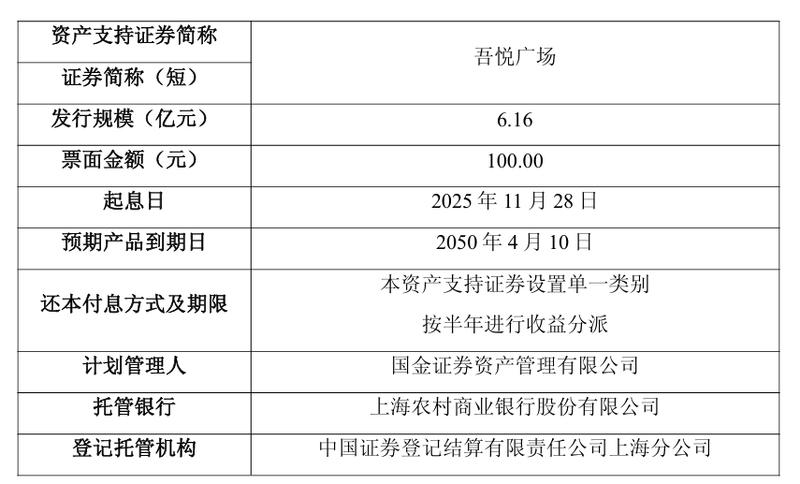
Core Viewpoint - New City Holdings has launched the "Wuyue Plaza Holding Real Estate Asset-Backed Special Plan," marking the first issuance of consumer-type holding real estate ABS in China and the first by a private A-share listed company, setting a dual record in the industry [1][2]. Group 1: Issuance Details - The issuance scale of the ABS is 616 million yuan, with a corresponding debt portion of 410 million yuan, and a product term of approximately 25 years [1][4]. - The underlying asset for this ABS is the Wuyue Plaza located in the core area of the Qingpu District, which serves over 400,000 residents from more than 160 surrounding communities [2]. Group 2: Market Impact and Significance - This issuance is expected to enhance New City Holdings' asset liquidity and optimize its capital structure, providing a new financing pathway for the commercial real estate sector [2][3]. - The ABS includes a continuous fundraising mechanism, allowing for the ongoing acquisition of quality assets, thus promoting sustainable development of the product [2]. Group 3: Financial Performance - As of Q3 2025, New City Holdings has established 205 comprehensive projects across 141 cities, with 176 operational and a high occupancy rate of 97.7% [2]. - The total foot traffic at Wuyue Plaza reached 950 million, with total sales exceeding 51.5 billion yuan, both showing a year-on-year increase of 16% [3]. Group 4: Broader Financing Strategy - The issuance is part of a broader direct financing plan approved in May 2025, allowing for up to 20 billion yuan in various financing instruments, including ABS and REITs [5][6]. - New City Holdings has engaged in multiple financing activities this year to bolster liquidity, including issuing bonds and restarting dollar bond issuance to manage upcoming debt obligations [6].