
太阳能技术

Search documents
第一太阳能第四季度盈利不及预期 全年指引疲软
Xin Lang Cai Jing· 2026-02-25 14:21
太阳能技术公司第一太阳能盘前股价下跌17%,因第四季度盈利不及预期且全年指引疲软。该公司当季 每股收益4.84美元,低于伦敦证券交易所集团调查分析师预期的5.15美元;营收为16.8亿美元,高于预 期的15.6亿美元。但全年营收指引为49亿至52亿美元,显著低于预期的61.2亿美元。 责任编辑:张俊 SF065 太阳能技术公司第一太阳能盘前股价下跌17%,因第四季度盈利不及预期且全年指引疲软。该公司当季 每股收益4.84美元,低于伦敦证券交易所集团调查分析师预期的5.15美元;营收为16.8亿美元,高于预 期的15.6亿美元。但全年营收指引为49亿至52亿美元,显著低于预期的61.2亿美元。 责任编辑:张俊 SF065 ...

达沃斯“捕获”中国企业家:出海不当“搬运工”,主导全球汽车充电规则,牵手英伟达不被“低估”|一探
Di Yi Cai Jing· 2026-01-23 01:17
Core Viewpoint - The article highlights the current state of Chinese companies going global, emphasizing the importance of effectively communicating their technological advancements and innovation stories to the world [1] Group 1: Company Insights - BYD's Executive Vice President, Li Ke, stated that the company's plug-in hybrid technology can replace traditional fuel vehicles on a one-to-one basis, and its fast-charging technology allows electric vehicles to charge at speeds comparable to refueling [1] - Li Yifan, CEO of Hesai Technology, noted that hard tech companies often struggle with external communication, leading to an underestimation of China's technological capabilities by international partners [1] - Longi Green Energy's Vice President and North America President, Luo Xin, emphasized that the company's competitive edge lies not only in solar technology but also in creating a comprehensive clean energy system that includes photovoltaics, energy storage, and hydrogen energy [1] Group 2: Industry Trends - The "wild capture" interviews reveal a common challenge for Chinese companies: how to better narrate their innovation stories to the world while possessing strong technological advantages [1] - The shift from being "underestimated" to "actively communicating" reflects a new phase for Chinese companies in technology export, focusing on value dissemination rather than just product output [1] - Chinese enterprises are learning to articulate their core strengths in a language that resonates globally, marking a significant evolution in their international engagement strategies [1]




超3GWh!比亚迪、远景等签储能协议
行家说储能· 2025-09-26 09:30
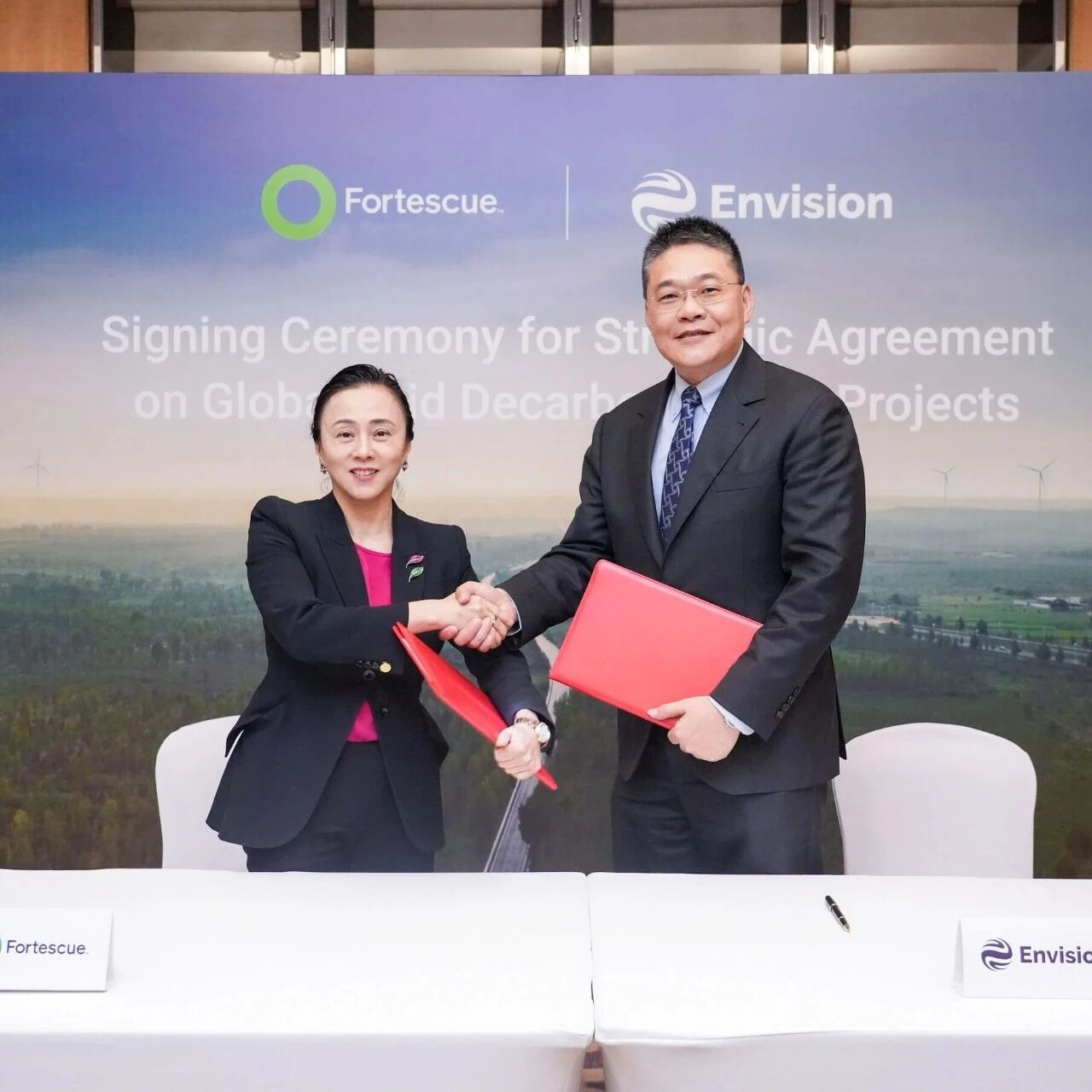
Core Viewpoint - The article discusses significant developments in the energy storage sector, highlighting collaborations between major companies to enhance clean energy systems and achieve decarbonization goals. Group 1: Fortescue Collaborations - Fortescue has formed a global alliance to establish a cost-effective, 24/7 clean energy system, aiming to accelerate global industrial decarbonization [2] - Fortescue has selected Envision Energy as a strategic partner in wind and energy storage, leveraging its expertise to support Fortescue's electrification and 2030 net-zero target [2] - Fortescue has signed agreements with BYD and LONGi Green Energy for energy storage solutions and solar technology, respectively, to support its decarbonization efforts in the Pilbara region [4] Group 2: Envision Energy Supply Agreement - Envision Energy has signed a supply agreement with Fortescue to provide 132MW turbines for a large wind project in Western Australia [4] - Fortescue plans to deploy 2-3GW of wind and solar power generation along with large-scale battery storage [5] Group 3: Rui Pu Lan Jun Developments - Rui Pu Lan Jun has signed a supply agreement with Energy Vault to deliver a 3GWh energy storage system by 2026, expanding their collaboration in Australia, the US, and Europe [6][7] - The cumulative supply scale of Rui Pu Lan Jun and Energy Vault has exceeded 1.5GWh, with successful projects delivered in California and Texas [7] - Rui Pu Lan Jun has secured four GWh-level storage orders in 2025, totaling 26.5GWh [8] Group 4: Summary of Collaborations - A summary table outlines various collaborations by Rui Pu Lan Jun, including agreements with Energy Vault, Japan's Sanwa Kogyo, and others, totaling over 26.5GWh in supply commitments [10]

中方还没走,欧盟就收到美国罚单,马克龙连提四个请求,事情不简单
Sou Hu Cai Jing· 2025-07-08 10:59
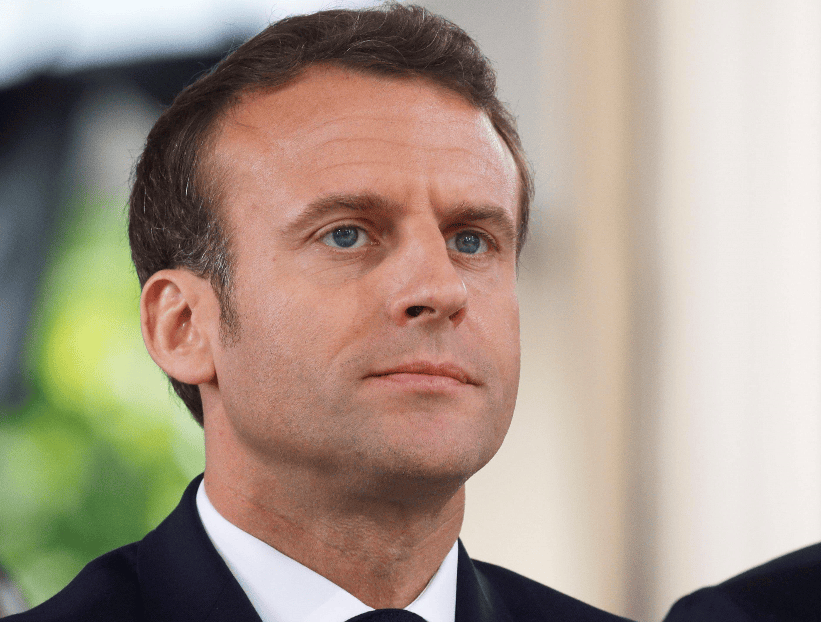
Group 1 - The article highlights the escalation of trade tensions between the US and the EU, with the US threatening a 17% tariff on EU agricultural exports, which could severely impact major agricultural exporting countries like France and the Netherlands [1][3] - The ongoing trade disputes have seen the US impose various tariffs on the EU, including a 20% "reciprocal tariff," 25% "automobile tax," and 25% "steel and aluminum tax," leading to significant disruptions in EU industries and affecting profits and market shares [3] - French President Macron has expressed the need for stronger coordination with China on international economic and financial policies, especially in light of global challenges such as economic recovery, climate crisis, and public health issues [3][4] Group 2 - Despite progress in Sino-French economic cooperation, there remain imbalances in certain sectors, prompting Macron to seek increased Chinese investment in France to foster a more balanced economic relationship [4] - The EU faces challenges in forming a unified response to US trade threats due to the diverse interests of its member states and complex decision-making processes [5] - There are existing tensions in EU-China relations, including disputes over electric vehicle tariffs and China's policies on rare earth exports, alongside recent anti-dumping measures imposed by China on EU products [5][8] Group 3 - The article emphasizes the potential for cooperation between China and the EU in areas such as green energy, digital economy, and technological innovation, which could enhance global technological development [5] - China maintains a principle of peaceful coexistence and mutual benefit in its relations with the EU, advocating for the removal of unreasonable sanctions to foster a conducive environment for cooperation [8]
深度丨福山对话彼得蒂尔:关于经济不平等、政府效率、技术进步和全球化
Z Finance· 2025-03-04 05:22
Core Viewpoint - The discussion highlights the increasing wealth inequality in the U.S., the inefficiency of government, and the stagnation of technological progress, suggesting that these issues are interconnected and may lead to significant societal consequences [2][3][6]. Summary by Sections Wealth Inequality - The disparity between the wealth of the top 1% and the bottom 99% has been growing at an unprecedented rate, potentially surpassing levels seen in the early 20th century [2][3]. - The right-wing has largely ignored this issue, either denying its existence or deeming it unimportant, which is seen as a significant blind spot [2][3]. Government Inefficiency - Government efficiency has deteriorated, with rising expenditures failing to yield proportional improvements in governance [3][4]. - Examples include the prolonged construction times for infrastructure projects compared to historical benchmarks, indicating a decline in operational effectiveness [3][4]. Technological Stagnation - There is a concern that technological progress has slowed since the late 1960s, with significant innovations becoming rare outside of specific sectors like computing and finance [6][7]. - The stagnation in technological advancement is linked to broader economic growth issues, leading to political cynicism and a zero-sum perception of economic competition [7][10]. Globalization's Impact - Globalization has created a "winner-takes-all" environment, adversely affecting the middle class and white-collar workers, particularly through labor arbitrage with countries like China [12][20]. - The benefits of globalization have not been evenly distributed, leading to increased inequality and social unrest [12][20]. Education and Innovation - The education system is criticized for perpetuating a bubble, with many students accumulating debt without securing corresponding employment opportunities [27][29]. - There is a call for a reevaluation of educational investments and a shift towards recognizing non-college career paths as viable options [27][29]. Future Considerations - The discussion raises philosophical questions about the role of government in planning for the future, particularly in the context of technological innovation and economic policy [15][17]. - The potential for long-term societal issues stemming from demographic changes and technological stagnation is emphasized, suggesting a need for proactive policy adjustments [23][24].

迪拜商业论坛:新跳板与新机会
晚点LatePost· 2024-08-22 11:44
出海面临着挑战,但新的落脚点正在出现。 "中国公司在迪拜商会的会员中,扮演了越来越重要的角色。" 在 8 月 21 日开始的迪拜商业论坛 - 中国活动中,迪拜商会总裁兼首席执行官穆罕默德·阿里·本·拉希德·卢 塔阁下在演讲中说,截至 2024 年上半年末,已经有 5400 家中国公司注册成为迪拜商会的活跃成员。 同样在这场发言中,穆罕默德·阿里·本·拉希德·卢塔阁下还提到,作为 "新丝绸之路" 的沿线城市,中国是 其最大的合作伙伴,仅 2023 年,双方的非石油贸易额就达到 678 亿美元;与 2013 年的总额相比,实现了 83.8% 的显著增长;过去十年间,中国与迪拜之间的非石油双边贸易累计价值约为 4,900 亿美元。 迪拜和中国企业乃至政府,都有诸多共同关注点,比如都关注人工智能和数字化解决方案,医疗健康产业 以及绿色科技等等,也因此,随着迪拜开展迪拜经济议程 D33(简称 "D33 议程"),其作为一个商业跳板 的优势正受到中国企业的关注。 这也是迪拜商业论坛成立的初衷。在此次迪拜商业论坛 - 中国活动中,不仅深入探讨了迪拜经济议程 D33 如何将迪拜打造成全球经济中心;还通过论坛开幕致辞、圆桌讨论 ...