
夫那奇珠单抗

Search documents
首次杀进医保,营收翻7倍,智翔金泰:距离上岸还有多远?
市值风云· 2026-03-09 10:11
Core Viewpoint - The commercial challenges for Zhixiang Jintai (智翔金泰) are just beginning, despite significant revenue growth and reduced losses in 2025 [1][10]. Financial Performance - In 2025, Zhixiang Jintai achieved a revenue of 231 million yuan, a year-on-year increase of nearly 666.65% [2]. - The net loss for the company was 536 million yuan, which represents a 32.74% reduction in losses compared to the previous year [2][9]. - Operating cash flow net outflow significantly narrowed to 261 million yuan in the first three quarters of 2025, down from 423 million yuan in the same period of 2024, primarily due to sales collections and the receipt of upfront payments [7]. Product Development and Sales - The revenue growth was driven by two main factors: the sales volume of the first commercial product, Sailiqi monoclonal antibody (金立希®), and a one-time licensing income from overseas collaboration on GR1803 [3][4]. - Sailiqi monoclonal antibody generated sales revenue of 45.38 million yuan in the first half of 2025, contributing significantly to the total annual revenue of 230 million yuan [15]. - The product was included in the national medical insurance directory in December 2025, which is expected to enhance its market penetration by reducing patient out-of-pocket costs by over 60% [12]. Market Position and Competition - The IL-17A market is competitive, with six approved products in China, including Novartis' first-mover product, which poses a challenge for Zhixiang Jintai to maintain market share despite its lower pricing strategy [16]. - The company has a diversified pipeline that includes products for infectious diseases and oncology, with significant collaborations to alleviate financial pressure and leverage established distribution channels [17][19]. Strategic Approach - Zhixiang Jintai's strategy focuses on a combination of in-house development for autoimmune products and partnerships for infectious disease products, which helps control costs and mitigate risks [20]. - The company has demonstrated its ability to develop drugs and secure partnerships, but it now faces the challenge of proving its commercial viability and sustainability in the market [20]. Future Outlook - The high growth in 2025 is seen as just the beginning, with the real commercial challenges expected to unfold in 2026 [21].



创新驱动自免市场扩容,三生国健迈入价值兑现期
Guo Ji Jin Rong Bao· 2026-02-14 04:14
Core Viewpoint - The approval of the anti-IL-17A monoclonal antibody, Anmucita, by Sanofi is a significant milestone for the domestic innovative drug industry, enhancing the competitive landscape in the treatment of autoimmune diseases like psoriasis [1] Group 1: Market Trends and Competitive Landscape - The market position of anti-IL-17 treatments is gradually increasing, with Novartis's Cosentyx projected to achieve sales of $6.668 billion by 2025, reflecting a 9% year-on-year growth [1] - As imported products approach patent expiration, sales growth is slowing, leading to increased focus on domestic players, including Sanofi's Anmucita, Hengrui's innovative drug, and others [1] - The domestic autoimmune drug market is expected to reach $4.6 billion by 2024, with a compound annual growth rate (CAGR) of 15.9% from 2020 to 2024, and projected to grow to $35.2 billion by 2034 [7] Group 2: Clinical Advantages of Anmucita - Anmucita demonstrates a significantly lower immunogenicity rate of only 0.7%, with no patients developing neutralizing antibodies, which enhances its clinical efficacy [4] - The drug shows rapid onset of action, with symptom relief occurring within two weeks of the first dose, and maintains high response rates (over 92%) for PASI75 and PASI90 at 52 weeks [4] - Anmucita offers a long dosing interval of Q8W (every 8 weeks), improving patient compliance while maintaining stable efficacy [4] Group 3: Company Strengths and Innovation - Sanofi's confidence stems from over 20 years of experience in target discovery, early development, and a comprehensive innovation system, positioning it ahead of many local biotech firms [5] - The company has established a robust antibody drug development platform and talent pool, enabling it to efficiently navigate the drug approval process and commercialize products [8] - Sanofi's extensive experience in the autoimmune sector allows it to leverage its commercial capabilities and channel coverage for seamless product launch and market penetration [8]

【招银研究|行业深度】生物医药之创新药——自身免疫病:国产创新药初露锋芒
招商银行研究· 2025-12-08 12:33
Overview of Autoimmune Diseases - Autoimmune diseases are characterized by the immune system's response to its own antigens, leading to tissue damage, with over 100 known types categorized into systemic and organ-specific diseases [2][7] - These diseases are often incurable and can be life-threatening, requiring long-term medication and incurring high treatment costs [10] Drug Development History - The traditional immunosuppressants have significant side effects, and the introduction of TNF-a inhibitors in 1998 marked the beginning of a targeted therapy era, leading to an explosion of innovative drugs [3][12] - The global autoimmune drug market reached $132.3 billion in 2022, with a projected compound annual growth rate (CAGR) of 27.2% from 2022 to 2030, potentially reaching nearly $20 billion in China by 2030 [3][18] Market Potential and Drug Trends - Approximately 7.6% to 9.4% of the global population suffers from autoimmune diseases, with some conditions affecting over 100 million people [3][16] - The global market for autoimmune drugs is dominated by biologics, which accounted for $96.4 billion (72.9%) of the total market in 2022, expected to grow to $176.7 billion by 2030 [18] Emerging Opportunities in Domestic Market - The domestic market for autoimmune drugs is still in its early stages, with a market size growing from $2 billion in 2018 to $2.9 billion in 2022, and expected to reach nearly $20 billion by 2030 [18] - The introduction of innovative domestic drugs is anticipated to accelerate post-2024, with several products expected to launch [31] Heavyweight Products in Autoimmune Drug Market - Autoimmune drugs are prevalent among the top 100 best-selling drugs globally, second only to oncology drugs, indicating a strong market presence [23][25] - Notable products include AbbVie's adalimumab, which has generated over $200 billion in sales from 2012 to 2022, and other drugs like risankizumab and dupilumab showing significant sales growth [25][27] Targeted Therapies and Innovations - The main domestic targets for autoimmune drugs include TNF-a, JAK inhibitors, and interleukins, with a focus on innovative therapies such as TYK2 inhibitors and bispecific antibodies [4][29] - The development of TYK2 inhibitors is gaining momentum due to their improved safety profile compared to earlier JAK inhibitors, with several products in advanced clinical stages [48][52] Conclusion - The autoimmune disease market presents substantial growth opportunities driven by increasing patient populations, innovative drug development, and a shift towards targeted therapies, particularly in the domestic market [3][18][31]

第三季度亏损大幅收窄 智翔金泰业绩回暖待盈利
Xin Lang Cai Jing· 2025-11-28 11:29
Core Viewpoint - The company Zhixiang Jintai (688443.SH) is gaining attention as it progresses towards commercializing its core product, the Sairiqi monoclonal antibody injection, despite its initial poor stock performance and ongoing losses. Investors are keen to understand when the company will achieve profitability as it moves into a phase of revenue realization [1][4]. Financial Performance - In the third quarter, Zhixiang Jintai reported a revenue of 162.16 million yuan, a year-on-year increase of 1199.88%, while the net profit attributable to shareholders was a loss of 53.28 million yuan, significantly narrowing from a loss of 187 million yuan in the same period last year [3][4]. - For the first three quarters, the company achieved a total revenue of 208 million yuan, reflecting a year-on-year increase of 1562.05%, with the net loss narrowing from 550 million yuan to 370 million yuan, a reduction of 32.73% [4]. Product Development and Market Position - Zhixiang Jintai focuses on the development of monoclonal and bispecific antibodies for autoimmune, infectious diseases, and oncology. Currently, only one product has been approved for sale, and the company has incurred a cumulative net loss of 2.869 billion yuan from 2020 to 2024 [5][7]. - The Sairiqi monoclonal antibody injection has been approved for two indications and is expected to contribute significantly to revenue, having generated 45.38 million yuan in sales in the first half of the year [7][8]. - The company is facing competition from multiple IL-17A targeted drugs, including Novartis's Secukinumab, which has established a strong market presence with sales reaching 2.08 billion yuan in 2022 and increasing to 2.75 billion yuan in 2023 [8][9]. Research and Development - Zhixiang Jintai has over ten products in its research pipeline, with three currently under review for approval. The company has invested heavily in R&D, with expenditures of 4.54 billion yuan, 6.20 billion yuan, and 6.10 billion yuan over the last three years, totaling 16.85 billion yuan [10][11]. - Recent collaborations have provided short-term financial relief, including a partnership with Cullinan Therapeutics that brought in a $20 million upfront payment and potential milestone payments totaling $692 million [12][13]. Future Outlook - The company aims to enhance its product pipeline and market presence through innovative drug discovery technologies and expanding its therapeutic targets. However, long-term sustainability will depend on the success of its proprietary products in generating consistent revenue [13].


现场直击医保国谈首日:“保密” 意识升级 抗菌药等品种率先登场
Xin Lang Cai Jing· 2025-10-30 12:53
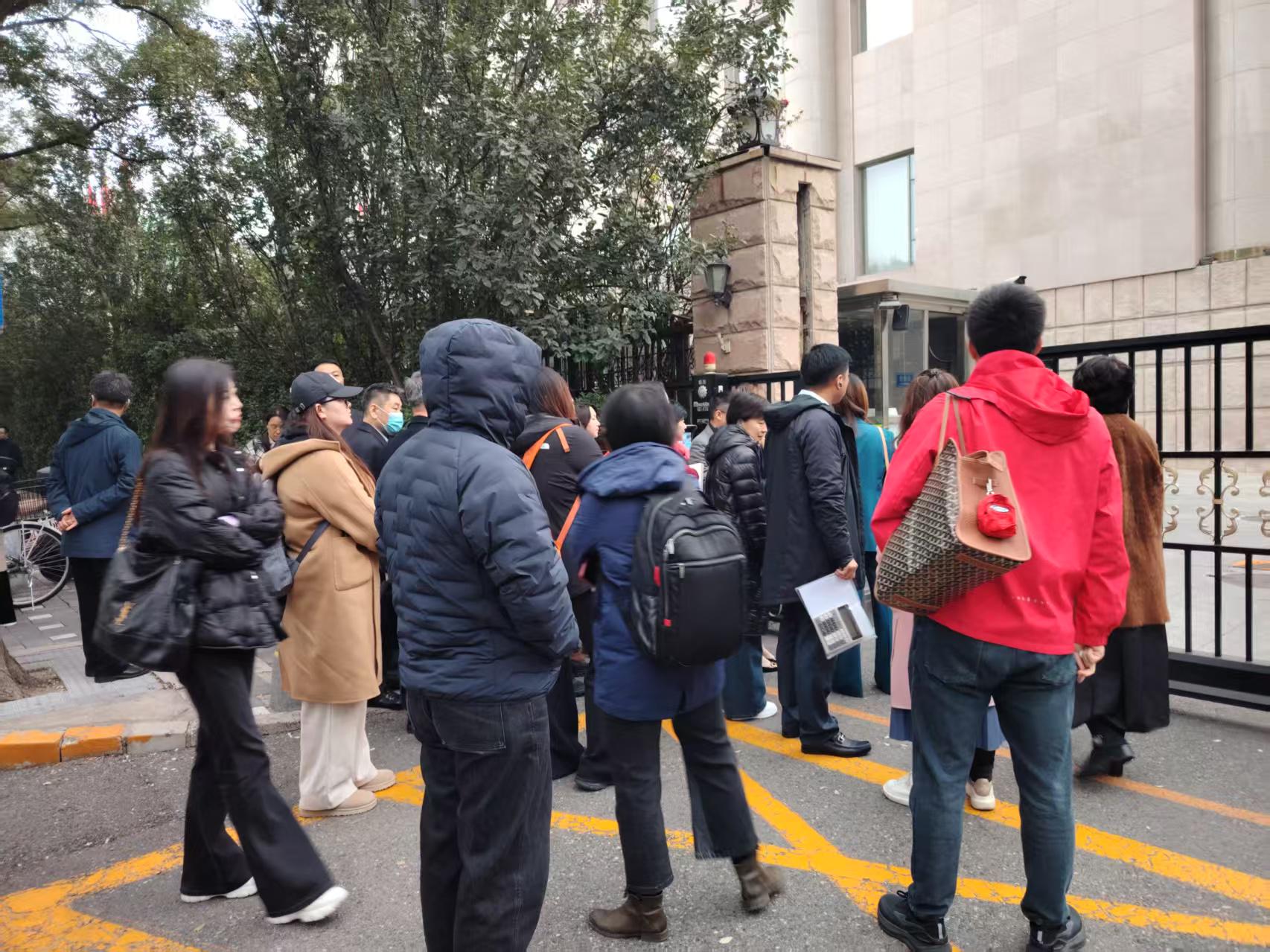
Core Points - The 2025 National Medical Insurance Directory negotiations have officially commenced, highlighting the importance of pharmaceutical innovation and patient access to medications [1] - The atmosphere at the negotiations is characterized by a cautious and low-key approach from pharmaceutical representatives, with an increased emphasis on confidentiality [3][4] - A total of 535 drugs are under review, with 311 outside the directory and 224 within it, alongside 121 high-value drugs reviewed under the commercial insurance innovation drug directory [9][10] Group 1: Negotiation Atmosphere - The entry process for pharmaceutical representatives was notably quieter and more orderly compared to previous years, reflecting a more subdued approach [3][4] - Representatives from both domestic and multinational pharmaceutical companies, including notable names like 恒瑞医药 and 阿斯利康, participated in the negotiations [4][9] Group 2: Key Drug Categories - Antibacterial drugs are expected to be a significant focus in the afternoon session of the negotiations, with specific products like 万古霉素 being highlighted [9][10] - Innovative drugs, including CAR-T products and new lipid-lowering medications, are also under consideration, with 恒瑞医药 presenting multiple products for initial review [10][12] Group 3: Market Insights - The PCSK9 inhibitor 瑞卡西单抗 has gained attention for its long-acting properties, with a market size of 1.32 billion yuan in 2023, representing 7.8% of the national lipid-lowering drug market [10][11] - The long-acting 阿立哌唑微球 from 丽珠集团 is another product of interest, potentially replacing oral formulations and capturing market share if included in the insurance directory [12]


恒瑞医药前三季赚逾57亿投49亿研发 海外市场收入快速增长
Chang Jiang Shang Bao· 2025-10-29 23:55
Core Viewpoint - The company, Heng Rui Pharmaceutical, has successfully transitioned from generic drugs to innovative drugs, resulting in steady growth in its operating performance, with significant increases in revenue and net profit in recent quarters [1][4][6]. Financial Performance - In the first three quarters of 2025, Heng Rui Pharmaceutical achieved revenue of approximately 232 billion yuan, a year-on-year increase of about 15% [1][6]. - The net profit attributable to shareholders reached 57.51 billion yuan, reflecting a year-on-year growth of 24.50% [1][6]. - The company has maintained a trend of increasing revenue and net profit for three consecutive years [2][6]. - The operating cash flow net amount for the first three quarters was 91.10 billion yuan, a significant increase of 98.68% compared to the previous year [6]. Growth Drivers - The rapid growth in performance is primarily attributed to the strong contribution from innovative drugs, which accounted for 60.66% of total revenue in the first half of 2025 [4][9]. - The company has consistently increased its R&D investment, with 49.45 billion yuan allocated in the first three quarters of 2025, marking an 8.71% increase year-on-year [5][10]. - Heng Rui Pharmaceutical has actively pursued overseas markets, achieving significant licensing agreements, including a notable deal with GlaxoSmithKline (GSK) that could yield substantial future revenue [11]. Market Position and Strategy - The company has shifted its focus to innovative drugs, with a reported sales revenue of 138.92 billion yuan in 2024, reflecting a 30.60% year-on-year growth despite competitive pressures [9]. - As of mid-2025, Heng Rui Pharmaceutical had received approval for 23 new molecular entity drugs in China, positioning itself as a leader in innovation within the industry [9].
医保商保“双目录”初审揭幕,高价创新药冲刺入列,创新药ETF沪港深(159622)涨超1.6%持续溢价交易
Sou Hu Cai Jing· 2025-08-13 02:56
Core Viewpoint - The adjustment of the national medical insurance and commercial health insurance drug directories is a significant event for the innovative drug investment landscape in the second half of the year, with over 650 drugs entering the basic medical insurance directory and commercial insurance innovative drug directory [1][2]. Group 1: Medical Insurance Directory Adjustments - A total of 534 drug generic names passed the initial review for the basic medical insurance directory, with 310 drugs being added to the directory, a significant increase from 249 in 2024 [2]. - The directory adjustments allow newly approved innovative drugs to have the opportunity to enter the insurance directory, including several notable drugs such as the lung cancer drug Gorailis and the autoimmune drug Fuanqi [2]. Group 2: Commercial Health Insurance Directory - The commercial health insurance innovative drug directory has approved 121 drugs, including five CAR-T therapies and a domestic vaccine, marking a new approach for market access for preventive biological products [3]. - Notable CAR-T therapies that made it into the directory include products from Fosun Kite, Huyuan Bio, and WuXi AppTec, with the latter's product achieving $808 million in revenue in the first half of the year, reflecting a doubling in growth [3]. Group 3: Future Outlook for Innovative Drugs - The upcoming months will see significant overseas pharmaceutical conferences and further developments in the medical insurance directories, providing ample opportunities for speculation and investment in innovative drugs [4]. - The domestic innovative drug sector is expected to benefit from increased clinical data catalysts and a rebound in funding and secondary market activity, enhancing the demand for new drug development [4].

丽珠集团(000513):LZM012的III期临床达到主要终点
Xin Lang Cai Jing· 2025-07-24 08:33
Core Viewpoint - LZM012, a humanized monoclonal antibody injection targeting IL-17A/F developed by the company, has successfully met its primary endpoint in Phase III clinical trials for moderate to severe plaque psoriasis, showing non-inferiority and superiority compared to Secukinumab [1][2] Group 1: Clinical Trial Results - The primary endpoint of the Phase III trial was the proportion of subjects achieving PASI 100 at week 12, with LZM012 showing a PASI 100 response rate of 49.5% compared to 40.2% for Secukinumab [2] - The secondary endpoint at week 4 showed a PASI 75 response rate of 65.7% for LZM012 versus 50.3% for Secukinumab, indicating a faster onset of action and good safety profile for LZM012 [2] Group 2: Market Landscape - The IL-17 market remains competitive, with only three IL-17 inhibitors approved overseas: Novartis' Secukinumab, Eli Lilly's Efalizumab, and UCB's Bimekizumab [1] - In 2024, projected sales for these drugs are $6.14 billion for Secukinumab, $3.26 billion for Efalizumab, and $630 million for Bimekizumab [1] Group 3: Future Prospects - The company has submitted a pre-application for marketing authorization to the CDE, with expectations for continued growth as its pipeline products enter the market [1] - Profit forecasts indicate net profits of 2.2 billion, 2.5 billion, and 2.8 billion yuan for 2025-2027, reflecting an optimistic outlook on business structure optimization and accelerating growth [2]
近千亿银屑病市场“变天”?丽珠医药炸场,但真正对手却不是诺华?
Tai Mei Ti A P P· 2025-07-24 02:14
Core Viewpoint - The path of domestic innovative drugs in China is becoming clearer, with companies like Livzon Pharmaceutical demonstrating the potential to lead in the market through differentiated treatment mechanisms and successful clinical trials [1][4]. Group 1: Clinical Trial Success - Livzon Pharmaceutical's LZM012, a recombinant anti-IL-17A/F humanized monoclonal antibody, achieved its primary endpoint in a Phase III clinical trial for moderate to severe plaque psoriasis, outperforming Novartis's Cosentyx (secukinumab) [1][3]. - The trial results showed a PASI 100 response rate of 49.5% for LZM012 compared to 40.2% for the control group (secukinumab) at week 12, indicating superior efficacy [3]. - LZM012 also demonstrated faster onset of action with a PASI 75 response rate of 65.7% at week 4, compared to 50.3% for secukinumab [3]. Group 2: Market Potential - The psoriasis drug market in China reached 13.9 billion yuan in 2023 and is projected to grow to 89.4 billion yuan by 2032, with a compound annual growth rate of 59.1% [5]. - The impending patent expiration of secukinumab presents an opportunity for LZM012 to capture market share [5][6]. Group 3: Competitive Landscape - LZM012 faces competition from several other IL-17 targeted therapies already approved in China, including Eli Lilly's etanercept and others, which may impact its market entry [5][6]. - The competitive landscape is further complicated by the aggressive pricing strategies of established products like secukinumab, which has seen significant price reductions since its launch [6]. Group 4: Company Performance - Livzon Pharmaceutical reported a revenue decline of 4.97% in 2024, with net profit increasing by 5.5%, indicating challenges in core business growth despite cost-cutting measures [7]. - The company has successfully reduced sales, management, and R&D expenses, leading to improved net profit margins [7]. Group 5: Strategic Challenges - The success of innovative drugs like LZM012 hinges not only on clinical efficacy but also on navigating the complexities of commercialization, including market competition and pricing strategies [9]. - Livzon Pharmaceutical must maintain strategic focus to effectively respond to market dynamics and ensure the successful launch of its new products [9].
直击股东大会|智翔金泰透露商业化策略:国内销售外包+海外授权,盈利拐点预计在2027年
Mei Ri Jing Ji Xin Wen· 2025-06-19 11:30
Core Viewpoint - The company has made significant changes in its fundamentals since its listing two years ago, highlighted by a licensing agreement with Cullinan Therapeutics for the GR1803 dual antibody, which could yield over $712 million in total payments and revenue sharing [1][2][3]. Group 1: Licensing Agreement and Financial Implications - The licensing agreement with Cullinan Therapeutics grants them global rights for GR1803 outside of China, while the company retains rights within China [2][3]. - The agreement includes an upfront payment of $20 million and potential milestone payments of up to $692 million, along with revenue sharing, totaling over $712 million [1][3]. - The GR1803 injection is currently in Phase II clinical trials and is aimed at treating relapsed/refractory multiple myeloma, with promising early clinical data showing an overall response rate of 85% [3]. Group 2: Product Commercialization and Market Challenges - The company’s first commercialized product, Selecitinib (IL-17A monoclonal antibody), achieved sales of 30 million yuan after receiving approval for psoriasis treatment, but missed the opportunity for insurance reimbursement negotiations [1][6]. - The company reported a significant revenue increase of 2384.1% year-on-year, reaching 30.09 million yuan, but still faced a net loss of 797 million yuan [6]. - The company is actively working to negotiate for Selecitinib's inclusion in the insurance reimbursement list to enhance market penetration and sales volume [6][7]. Group 3: Future Strategies and Market Environment - The company plans to adopt a dual strategy for future growth, utilizing a sales outsourcing model domestically while pursuing early licensing agreements internationally [4]. - The innovative drug market is experiencing favorable conditions, with a surge in business development activities, as evidenced by a total of $45.5 billion in domestic innovative drug business development in the first five months of 2025 [4][7]. - The company anticipates that profitability may not be achieved until 2027, despite plans for two additional product launches in the future [7].