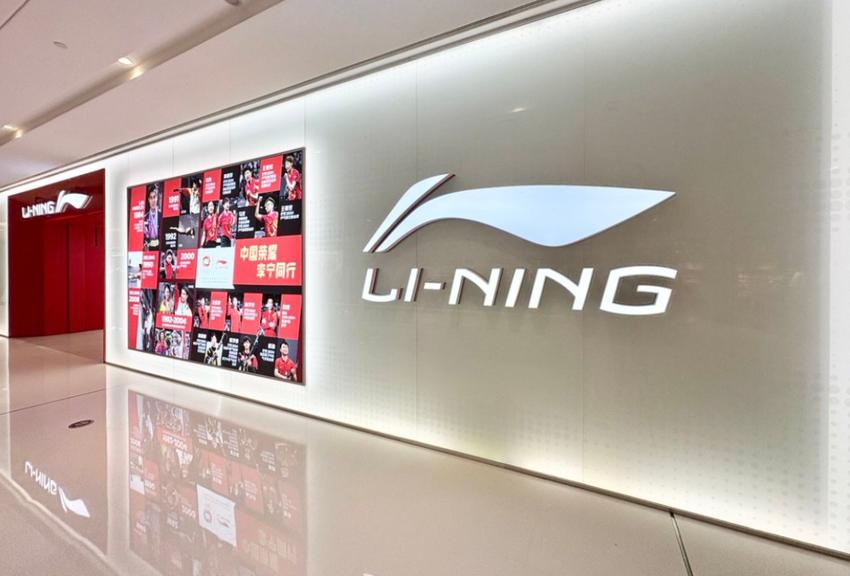
宁咖啡

Search documents
2026年第3周:服装行业周度市场观察
艾瑞咨询· 2026-02-02 00:05
Group 1: Luxury Goods Market Trends - The luxury goods industry is shifting towards high-quality growth, with major players like LVMH and Richemont adjusting strategies to focus on core businesses and supply chain control [2] - LVMH is divesting non-core brands and enhancing supply chain and experiential layouts, while Richemont is strengthening its jewelry business and divesting loss-making e-commerce [2] - Kering is selling its beauty business to concentrate on eyewear and jewelry manufacturing, indicating a trend of precise investment and asset optimization in the industry [2] Group 2: Retail Industry Transformation - The retail supermarket sector is facing a transformation challenge, with some companies attempting to emulate successful models like "胖东来" but experiencing limited success [3] - The retail industry has evolved through four stages, culminating in a "fashion" phase post-2023, where consumer rational needs and emotional values must be met [3] - Creating fashionable retail spaces requires attention to store design, product selection, and customer experience to enhance customer dwell time and increase sales [3] Group 3: Footwear Trends - The footwear trend for 2025 is characterized by diversification and personalization, with consumers prioritizing comfort and self-expression over limited edition collaborations [4] - 3D printing technology is becoming a focal point in the industry, with brands like Nike and Adidas innovating their product lines [4] - Domestic footwear brands are improving in design and quality, challenging previous biases, while the popularity of thin-soled shoes faces criticism for lack of innovation [4] Group 4: Luxury Brands and High-End Retail - High-end retail spaces in first-tier cities are experiencing a wave of luxury brand withdrawals, driven by low foot traffic and the rise of online channels [5] - Major luxury brands are shifting focus to online sales and core business areas, leading to a transformation in high-end retail strategies [5] - Shopping centers are adapting by introducing new concepts and experiences to attract customers, moving from traditional retail to experiential consumption [5] Group 5: Emerging Brands and Market Dynamics - Bubble Mart reported a revenue of 13.876 billion yuan in the first half of 2025, a 204.4% increase year-on-year, driven by cross-brand collaborations [7] - The "排骨羽绒服" has transformed from an unpopular item to a trending fashion piece, achieving significant sales growth through social media and influencer marketing [8] - The Swedish outdoor brand Haglöfs is entering the Chinese market with plans to open 25 stores by the end of 2025, targeting high-net-worth individuals [9] Group 6: Strategic Adjustments in Established Brands - The brand Wolf Claw is undergoing a strategic shift towards the mid-to-high-end market after being acquired by Anta, closing its online flagship store [10][11] - Anta's strategy includes leveraging Wolf Claw to fill gaps in the high-end outdoor market, reflecting a broader trend of brand repositioning in response to market dynamics [10][11] - Li Ning is expanding its coffee business while also entering the high-end outdoor market, indicating a multi-faceted growth strategy [18]




李宁同仁堂万达蔚来大疆,为何都要抢“一杯咖啡”?
Sou Hu Cai Jing· 2026-01-12 23:09
Core Insights - The emergence of Ning Coffee, an independent coffee brand incubated by Li Ning, marks a strategic shift from being a supplementary service to an independent brand, creating a composite space that integrates coffee, sports, and social interaction [2] - The rapid growth of the coffee market in China reflects a structural change in consumer behavior, particularly among younger demographics, with coffee becoming a social currency and lifestyle symbol [3][11] Group 1: Market Trends - The Chinese coffee consumer base is projected to exceed 500 million by 2024, with individuals aged 18-35 making up over 68% of this demographic [3] - Coffee consumption is increasingly viewed as a lifestyle choice, with factors such as aesthetic spaces and social sharing driving demand among younger consumers [3][11] Group 2: Strategic Moves by Traditional Brands - Various traditional companies, including China Post and Tongrentang, are entering the coffee market to connect with younger consumers and reshape their brand identities [2][5] - The strategy of integrating coffee into their offerings allows these companies to extend their brand influence beyond their core products, creating a lifestyle brand image [7][9] Group 3: Business Model and Profitability - Coffee serves as a low-cost entry point for traditional businesses to enhance user engagement and increase customer lifetime value (LTV) [6][7] - The cost of producing a cup of coffee is typically under 10 yuan, while selling prices range from 25 to 40 yuan, resulting in high profit margins of 60%-70% [6] Group 4: Consumer Engagement and Brand Experience - The introduction of coffee in retail spaces aims to extend customer dwell time and create opportunities for secondary purchases, enhancing overall customer experience [6][9] - Companies like Li Ning and Huawei are leveraging coffee to foster community engagement and enhance brand loyalty, transforming their retail environments into immersive lifestyle spaces [7][9] Group 5: Challenges and Considerations - Despite the apparent opportunities, not all companies possess the operational capabilities required for the food and beverage sector, leading to potential pitfalls in execution [10] - The coffee market is becoming increasingly competitive, with over 250,000 coffee shops projected in China by the end of 2024, necessitating a unique value proposition for traditional brands to avoid becoming mere background players [10]

可选消费W01周度趋势解析:免税优异表现拉动增长,港股消费跌幅较大-20260105
Haitong Securities International· 2026-01-05 14:47
Investment Rating - The report assigns an "Outperform" rating to multiple companies including Nike, Midea Group, JD Group, Haier Smart Home, Gree Electric, and others, while Lulu Lemon is rated as "Neutral" [1]. Core Insights - Duty-free sales have shown exceptional performance, driving growth in the discretionary sector, while Hong Kong consumer stocks have experienced significant declines [4][11]. - The luxury goods sector has outperformed, with a weekly increase of 1.5%, while the retail sector also saw a rise of 1.1% [5][13]. - The report highlights that the overall sentiment in travel-related sectors remains high, contributing positively to the discretionary consumption outlook [3]. Weekly Performance Review - The weekly performance of various sectors is as follows: luxury goods > retail > overseas sportswear > overseas cosmetics > US hotels > domestic sportswear > credit cards > snacks > pets > domestic cosmetics > gold and jewelry > gaming, with respective weekly changes of 1.5%, 1.1%, 0.8%, -0.3%, -0.4%, -2.4%, -2.4%, -2.8%, -2.9%, -4.5%, -4.6%, and -5.6% [11][12]. - The retail sector's growth was significantly driven by China Duty Free, which saw a 7.6% increase due to strong sales during the New Year holiday [6][13]. Monthly and Year-to-Date Performance - Monthly performance shows retail leading with a 4.9% increase, followed by overseas sportswear and US hotels, while domestic cosmetics and gaming sectors faced declines [11]. - Year-to-date performance indicates that overseas cosmetics and US hotels have performed well, while domestic cosmetics and snacks have shown negative growth [12]. Valuation Analysis - The report notes that the valuation of various sectors remains below their average over the past five years, with expected PE ratios for 2025 indicating significant potential for growth [9][14]. - Specific sectors such as overseas sportswear are projected to have a PE of 31.2 times, which is 59% of the past five-year average, while domestic sportswear is at 13.3 times, 70% of the average [14][15].
新茶饮2026:一半是深海,一半是远洋
3 6 Ke· 2026-01-05 12:57
Core Insights - The new tea beverage industry is reaching its ceiling, with contrasting signals indicating the end of a chaotic growth phase and a shift towards stability and efficiency [1][2] - The industry growth rate is projected to stabilize between 5%-7% in the first three quarters of 2025, similar to the previous year, leading to a more strategic competition focused on brand loyalty and operational efficiency [2][20] Industry Trends - Product innovation has shifted from a focus on sensory stimulation to becoming a "meaning anchor" for consumers' lifestyle and emotional needs [3] - The controversy surrounding the pricing strategy of brands like Mixue Ice City highlights the risks of straying from established brand perceptions [4][5] Brand Strategies - Successful brands are transitioning towards health-oriented products, emphasizing low-calorie and functional ingredients to align with consumer trends towards healthier lifestyles [6] - The evolution of co-branding strategies reflects a deeper engagement with consumers, moving from simple logo placements to creating shared values and experiences [7] Retail Dynamics - The role of physical stores is evolving from mere distribution points to brand experience centers that collect data and provide localized services [8][9] - The focus is shifting towards optimizing store efficiency and creating unique customer experiences that cannot be replicated online [9][11] Market Expansion - Brands like Mixue Ice City are rapidly expanding internationally, leveraging their successful domestic models in emerging markets, while others like Nayuki and Heytea are focusing on cultural branding in developed markets [17][18] - The competition will increasingly hinge on supply chain efficiency and the ability to adapt to local markets, with successful brands needing to balance cost control with product innovation [14][15][19] Future Outlook - The tea beverage industry is expected to surpass a market size of one trillion yuan by 2026, with growth concentrated among leading brands, making it challenging for smaller players to survive [20][21] - The industry is entering a phase of intense competition and consolidation, where only brands with robust supply chains and operational capabilities will thrive [21]
李宁,这次真的要把咖啡当生意了
3 6 Ke· 2025-12-23 07:33
Core Viewpoint - The opening of the new WellTown Super Outlet store in Beijing marks a significant shift for Li Ning's coffee brand, Ning Coffee, transitioning from a supplementary service to a standalone business model in a competitive market environment [2][4][12]. Group 1: Business Model Evolution - Ning Coffee has evolved from being an auxiliary service within Li Ning stores to an independent entity with its own storefront and seating area, indicating a strategic shift towards a more commercial approach [2][4][8]. - Initially, Ning Coffee was introduced in 2022 as part of a retail experience, focusing on enhancing customer comfort rather than generating sales, often using promotional strategies like "free drinks with purchase" [3][12]. - The new store's location in a public shopping space allows Ning Coffee to attract a broader customer base, not limited to Li Ning consumers, and requires it to compete with established coffee brands [7][12]. Group 2: Product Strategy and Market Positioning - The menu of Ning Coffee incorporates Li Ning's sports branding, with creatively named drinks that reflect the company's identity, such as "Red Rabbit Latte" and "Wade's Way Sparkling Drink" [8][11]. - The introduction of health-oriented products, such as drinks with kombucha or protein powder, aligns with current consumer trends towards wellness [11]. - Ning Coffee is also experimenting with localized products in different regions, showcasing adaptability to local tastes and preferences [11][12]. Group 3: Future Outlook - The company aims to scale Ning Coffee into a more independent operation by 2025, reflecting a commitment to exploring the coffee market as a potential growth avenue [12]. - This strategic move is seen as part of a broader trend where brands leverage high-frequency consumer products like coffee to strengthen customer connections and enhance the retail experience [12].