家用服务机器人

Search documents
机器人给人当“保姆”,还有多远?专家们这样说
证券时报· 2026-03-13 01:36
Core Viewpoint - The article discusses the development and future trends of the home service robot industry in China, highlighting the gap between user expectations and actual understanding, and emphasizing the need for companies to convert high purchase intentions into actual sales through improved product experiences and services [1]. Group 1: Market Trends and Predictions - The home service robot market is expected to evolve in four directions: from single-function to multi-functional integration, from specific scenarios to whole-home smart hubs, from tool attributes to emotional interaction, and a gradual decrease in prices leading to increased penetration [1]. - By 2025, the production of service robots in China is projected to reach 18.58 million units, representing a year-on-year growth of 16.1% [2]. Group 2: Industry Challenges and Developments - Major home appliance companies like Haier, Hisense, and Midea are leading the deployment of service robots, transitioning appliances from single smart terminals to comprehensive service platforms [3]. - The home appliance industry is experiencing two significant trends: AI integration and embodiment, where appliances gain proactive intelligence and spatial understanding to operate autonomously in real-world environments [3]. Group 3: User Needs and Pain Points - The implementation of humanoid robots in home care faces three core challenges: disconnect between technology and real needs, lack of a safety and trust framework, and insufficient adaptability to non-structured home environments [5]. - The "last mile" of service robot deployment encounters five major challenges, including the current limitations of artificial general intelligence (AGI) and the complexity of tasks that are simple for humans but difficult for robots [5][6]. Group 4: Safety and Ethical Considerations - There are significant concerns regarding the safety and ethical implications of service robots, including the potential for accidents and data privacy risks associated with continuous monitoring in homes [6]. - The high cost of advanced companion robots, typically around ten thousand yuan, poses a barrier for average households, limiting market accessibility [6].


2025年报业绩预告开箱(六):百亿巨亏连环爆,AI与创新药继续领跑
市值风云· 2026-02-02 11:59
Performance Highlights - New Yi Sheng (300502.SZ) expects net profit between 9.4 billion and 9.9 billion CNY, a year-on-year increase of 231.24% to 248.86% due to rising demand for high-speed optical modules driven by global computing power investments[4] - Han's Chip (688256.SH) anticipates net profit between 1.85 billion and 2.15 billion CNY, turning from a loss of 450 million CNY last year, benefiting from the growing demand for AI computing power[5] - Zhongji Xuchuang (300308.SZ) projects net profit between 9.8 billion and 11.8 billion CNY, a year-on-year growth of 89.50% to 128.17%, driven by strong customer investment in computing infrastructure[6] - Runze Technology (300442.SZ) expects net profit between 5 billion and 5.3 billion CNY, a year-on-year increase of 179.28% to 196.03%, largely due to non-recurring gains from public REITs issuance[10] Underperformance Highlights - Great Wall Motors (601633.SH) forecasts net profit of 9.912 billion CNY, a year-on-year decline of 21.71% due to increased marketing expenses and competitive pressures[36] - GAC Group (601238.SH) expects a net loss between 8 billion and 9 billion CNY, turning from a profit of 824 million CNY last year, impacted by fierce competition and increased asset impairment provisions[39] - Xiexin Integrated (002506.SZ) anticipates a net loss between 890 million and 1.29 billion CNY, shifting from a profit of 68 million CNY last year due to structural supply-demand issues in the photovoltaic industry[41] - Baile Tianheng (688506.SH) projects a net loss of around 1.1 billion CNY, down from a profit of 3.708 billion CNY last year, primarily due to increased R&D expenses[42] Industry Trends - Technology-driven sectors like AI and innovative pharmaceuticals are leading growth, with companies like New Yi Sheng and Han's Chip benefiting from strong demand and technological advancements[69] - Cost control is becoming a critical competitive advantage, particularly in the energy and manufacturing sectors, as seen with companies like Datang Power (601991.SH) benefiting from lower coal prices[70] - Traditional cyclical industries such as real estate and agriculture are facing significant downward pressure, with companies like Vanke (000002.SZ) and Tianbang Foods (002124.SZ) experiencing substantial losses due to market adjustments[72]





潮起潮落,机器人租赁催生平台
Shen Zhen Shang Bao· 2026-01-23 04:40
Core Insights - The rise of humanoid robot rentals in Huaqiangbei was driven by a "curiosity effect," peaking in early 2025, but this trend has since declined as many rental shops have shifted to selling AI robots and live-streaming equipment [1][2] Group 1: Market Dynamics - During the peak rental period, daily rental prices for humanoid robots soared to between 18,000 and 25,000 yuan, with a significant demand that made them hard to find [2] - The current rental prices have decreased significantly, with humanoid robots now renting for 4,000 to 5,000 yuan per day, and robotic dogs around 300 yuan [5] - The rental market is evolving from merely renting equipment to providing comprehensive service capabilities, emphasizing delivery and stability [3] Group 2: Business Model Changes - The global robot selection center in Huaqiangbei integrates rental, sales, and service development, moving away from the previous scattered rental model [2][4] - Most robot companies do not directly offer rental services, with some only providing loans to familiar clients, indicating a shift in how rental services are approached [6] - The rental market is divided into short-term rentals for events and long-term rentals for practical applications, with the latter being more stable but not necessarily cost-effective [7] Group 3: Platform Development - The launch of the "Qingtian Rental" platform aims to consolidate scattered rental resources, addressing the challenges of finding suitable robots for various events [8] - The Chinese robot market surpassed 150 billion yuan in 2025, with rental model penetration increasing by over 300% compared to five years prior [8] - The emergence of platforms is seen as a positive development, potentially improving service quality and reducing market chaos, even if it does not necessarily increase profitability [9]

人形机器人周报20251221:Tesla发布人形机器人年度报告,美国创世纪计划正式启动-20251221
CMS· 2025-12-21 14:32
Investment Rating - The report maintains a recommendation for the industry, indicating a positive outlook for investment opportunities in the humanoid robotics sector [5]. Core Insights - The humanoid robotics sector has shown a slight adjustment, with the index underperforming the broader market. The humanoid robotics index fell by 1.54% during the week, while the CSI 300 index decreased by 0.28% [10][12]. - Key developments include Tesla's release of its annual humanoid robot report, showcasing significant technological advancements in its Optimus robot, and the launch of the U.S. national AI "Genesis Project," which aims to accelerate scientific discovery through AI [16][18]. - The report highlights the importance of monitoring supply chain orders related to the T-chain and emphasizes the need to focus on suppliers with strong certainty [16]. Industry Overview - The humanoid robotics sector is characterized by a total of 474 listed companies with a total market capitalization of approximately 4,799.3 billion [5]. - The sector's performance over the past month shows a 1.0% increase over one month, a 27.1% increase over six months, and a 37.5% increase over twelve months [7]. - The report identifies several key companies and their respective sectors, including Tier 1 suppliers like Changying Precision, Sanhua Intelligent Control, and Top Group, as well as other relevant companies in the robotics supply chain [4][9]. Recent Developments - Tesla's Optimus robot has made significant progress in its capabilities, including basic movements and complex interactions, with plans for mass production starting in late 2026 [16][17]. - The U.S. "Genesis Project" involves major tech companies like OpenAI and Google, aiming to create a national AI-driven research platform [18]. - Domestic developments include partnerships between companies like Unibot and Texas Instruments, as well as the deployment of humanoid robots in various production lines [20][21][22]. Market Performance - The liquidity in the humanoid robotics sector has been declining, with core stocks accounting for 5.10% of total A-share trading volume, indicating a decrease in market activity [12]. - The report lists the top-performing stocks in the humanoid robotics sector, with notable gains from companies like Zhongyou Technology and Junsheng Electronics, while others like Zhongjian Technology and Zhejiang Haideman faced significant declines [14][15].

从“晒技能”到“赛技能”
Ren Min Ri Bao· 2025-12-15 06:10
Core Insights - The Global Developer Pioneer Summit and International Embodied Intelligence Skills Competition (GDPS 2025) was held in Shanghai, showcasing the integration of artificial intelligence into real-world applications, particularly in industrial production, life services, and professional services [1] Group 1: Industrial Production - The competition featured humanoid robots demonstrating precision in assembly tasks, achieving component recognition in 0.3 seconds and adjusting grip with 0.01 mm accuracy, highlighting advancements in real-time motion control algorithms [2] - A team developed a high-torque joint module that reduced friction coefficients by 30% through material and structural optimization, emphasizing the importance of tolerances in software engineering [2] - The establishment of the Shanghai Humanoid Robot Pilot Alliance aims to unify control systems for robots, facilitating the transition from prototypes to mature products across the industrial chain [2] Group 2: Life Services - In community service scenarios, robots assisted elderly individuals by recognizing needs through voice interaction and providing safe navigation support, demonstrating the potential for personalized assistance in daily life [3] - Home service robots showcased capabilities such as obstacle avoidance, food inventory management, and health data analysis, indicating a shift towards more individualized service models [3] - The integration of flexible and personalized service modes in embodied intelligence is expected to reshape life services and open new avenues for industry development [3] Group 3: Professional Services - The competition tested embodied intelligence in emergency rescue and medical rehabilitation, showcasing robots' capabilities in extreme environments [4] - Rescue robots successfully navigated simulated disaster scenarios, demonstrating advanced pathfinding and stability adjustments to locate and relay vital signs of trapped individuals [4] - In rehabilitation, robots provided tailored assistance to patients, balancing precision and gentleness in training, while surgical robots performed tasks with an accuracy of 0.1 mm, underscoring the critical demands of medical applications [6]
从“晒技能”到“赛技能”——在具身智能技能大赛感受产业潜力
Ren Min Ri Bao· 2025-12-15 02:21
Core Insights - The Global Developer Pioneer Summit and International Embodied Intelligence Skills Competition (GDPS 2025) was held in Shanghai from December 12 to 14, showcasing the integration of artificial intelligence into real-world applications and the potential of embodied intelligence in various sectors [1] Group 1: Industrial Production - The industrial manufacturing competition highlighted the precision and speed of humanoid robots, capable of identifying different parts within 0.3 seconds and adjusting grip with 0.01 mm accuracy, completing tasks without errors [2] - A team developed a high-torque joint module that reduced friction coefficients by 30% through material optimization, emphasizing the importance of tolerances in software engineering [2] - The establishment of the Shanghai Humanoid Robot Pilot Alliance aims to unify control systems for robots, facilitating the transition from prototypes to mature products across the industrial chain [2] Group 2: Life Services - The life services competition featured robots assisting elderly individuals, showcasing their ability to understand dialects and provide personalized support, enhancing community service experiences [3] - Home service robots demonstrated capabilities such as path planning, ingredient recognition, and health data analysis to offer tailored recommendations, reflecting a shift towards more personalized service models [3] - Embodied intelligence is transforming life services by providing flexible and individualized assistance, creating new opportunities for industry development [3] Group 3: Professional Services - The professional services competition tested robots in emergency rescue and medical rehabilitation scenarios, highlighting their operational capabilities in extreme environments [4] - A rescue robot successfully navigated a simulated disaster site, demonstrating its ability to maintain stability and locate victims while transmitting vital signs [4] - In rehabilitation, robots adjusted assistance based on patient feedback, ensuring effective training while minimizing the risk of injury, underscoring the precision required in medical applications [6]
从“晒技能”到“赛技能”(经济聚焦)
Ren Min Ri Bao· 2025-12-14 22:30
Group 1: Core Insights - The Global Developer Pioneer Conference and International Embodied Intelligence Skills Competition (GDPS 2025) was held in Shanghai from December 12 to 14, showcasing the integration of artificial intelligence into real-world applications [1] - The competition highlighted advancements in embodied intelligence across three main tracks: industrial production, life services, and professional services, demonstrating the technology's breakthroughs and industrial potential [1] Group 2: Industrial Production - In the industrial manufacturing competition, humanoid robots showcased their ability to assemble precision parts with a mechanical arm that could identify three different specifications of components within 0.3 seconds and adjust gripping force with a precision of 0.01 millimeters [2] - A team developed a high-torque joint module that reduced the friction coefficient by 30% through optimized material formulation and transmission structure, emphasizing the importance of tolerances in software engineering [2] - The establishment of the Shanghai Humanoid Robot Pilot Alliance aims to unify full-body control and fine operation planning, addressing the need for collaborative skills in embodied intelligence [2] Group 3: Life Services - The life services competition featured robots assisting elderly individuals, demonstrating capabilities such as voice interaction and personalized community activity recommendations [3] - A home service robot showcased its ability to autonomously plan paths, identify ingredients, and recommend recipes based on user health data, highlighting the personalized service potential of embodied intelligence [3] - The integration of flexible and personalized service models in daily life is expected to open new avenues for industrial development [3] Group 4: Professional Services - The professional services track tested embodied intelligence in emergency rescue and medical rehabilitation scenarios, emphasizing the technology's performance in extreme environments [4] - A rescue robot successfully navigated a simulated disaster scene, demonstrating its ability to calculate optimal paths and maintain stability while locating simulated victims [4] - In rehabilitation, a robot assisted stroke patients by adjusting support based on their exertion levels, while a surgical robot performed precise operations with an error margin of 0.1 millimeters, showcasing the critical balance of precision and care in medical applications [6]
从“晒技能”到“赛技能”——在具身智能技能大赛感受产业潜力(经济聚焦)
Ren Min Ri Bao· 2025-12-14 22:08
Core Insights - The Global Developer Pioneer Summit and International Embodied Intelligence Skills Competition (GDPS 2025) was held in Shanghai from December 12 to 14, showcasing the integration of artificial intelligence into various real-life applications [1] Group 1: Industrial Production - The industrial assembly competition featured humanoid robots performing precise assembly tasks, achieving 0.01 mm accuracy and completing eight processes without errors [2] - A team developed a high-torque joint module that reduced friction coefficients by 30% through material and structural optimization, highlighting the importance of tolerances in software engineering [2] - The establishment of the Shanghai Humanoid Robot Pilot Alliance aims to unify control systems for robots, facilitating the transition from technology prototypes to mature products across the industrial chain [2] Group 2: Life Services - In the life services competition, a smart service robot assisted elderly participants by recognizing needs through voice interaction and providing community activity information [3] - A home service robot demonstrated its ability to autonomously plan paths, identify ingredients, and recommend recipes based on user health data, showcasing personalized service capabilities [3] - The integration of embodied intelligence in daily life is transforming service models, creating new opportunities for industry development [3] Group 3: Professional Services - The professional services competition tested embodied intelligence in emergency rescue and medical rehabilitation scenarios, emphasizing the technology's performance in extreme conditions [4] - A rescue robot successfully navigated a simulated disaster site, demonstrating its ability to calculate optimal paths and maintain stability while locating victims [4] - In rehabilitation, a robot adjusted assistance levels based on patient feedback, while a surgical robot showcased precision in minimally invasive procedures, with errors controlled within 0.1 mm [6]
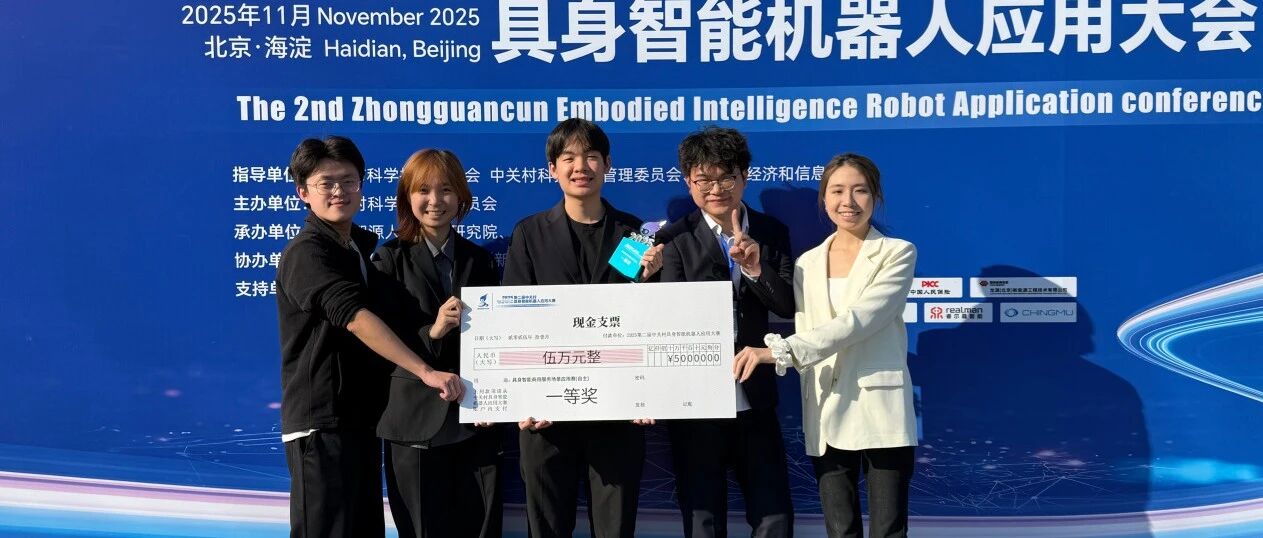
专访清华大学Tinker队!斩获商用服务自主赛一等奖后他们还有更大的目标!
机器人大讲堂· 2025-12-06 09:05
Core Viewpoint - The Tinker team from Tsinghua University won the first prize in the Intelligent Commercial Service Scenario Application Competition at the 2025 Second Zhongguancun Embodied Intelligent Robot Application Competition, showcasing their advanced technology and teamwork [1]. Team Composition and Structure - The Tinker team is guided by Professor Chen Rui from the Mechanical Engineering Department of Tsinghua University, consisting mainly of undergraduate students from various disciplines such as automation, electronics, mechanics, computer science, and software, allowing for knowledge complementarity [4]. - The team established clear divisions of labor from the outset, with each module's core work assigned to students with strong professional capabilities, ensuring efficient progress in robot technology [5]. Technical Preparation and Strategy - The Tinker team identified the competition's rules as highly compatible with their long-term preparation for the RoboCup@Home competition, focusing on practical application and rapid iteration of their technology [6]. - The team conducted in-depth analysis and comparison of competition tracks, selecting the "Intelligent Commercial Service Scenario Application Competition (Autonomous)" as their core task due to its alignment with their technical strengths and past experiences [6]. Project Management and Collaboration - The team implemented a detailed project breakdown into multiple technical modules, assigning responsible leaders for each module to ensure clarity in task objectives and responsibilities [7]. - Weekly team meetings served as a platform for information synchronization and collaborative progress, allowing for timely updates on work progress and problem-solving discussions [10]. Technical Challenges and Solutions - Throughout the competition, the team faced significant technical challenges, particularly in dynamic environments, requiring high levels of multi-module collaboration, system robustness, and real-time performance [11]. - The team focused on overcoming three core technical challenges: achieving high-precision, low-latency mapping and autonomous positioning; optimizing multi-target detection and semantic understanding models; and enhancing the success rate of the robotic arm's grasping capabilities [13]. Practical Application and Future Directions - The competition provided a comprehensive practical platform for the team, facilitating the transition from basic research to system integration and real-world application [13]. - The Tinker team anticipates that embodied intelligence will achieve large-scale application in clearly defined, safe, and controllable closed or semi-closed environments within the next 1-3 years, particularly in education and logistics [22][23]. Future Competitions and Goals - The team is now focused on preparing for the RoboCup domestic and international competitions, aiming to enhance the robot's autonomous decision-making capabilities and robustness in complex, dynamic environments [24]. - The Tinker team plans to deepen collaboration with Professor Chen Rui's laboratory to integrate cutting-edge research into their robot platform, aiming for a replicable and scalable embodied intelligence technology system [26].
从三季报看中国经济:新消费潜力迸发
Jing Ji Ri Bao· 2025-11-17 00:03
Core Viewpoint - The third-quarter reports of listed companies reflect the resilience and vitality of China's consumer market, indicating a structural adjustment period in the consumption sector with both challenges and opportunities [1] Overall Recovery - The consumer sector shows a steady recovery overall, but there is uneven performance across different segments. Essential consumption remains stable, while discretionary consumption is experiencing a divide [2] - Essential consumption sectors like food and beverages are performing well due to their necessity, with leading companies showing stable revenue and profit growth [2] - The liquor industry, representing traditional high-end consumption, is under pressure, with major companies like Wuliangye and Luzhou Laojiao reporting significant declines in revenue and profit [2] - In contrast, the new energy vehicle industry is thriving, benefiting from policy support and product upgrades, becoming a key growth driver in the consumer sector [2] Channel Transformation - Traditional retail companies are accelerating their online transformation, integrating online and offline channels to capture market changes, with those embracing digitalization seeing growth [3] Cost Pressures - Global commodity prices remain high, putting pressure on raw material and logistics costs, which challenges the gross margins of mid-to-low-end consumer companies [4] - Companies that optimize product structures and improve supply chain efficiency are demonstrating stronger profitability and market competitiveness [4] Structural Highlights - A number of structural highlights are emerging, driving high-quality development in consumer-related listed companies through innovation in technology, business models, and consumer scenarios [5] - In the smart home sector, companies like Ecovacs and Haier are experiencing significant profit growth, with Ecovacs reporting a 131% increase in net profit [5] - The traditional consumption sector is exploring new business models, with companies like Kweichow Moutai and Mercury Home Textiles achieving double-digit growth through innovative product offerings [6] New Consumption Scenarios - Companies are actively transforming to capture new consumption trends, with firms like Golden Dragon Fish and Miaokelando reporting substantial profit increases due to cost improvements and channel optimization [8] - The consumer market is becoming increasingly segmented, with new brands focusing on specific demographics and scenarios, such as new-style tea drinks and pet economy products [8] - Domestic brands are gaining market share and showing strong performance in sectors like sportswear and beauty products, driven by cultural confidence and supply chain advantages [8] Market Dynamics - The consumer market is undergoing structural upgrades, with recovery being uneven due to factors like income expectations and regional disparities [9] - Companies with strong brand barriers and unique market advantages are favored by capital, while those embracing new trends and product iterations can still find growth opportunities [9] - The competition is shifting from traditional versus new consumption to the operational efficiency and strategic vision of different companies within the same industry [9] High-Quality Development - The recovery trend in China's consumer market is moving from total growth to structural optimization, with companies encouraged to focus on high-quality development through innovation [10]