小米玄戒O2

Search documents
宇树科技2025年人形机器人出货量超过5500台;小米玄戒O2或继续用台积电3nm丨智能制造日报
创业邦· 2026-01-20 03:29
Group 1 - Musk stated that the AI5 chip is crucial for Tesla, emphasizing the need for two teams to focus on its development, with personal involvement for several months [2] - The AI5 chip is described as a "very powerful" chip, with design progress reported to be on track, and Tesla plans to restart the development of Dojo3 [2] - Yushutech is projected to exceed 5,500 units in humanoid robot shipments by 2025, with over 6,000 units expected to roll off the production line [2] Group 2 - Xiaomi's second-generation self-developed SoC, the Xuanjie O2, is likely to use TSMC's N3P process instead of the latest 2nm process, with plans to expand its application beyond smartphones to tablets, cars, and computers [2] - The launch of 19 low-orbit satellites for satellite internet was successfully completed by China using the Long March 12 rocket, marking a significant achievement in commercial space endeavors [2]





慕了!内存芯片巨头人均发64万年终奖;特斯拉将重启Dojo 3超级计算机项目;2025胡润中国人工智能企业50强出炉!6300亿「寒王」登顶
雷峰网· 2026-01-20 00:40
Group 1 - SK Hynix announced a record year-end bonus of 1.36 billion KRW (approximately 640,000 RMB) per employee, attributed to a new performance bonus plan linked to the company's profits [4][5] - The new bonus plan allows employees to receive up to 50% of their bonuses in company stock, with additional cash rewards for holding the stock for a year [4][5] - The company expects a significant increase in bonuses due to a new agreement that ties bonuses to 10% of the previous year's operating profit, with an estimated total operating profit of 45 trillion KRW for the year [5] Group 2 - HuRun Research Institute released a list of the top 50 AI companies in China, with Cambricon leading at a valuation of 630 billion RMB, followed by Moore Threads and MuXi [7][8] - Cambricon has seen a revenue increase of 4,300% year-on-year, driven by its focus on AI core processor chips and partnerships with leading AI model companies [7][8] - The top five companies in the list include Cambricon, Moore Threads, MuXi, iFlytek, and Horizon Robotics, showcasing the rapid growth and innovation in the AI sector [9] Group 3 - Li Auto's AI glasses sold out in just three hours, with demand exceeding supply, indicating strong market interest [10] - The glasses, priced from 1,999 RMB, are designed to integrate with Li Auto's ecosystem and feature advanced technology such as a 12MP camera and AI capabilities [10] - The product's success highlights the growing trend of smart wearable devices in the automotive industry [10] Group 4 - Porsche reported a 10% decline in global sales for 2025, with a 26.28% drop in the Chinese market, reflecting challenges in the luxury car segment [12] - The company is focusing on maintaining a healthy supply-demand relationship and stable value system amid market pressures [12] - Porsche's stock fell by 4.34% following the sales report, indicating investor concern over the company's performance [12] Group 5 - Moonshot AI, an AI startup backed by Alibaba, achieved a valuation of 48 billion USD (approximately 330 billion RMB) in its latest funding round, reflecting strong market demand for AI companies [14][15] - The company has raised significant capital in a short period, indicating robust investor interest in the AI sector [14][15] - The rapid increase in valuation highlights the competitive landscape for AI startups in China [14][15] Group 6 - Xiaomi's second-generation self-developed chip, the Xuanjie O2, is expected to utilize TSMC's 3nm process and expand its application to tablets, cars, and computers [17][18] - The company aims to enhance its self-developed chip capabilities across various product lines, indicating a strategic shift towards in-house technology [17][18] - The Xuanjie O1 chip, released earlier, has already demonstrated high performance, positioning Xiaomi competitively in the semiconductor market [18] Group 7 - Northvolt announced a projected net loss of 4.35 to 4.65 billion RMB for 2025, primarily due to ongoing investments in product development and market expansion [32] - Despite the losses, the company expects a significant increase in sales volume, indicating a long-term growth strategy [32] - The strategic investments are aimed at enhancing the company's market position in the rapidly evolving electric vehicle sector [32]

收评:沪指涨0.29% 贵金属、电网设备板块集体走强
Xin Hua Cai Jing· 2026-01-19 07:30
Market Overview - The A-share market showed mixed performance on January 19, with the Shanghai Composite Index closing at 4114.00 points, up 0.29%, while the Shenzhen Component Index rose 0.09% to 14294.05 points, and the ChiNext Index fell 0.70% to 3337.61 points [1] - The total trading volume in the Shanghai and Shenzhen markets was 2.71 trillion yuan, a decrease of 317.9 billion yuan compared to the previous trading day [1] Sector Performance - The aviation, tourism, hotel and catering, and electrical equipment sectors saw significant gains, while the internet, communication equipment, software services, and semiconductor sectors experienced declines [1] - The electric grid equipment sector had a notable surge, with several stocks hitting the daily limit, including Baobian Electric and China West Electric [2] - The precious metals sector also performed well, with stocks like Sichuan Gold and Zhaojin Gold reaching their daily limit [2] Institutional Insights - According to Jifeng Investment Advisory, the market is in an upward trend, with many sectors finding support at the 60-day moving average, indicating a new round of upward momentum [3] - Citic Securities highlighted the strategic importance of global rare earth resources, predicting a sustained increase in demand from emerging sectors such as electric vehicles and humanoid robots, leading to a potential supply-demand gap by 2026 [4] Economic Forecast - The National Bureau of Statistics projected a 5% year-on-year growth for China's GDP in 2025, with quarterly growth rates of 5.4%, 5.2%, 4.8%, and 4.5% respectively [5] Company Developments - Xiaomi's second-generation self-developed SoC, the Xuanjie O2, is expected to utilize TSMC's N3P process, with plans to expand its application beyond smartphones to tablets, cars, and computers [6]


小米玄戒O2被曝继续用台积电3nm
Guan Cha Zhe Wang· 2026-01-16 09:07
Core Viewpoint - Xiaomi is planning to adopt TSMC's N3P process for its second-generation self-developed SoC, the Xuanjie O2, instead of the latest 2nm process, and aims to expand the application of its self-developed chips beyond smartphones [1][2] Group 1: Product Development and Strategy - The Xuanjie O2 is expected to be applied in "non-smartphone" products, indicating Xiaomi's intention to broaden its chip usage [1] - The first-generation SoC, Xuanjie O1, was launched last year but was only used in a limited number of products, such as the Xiaomi 15S Pro and Xiaomi Pad 7 series [1] - Industry insiders suggest that the Xuanjie O1 served primarily to test Xiaomi's technical capabilities and market acceptance rather than to replace existing SoC suppliers like Qualcomm and MediaTek [1] Group 2: Market Competition and Challenges - Qualcomm and MediaTek are transitioning to more advanced 2nm processes for their flagship SoCs, which could weaken the market competitiveness of Xiaomi's Xuanjie O2 if it uses the N3P process [2] - TSMC's 2nm process has limited initial capacity, already allocated to major clients like Apple and Nvidia, making it difficult for Xiaomi to secure early production capacity [2] - The cost of 2nm processes is significantly higher than that of 3nm, which, combined with rising memory chip prices, has increased the overall material costs for smartphones by over 25% [2] Group 3: Pricing and Financial Implications - The launch price of the Xiaomi 17 Ultra has increased by around 500 yuan compared to its predecessor, indicating a trend of rising product prices [3] - Xiaomi's president has indicated that significant price increases are expected across the industry in the coming year, which may further pressure profit margins if higher-cost processes are adopted [3] - Xiaomi is likely to use its self-developed processors in mid-range and sub-flagship products, potentially exerting pressure on MediaTek, which primarily supplies non-flagship models [3] Group 4: Future Innovations and Investments - Xiaomi's founder has stated that by 2026, the company aims to achieve a "triple integration" of self-developed chips, operating systems, and AI models in a single product, marking a significant technological milestone [4] - Over the past five years, Xiaomi has committed approximately 105 billion yuan to core technology research and plans to invest 200 billion yuan over the next five years [4] - The company is targeting comprehensive chip coverage across its entire product line, including tablets, PCs, and automobiles, with the Xuanjie O2 leading this initiative [3][4]

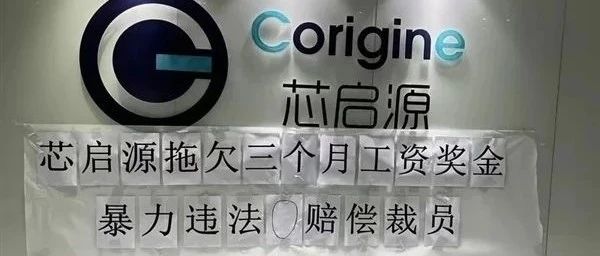
国产半导体大厂暴雷!欠薪数月、0赔偿裁员,HR直言就是不发;小马智行与文远知行隔空对垒,火药味十足;豆包高考测试成绩有望上清北
雷峰网· 2025-06-26 00:43
Group 1 - The competition in the Robotaxi market is intense, with only three companies, Waymo, Pony.ai, and Baidu, meeting the standards for scale and automation, according to Pony.ai's CTO [4] - ByteDance's AI research team leader, Kong Tao, has left the company to start his own venture, indicating a shift in talent within the AI sector [14] - Xiaomi is set to launch its new SUV model, the YU7, with three versions and advanced features, highlighting its commitment to the automotive market [12][13] Group 2 - The semiconductor company, Chipone, has faced severe financial issues, including unpaid salaries and layoffs without compensation, raising concerns about its operational stability [8] - Intel is gradually shutting down its automotive business, focusing on its core client and data center products, which may impact its automotive clients [40] - The launch of Cao Cao Mobility on the Hong Kong Stock Exchange marks it as the largest tech mobility platform in Hong Kong, with a valuation of approximately 228 billion HKD [28][29] Group 3 - The ongoing layoffs at Microsoft’s Xbox division reflect a broader strategy to shift resources towards cloud services, indicating a significant restructuring within the company [41] - DJI is experiencing severe shortages of its drones in the U.S. market, leading to speculation about its future in that region, although the company remains committed to the market [22][23] - Ningde Times emphasizes overseas expansion as a priority amidst fierce competition in the domestic electric vehicle market, highlighting concerns over unhealthy competition [34][35]