
护发素

Search documents
2026年俄罗斯消费者分析,WB智云金科,跨境电商、俄罗斯电商野莓
Sou Hu Cai Jing· 2026-02-26 02:22
Group 1 - The core consumer in 2026 is characterized as a skeptical individual who takes time to make purchasing decisions, with 11% of online shopping carts being abandoned for over a day, and trust requiring a rating of 4.5 or higher to be established [2][6][27] - E-commerce sales for fast-moving consumer goods (FMCG) are growing at nearly three times the rate of offline sales, with online sales increasing by 31.3% from January to September 2025 [2][27] - The growth of e-commerce platforms is slowing, with GMV growth decreasing from 112% in 2023 to 50% in 2024, indicating a maturing online market [3][27] Group 2 - Consumer behavior is shifting from impulsive buying to a focus on value and experience, with a notable increase in home cooking and DIY coffee, leading to a 15.6% growth in ready-to-eat food sales in 2025 compared to 2024 [3][27] - Nostalgia is becoming a significant driver of consumer choices, with products reflecting Soviet aesthetics and retro designs experiencing growth even in declining categories [5][27] - Consumers are increasingly spending more time on purchase decisions, with 11.1% of orders remaining in carts for over a day, creating a substantial pool of delayed demand [5][6][27] Group 3 - The trend of health-conscious living is becoming more pronounced, with consumers prioritizing quality food, fitness, and practical value over luxury [5][27] - The market is witnessing a polarization in consumer choices, with a preference for either minimalist products or those offering unique experiences, leading to a competitive environment where brands must stand out [8][28] - The rise of AI in shopping is streamlining choices, with consumers relying on technology to filter products based on specific needs, intensifying competition among brands [13][28] Group 4 - The demographic shift is influencing consumer behavior, with older generations investing in health and quality of life, while younger consumers are delaying traditional milestones and focusing on personal experiences [17][21][27] - The 55+ age group is emerging as a powerful economic force, actively seeking anti-aging products and maintaining a youthful lifestyle, which is reshaping market dynamics [17][18][27] - Brands must adapt their communication strategies to resonate with diverse consumer groups, emphasizing trust, clear value, and personalization to succeed in the evolving market landscape [14][27]

50批次化妆品不符合规定,菌落总数超标、成分比对不符成重灾区
Xin Jing Bao· 2026-02-05 04:53
Core Viewpoint - In 2025, a total of 50 batches of cosmetics were found to be non-compliant during sampling inspections conducted by the National Medical Products Administration, with brands such as Qiaoyinzi, Kangzhiben, and Weitalili involved, highlighting significant quality control issues in the cosmetics industry [1] Group 1: Non-compliance Issues - 50 batches of cosmetics were identified as non-compliant, including various product types such as conditioners, shampoos, whitening creams, and sunscreens [1] - Among the non-compliant products, 7 batches had excessive total bacterial counts, accounting for approximately 14% of the total [1] Group 2: Bacterial Count Findings - Specific products with excessive bacterial counts include Qiaoyinzi Herbal Cleansing Mud Mask with 7.5×10 CFU/g and Qiaoyinzi Ginger Refreshing Shampoo with 1,500,000 CFU/ml [3] - The total bacterial count is a critical indicator of product quality and consumer safety, with potential health risks associated with using contaminated cosmetics [3] Group 3: Regulatory Standards - The "Cosmetic Safety Technical Specifications (2015 Edition)" stipulates that the total bacterial count for eye, lip, and children's cosmetics must not exceed 500 CFU/ml (g), while other cosmetics must not exceed 1,000 CFU/ml (g) [4] - Additionally, 31 batches of cosmetics failed to meet the "ingredient comparison" requirements, particularly in sunscreen and hair dye products [4] Group 4: Causes of Non-compliance - Factors contributing to non-compliance include inadequate supply chain and raw material management, as well as quality control failures during production [4][5] - Issues such as insufficient cleaning validation during production, measurement errors, and uncontrolled process parameter changes are identified as potential risk factors [5]

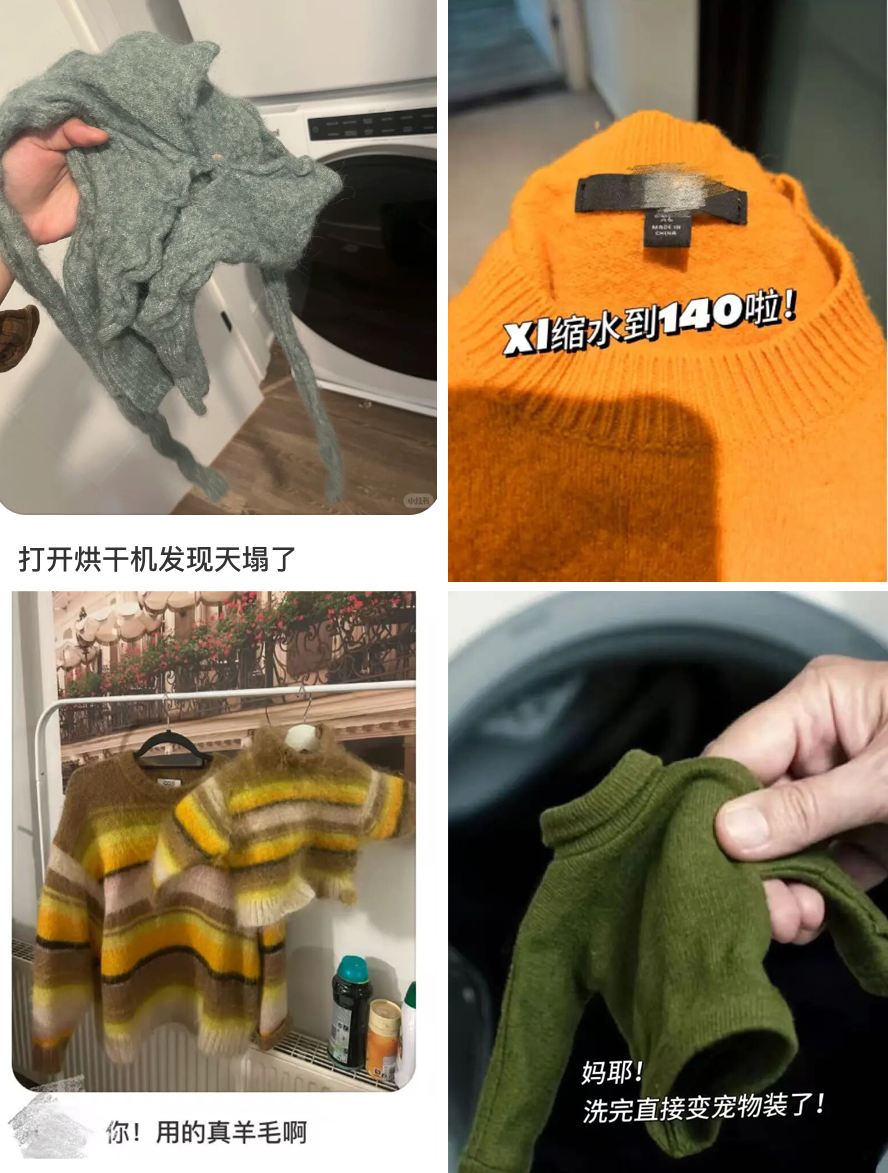
“羊毛衫缩水还原剂”,是智商税还是真有效?
Xin Lang Cai Jing· 2026-01-25 11:03
Core Viewpoint - The article discusses the common issue of wool sweaters shrinking during washing, highlighting the reasons behind this phenomenon and offering tips for proper care and maintenance to prevent damage [1][11][15]. Group 1: Reasons for Shrinkage - Wool fibers have a structure similar to human hair, with scales on their surface that can interlock during washing, leading to shrinkage and loss of warmth [11][15]. - The primary component of wool is protein, which is affected by hydrogen bonds that can break and reform when exposed to water, especially hot water, causing the fibers to compress and shrink [17][19]. Group 2: Washing Techniques - To avoid shrinkage, it is recommended to dry clean wool sweaters instead of washing them with water, using solvents that do not disrupt hydrogen bonds [19][20]. - For washable wool, cold water should be used, and washing should be done gently to minimize physical stress on the fibers [20][22]. Group 3: Recovery from Shrinkage - If shrinkage has already occurred, using conditioner may help, but it will not restore the sweater to its original state, only provide temporary relief [22][24]. - Advances in wool treatment technology, such as plasma treatment, can reduce shrinkage rates by altering the scale structure of the fibers [26].
名臣健康股价涨5.14%,国泰基金旗下1只基金位居十大流通股东,持有129.48万股浮盈赚取168.32万元
Xin Lang Cai Jing· 2026-01-22 02:17
Group 1 - Mingchen Health's stock increased by 5.14%, reaching 26.59 CNY per share, with a trading volume of 1.03 billion CNY and a turnover rate of 1.49%, resulting in a total market capitalization of 70.87 billion CNY [1] - Mingchen Health, established on December 14, 1994, and listed on December 18, 2017, is based in Shantou, Guangdong Province. The company specializes in the research, production, and sales of health care products, including shampoos, conditioners, shower gels, gel water, and skincare products [1] - The revenue composition of Mingchen Health is as follows: 76.84% from online games, 23.09% from daily chemical products, and 0.07% from other sources [1] Group 2 - Guotai Fund's Guotai Zhongzheng Animation Game ETF (516010) entered the top ten circulating shareholders of Mingchen Health, holding 1.2948 million shares, which accounts for 0.49% of the circulating shares. The estimated floating profit today is approximately 1.6832 million CNY [2] - The Guotai Zhongzheng Animation Game ETF (516010) was established on February 25, 2021, with a current scale of 30.01 billion CNY. Year-to-date returns are 11.68%, ranking 767 out of 5542 in its category; the one-year return is 61.36%, ranking 666 out of 4256; and since inception, the return is 59.5% [2] Group 3 - The fund manager of Guotai Zhongzheng Animation Game ETF (516010) is Huang Yue, who has been in the position for 4 years and 353 days. The total asset scale of the fund is 35.78 billion CNY, with the best fund return during his tenure being 50.08% and the worst being -57.08% [3]
名臣健康股价涨5.05%,国泰基金旗下1只基金位居十大流通股东,持有129.48万股浮盈赚取152.79万元
Xin Lang Cai Jing· 2026-01-15 05:56
Group 1 - The core viewpoint of the news is that Mingchen Health has seen a stock price increase of 5.05%, reaching 24.56 CNY per share, with a trading volume of 214 million CNY and a turnover rate of 3.38%, resulting in a total market capitalization of 6.546 billion CNY [1] - Mingchen Health, established on December 14, 1994, and listed on December 18, 2017, is located in the Lian Nan Industrial Zone of Chenghai District, Shantou City, Guangdong Province. The company specializes in the research, development, production, and sales of health care products, including shampoos, conditioners, shower gels, gel water, and skincare products [1] - The revenue composition of Mingchen Health is primarily from online games at 76.84%, followed by daily chemical products at 23.09%, and other sources at 0.07% [1] Group 2 - Among the top ten circulating shareholders of Mingchen Health, a fund under Guotai Fund ranks as a significant stakeholder. The Guotai Zhongzheng Animation Game ETF (516010) entered the top ten circulating shareholders in the third quarter, holding 1.2948 million shares, which accounts for 0.49% of the circulating shares. The estimated floating profit today is approximately 1.5279 million CNY [2] - The Guotai Zhongzheng Animation Game ETF (516010) was established on February 25, 2021, with a current scale of 3 billion CNY. Year-to-date returns are 17.29%, ranking 178 out of 5525 in its category; the one-year return is 73.43%, ranking 319 out of 4208; and since inception, the return is 67.52% [2]
名臣健康跌2.03%,成交额1.61亿元,主力资金净流出1643.45万元
Xin Lang Cai Jing· 2026-01-14 05:41
Group 1 - The core viewpoint of the news is that Mingchen Health's stock has experienced fluctuations, with a recent decline of 2.03% and a total market capitalization of 6.175 billion yuan [1] - As of January 14, the stock price is reported at 23.17 yuan per share, with a trading volume of 161 million yuan and a turnover rate of 2.57% [1] - The net outflow of main funds is 16.4345 million yuan, with significant selling pressure observed [1] Group 2 - Mingchen Health's stock has seen a year-to-date increase of 0.78%, with a 1.00% rise over the last five trading days, a 6.04% increase over the last 20 days, and a substantial 31.35% increase over the last 60 days [2] - The company, established on December 14, 1994, and listed on December 18, 2017, specializes in the research, production, and sales of health care products, with a revenue composition of 76.84% from online games and 23.09% from daily chemical products [2] - As of September 30, 2025, Mingchen Health reported a revenue of 1.079 billion yuan, reflecting a year-on-year growth of 9.56%, while the net profit attributable to shareholders decreased by 56.03% to 42.5498 million yuan [2] Group 3 - The company has distributed a total of 151 million yuan in dividends since its A-share listing, with 46.5738 million yuan distributed over the past three years [3] - As of September 30, 2025, the top ten circulating shareholders include various ETFs, with notable changes in holdings among major institutional investors [3]
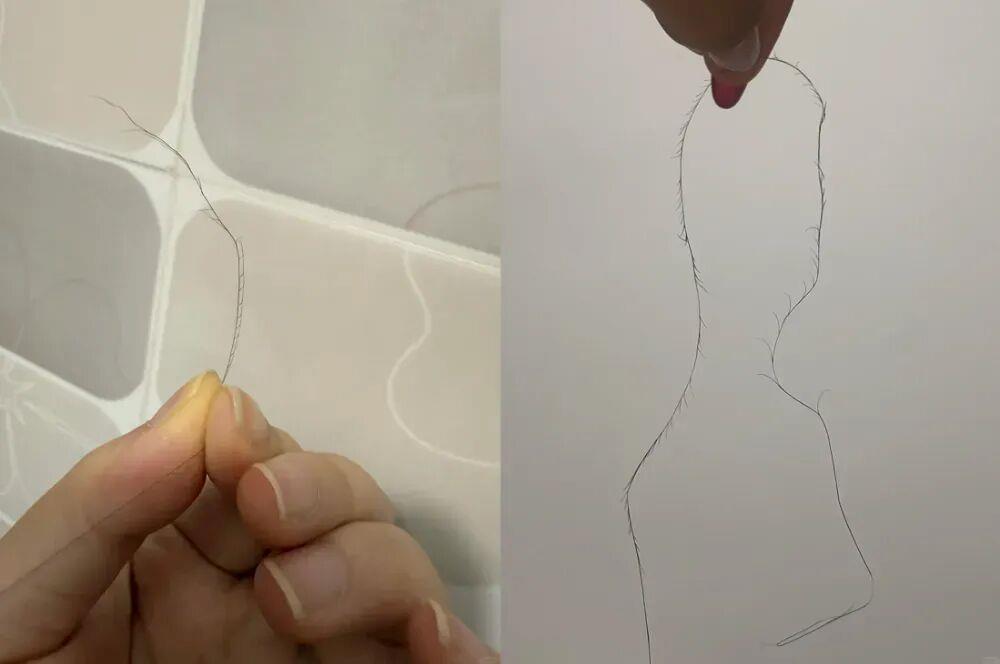
头发开叉其实是种病,很多人忽视了!三招就能改善
Xin Hua Wang· 2025-12-28 14:16
Core Viewpoint - Hair splitting, known medically as "hair shaft abnormalities," indicates that hair is unhealthy and requires attention [3][4] Group 1: Understanding Hair Shaft Abnormalities - Hair is a specialized structure of the skin, primarily composed of keratin, which is also found in nails and other skin layers [3] - Hair shaft abnormalities encompass various issues, including split ends, which differ from hair loss that originates from follicle problems [3][4] - Common manifestations of hair shaft abnormalities include split ends, hair fragility, changes in appearance and texture, tangling, difficulty in combing, thinning, and slow growth [5][6] Group 2: Causes of Hair Shaft Abnormalities - The majority of hair shaft abnormalities are caused by external factors such as mechanical, chemical, and thermal damage [8][11] - Mechanical damage can occur from excessive brushing, rough towel drying, and tight hairstyles, leading to structural loss and shine [14] - Chemical damage arises from hair treatments like dyeing and perming, which can break down keratin and damage the hair cuticle [15][16] - Thermal damage is caused by high temperatures from styling tools, leading to internal hair damage and increased fragility [18][21] Group 3: Solutions for Healthy Hair - To maintain healthy hair, it is essential to minimize negative impacts by avoiding harsh mechanical actions and excessive heat [22][23] - Regular use of conditioners can help protect hair by addressing surface abnormalities and improving texture [26][27] - Cutting hair shorter can reduce mechanical damage and the risk of split ends, providing a quick solution to improve hair health [28]

头发开叉其实是种病 3步就能改善
Xin Lang Cai Jing· 2025-12-27 04:16
Core Viewpoint - Hair issues are not limited to hair loss; split ends are also a significant concern, indicating underlying hair health problems [1][3] Group 1: Hair Structure and Abnormalities - Hair is a specialized structure known as "hair shaft," primarily composed of keratin, which is also found in nails and animal hooves [4] - Abnormalities in hair structure, termed "hair shaft abnormalities," differ from hair loss, which is related to follicle issues [4][6] - There are two classifications of hair shaft abnormalities based on hair brittleness, which can lead to breakage or structural irregularities without breakage [4][6] Group 2: Causes of Hair Shaft Abnormalities - External factors are the primary causes of hair shaft abnormalities, including mechanical, chemical, and thermal damage [6][7] - Mechanical damage can occur from excessive brushing, rough towel drying, and tight hairstyles, leading to structural loss and dullness [9][10] - Chemical damage arises from hair treatments like dyeing and perming, which can weaken the hair structure due to harsh chemicals [11][12] - Thermal damage from tools like hair dryers and straighteners can create internal bubbles in the hair, leading to fragility [13][14] - Environmental factors such as UV exposure, humidity, and pollution can also contribute to hair damage, particularly from prolonged sun exposure [14] Group 3: Solutions for Healthy Hair - Recommendations to maintain healthy hair include reducing mechanical damage by avoiding harsh treatments and minimizing heat exposure [16][17] - The use of conditioners is advised to help repair damaged hair surfaces and improve manageability [15][17] - Shortening hair length can reduce mechanical stress and the risk of damage, particularly for individuals with long hair [15][18]
理发店陷入生存危机,没有电商冲击,却纷纷倒闭,原因很扎心
Sou Hu Cai Jing· 2025-12-19 09:31
Core Viewpoint - The hairdressing industry is experiencing a transformation amidst declining birth rates and the closure of educational institutions, indicating a shift in consumer behavior and market dynamics [1][2]. Group 1: Industry Challenges - The hairdressing industry is facing a decline, with many establishments struggling to compete in the e-commerce era without direct confrontation [3][4]. - A significant number of hairdressers lack formal training, often relying on basic techniques and misleading practices to attract customers [8][10]. - The prevalence of deceptive pricing strategies has led to customer dissatisfaction, with many feeling they are overcharged for subpar services [11][12]. Group 2: Consumer Behavior - Customers are increasingly wary of hair salons due to aggressive upselling tactics and fear of being overcharged, leading to a decrease in demand for hair services [16][18]. - The rise of low-cost hair services, with prices dropping to as low as 10 yuan for a haircut, has intensified competition but often at the expense of service quality [18][20]. - Many salons are shifting their business models to include beauty services and product sales, attempting to attract customers who prefer one-stop shopping experiences [20][21]. Group 3: Market Dynamics - The influx of new entrants into the hairdressing market has resulted in oversaturation, with many salons prioritizing quick profits over sustainable practices [14][22]. - The sale of hair care products has become a primary revenue source for salons, targeting young professionals and students who may not have long-term loyalty to specific establishments [24][26]. - The industry is caught in a vicious cycle of price wars and declining service quality, making it difficult for salons to maintain profitability and customer loyalty [26][28].

国家药监局通报37批次不符合规定化妆品
Ren Min Wang· 2025-12-10 02:31
Core Viewpoint - The National Medical Products Administration (NMPA) of China reported that 37 batches of cosmetics, including shampoos, body washes, hair dyes, masks, sunscreens, and conditioners, do not meet regulatory standards [1] Regulatory Actions - The NMPA has mandated local drug supervision departments in Shanghai, Shandong, Guangdong, and other provinces to investigate the manufacturers and registrants of the non-compliant cosmetics [1] - Companies are required to implement risk control measures and conduct self-inspections and corrections [1] - Local authorities must order the cessation of sales of the non-compliant products and investigate the procurement records of the retailers [1] Legal Consequences - The NMPA emphasized that any illegal activities discovered during the investigations will be dealt with severely, and cases involving criminal offenses will be referred to law enforcement [1]