新能源技术

Search documents
把握推动高质量发展的科学方法论
Jing Ji Ri Bao· 2025-12-01 22:26
Core Viewpoint - The article emphasizes the importance of "high-quality development" as a primary goal for China's 15th Five-Year Plan, highlighting the need for a balanced approach between stability and progress in economic and social development [1][2][5]. Group 1: Stability and Progress - "Stability" is identified as a prerequisite for high-quality development, reflecting a methodology that respects objective laws and emphasizes practical realities [3]. - The current development environment is characterized by complex changes, necessitating a focus on stabilizing employment, businesses, markets, and expectations to ensure economic operations remain within a reasonable range [3][5]. - "Progress" is framed as the goal and direction of high-quality development, requiring transformative changes in quality, efficiency, and momentum to achieve a balance between qualitative improvement and reasonable quantitative growth [4][5]. Group 2: Dynamic Balance - The article stresses the need for a dynamic balance between "stability" and "progress," which serves as a guiding principle for economic work, advocating for effective macroeconomic regulation and policy implementation [5]. - It highlights the importance of maintaining a systematic view to harmonize government and market roles, speed and quality, and development and safety [5]. Group 3: Coordinated Development - The concept of "point" and "surface" coordination is introduced, emphasizing the need for targeted breakthroughs in key areas while ensuring overall systemic advancement [6][7]. - The article suggests that breakthroughs in core issues can lead to broader systemic improvements, particularly in the context of developing a modern industrial system centered on advanced manufacturing [7][8]. Group 4: Internal and External Integration - The article discusses the necessity of integrating internal and external development, advocating for a strong domestic cycle while promoting international cooperation and trade [10][12]. - It notes that domestic consumption is a significant driver of economic growth, with a focus on enhancing consumer demand and optimizing investment structures [11][12]. Group 5: Institutional Support - The article calls for the establishment of a robust institutional framework to support high-quality development, including the construction of a high-level socialist market economy and the removal of barriers to market integration [9][13]. - It emphasizes the importance of creating a conducive business environment to facilitate the efficient allocation of resources and promote innovation [9][13].
中国开放创新环境令诸多市场主体“用脚投票” 跨国企业实现跨越式成长
Yang Shi Wang· 2025-10-26 07:26
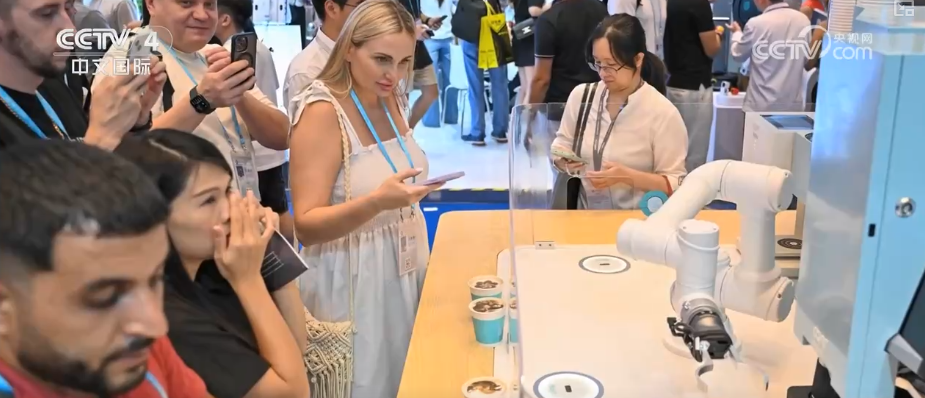
Group 1 - The core viewpoint of the articles emphasizes China's commitment to sharing opportunities with the world and fostering mutual development, as highlighted by the recent Fourth Plenary Session of the 20th Central Committee of the Communist Party of China [1] - During the "14th Five-Year Plan" period, China has provided zero-tariff treatment on 100% of products for all least developed countries that have diplomatic relations with China, showcasing its high-level openness to the world [4] - China has hosted major trade events such as the China International Import Expo (CIIE), with a cumulative intended transaction amount exceeding 500 billion USD, indicating a diverse range of trade partnerships [4] Group 2 - Numerous infrastructure projects initiated by China, such as the China-Laos Railway and the Jakarta-Bandung High-Speed Railway, are operational globally, promoting a new connectivity framework [7] - China has signed cooperation documents with over 150 countries and more than 30 international organizations under the Belt and Road Initiative, enhancing global collaboration [7] - China's high-speed rail mileage accounts for over 70% of the world's total, and its industrial robot installations represent more than 50% of the global total, reflecting its transition from a global manufacturing hub to a global innovation center [9] Group 3 - By 2025, China is expected to rank among the top ten in the global innovation index, indicating its rapid rise in the global technology innovation landscape during the "14th Five-Year Plan" [13] - China's high-quality development is seen as a stabilizing force in the global economy, responding effectively to external uncertainties [13] - The "15th Five-Year Plan" is viewed not only as a domestic economic and social development document but also as a development blueprint with global significance [13]

从“中国经济”到“中国人经济”,有何不同寻常?|新京报专栏
Xin Jing Bao· 2025-10-24 08:01
Core Viewpoint - The article emphasizes the strategic shift in China's economic development philosophy, highlighting the importance of both GDP and GNI, which reflects a transition from a production-oriented approach to a more comprehensive perspective on national wealth and economic well-being [2][3]. Summary by Sections Economic Development Strategy - The 20th Central Committee's Fourth Plenary Session approved the proposal for the 15th Five-Year Plan, focusing on expanding bilateral investment cooperation and emphasizing both GDP and GNI as key indicators of economic health [2]. - The shift from focusing solely on domestic production (GDP) to including national wealth (GNI) signifies a paradigm change in understanding economic performance [2][3]. GNI vs. GDP - GNI, which includes net income from abroad, provides a broader view of national wealth compared to GDP, which is limited to domestic production [3]. - GNI emphasizes the importance of individuals and their global resource allocation capabilities, while GDP focuses on local production [3]. International Investment and Competitiveness - Chinese enterprises have established over 50,000 companies abroad, with foreign investment stock exceeding $3 trillion, maintaining a global ranking in the top three for eight consecutive years [3]. - The growth of overseas assets contributes directly to GNI, aligning with the goal of meeting the people's growing needs and supporting high-level openness [4]. Policy Implications - The dual focus on GDP and GNI is seen as a necessary response to the challenges of globalization, enhancing China's control over global resources and supply chains [6]. - The proposal includes measures to attract foreign investment and support outbound investment, particularly in advanced manufacturing and digital economy sectors [7][8]. Institutional Reforms - The establishment of a more comprehensive institutional framework for high-level openness is anticipated, including aligning with international trade agreements and improving the business environment for foreign investors [7][8]. - The focus on GNI growth may lead to a shift in local government priorities from merely attracting investment to fostering talent and global engagement [8]. Global Economic Governance - The emphasis on both GDP and GNI offers a new model for economic governance, providing a reference for developing countries to balance efficiency and equity [9]. - This approach aims to enhance resilience against market fluctuations and promote inclusive globalization, as seen in projects like the China-Laos railway [9]. Conclusion - The transition from a GDP-centric model to one that values GNI reflects a profound change in development philosophy, positioning China as a global value creator rather than just a manufacturing hub [9].
什么是环保概念,涵盖哪些产业链
Sou Hu Cai Jing· 2025-10-04 01:21
Core Insights - The environmental protection concept encompasses a series of industrial activities and technological applications aimed at reducing environmental damage, lowering pollution emissions, and enhancing resource utilization efficiency [1] - The global climate change issue has led governments to implement policies supporting green transformation, making the environmental protection concept a significant focus in capital markets [1] Industry Structure - The environmental protection industry chain includes upstream technology research and equipment manufacturing, midstream environmental governance and operational services, and downstream resource recycling [1] - Upstream activities involve the development and production of energy-saving and environmentally friendly materials, renewable energy technologies, and pollution monitoring instruments [1] - Midstream focuses on pollution control projects such as wastewater treatment, flue gas purification, and solid waste management [1] - Downstream emphasizes the recycling and reuse of waste materials, including the recovery of metals, dismantling of electronic products, and biomass energy conversion [1] Clean Energy and Infrastructure - The environmental protection concept extends to the application of clean energy as a substitute for traditional fossil fuels, including the development of wind, solar, and hydrogen energy [1] - Supporting infrastructure such as smart grids and energy storage systems are also critical components of green low-carbon development [1] Investment Opportunities - Understanding the structure of the environmental protection industry chain helps investors identify investment opportunities at different stages [2] - Environmental governance demand may be released first due to policy drivers, while long-term growth potential may arise from technological innovation and circular economy models [2] - The environmental protection industry is significantly influenced by policies, and some areas may have longer return cycles, necessitating a comprehensive assessment of macroeconomic conditions and industry trends for investment decisions [2]
全球百强创新集群:中国这个集群第一,前15中国有5个
第一财经· 2025-09-02 03:09
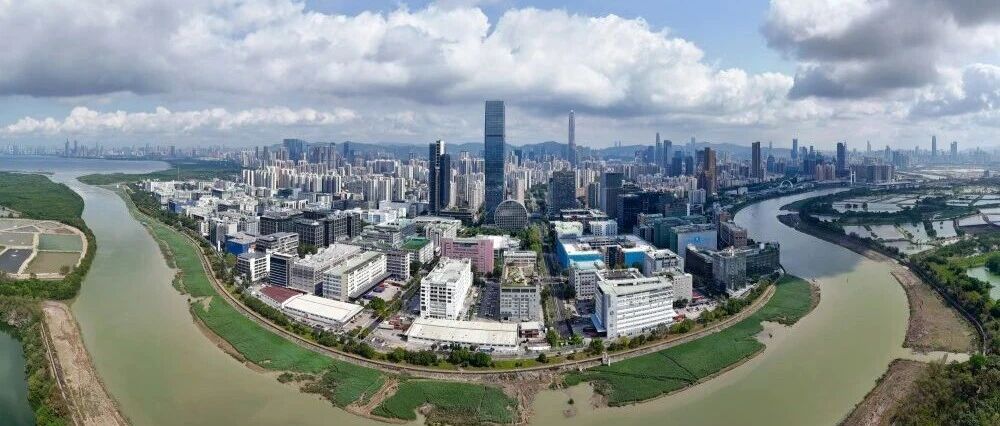
Core Insights - The 2025 Global Innovation Index (GII) highlights the importance of venture capital in driving innovation activities, with the Shenzhen-Hong Kong-Guangzhou cluster surpassing the Tokyo-Yokohama cluster to claim the top position [3][6] - The introduction of venture capital transactions as a new metric in the GII methodology has significantly influenced the rankings, emphasizing the role of startup activities and innovation financing [6][7] Group 1: Rankings and Performance - The top three innovation clusters in the 2025 GII are Shenzhen-Hong Kong-Guangzhou (1st), Tokyo-Yokohama (2nd), and San Jose-Sunnyvale-Santa Clara (3rd) [4][6] - China leads with the most clusters (24) in the top 100, while the United States follows with 22 clusters [6][7] - The clusters of Beijing (4th), Seoul (5th), and Shanghai-Suzhou (6th) also rank highly, showcasing China's strong innovation ecosystem [6][7] Group 2: Methodology and Metrics - The GII 2025 employs three key indicators: the location of inventors in published PCT patent applications, the authorship of published scientific papers, and the volume of venture capital transactions [7] - The new methodology has narrowed the gap between China and the U.S. in terms of innovation strength, with Shenzhen-Hong Kong-Guangzhou showing superior performance in venture capital transactions [7][8] Group 3: Scientific Contributions - The top three clusters for scientific paper publications are Beijing (4% of global total), Shanghai-Suzhou (2.5%), and Shenzhen-Hong Kong-Guangzhou (2.4%) [7] - The highest PCT application contributions come from Tokyo-Yokohama (10.3%), Shenzhen-Hong Kong-Guangzhou (9%), and Seoul (5.4%) [7] Group 4: Venture Capital Activity - From 2019 to 2023, the top 100 clusters attracted nearly 169,000 venture capital transactions, with San Jose-Sunnyvale-Santa Clara (6.9%), New York City (4.5%), and London (4.4%) leading the way [8] - The data indicates a strong correlation between venture capital activity and innovation density, particularly in leading clusters [8] Group 5: Innovation Density - In terms of innovation density, the top clusters are San Jose-Sunnyvale-Santa Clara (1st), Cambridge (2nd), and Boston-Cambridge (3rd), with Ningde (China) ranking 4th due to a surge in patent applications from CATL [10]

2025上海合作组织国际投资贸易博览会开幕
Qi Lu Wan Bao· 2025-07-19 05:26
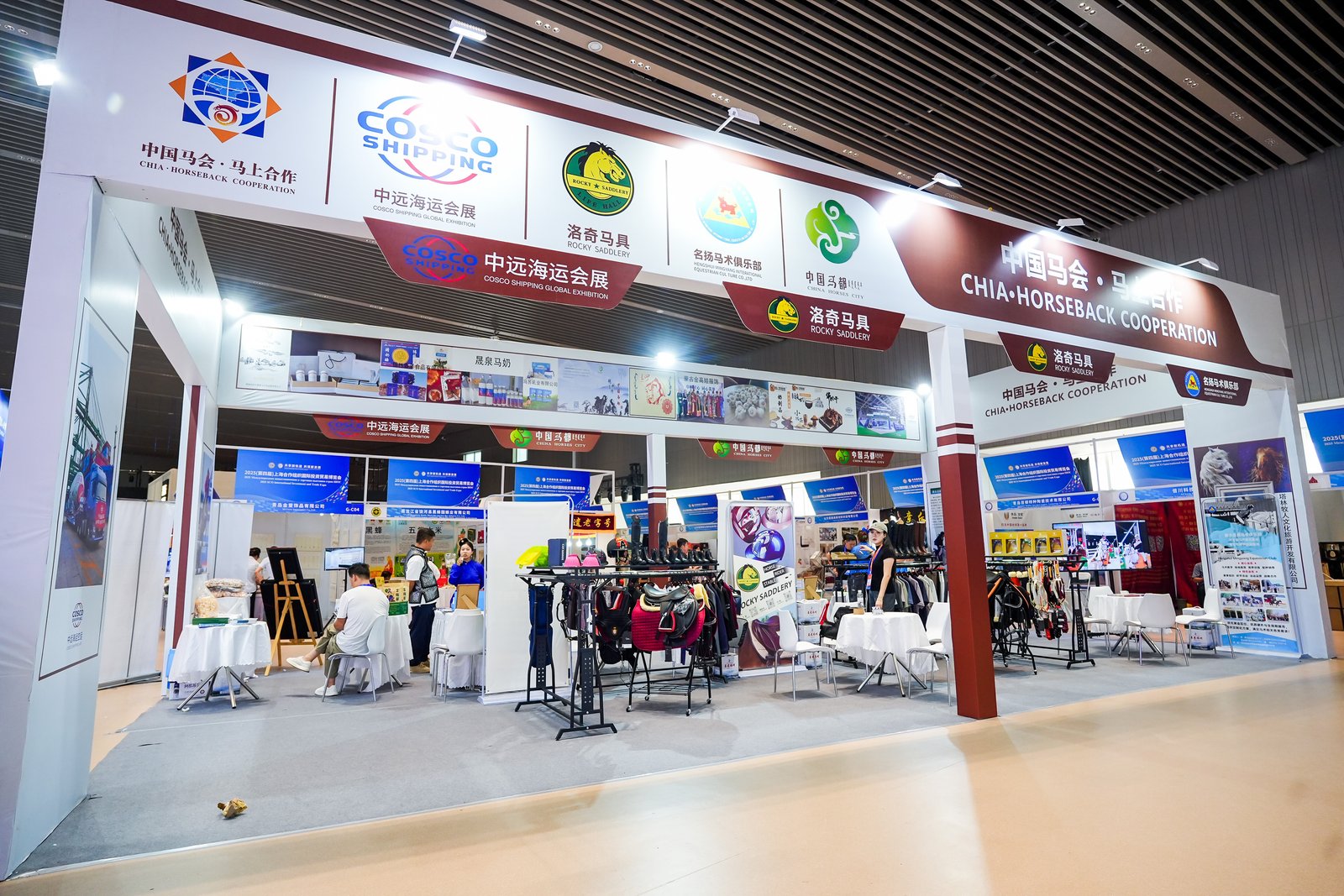
Core Viewpoint - The 2025 Shanghai Cooperation Organization International Investment and Trade Expo (SCO Expo) has commenced in Qingdao, focusing on enhancing international economic and trade cooperation among SCO member states and other participating countries [1][3]. Group 1: Event Overview - The SCO Expo is hosted by the Qingdao Municipal Government and themed "Sharing New Opportunities, Seeking New Development," attracting 360 exhibitors and 2,905 buyers from SCO member states and other countries [3]. - The event aims to promote regional industrial chain collaboration, green transformation, and digital innovation, enhancing international economic exchanges and investment [3][5]. Group 2: Exhibition Details - The expo features an innovative "1+5+2+N" model with a total exhibition area of 44,000 square meters, including one comprehensive exhibition, five specialized exhibitions, two special events, and numerous supporting activities [5]. - The comprehensive exhibition focuses on showcasing the image of SCO member states, while specialized exhibitions cover various sectors such as international consumer goods, high-end equipment, and automotive components [5][7]. Group 3: Participation and Collaboration - Major industry leaders like CRRC Qingdao Sifang, Huaxi Biological, and Hexagon are participating, showcasing cutting-edge technologies and innovations in fields such as new energy and smart agriculture [7]. - The expo serves as a platform for sharing local economic cooperation experiences and exploring bilateral trade and investment opportunities among participating countries [7].