
无人船

Search documents
同频共振融入国家发展大局
Jing Ji Ri Bao· 2026-02-20 22:12
Core Viewpoint - The Hong Kong Special Administrative Region government has announced the formulation of its first "Five-Year Plan," aligning it with the national "14th Five-Year Plan," indicating a proactive approach to integrate into the national development framework and embrace future opportunities [1][2]. Group 1: Policy and Governance - The "Five-Year Plan" signifies a more robust governance style, requiring comprehensive planning with binding indicators, timelines, and responsible parties [2]. - Current outdated laws in Hong Kong hinder the adaptation to new products and technologies, necessitating the "Five-Year Plan" to streamline processes and create a more efficient business environment [2][3]. Group 2: Economic Development - The plan aims to cultivate new productive forces, leveraging Hong Kong's status as a financial hub and educational center, which includes five globally ranked universities and a pool of high-level international talent [2]. - The development of innovation and technology industries is expected to enhance Hong Kong's industrial balance and resilience against risks [2]. Group 3: Strategic Alignment - The "Five-Year Plan" will align with national strategies, such as enhancing Hong Kong's role in the financial sector, improving transportation collaboration within the Greater Bay Area, and fostering a strong domestic market [3]. - The plan emphasizes urban development without interfering with corporate autonomy, providing investors with clearer opportunities and a stable outlook for long-term growth [3].
且听这片湖的科创“船说”(“镇”在创新)
Ren Min Ri Bao· 2026-02-09 05:45
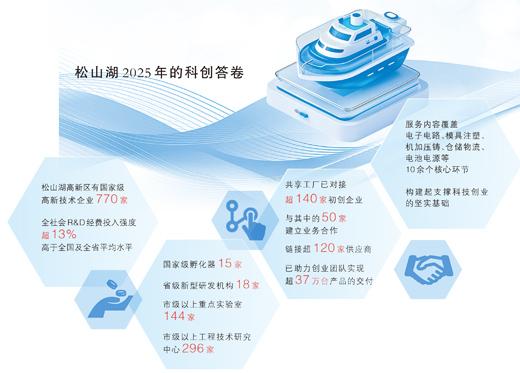
Core Insights - The article highlights the rapid development of the Songshan Lake Science City in Dongguan, which is set to surpass a GDP of 100 billion yuan in 2024, becoming the second "billion-level" town in Dongguan after Chang'an [2]. Group 1: Innovation Ecosystem - The Songshan Lake area has fostered a comprehensive innovation ecosystem, facilitating a full chain from basic research to technology transfer and product commercialization [3][4]. - The establishment of a "one-stop" service platform in the XbotPark robot base has supported over 140 startups, helping them achieve the delivery of over 370,000 products by connecting them with more than 120 suppliers [5]. Group 2: Support for Startups - Startups like Yidong Technology have benefited from the supportive environment in Songshan Lake, which provides essential resources for product testing and development [8][10]. - The local government has implemented regular communication platforms, such as "Tuesday Meetings," to address the common challenges faced by tech startups and enhance collaboration among academia, industry, and government [6][11]. Group 3: Talent Attraction and Development - The Songshan Lake International Innovation and Entrepreneurship Community has become a hub for over 6,000 innovative talents, supported by various research institutions and shared resources [10][11]. - The community offers a conducive living environment with amenities and services aimed at attracting and retaining high-level talent, contributing to the area's growth and innovation [11].

无人船建模与控制研究获进展
Zhong Guo Zi Ran Zi Yuan Bao· 2026-02-04 03:36
Core Insights - The Ministry of Natural Resources' First Institute of Oceanography has made significant advancements in unmanned vessel modeling and control, providing new technological pathways for autonomous navigation and intelligent control of unmanned vessels [1] Group 1: Challenges in Current Technology - The current technology faces two main challenges: the difficulty in precise modeling of high-speed unmanned vessels under multiple navigation states, and the struggle to balance reliability and interpretability in control methods [1] - High-speed unmanned vessels exhibit strong non-linear and multi-stage characteristics, making traditional physical models inadequate [1] - Existing deterministic model-based control methods lack robustness, while current neural network controllers often lack physical modeling, leading to insufficient interpretability [1] Group 2: Research Developments - The research team conducted a series of navigation experiments using the self-developed 7-meter high-speed unmanned vessel "Jiuhang 750" to address the issues of physical-data modeling and learning control [2] - A hybrid modeling and control framework based on the Koopman physical model and neural networks was proposed, which offers advantages in interpretability and accuracy, enabling reliable control of unmanned vessels in complex marine environments [2] - The proposed control framework was validated through comparative experiments, demonstrating superiority over traditional nonlinear control methods, thus providing new technical support for the safe autonomous navigation of unmanned vessels [2] Group 3: Modeling Techniques - To address the precise modeling of unmanned vessels at low, medium, and high speeds, the research team introduced a Gaussian process regression modeling method based on mixed kernel functions [2] - This method allows the unmanned vessel model to capture smooth global trends while also describing local abrupt changes, establishing a non-parametric motion model suitable for different navigation states [2] - Experimental validation showed that this model's accuracy surpasses traditional methods, providing effective means for multi-state unmanned vessel motion modeling and forecasting [2] Group 4: Implications for Industry - The series of research outcomes provides new modeling tools and control strategies for autonomous navigation and intelligent control of unmanned vessels in complex marine environments [2] - These advancements are expected to further promote the application of unmanned vessel systems in marine observation and operations [2]
民企奋进自贸港:“与海南共振,与产业共赢”
Sou Hu Cai Jing· 2026-01-23 04:24
Core Insights - The article highlights the growth of Hainan Flyer Technology Co., Ltd. as a representative emerging technology enterprise benefiting from the Hainan Free Trade Port policies, emphasizing the alignment of the company's strategy with the region's development goals [1][5]. Company Development - Hainan Flyer Technology started with a small team and has grown to establish headquarters in Haikou, Guangzhou, and Beijing, covering a full range of operations from drones to underwater vehicles [4]. - The company has participated in the formulation of two national standards and holds 81 core patents and software copyrights, showcasing its innovation and contribution to the industry [4]. Challenges and Opportunities - Initially, the company faced challenges such as attracting high-end talent and managing financial pressures, which are critical for technology enterprises [4]. - The founder emphasized the importance of creating a compelling vision to attract team members, highlighting the need for a meaningful and future-oriented mission [4]. Policy Support - The Hainan Free Trade Port policies have significantly reduced operational costs, such as a savings of approximately 60,000 yuan on a 3D printer due to zero tariff policies [5]. - Tax incentives, including the "Double 15" tax policy, have enhanced the region's attractiveness for high-end talent, contributing to the company's competitive edge [5]. Strategic Alignment - The company's growth is closely aligned with national and regional development strategies, aiming to contribute to the construction of the Hainan Free Trade Port [5]. - The founder expressed a commitment to leveraging the advantages of the Free Trade Port to expand product and service exports, positioning the company for international growth [5].
海南飞行者科技——“自贸港政策让我们安心做研发”
Hai Nan Ri Bao· 2026-01-22 01:43
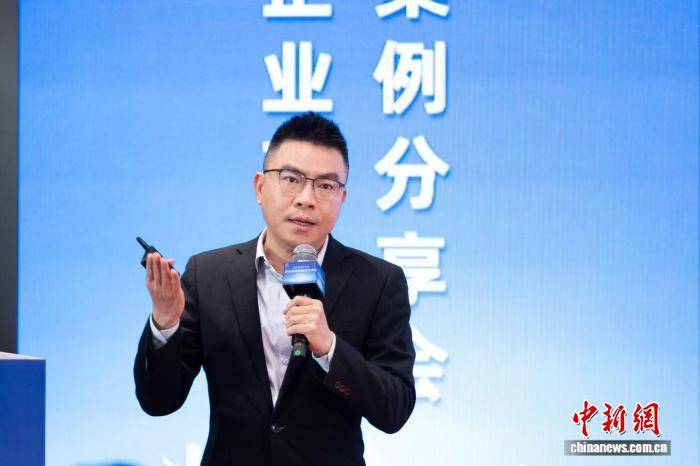
Core Insights - Hainan Flyer Technology Co., Ltd. has transformed from a small startup to a national-level "little giant" enterprise in just nine years, showcasing the potential of innovation in the Hainan Free Trade Port [1][2] - The company has leveraged the benefits of the Free Trade Port policies, such as zero tariffs and tax incentives, to enhance its research and development capabilities and attract high-end talent [1][2] - Flyer Technology has developed a comprehensive "air-sea-submarine" equipment system, holding 81 core technology patents and participating in national standard formulation, reflecting its strong technological foundation [2][3] Group 1 - The company started with a 43-square-meter office and a three-person team, now boasting a full matrix of unmanned equipment systems [1] - The founder emphasized that the Free Trade Port policies not only reduce costs but also allow for long-term R&D focus [1] - The company has attracted top talent from prestigious universities, strengthening its technical and product development capabilities [1] Group 2 - Flyer Technology has achieved significant recognition, moving from provincial "specialized and innovative" status to national "little giant" status, and has won multiple national and international awards [2] - The company focuses on real-world applications, such as deep-sea monitoring and marine environmental surveys, utilizing intelligent equipment for tasks that are difficult for humans [3] - Future plans include expanding technology applications in low-altitude economy, smart oceans, and emergency support, aiming for scalable and replicable models [3]
广东出台14条政策措施 推动人工智能赋能交通运输高质量发展 支持地市有序扩大高级别自动驾驶应用区域
Nan Fang Ri Bao Wang Luo Ban· 2026-01-22 01:39
Core Insights - The article discusses the implementation of the "Measures" by the Guangdong provincial government to accelerate the integration of artificial intelligence (AI) in transportation, aiming to enhance the quality, efficiency, and transformative power of the sector [1] Group 1: Support Framework - The "Measures" focus on three core areas: data supply, computational power and algorithm support, and key technology breakthroughs [1] - In terms of data supply, Guangdong aims to lead with the construction of a digital foundation for the transportation industry, enhancing data governance and creating a high-quality data resource directory [1] - For computational power, the province will utilize data center clusters and deploy edge computing nodes in critical areas to create a collaborative system of centralized and real-time computing [1] - Key technology breakthroughs will focus on developing AI models and agents, particularly in real-time perception, multi-modal data integration, intelligent control, and strategy optimization [1] Group 2: Innovative Application Scenarios - The "Measures" outline eight innovative application scenarios to transition AI technology from research to practical use [2] - These include advancing smart connected vehicle trials, enhancing smart road construction, and supporting the integration of rail transport systems [2] - Other scenarios involve improving smart waterway efficiency, upgrading smart port operations, enhancing civil aviation safety, expanding low-altitude intelligent applications, and developing a comprehensive smart transportation service system [2] Group 3: Operational Mechanisms - The "Measures" establish three operational mechanisms to ensure effective implementation [3] - A dedicated task force will be formed by the provincial transportation department to oversee the execution of these initiatives [3] - Collaborative innovation will be promoted through regular innovation competitions and industry showcases [3] - The province will also create a platform for communication between application scenario enterprises and technology innovators, while fostering talent development in AI and transportation [3]
吴中区推进“机器人+人工智能”发展 首批100个场景需求清单发布
Su Zhou Ri Bao· 2026-01-20 02:31
Group 1 - The second Suzhou Wuzhong Embodied Intelligent Robot Industry Innovation Development Conference has commenced, showcasing multiple new robot products and significant industry achievements [1] - A total of 18 new robot products from 6 companies that debuted at CES this year were presented, along with 19 new products from 12 embodied intelligence companies, covering various fields such as industrial, service, and special robots [1] - Wuzhong District aims to become the "National Robot Industry Cluster No. 1," with 1,600 enterprises in the industry chain collaborating, leading to 69 complete machine enterprises driving technological innovation and a product variety exceeding 72 types, totaling over 900 products [1] Group 2 - The conference announced a three-year action plan for the open application of intelligent scenarios in Wuzhong District, launching a platform that integrates drones, unmanned ships, unmanned vehicles, and embodied intelligent robots [2] - The first batch of 100 scenario demand lists for "Robot + Artificial Intelligence" in Wuzhong District was revealed, covering eight major fields including industry, commerce, education, culture and tourism, agriculture, healthcare, elderly care, and security inspection [2] - The conference also released the "LakeTech Innovation Ecosystem Construction 2026 Action Plan" and the OPC innovation and entrepreneurship talent training plan, focusing on six major systems to promote deep integration of technological and industrial innovation [2]

吴中全域智能场景应用开放平台上线
Xin Hua Ri Bao· 2026-01-19 20:58
Group 1 - The core viewpoint of the news is that the Wuzhong District is actively promoting the development of the embodied intelligence robotics industry by opening up application scenarios and facilitating cooperation between enterprises and local government [1][2] - Wuzhong District has released over 100 specific application scenarios across various fields, including urban governance and public facilities, to create new development opportunities for local companies [1] - The district aims to establish a comprehensive intelligent scene application open platform and implement a three-year action plan to support the commercialization of robotics technology [1][2] Group 2 - An investment alliance for the embodied intelligence industry has been established to encourage innovation and guide capital towards key technological breakthroughs and industrial incubation [2] - Wuzhong District has set up 39 robot industry funds with a total scale of 16 billion yuan to empower the industry with financial resources [2] - The district plans to attract 100 robot manufacturing companies, create 1,000 application scenarios, and deploy 10,000 intelligent robots, fostering a development model of "hundred enterprises leading, thousand scenes coexisting, and ten thousand machines empowering" [2]
“十五五”全域智能无人体系新场景培育与发展战略趋势预判专项报告
Xin Lang Cai Jing· 2026-01-19 13:16
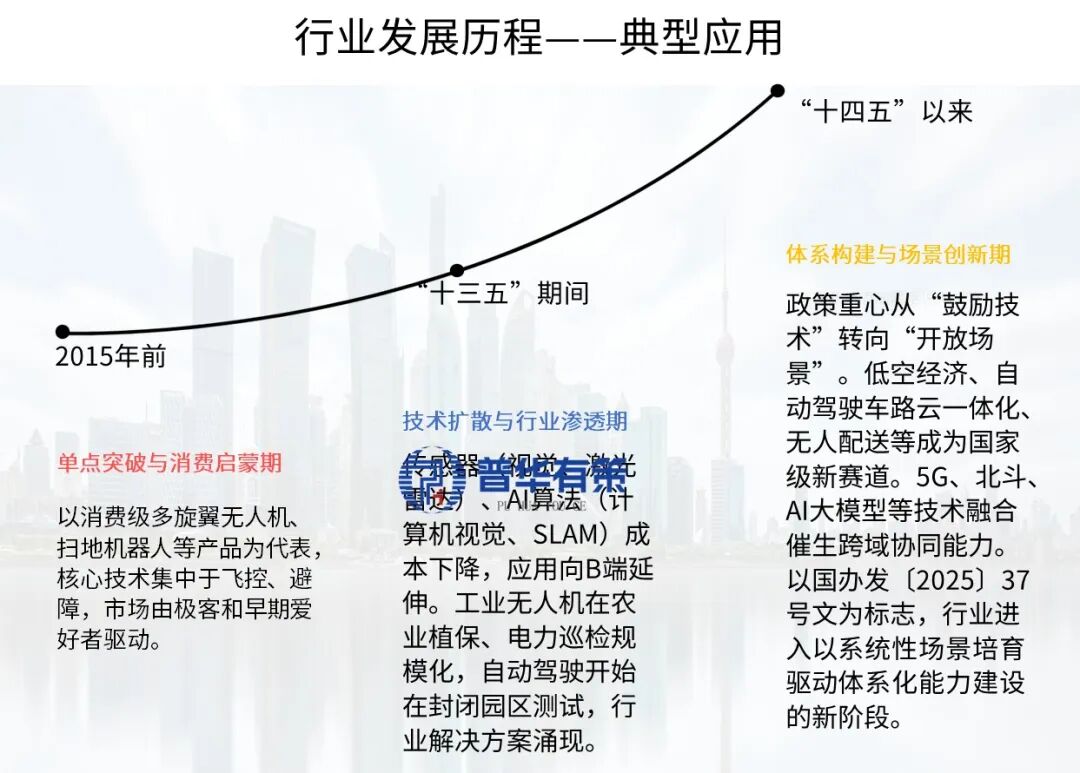
Industry Overview - The all-domain intelligent unmanned system is a complex system integration based on AI, IoT, big data, and cloud computing, encompassing unmanned equipment, supporting infrastructure, data platforms, standards, and business models [1][18] - It serves as a strategic industrial ecosystem that drives the large-scale commercialization of new technologies and products, essential for cultivating new productive forces [1] Policy Environment Analysis - Since the "14th Five-Year Plan," especially by 2025, there has been a strategic shift in the policy environment, emphasizing "new productive forces" and promoting innovation driven by application scenarios [3][20] - The policy focus has transitioned from merely encouraging technology R&D to a systematic deployment that includes technology breakthroughs, scenario opening, standard formulation, infrastructure construction, and safety regulation [3][20] Key Policies - Various policies have been introduced, such as the "Artificial Intelligence + Manufacturing" action plan, which aims to integrate AI technology into major equipment and promote the development of unmanned systems [5][21] - The 2025 Central Economic Work Conference emphasized the importance of technological innovation in leading the modernization of the industrial system, injecting strong policy momentum into strategic emerging industries, including all-domain unmanned systems [5][21] Industry Chain Analysis - China has established the most complete and active all-domain unmanned system industry chain globally, with core upstream components like high-end chips and precision sensors still being a vulnerability [6][22] - The midstream sector is highly competitive, with companies transitioning from hardware manufacturers to comprehensive solution providers that integrate hardware, software, services, and data [6][22] Competitive Landscape - The current competitive landscape features a dominant player, DJI, leading the consumer and industrial drone markets, supported by strong technology, brand, and supply chain advantages [7][23] - Major tech giants like Baidu and Huawei form a strong competitive group, leveraging their foundational technology advantages in AI, cloud computing, and communication [7][23] Key Drivers of Industry Development - The national strategy of developing new productive forces is a significant driver, with government support for scenario opening and project trials acting as catalysts for industry growth [8][24] - The integration of AI large models has reached a critical point, enhancing the cognitive and decision-making capabilities of unmanned systems [9][25] - There is a strong macroeconomic and social demand for automation and intelligent solutions due to changes in population structure and rising labor costs [10][26] - The capital market shows long-term interest in hard technology and future industries, providing essential funding for R&D and accelerating industry consolidation [11][27] - New market spaces created by innovative scenarios, such as low-altitude economy and eVTOL, are expected to drive significant growth [12][28]
在科创岛上 打开未来产业之门
Xin Hua She· 2026-01-18 02:14
Group 1 - Chengdu's Innovation Ecological Island has welcomed its first three resident companies in 2026, focusing on robotics, machine vision, and biotechnology, bringing the total number of companies on the island to over 50 [1] - The island covers approximately 1006 acres and is divided into three areas: innovation transformation service area, emerging industry cultivation area, and ecological vitality gathering area [1] - The island features advanced technologies such as L4 autonomous driving for smart boats and low-altitude logistics using drones for delivery [1][2] Group 2 - The island has hosted over 200 innovation activities in the past year and has opened more than 100 technology application scenarios, including 38 that have been implemented and demonstrated [2] - The surrounding area includes key innovation bases such as the National Supercomputing Center in Chengdu and the Tianfu Laboratory, with over 120 innovation service institutions and 273 pilot test platforms [3] - The island's ecosystem has attracted high-quality companies, with 13% being unicorns and 50% classified as "invisible champions" or specialized "little giants" [3]