
机电

Search documents
长缆科技(002879.SZ):公司成功进入商业航天领域,实现了材料等产品在航天行业的导入
Ge Long Hui A P P· 2026-02-04 14:21
Group 1 - The core viewpoint of the article highlights that Changlan Technology has successfully entered the commercial aerospace sector, marking a significant expansion into new markets [1] - The company has introduced products such as materials, cabinets, connectors, and electromechanical components into the aerospace industry, indicating a diversification of its product offerings [1] - This strategic move is expected to inject new momentum into the company's future development, showcasing its proactive approach to exploring emerging markets [1]

长缆科技:公司成功进入商业航天领域,实现了材料等产品在航天行业的导入
Ge Long Hui· 2026-02-04 14:20
Group 1 - The core viewpoint of the article highlights that Changlan Technology has successfully entered the commercial aerospace sector, marking a significant expansion into new markets [1] - The company has introduced various products, including materials, cabinets, connectors, and electromechanical components, into the aerospace industry [1] - This strategic move is expected to inject new momentum into the company's future development [1]
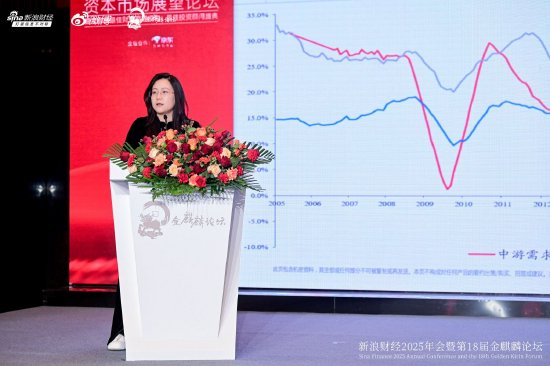
华创证券张瑜:大分化背景下,中游背后的宏观景气略胜一筹
Xin Lang Cai Jing· 2026-01-16 06:11
Core Viewpoint - The speech by Zhang Yu, Chief Economist of Huachuang Securities, at the 2026 Global and China Capital Market Outlook Forum, presents a new perspective on the development stage of Chinese manufacturing, emphasizing the resilience of the midstream sector and its potential for recovery [1][7]. Group 1: Midstream Sector Resilience - The four key areas of midstream external demand (electromechanical exports) show resilience, with expectations for other electromechanical sectors to benefit from a mild recovery cycle in industrial production driven by global monetary policy easing [3][9]. - The ICT sector is anticipated to benefit from the ongoing technological revolution and the sustained prosperity of the global semiconductor market [3][9]. - Shipbuilding exports are expected to gain from high growth in existing orders, while automotive exports are projected to benefit from enhanced competitiveness and the ongoing electrification process in global automotive exports [3][9]. Group 2: Return on Equity (ROE) Insights - Focusing on the ROE of midstream listed companies, it is noted that ROE aligns with midstream Producer Price Index (PPI), which in turn correlates with midstream fixed asset turnover rates [5][11]. - Predictions regarding midstream fixed asset growth are based on reduced capital expenditures in 2024-2025, alongside forecasts for midstream demand benefiting from high prosperity in electromechanical exports, suggesting that midstream ROE may continue to rise [5][11].

长缆科技:公司的材料、箱柜、连接器、机电等产品在航天领域已有应用
Zheng Quan Ri Bao Wang· 2026-01-12 14:11
Core Viewpoint - Changlan Technology (002879) has confirmed its products, including materials, cabinets, connectors, and electromechanical components, are already being applied in the aerospace sector, although the revenue contribution from this segment remains relatively small [1]. Group 1 - The company has existing supply agreements for its products in the aerospace field [1]. - The revenue generated from aerospace applications currently constitutes a minor portion of the company's overall revenue [1].
10万亿消费潜力激活!涨工资不是口号,2026经济转轨改写收入格局
Sou Hu Cai Jing· 2026-01-06 05:43
Economic Policy Shift - The central economic work conference in December 2025 announced a shift from encouraging income growth to implementing a specific plan for increasing urban and rural residents' income, marking a significant policy change [1] - The new policy aims to address the long-standing issue of low resident income as a percentage of GDP, which has hindered economic growth [3] Investment and Consumption Trends - Fixed asset investment in China decreased by 2.6% in the first 11 months of 2025, with real estate development investment plummeting by 15.9%, indicating a shift in economic drivers from investment and exports to consumption [3] - The consumer spending rate in China stands at 39.9%, significantly lower than the average of 54% in developed countries, suggesting a substantial potential for consumption growth [5] Wage Increases and Employment Dynamics - Minimum wage standards in provinces like Shanxi and Sichuan were raised by 8% to 12%, while major companies like ByteDance and JD Technology implemented aggressive salary increases, with JD reporting an average salary hike of 20% [6] - The wage increase trend is skewed towards low-income workers and those with critical skills, while high-paying sectors like finance and real estate show little to no wage growth [8] Urban-Rural Income Disparity - The income disparity between urban and rural residents remains significant, with urban disposable income at 42,991 yuan compared to 17,686 yuan for rural residents, leading to a ratio of 2.43:1 [10] - Efforts to increase rural income through land reform and market access face challenges due to existing structural barriers [10] Consumer Behavior and Economic Stimulus - A high savings rate persists among residents, with 65% of new disposable income allocated to savings or debt repayment, and only 12% directed towards consumption [12] - Policy measures include lowering LPR rates to ease mortgage burdens and providing consumption and childbirth subsidies to stimulate spending [12] Geographic and Sectoral Disparities - The distribution of income growth is uneven, with significant differences in housing market dynamics between tier-3 cities and major urban centers like Shenzhen [14] - The survival of small and medium enterprises is under pressure due to rising social security costs and reduced funding, leading to potential market consolidation [14]

规则变了!中国对一带一路顺差首超美国,全球贸易正在换重心
Sou Hu Cai Jing· 2026-01-05 14:15
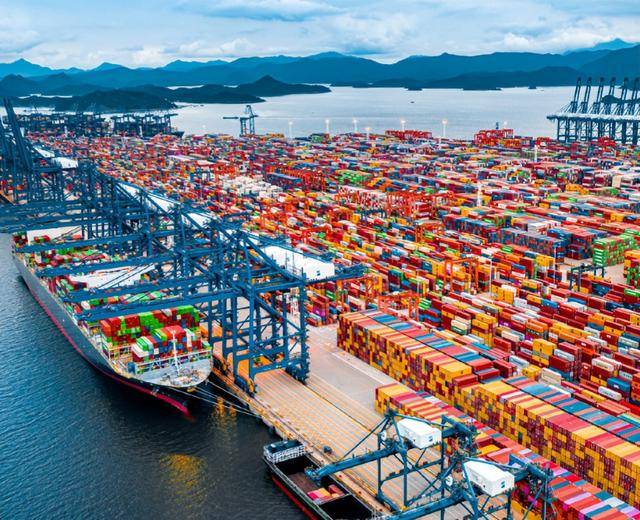
Core Viewpoint - China's trade surplus with Belt and Road Initiative (BRI) countries has surpassed its surplus with the United States for the first time, indicating a significant shift in global trade dynamics [1][4]. Group 1: Trade Surplus Data - In the first eleven months of 2025, China's trade surplus with BRI countries accounted for 45% of its total trade surplus, approximately $480 billion, while the surplus with the U.S. dropped to 24%, a decline of over 10 percentage points year-on-year [1]. - This shift represents a historical turning point in global trade, moving the focus away from the U.S. as a dominant trade partner [1][10]. Group 2: U.S. Market Dynamics - The U.S. has transformed from a key customer to an unreliable variable due to actions such as tariffs, supply chain decoupling, and technology restrictions, which have inadvertently pushed China to diversify its trade routes [4][10]. - The trade relationship with BRI countries is characterized by a more pragmatic approach, focusing on cost-effectiveness and reliable supply rather than political conditions [8][10]. Group 3: Belt and Road Initiative - The BRI has evolved into a multifaceted trade ecosystem, with over 155 participating countries, representing nearly 80% of global nations, primarily from developing and emerging markets [6]. - China's manufacturing products have a natural competitive advantage in these markets, ranging from infrastructure equipment to consumer goods [6][8]. Group 4: Financial and Trade Implications - The shift in trade surplus structure signifies a transition from a single-core dependency to a diversified trade network, impacting global financial systems and the balance of power [10][12]. - The increasing use of the Chinese yuan in trade settlements among BRI countries indicates a gradual move away from dollar dominance, suggesting a potential reconfiguration of global financial rules [12][16]. Group 5: Strategic Outlook - This transition is not without risks, as BRI countries may face political instability and market volatility, but it represents a critical step for China in diversifying its trade relationships and reducing reliance on any single market [14][18]. - The change in trade dynamics signals a potential decline in U.S. influence and a redefinition of global trade rules, marking a new era in international relations [16][18].
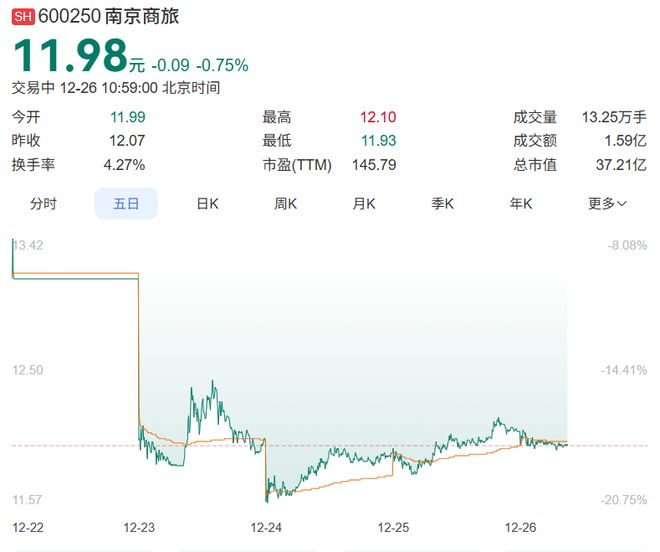
筹划一年多收购四星级酒店告吹,南京商旅股价四天下跌17%
Nan Fang Du Shi Bao· 2025-12-26 03:37
Core Viewpoint - Nanjing Commercial Travel (600250.SH) announced the termination of its acquisition of Nanjing Huangpu Hotel, leading to a 17.32% drop in stock price over four trading days. The company emphasized its development strategy during an investor briefing on December 25, 2025 [1][9]. Financial Performance - Nanjing Commercial Travel, formerly known as Nanfang Co., has seen fluctuating revenues: 2022 revenue was 822 million yuan, 2023 was 856 million yuan, and 2024 was 776 million yuan. The company reported a net profit of -122 million yuan in 2022, 31 million yuan in 2023, and 6 million yuan in 2024. For the first three quarters of 2025, revenue was 552 million yuan, down 8.07% year-on-year, with a net profit of 18 million yuan, a 14% decline [3]. Business Segment Performance - The company's core business segments faced challenges: - Import and export trade revenue was 194 million yuan, down 11.75% year-on-year - Domestic trade revenue was 104 million yuan, down 31.34% - Retail department store revenue was 59 million yuan, down 49.87% - Tourism services revenue was 280 million yuan, up 29.39%, but with a 95.36% increase in costs, leading to an 18.35 percentage point drop in gross margin [3][4]. Acquisition Details - On May 25, 2024, Nanjing Commercial Travel announced plans to acquire 100% of Nanjing Huangpu Hotel and 49% of Nanjing South Commercial Operation Management Co. The hotel, a four-star establishment, has seen declining revenues: 67 million yuan in 2023, 60 million yuan in 2024, and 15 million yuan in Q1 2025, with net profits also decreasing [6][8]. Market Environment - The hotel industry is experiencing accelerated clearing, with single hotels facing significant risks. The trend is shifting towards increased chain hotel rates. The termination of the acquisition was attributed to changes in market conditions and the need to protect the interests of the company and its investors [8][9]. Future Strategy - In the December 25 briefing, the company reiterated its commitment to a dual business strategy of "tourism + commerce," focusing on existing business while seeking new growth opportunities to enhance core competitiveness and improve operational performance [9].

长缆科技:成功进入商业航天领域,实现了材料、连接器等产品在航天行业导入
Zheng Quan Shi Bao Wang· 2025-12-18 14:04
Group 1 - The company, Changlan Technology, has successfully entered the commercial aerospace sector [1] - The company has achieved the integration of materials, cabinets, connectors, and electromechanical products into the aerospace industry [1]
贸易覆盖非洲56个国家,威海“十四五”拓展非洲市场成效显著
Qi Lu Wan Bao· 2025-12-05 14:03
Group 1 - During the "14th Five-Year Plan" period, Weihai City is seizing the opportunity to actively engage in the high-quality construction of the "Belt and Road" initiative, focusing on trade, investment, and engineering cooperation with African countries, particularly Tanzania [1] - Weihai has over 620 enterprises conducting trade with 56 African countries and has established 60 enterprises in Africa across 21 industry categories, making it the most active city in Shandong Province for cooperation with Africa [1] - The city has developed a comprehensive overseas economic and trade cooperation zone in Tanzania, which is the largest and most functional trade and logistics complex in East Africa, facilitating an average annual export of $250 million in domestic products to Africa [1] Group 2 - Weihai has been hosting domestic and international exhibitions, including the Dar es Salaam International Trade Fair, where it has organized participation for 630 domestic enterprises, resulting in over $7 million in on-site orders and more than $45 million in intended orders [2] - The city has opened its first international shipping route to Africa, significantly reducing transportation time by approximately 30 days and lowering shipping costs by about 10%, while also providing comprehensive logistics services [2] - A comprehensive overseas service system has been established to address potential risks for enterprises operating abroad, with over 600 engineering projects completed in more than 20 African countries, generating over $8 billion in revenue [3]
报告:中国对外贸易多元化格局持续深化
Zhong Guo Xin Wen Wang· 2025-10-10 06:23
Core Insights - China's foreign trade diversification pattern continues to deepen, with increasing cooperation with Southeast Asia and rapid growth in trade with emerging markets, leading to a more balanced trade partner structure [1][2] Trade Partner Analysis - The report identifies a significant shift in trade partner relationships, with BRICS countries transitioning from "volatile partners" to "developing partners," indicating deepening cooperation with emerging markets [2] - Conversely, Mexico and Canada have shifted from "developing partners" to "volatile partners," reflecting the spillover effects of U.S. tariff policies [2] - South Korea is categorized as a "stable partner," indicating a long-term and stable cooperation between Chinese suppliers and South Korean buyers [2] Trade Volatility Index - The trade volatility index reveals that ASEAN, Australia, and the EU rank as the top three in terms of trade volatility [2] - Categories with the highest increase in volatility include Category 16 (electromechanical), Category 14 (jewelry and precious metals), and Category 18 (optical and medical equipment) [2] - Category 16, which has the highest export total, shows significant volatility in the ASEAN, BRICS, and EU markets, reflecting structural optimization driven by growth [2] - The report highlights that products representing export transformation and upgrading, particularly Categories 16, 17 (transport equipment), and 18, have seen substantial increases in exports to the EU, ASEAN, and BRICS, indicating successful upgrades in China's export product structure [2]