
权益类公募产品

Search documents
券商研究框架-探寻产业变迁和投资价值
2026-01-07 03:05
Summary of the Conference Call Records Industry Overview - The brokerage industry currently has a Price-to-Book (PB) ratio of approximately 1.47, which is around the 35th percentile historically, indicating a relative undervaluation and potential for valuation recovery [1][2] - Regulatory optimization is expected to enhance the asset-liability management of quality brokerages, leading to an increase in Return on Equity (ROE) [1][2] Key Projections for 2026 - The brokerage sector is anticipated to experience a market recovery, with trading activity and margin financing (two-in-one business) expected to maintain a growth rate of around 20% [1][2] - The overall industry ROE is projected to rise to approximately 9%, while leading brokerages may achieve ROE levels of 11%-12% [1][2] Business Segments Brokerage Business - The brokerage business is experiencing cyclical weakening, with a price war leading to a decline in net commission rates, resulting in weak growth [1][5] - Margin financing, as a pro-cyclical indicator, is expected to maintain a good interest margin, contributing to significant growth in net interest income for brokerages [1][5] Investment Banking - A recovery in investment banking is expected in 2026, with an anticipated rebound in IPO and refinancing volumes, particularly benefiting leading firms like Guotai Junan, CITIC Securities, and CICC [1][6][7] Asset Management - Following the new asset management regulations in 2018, the scale of brokerage asset management has stabilized and is expected to recover, although fixed-income products are unlikely to provide long-term support for profit growth [1][8] - Equity public funds are experiencing rapid growth post-fee reductions, driven by changes in resident wealth management demands [1][8] Recommended Stocks - Leading stocks in the sci-tech theme are recommended, with Guotai Junan as the top pick, followed by CICC H shares, benefiting from leading project reserves in the sci-tech board [1][3][9] - Guotai Junan has a PB of approximately 1.15, indicating significant room for valuation recovery [3][9] Cost Structure and Market Dynamics - The brokerage industry's profitability model is primarily analyzed using the ROE-PB framework, with self-operated businesses accounting for about 40% of revenue, followed by brokerage services at 25% and investment banking at 15% [1][4] - Cost management has improved, with a decrease in management expense ratios and lower credit impairment losses since 2022, leading to better performance among listed brokerages [1][11] Future Outlook - The overall outlook for the securities industry in 2026 is optimistic, with expected growth rates around 20% from a low base, and an increase in industry ROE from 8% to 9% [1][13] - The valuation uplift potential is estimated to be between 30%-50%, with a focus on sci-tech themed stocks like Guotai Junan and CICC H shares [1][13]
A股,大利好!高盛,最新发声!
券商中国· 2025-08-21 23:33
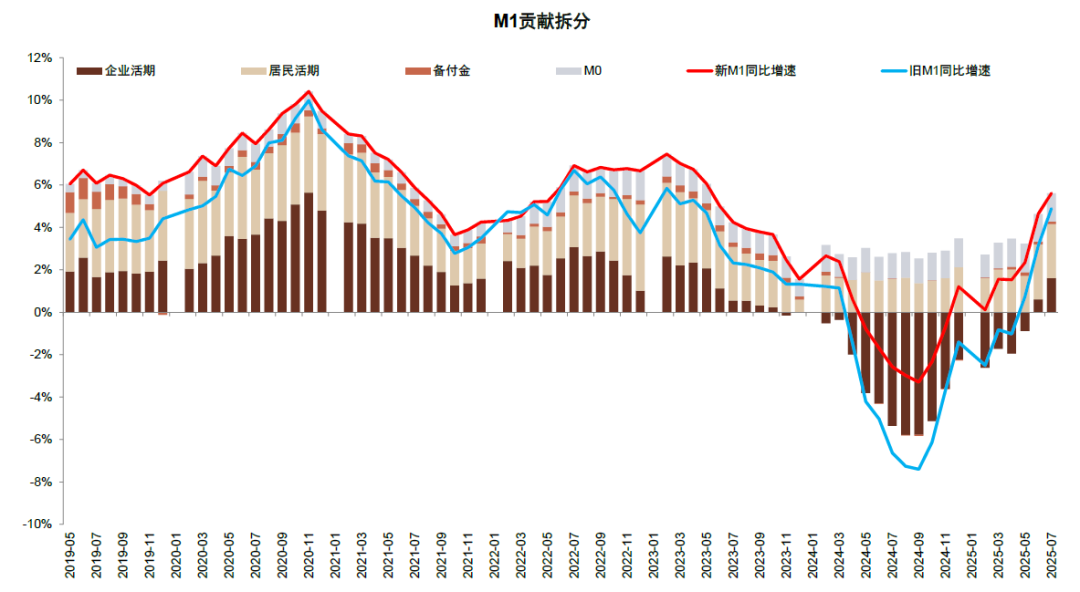
Core Viewpoint - Foreign capital remains optimistic about the Chinese stock market, particularly small and mid-cap stocks, despite recent gains in major indices [1][2]. Group 1: Market Performance - Since the rebound began on April 8, the Shanghai Composite Index has risen over 21%, the Shenzhen Component Index has increased by more than 27%, and the ChiNext Index has surged over 43% [2]. - The CSI 300 Index has gained over 19%, while the CSI 500 and CSI 1000 indices have risen by 26.8% and 31.96%, respectively [2]. - The CPO index has shown the strongest performance with a rise of over 123%, while other indices such as the light chip index and CRO have also seen significant increases [2]. Group 2: Capital Flow and Investment Trends - High net worth individuals in China currently allocate only 22% of their financial assets to funds and stocks, indicating a potential inflow of over 10 trillion yuan into the market [2]. - There are signs of a shift in household savings from bank deposits to stocks, as evidenced by a negative monthly change in household deposits and an increase in non-bank financial institution deposits [3]. - The A-share market has become the most net bought market recently, with a buying ratio of 1.1 times [3]. Group 3: Institutional Insights - UBS reports that the Indian stock market is losing favor among fund managers, who are reallocating to more attractive valuations in A-shares and H-shares [4]. - CICC has observed signs of deposits moving into the stock market since May, with M1 growth rising to 5.6% in July, indicating increased liquidity [5][6]. - The rapid growth of margin accounts at brokerages suggests that deposits are being prepared for market entry, with non-bank deposits increasing by 1.4 trillion yuan in July [6]. Group 4: Market Outlook - The overall valuation of A-shares remains reasonable, but increased trading volume may lead to short-term volatility [7]. - The potential inflow of household savings into the stock market is estimated to be between 5 trillion and 7 trillion yuan, which could exceed previous market cycles [6][7]. - The resilience of the Chinese economy is gaining international recognition, and the current low relative valuation of A-shares suggests that the "migration" of household savings into the stock market is still in its early stages [7].



多只债基提高净值精度,最多调至小数点后13位
21世纪经济报道· 2025-08-20 10:37
Core Viewpoint - The article discusses the significant increase in non-bank deposits and the shift of funds from fixed-income products to equity markets, driven by the rising stock market and the phenomenon of "deposit migration" [1][3][5]. Group 1: Financial Data Overview - In the first seven months of the year, RMB deposits increased by 18.44 trillion yuan, with household deposits rising by 9.66 trillion yuan and non-bank financial institution deposits increasing by 4.69 trillion yuan [3]. - In July alone, RMB deposits increased by 500 billion yuan, with household deposits decreasing by 1.11 trillion yuan and non-bank deposits increasing by 2.14 trillion yuan [3]. - The year-on-year comparison shows that in July, household deposits decreased by 7.8 billion yuan while non-bank deposits increased by 1.39 trillion yuan [3]. Group 2: Factors Driving Deposit Migration - The migration of deposits is attributed to several factors, including the end of the mid-year bank assessment, a significant return of household deposits to wealth management products, and the recent rise in the stock market [3][4]. - The trend of deposit activation is evident, with M1 growth rising to 5.6% in July, up from 2.3% in May, indicating a shift away from fixed-term deposits [4]. - The increase in non-bank deposits is also linked to the rapid growth of margin accounts at brokerage firms, suggesting that funds are being prepared for entry into the stock market [4]. Group 3: Market Activity and Fund Adjustments - The A-share market has seen a surge in trading activity, with daily trading volumes exceeding 2 trillion yuan since August, indicating a more active capital market [4]. - A total of 54 funds or asset management products have adjusted their net asset value precision due to large redemptions, reflecting the impact of the shift from fixed-income to equity markets [6][8]. - The recent trend shows that over 70% of newly established funds are equity-based, with many funds ending their fundraising early to quickly enter the market [9].

中金:居民存款搬家潜力几何?
智通财经网· 2025-08-19 00:10
Group 1 - The article highlights signs of deposits moving towards the stock market since May, driven by factors such as increased M1 growth and a shift in deposit trends [1] - M1 growth reached 5.6% year-on-year in July, up from 2.3% in May, indicating a trend of deposit activation [1] - There is a notable increase in the popularity of equity funds, with a slowdown in fixed-income wealth management products compared to last year [1][9] Group 2 - The capital market has become more active, with daily trading volumes in A-shares exceeding 2 trillion yuan since August [2] - The number of new accounts opened on the Shanghai Stock Exchange increased by 26% in July compared to May, although it remains below the peak in October of the previous year [2] Group 3 - The article discusses the sources of deposits, including fiscal spending and international balance of payments, which have contributed to deposit creation [15] - The contribution of fiscal measures to deposit creation rose from 25% at the end of 2023 to 53% currently, while the contribution from entity credit decreased from 73% to 41% [15][23] Group 4 - Factors driving the movement of deposits to the stock market include improved risk appetite due to government stimulus policies and a recovery in stock market returns [31] - The average return on A-shares over the past 12 months has reached around 20%, prompting a shift in investment strategies [31][33] Group 5 - The potential for deposits to move into the stock market is estimated at 5-7 trillion yuan, based on excess savings, maturing deposits, and the activation of deposits [45][46] - The article notes that the actual movement of deposits will depend on macroeconomic conditions, policy expectations, and external factors [45][46] Group 6 - The shift of deposits to the stock market is expected to benefit banks by expanding interest margins and improving the outlook for credit demand [48] - The article suggests that while the stock market's attractiveness may reduce the appeal of high-dividend yields, it remains attractive for long-term funds [48]
REITs网下认购创新高;QDII基金减持美股避险丨天赐良基
Mei Ri Jing Ji Xin Wen· 2025-04-23 00:54
Group 1 - Jianxin Fund plans to invest at least 180 million yuan in its equity public products, having already invested 173 million yuan from Q4 2024 to Q1 2025 [1] - Jianxin Fund anticipates that external pressures will enhance the domestic policy logic of "taking the initiative," with expectations for a release of counter-cyclical policies to mitigate the impact of US tariffs [1] Group 2 - Multiple Hong Kong Stock Connect ETFs experienced significant trading activity during the market closure, with some ETFs seeing turnover rates exceeding 900% [2] - The Hang Seng Stock Connect ETF recorded a trading volume of 374 million yuan on April 18, a 76-fold increase from the previous trading day [2] - Due to the surge in ETF prices, premium rates have also increased, prompting several fund companies to issue risk warning announcements [2] Group 3 - Several QDII funds have significantly reduced their holdings in US stocks while increasing their positions in A-shares and Hong Kong stocks, with one fund's US stock allocation dropping from 52.38% to 24.22% [3] - The same fund increased its Hong Kong stock allocation from 20.48% to 54.94% [3] Group 4 - The offline subscription for Huatai Suzhou Hengtai Rental Housing REIT reached a record high, with a total subscription amount 222.64 times the initial offering [4] - The previous record was held by the Hui Tian Fu Shanghai Real Estate Rental Housing REIT, which had a subscription rate of 180.74 times [4] Group 5 - E Fund's consumer sector fund increased its allocation to liquor stocks, viewing it as a high-yield bond with domestic demand upside [5] - The fund's top ten holdings include Kweichow Moutai, Shanxi Fenjiu, and Wuliangye, with adjustments made in the automotive sector [5][6] Group 6 - Fund manager Guo Lan reduced holdings in Xinlitai, with the number of shares held decreasing from 16.23 million to 14.07 million [7] - Xinlitai is an innovative pharmaceutical company listed on the Shenzhen Stock Exchange [7] Group 7 - Fund manager Fu Pengbo slightly increased holdings in Furuisi, with shares rising from 672.96 million to 684.96 million [8] - Furuisi focuses on liver disease treatment and is listed on the Shenzhen Stock Exchange [8] Group 8 - On April 22, the market showed mixed results, with the Shanghai Composite Index rising by 0.25% while the Shenzhen Component Index and ChiNext Index fell by 0.36% and 0.82%, respectively [9] - The total trading volume in the Shanghai and Shenzhen markets reached 1.09 trillion yuan, an increase of 48.6 billion yuan from the previous trading day [9] Group 9 - Hong Kong innovative drug-related ETFs saw strong performance, with some rising by as much as 5.77% [10] - Analysts suggest that the pharmaceutical sector may attract market funds due to previous declines and cheap valuations, with significant investment opportunities expected in innovative and generic drugs [10]