民航服务

Search documents
未知机构:长江金属大化工交运联合深度资源大时代下一个战略品种在哪里-20260224
未知机构· 2026-02-24 04:10
Summary of Key Points from the Conference Call Industry Overview - The conference call discusses the non-ferrous metal resources market and the implications of geopolitical factors and carbon neutrality policies on resource scarcity [1] - The focus is on strategic resources in China and the U.S., highlighting the competitive advantages in manufacturing and supply chain [2] Core Insights and Arguments 1. **Strategic Resources**: - China possesses a complete industrial chain and cost advantages, successfully capturing profits from both overseas raw materials and downstream exports, particularly in sectors like electrolytic aluminum, chemicals, and oil transportation [2] - Certain high-tech industries in the U.S., such as civil aviation, gas turbines, and semiconductors, have become strategic resources due to tariffs and geopolitical tensions [2] 2. **Global Trends**: - The trend of de-globalization is leading to a return of manufacturing to various countries and strategic inventory replenishment, which is expected to enhance the resilience of manufacturing demand [2] - The current low-interest-rate environment is facilitating financial liquidity that is being transmitted to the real economy, indicating a rotation cycle in commodities from "non-ferrous - chemicals - crude oil," with promising future potential [2] 3. **Price Dynamics**: - Compared to the record highs in non-ferrous resources, prices for electrolytic aluminum, chemicals, refining, and aviation are at historically low levels, creating a strong safety margin [2] - The constrained supply in smelting and manufacturing sectors results in profit margins significantly lower than those in mining; thus, a price rebound could lead to substantial profit elasticity [2] Additional Important Content - The discussion emphasizes the importance of understanding the interplay between geopolitical factors and market dynamics in identifying investment opportunities within the resource sector [1][2] - The potential for price recovery in the mentioned sectors is highlighted as a key area for investors to watch, given the current market conditions [2]
Top Charts |春运出行图鉴(02.02-02.08)
申万宏源证券上海北京西路营业部· 2026-02-10 02:01
Core Viewpoint - The 2026 Spring Festival travel season is expected to see a total of 9.5 billion people traveling across regions, representing a year-on-year increase of approximately 5.5% compared to 2025 [24]. Group 1: Overall Travel Volume - On February 8, 2026 (the 7th day of the Spring Festival), the total cross-regional personnel flow reached 227.713 million, a 2.3% increase compared to the same period in 2025 [3]. - From February 2 to February 8, 2026, the total cross-regional personnel flow amounted to 1.42 billion, with an average daily flow that increased by 2.3% compared to 2025 [25]. Group 2: Public Transport Usage - The average daily passenger volume for long-distance travel via public transport (including highways, railways, waterways, and aviation) increased by 3.8% year-on-year during the first seven days of the Spring Festival [7]. - The average daily passenger volume for railways and civil aviation increased by 0.4% and 5.4% respectively during the same period [25]. Group 3: Ticket Prices - On February 8, 2026, the average ticket price for civil aviation was 950 yuan, which is a 3.3% increase compared to the same day in 2025 [25]. - The average ticket price for civil aviation during the first seven days of the Spring Festival was 870 yuan, reflecting a 3.5% increase compared to 2025 and a 0.7% increase compared to 2019 [25]. Group 4: Migration Trends - The migration index for labor-exporting provinces such as Hubei and Guizhou showed a significant increase, with migration intensity rising from 3.2% and 14.1% before the Spring Festival to 12.5% and 17.5% respectively during the first six days of the festival [11]. - Conversely, labor-importing provinces like Guangdong and Jiangsu also experienced a rise in migration intensity, increasing from 13.6% and 8.5% before the Spring Festival to 20.5% and 9.4% respectively during the first six days [17].

以色列否认民航情势吃紧的传言
Xin Hua She· 2026-01-26 11:51
Core Viewpoint - The Israeli Civil Aviation Authority announced that there are currently no impacts on Israeli civil aviation activities due to geopolitical tensions, and operations at Ben Gurion Airport near Tel Aviv are functioning normally [1] Group 1 - The Israeli Civil Aviation Authority issued a statement confirming the stability of civil aviation operations [1] - Ben Gurion Airport is reported to be operating normally without any disruptions [1]
华东民航福建辖区“民航服务提振消费年”交叉检查工作完成
Zhong Guo Min Hang Wang· 2025-10-27 08:16
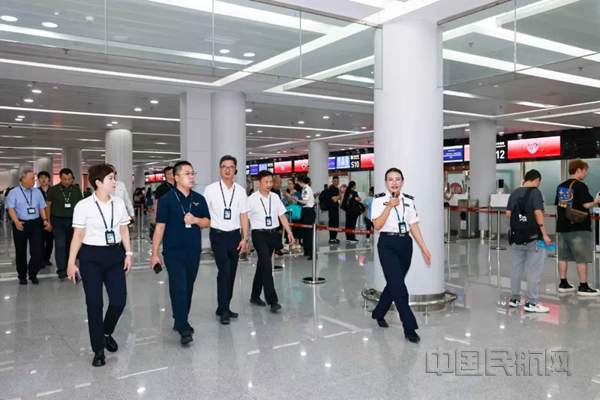
Core Viewpoint - The Civil Aviation Administration of China (CAAC) is promoting a "Civil Aviation Service Consumption Boost Year" initiative for 2025, focusing on enhancing service quality in the aviation sector through various measures and inspections [1][5]. Group 1: Service Quality Improvement - The Northeast Bureau of Civil Aviation conducted a service quality cross-check in Quanzhou, Fujian, in collaboration with the East China Bureau [1]. - Quanzhou Jinjiang International Airport and Xiamen Airlines Quanzhou Branch reported on their progress, unique service initiatives, and interim results during the inspection [1]. - The inspection team acknowledged the achievements in service quality enhancement and emphasized the importance of a long-term commitment to improving passenger satisfaction and addressing travel pain points [1]. Group 2: Key Areas of Focus - The inspection team concentrated on critical areas such as travel integration, baggage handling, rainy season support, complaint management, and service capability enhancement as outlined in the CAAC's task breakdown for the 2025 initiative [5]. - During the on-site inspection, the team visited various operational areas, including the integrated command center and cultural exhibition zones, to evaluate service facilities, staff compliance with service standards, and passenger feedback mechanisms [5].
2025年第三季度中国民航服务旅客满意度评价报告出炉啦!
Zhong Guo Min Hang Wang· 2025-10-17 01:50
Core Insights - The report on passenger satisfaction in China's civil aviation sector for Q3 2025 indicates a new evaluation model that enhances service quality and passenger experience through "Internet + Civil Aviation Services" [1] Group 1: Survey Methodology - The satisfaction evaluation system utilized questionnaires distributed via 12326, Hanglv Zongheng, and OTA platforms, ensuring comprehensive and objective data collection through dual verification of passenger identity and travel information [5] - The survey period for the Q3 report was from July 1, 2025, to September 30, 2025, using a scoring system out of 10 [5] Group 2: Participation Statistics - A total of 263 domestic airlines and 41 airports were evaluated, with a 100% coverage rate for domestic passenger airlines and a 96% coverage rate for domestic civil airports [6] Group 3: Overall Satisfaction Scores - The overall satisfaction score for airline services in Q3 2025 was 8.75, reflecting a 0.19-point increase from Q2 2025 [11] - Ground services scored 9.01, indicating it as a strong service area, while in-flight services scored 8.54, marking it as a weaker area [12] Group 4: Service Breakdown - Ticketing and customer service received a score of 8.94 [8] - The highest-rated service areas included ticketing services (9.42), check-in services (9.11), and transfer services (9.04) [22] - The lowest-rated services were delay services (7.66), cabin environment facilities (8.36), and in-flight meal services (8.57) [22] Group 5: Airport Service Satisfaction - The airport service satisfaction score for Q3 2025 was 9.02, with a 0.17-point increase from Q2 2025 [36] - Service facilities and commercial offerings scored 9.12, while flight normality and delay services scored 8.74, indicating areas for improvement [36]

8天23.6亿人次流动!“双节”出行,玩法升级了?
2 1 Shi Ji Jing Ji Bao Dao· 2025-09-30 13:50
Group 1: Travel Volume and Trends - The total travel volume during the National Day holiday in China is projected to reach 2.36 billion trips, averaging nearly 300 million trips per day over the 8-day holiday [1] - Self-driving trips dominate the holiday travel, with an estimated 1.87 billion people choosing to drive, accounting for 80% of total travel volume [1] - The peak traffic period is expected to see daily vehicle flow surpassing 70 million, with new energy vehicles reaching an average of 14 million per day, representing 20% of the total [1] Group 2: Transportation Modes - The railway sector anticipates over 200 million passengers, with an average of 13,000 passenger trains planned daily, peaking on October 1 [2] - The civil aviation sector expects to transport 19.2 million passengers, marking a 3.6% year-on-year increase, with the last two days of the holiday likely to see airports busier than tourist attractions [2] - The rise in long-distance travel has led to increased demand for rental cars, with significant growth in rental orders and new services being offered by rental companies [2] Group 3: Infrastructure and Support - China's transportation infrastructure has seen significant advancements, with the largest high-speed rail network and highway network globally, totaling 48,000 kilometers of high-speed rail, which is over 70% of the world's total [2] - The country has established 62,000 charging parking spaces, achieving a charging station coverage rate of 98.4% in service areas, facilitating the large-scale movement of 2.36 billion people [2] - Daily travel in China also includes 180 million cross-regional trips and the transportation of 160 million tons of goods, reflecting the effectiveness of the unified national market [3]
“人享其行、物畅其流”加快实现
Jing Ji Ri Bao· 2025-08-03 21:56
Core Viewpoint - The transportation sector in China is rapidly advancing towards becoming a "transportation powerhouse," with significant improvements in infrastructure, service quality, and operational efficiency, as outlined in key national plans and guidelines [1][8]. Group 1: Infrastructure Development - The national comprehensive transportation network is being constructed with a focus on integrating railways, highways, waterways, and civil aviation, achieving a basic connection of the main framework [2]. - By the end of 2024, the railway operating mileage is expected to reach 162,000 kilometers, an increase of approximately 16,000 kilometers from the end of the 13th Five-Year Plan, with high-speed rail accounting for 10,000 kilometers of this increase [2]. - The total length of highways is projected to reach 5.49 million kilometers, with an increase of about 290,000 kilometers, including 30,000 kilometers of expressways [2]. Group 2: Service Enhancement - The railway sector is experiencing significant growth, with an expected 190 million passengers transported during the summer transport period, averaging over 3.05 million passengers daily, showing a notable year-on-year increase [4]. - High-speed rail and civil aviation are becoming the preferred modes of transport, with 3.272 billion passengers expected to be transported by high-speed trains in 2024, accounting for 75.9% of total railway passenger volume [4]. - The transportation department is promoting smart travel solutions, including online ticket sales and electronic payments, enhancing convenience for passengers [5]. Group 3: Pilot Projects and Innovations - The transportation sector has initiated over 819 pilot projects since the implementation of the "Transportation Power Construction Outline," with more than 100 projects completed and verified, leading to significant innovations and improvements [8]. - The establishment of new transport models, such as the "river-sea direct" transport system, has reduced transportation costs by over 30% and streamlined logistics processes [7]. - The focus on key tasks and challenges will continue, with plans for high-quality pilot projects to further support the construction of a transportation powerhouse [8].
全球最大高速铁路网、高速公路网和邮政快递网建成……“十四五”交通建设成绩单出炉
Zheng Quan Shi Bao Wang· 2025-07-21 10:46
Group 1: Achievements in Transportation Infrastructure - By the end of 2024, the railway operating mileage is expected to reach 162,000 kilometers, an increase of approximately 16,000 kilometers compared to the end of the 13th Five-Year Plan [1] - Major urban transportation networks have been established in regions such as Beijing-Tianjin-Hebei, Yangtze River Delta, and Guangdong-Hong Kong-Macao Greater Bay Area, with urban rail transit operating mileage reaching about 11,000 kilometers, ranking first in the world [1] - The total length of urban public transport lines has reached 1.75 million kilometers, an increase of 48.5% compared to the end of the 13th Five-Year Plan [1] Group 2: National Comprehensive Transportation Network - The national comprehensive transportation network has been constructed with a focus on integration, connecting over 80% of county-level administrative regions and serving around 90% of the national economy and population [2] - The "Eight Vertical and Eight Horizontal" high-speed rail network has been completed and put into operation at 81.5%, with high-speed rail operating mileage reaching 48,000 kilometers, accounting for over 70% of the world's total [2] - The construction of a national comprehensive transportation hub system is ongoing, with 80% of new passenger hubs having an average transfer distance of no more than 200 meters [2] Group 3: Public Transportation Trends - Public travel has shifted from merely being able to travel to ensuring quality travel, with high-speed rail and civil aviation being preferred modes of transport [4] - Daily, approximately 1.3 billion people choose to travel by car, accounting for over 70% of inter-regional mobility [4] - Around 1 billion people use urban rail transit, buses, and taxis or ride-hailing services for commuting, reflecting the resilience and capacity of urban transportation [4] Group 4: Freight Transportation and Logistics - The freight turnover of railways and waterways has increased by 17.5% and 33.6% respectively compared to the end of the 13th Five-Year Plan [6] - The total freight transported by railways is expected to exceed 250 billion tons during the 14th Five-Year Plan, an increase of 50 billion tons compared to the 13th Five-Year Plan [6] - International air cargo transport volume reached 203.7 million tons in the first half of the year, a year-on-year increase of 23.4% [6] Group 5: International Connectivity and Belt and Road Initiative - China has signed over 270 bilateral and multilateral cooperation agreements covering various transportation sectors, enhancing international transport networks [8] - The "Silk Road Maritime" international shipping network has expanded globally, maintaining the world's highest maritime connectivity for 19 consecutive years [8] - Major projects like the China-Laos Railway and the new international airport in Gwadar are enhancing regional economic development and connectivity [9]
“去高跟鞋化”的空姐,告别“没苦硬吃”
Nan Fang Du Shi Bao· 2025-07-13 09:09
Core Viewpoint - The recent shift in the airline industry towards the "flat shoe reform" reflects a growing recognition of employee health and safety over outdated aesthetic standards, marking a significant change in the perception of professional attire for flight attendants [1][2]. Group 1: Industry Changes - Following Hunan Airlines, Spring Airlines has implemented a policy requiring female flight attendants to wear standard black flat shoes during their entire duty period, effective from July 7 [1]. - This reform is based on the Civil Aviation Administration's guidelines, which prohibit flight attendants from wearing high heels during flight operations, aiming to eliminate the cumbersome practice of switching between high heels and flats [1]. Group 2: Social and Cultural Shifts - There is a notable increase in the willingness and action among women to challenge unreasonable workplace dress codes, with the sentiment that "high heels should not define flight attendants" gaining traction in public consciousness [2]. - A stand-up comedian, who is also a former flight attendant, has transformed her experiences with high heel dress codes into a popular performance, highlighting a societal shift in understanding professional image and employee rights [2]. - The movement away from high heels is seen as paving the way for all service industry workers to redefine what constitutes a professional appearance, emphasizing health and efficiency over outdated norms [2].