港股消费主题ETF

Search documents
港股消费和红利板块韧性凸显公募看好结构性投资机会
Zhong Guo Zheng Quan Bao· 2026-02-05 20:27
Core Viewpoint - The Hong Kong stock market is experiencing a divergence in performance, with consumer and dividend sectors showing resilience amidst overall market volatility, while the Hang Seng Technology Index has seen significant declines [1][2]. Market Performance - On February 5, the Hang Seng Index closed at 26,885.24 points, up 0.14%, while the Hang Seng Technology Index rose 0.74% to 5,406.13 points [2]. - The market has been in a state of adjustment, particularly highlighted by a 3.36% drop in the Hang Seng Technology Index on February 2, which reached levels not seen since July 2025 [2]. Factors Influencing Market Trends - The recent market adjustments are primarily attributed to concerns over the Federal Reserve's policy shifts, particularly the proposed combination of "rate cuts + balance sheet reduction" by the newly nominated chair [2]. - Despite the volatility, southbound capital has shown a net inflow for two consecutive trading days, totaling over 38 billion HKD, with nearly 25 billion HKD net bought on February 5, marking the highest single-day net purchase this year [2]. Sector Performance - The consumer sector has seen significant gains, with stocks like Yum China rising over 11%, Miniso up over 6%, and Mao Geping increasing over 5%, leading to strong performance in consumer-themed ETFs [3]. - Approximately 80% of the top fifteen ETFs in terms of growth are focused on the Hong Kong consumer sector, indicating a strong interest in this area despite overall market declines [3]. Investment Outlook - Multiple public fund institutions believe that short-term fluctuations will not alter the long-term positive trend for the Hong Kong market, which remains attractive in terms of value [4]. - The current low valuation levels in the Hong Kong market are expected to provide a buffer against external volatility and make the market more sensitive to potential growth recovery and policy signals [4]. Sector-Specific Insights - The technology sector is anticipated to undergo valuation recovery, driven by technological breakthroughs, continuous inflow of southbound capital, and the Hong Kong market's status as a valuation low point [5][6].
港股消费和红利板块韧性凸显 公募看好结构性投资机会
Zhong Guo Zheng Quan Bao· 2026-02-05 20:21
Market Overview - On February 5, the Hong Kong stock market showed a divergence, with major indices rebounding in the afternoon and closing in the green. The Hang Seng Index closed at 26,885.24 points, up 0.14%, while the Hang Seng Tech Index rose 0.74% to 5,406.13 points [2] - The recent market trend has been characterized by volatility, particularly following a significant drop on February 2, when the Hang Seng Tech Index fell by 3.36% [2] Sector Performance - The consumer and dividend sectors demonstrated resilience amidst the overall market turbulence, with several consumer stocks experiencing substantial gains. Notably, Yum China surged over 11%, Miniso increased by over 6%, and Mao Geping rose by over 5% [3] - In the ETF market, consumer-themed ETFs outperformed, with a significant portion of the top-performing ETFs being focused on the consumer sector. On February 4, 70% of the top 20 cross-border ETFs were directed towards Hong Kong dividend themes [3] Investment Outlook - Multiple public fund institutions believe that the short-term volatility will not alter the mid-to-long-term positive trend for the Hong Kong stock market, which remains attractive in terms of valuation. They emphasize the importance of structural investment opportunities [4] - The manager of a mixed fund focused on Hong Kong stocks noted that the market's valuation attractiveness is gradually becoming evident, and there is potential for upward movement despite current fluctuations. Key factors influencing market pricing include corporate earnings and liquidity [4][5] - The outlook for 2026 suggests that improvements in price levels may be a critical variable for market direction, with the appreciation of the Renminbi potentially enhancing liquidity conditions [5]

上半年“国家队”资金借道ETF入市
Zhong Guo Zheng Quan Bao· 2025-08-31 23:20
Core Viewpoint - The "national team" funds, represented by Central Huijin and China Chengtong, have actively entered the market through ETFs in the first half of 2025, playing a stabilizing role in the capital market [1][2] Group 1: National Team Funds - Central Huijin Asset Management increased its holdings in 12 ETF products, spending over 210 billion yuan, with a total ETF market value reaching a historical high of 1.28 trillion yuan by the end of Q2 [2][3] - The ETFs include major indices such as the SSE 50 ETF, CSI 300 ETF, and ChiNext ETF, indicating a broad investment strategy [2][3] Group 2: Insurance Funds - Insurance funds held over 270 billion yuan in ETFs by the end of Q2, with China Life Insurance significantly increasing its ETF holdings by over 12 billion shares, ranking first among insurance institutions [4][5] - The largest ETFs held by China Life include those focused on Hong Kong technology and internet sectors, indicating a strategic focus on growth areas [4] Group 3: Foreign Banks - Foreign banks, such as Barclays and UBS, expanded their ETF investments, increasing the number of ETFs held from 133 and 55 to 197 and 138, respectively, with a combined market value exceeding 27 billion yuan [6] - These banks favored ETFs related to Hong Kong consumption, oil and gas, and overseas markets, reflecting a diversified investment approach [6][7]

南向资金猛买!“五朵金花”,为何这么红
天天基金网· 2025-06-19 05:23
Core Viewpoint - The recent performance of the Hong Kong stock market has been driven by five key sectors: healthcare, technology, consumer, dividends, and finance, forming a "Five Flowers" pattern. The narrowing of the AH premium index indicates a significant reduction in the discount of H-shares relative to A-shares, with some leading stocks even showing a premium for H-shares [1][4][10]. Group 1: Sector Performance - The five sectors have shown remarkable performance due to substantial net inflows from southbound funds, with over 690 billion HKD net purchases in 2023, accounting for 85% of the total net purchases in 2024 [4]. - The top-performing ETFs in the market are predominantly focused on Hong Kong healthcare themes, with returns exceeding 40% since the beginning of the year [4][6]. - The Hong Kong Stock Exchange has seen a significant increase in revenue and net profit, reaching record highs in Q1, driven by the performance of quality companies going public in Hong Kong [4]. Group 2: Fund Performance - Actively managed public funds with significant exposure to Hong Kong stocks, particularly in innovative pharmaceuticals, have reported outstanding returns, with some funds achieving over 98% returns [5][6]. - Funds focusing on new consumer stocks have also performed well, with returns exceeding 60% for certain funds during the same period [6]. Group 3: Drivers of Growth - The sectors driving the "Five Flowers" pattern can be categorized into three types: 1. Performance-driven sectors (technology and consumer) benefiting from AI industry growth and changing consumer habits [8]. 2. Valuation-driven sectors (healthcare) experiencing upward movement due to improved performance and favorable policies [8]. 3. Valuation recovery sectors (dividends and finance) seeing price increases primarily due to valuation adjustments rather than significant earnings growth [8]. Group 4: Future Outlook - The current market trends are attributed more to value recovery than short-term capital speculation, with expectations for continued performance in the technology and consumer sectors [10]. - The long-term investment value of Chinese equity assets is highlighted, with a focus on sectors like semiconductors and AI as key areas for future growth [10][11].

“新时代五朵金花”绽放大资金加速抢滩香江
Zhong Guo Zheng Quan Bao· 2025-06-18 20:58
Group 1 - The Hong Kong stock market has seen significant gains in the healthcare, technology, consumer, dividend, and financial sectors, referred to as the "Five Flowers" [1][2] - Southbound capital has net purchased over 690 billion HKD in Hong Kong stocks this year, surpassing 85% of the total net purchase for the entire year of 2024 [2] - The Hang Seng Index and Hang Seng Technology Index have outperformed the three major A-share indices this year [2] Group 2 - The performance of Hong Kong stocks has been driven by a surge in quality companies going public, particularly in new consumption, artificial intelligence (AI), and innovative pharmaceuticals [3] - The Hong Kong Stock Exchange has reported a significant increase in performance, with its stock rising over 40% this year, contributing to the rise of financial ETFs [3] - Actively managed public funds with significant exposure to Hong Kong stocks have shown impressive returns, with some funds focusing heavily on innovative pharmaceutical stocks [3][4] Group 3 - The strong performance of the "Five Flowers" is attributed to a favorable macroeconomic environment in China, which benefits both dividend assets and structural themes like new consumption and AI technology [5] - The "Five Flowers" can be categorized into three types based on their performance drivers: performance-driven (technology and consumption), valuation-driven (healthcare), and valuation recovery (dividend and financial sectors) [5][6] - The narrowing of the AH premium index indicates a value return rather than a short-term capital game, suggesting that the upward trend in these sectors is likely to continue [6][7] Group 4 - The long-term investment value of Chinese equity assets is being highlighted as both A-shares and H-shares exhibit low valuations compared to global markets [7] - The ongoing optimization of the Shanghai-Hong Kong Stock Connect mechanism is expected to enhance pricing efficiency between the two markets, potentially reducing the long-standing price differences between A-shares and H-shares [7] - Factors such as the resilience of the Chinese economy, trends in the AI industry, and low valuations are supporting the potential for value reassessment in the Hong Kong stock market [7]

共享基经丨与AI一起读懂ETF(十一):港股消费主题和恒生消费主题,有何不同?
Mei Ri Jing Ji Xin Wen· 2025-04-23 13:40
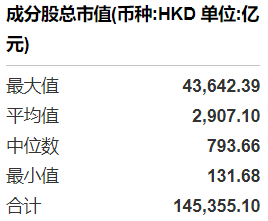
Core Viewpoint - The article discusses the performance of various ETFs related to the Hong Kong consumer sector, highlighting the differences between the China Securities Hong Kong Stock Connect Consumer Theme Index and the Hang Seng Consumer Index. Group 1: ETF Overview - Multiple popular thematic sectors, including robotics and Hong Kong technology and consumer sectors, have shown strong performance, with most related ETFs rising over 2% [1] - The main types of ETFs in the Hong Kong consumer sector include the China Securities Hong Kong Stock Connect Consumer Theme ETF, the Hong Kong Stock Connect Consumer Theme ETF, and the Hang Seng Consumer Theme ETF, with the primary difference being the indices they track [1] Group 2: Component Stock Composition - The China Securities Hong Kong Stock Connect Consumer Theme Index selects 50 consumer-related securities with good liquidity and large market capitalization from the Hong Kong Stock Connect range, with an average market capitalization of approximately 290.7 billion [2] - The Hang Seng Consumer Index selects the top 50 stocks categorized as non-essential or specific essential consumer businesses from the Hang Seng Composite Index, with an average market capitalization of about 84.4 billion [3] Group 3: Industry Coverage - The China Securities Hong Kong Stock Connect Consumer Theme Index covers a wide range of industries, including retail, media, consumer services, passenger vehicles and parts, and electronics [5] - The Hang Seng Consumer Index broadly covers traditional consumer sectors such as food and beverages, household appliances, textiles and apparel, and tourism, including emerging consumption trends like blind boxes [7] Group 4: Top Ten Weightings - The top ten weightings of the two indices differ significantly, with the China Securities Hong Kong Stock Connect Consumer Theme Index having a cumulative weighting of 75.99% for its top ten stocks, while the Hang Seng Consumer Index has a cumulative weighting of 59% [9] - Major companies in the China Securities index include Alibaba, Tencent, Xiaomi, and BYD, while the Hang Seng index features companies like Yum China, Pop Mart, Anta Sports, and Ctrip [9][10] Group 5: Historical Performance - The China Securities Hong Kong Stock Connect Consumer Theme Index has higher volatility due to its significant allocation to internet technology stocks, which can lead to greater returns during market upswings but also larger drawdowns during downturns [12] - The Hang Seng Consumer Index, with its stable consumer attributes, tends to perform more steadily during market fluctuations, making it a more conservative investment [12] Group 6: Valuation Levels - The current TTM price-to-earnings ratio for the China Securities Hong Kong Stock Connect Consumer Theme Index is below the historical 10th percentile, indicating a very low valuation [15] - The Hang Seng Consumer Index's TTM price-to-earnings ratio is below the historical 20th percentile, also suggesting a very low valuation [18] Group 7: Similarities - Both indices invest in the Hong Kong consumer sector, providing investors with tools to participate in the consumer industry [21] - Both indices aim to reflect the overall performance of the Hong Kong consumer sector, helping investors understand the development trends within this market [21]