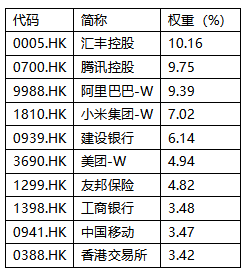
港股通50指数

Search documents
港股通50ETF(159712)盘中涨超1.5%,跨境资金回流有望支撑市场
Sou Hu Cai Jing· 2026-01-27 06:22
Core Viewpoint - The Hong Kong Stock Connect 50 ETF (159712) has seen an intraday increase of over 1.5%, indicating a potential inflow of cross-border capital that may support the market [1] Group 1: Market Analysis - Tianfeng Securities suggests that in the current environment of fluctuating market risk appetite and increasing external uncertainties, investors should focus on value-oriented investments with a supplementary emphasis on growth [1] - The recommendation is to prioritize sectors with relatively low valuation constraints and stable cash flow and dividend characteristics to enhance portfolio stability and defensive attributes amid uncertainty [1] Group 2: Index and ETF Details - The Hong Kong Stock Connect 50 ETF (159712) tracks the Hong Kong Stock Connect 50 Index (930931), which selects the 50 largest companies by market capitalization that are tradable through the Stock Connect mechanism [1] - The index emphasizes sectors such as finance, discretionary consumption, and information technology, combining high growth and low valuation characteristics to reflect the overall performance of large-cap Hong Kong stocks [1] - The constituent securities primarily consist of highly liquid industry leaders, representing both new and traditional economic sectors [1]
港股通50ETF(159712)涨超1.2%,港股盈利增速或迎修复
Mei Ri Jing Ji Xin Wen· 2026-01-23 07:16
Core Viewpoint - The Hong Kong stock market is expected to see a recovery in profit growth by the first half of 2026, driven by a slowdown in competition among internet platforms and a significant reduction in the drag from non-essential consumer profits [1] Group 1: Profit Growth Expectations - Profit growth in the Hong Kong stock market is anticipated to enter a recovery phase by mid-2026 [1] - The first quarter will show a notable decrease in the negative impact from non-essential consumer profits [1] - The materials and real estate construction sectors are expected to maintain high profit growth levels in the first half of the year [1] Group 2: Sector Performance - The information technology and healthcare sectors are projected to sustain high profit growth rates throughout the year, with a trend of lower profits in the first half followed by recovery in the latter half [1] - The commercialization of AI applications is accelerating, enhancing the valuation attractiveness of the Hong Kong technology sector [1] Group 3: ETF Overview - The Hong Kong Stock Connect 50 ETF (159712) tracks the Hong Kong Stock Connect 50 Index (930931), which selects the 50 largest listed companies within the Stock Connect framework [1] - The index covers both new and traditional economic sectors, with a focus on financials, non-essential consumption, and information technology [1] - It aims to reflect the overall performance of core listed companies in the Hong Kong Stock Connect that exhibit both high growth potential and low valuation characteristics [1]
港股通50ETF(159712)涨超2%,多重驱动因素或支撑港股前景
Mei Ri Jing Ji Xin Wen· 2026-01-13 02:40
Core Viewpoint - The Hong Kong stock market is expected to experience three driving factors by 2026: international capital allocation, inflow of Chinese capital, and recovery of China's economic fundamentals [1] Group 1: International Capital - A weakening US dollar index is anticipated to drive capital inflow into the Hong Kong stock market [1] Group 2: Chinese Capital - The appreciation of the Renminbi is likely to attract Chinese capital that has been held overseas to invest in Hong Kong stocks, helping to avoid foreign exchange costs and benefit from asset recovery [1] Group 3: Economic Fundamentals - The expected rebound in CPI and PPI in 2026 may lead to a weak recovery in corporate profits, with potential for a strong recovery if combined with debt reduction policies [1] Group 4: Industry Insights - The Hang Seng Technology Index is expected to benefit from the "Davis Triple Play," with a high probability of success in AI application sectors [1] - The dividend yield of Hong Kong stocks, supported by tax advantages for insurance capital, is projected to continue outperforming that of A-shares [1] - The convergence of prices between innovative drugs in China and the US presents growth opportunities [1] - New consumption trends are expected to replicate the core asset bull market seen from 2019 to 2021 [1] Group 5: ETF Information - The Hong Kong Stock Connect 50 ETF (159712) tracks the Hong Kong Stock Connect 50 Index (930931), which selects the 50 largest listed companies within the Stock Connect framework, covering 18 industries including finance and information technology, reflecting the overall performance of large-cap leaders in both new and traditional economies, characterized by high growth and low valuation [1]
国泰中证500ETF(561350)、港股通50ETF(159712)大涨点评
Sou Hu Cai Jing· 2026-01-05 11:34
Market Performance - The A-share market saw all three major indices rise, with the Shanghai Composite Index up by 1.38%, the Shenzhen Component Index up by 2.24%, and the ChiNext Index up by 2.85% [1] - The total market turnover reached 2.57 trillion yuan, showing an increase compared to the pre-holiday period [1] Driving Factors for the Rise - The significant rise in the Hong Kong stock market during the New Year period catalyzed the positive opening of the A-share market [3] - Key drivers include: - Intensified global AI application [3] - Increased interest in innovative pharmaceuticals [3] - Strengthening of the Renminbi, with the offshore Renminbi breaking the 7 mark, enhancing the attractiveness of Hong Kong stocks to foreign capital [3] Future Outlook - Externally, the imminent announcement of the new Federal Reserve chairperson and ongoing pressure from Trump for significant interest rate cuts may reinforce expectations for a weaker dollar [4] - Internally, various policies are being implemented to stabilize expectations and stimulate activity, such as optimizing housing purchase restrictions and reducing the value-added tax on second-hand housing [4] - The Guotai CSI 500 ETF (561350) tracks the CSI 500 Index, which focuses on emerging manufacturing and growth sectors like electronics and biomedicine, reflecting China's economic transformation [4] - The Hong Kong Stock Connect 50 ETF (159712) tracks the Hong Kong Stock Connect 50 Index, which includes large-cap blue-chip stocks across various sectors, providing good market representation and industry distribution [4] Industry Developments - Meta has acquired Manus for over $2 billion to enhance its AI agent capabilities [6] - Volcano Engine will be the exclusive AI cloud partner for the 2026 Spring Festival Gala [6] - Deepseek has released a new architecture paper that balances model training performance and efficiency [6] - The brain-computer interface sector is gaining traction, with Elon Musk's Neuralink set to begin large-scale production of brain-computer interface devices in 2026 [6] - The first industry standard for medical devices using brain-computer interface technology will be implemented on January 1, 2026, laying the foundation for standardized development in the industry [6] - The small nucleic acid drug sector is heating up, with Rebio Biotechnology set to enter the Hong Kong market, further stimulating market sentiment [6]

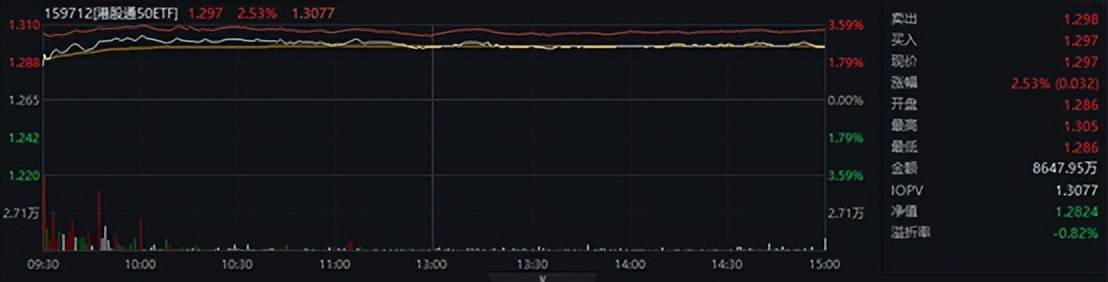
港股新浪潮下,寻找资金共识的入“港”口
Xin Lang Ji Jin· 2025-07-24 05:09
Group 1 - The core viewpoint of the article highlights the significant investment opportunities in the Hong Kong market driven by both capital inflows and technological advancements, particularly in AI, leading to a remarkable performance of Hong Kong stocks from 2025 onwards [1][2] - The article emphasizes the structural changes in the Hong Kong stock market, where traditional financial giants and new tech companies coexist, and a growing number of investors are turning to index-based investments to capture market trends [1][2] - The increasing consensus on the influx of new capital into the Hong Kong market suggests a strong demand for a broad-based index that can accommodate substantial capital needs, similar to the roles of the CSI 300 in A-shares and the S&P 500 in U.S. stocks [1][5] Group 2 - The article identifies the Hong Kong Stock Connect 50 Index as a potential core benchmark for the Hong Kong market, as it transcends single-industry limitations and reflects the current mainstream forces and economic transformation directions [2][3] - It discusses the importance of a representative broad-based index for investors, as it serves as a benchmark for measuring overall market performance and is often a core holding tool for institutional investors in mature markets [4][5] - The current structure of the Hong Kong ETF ecosystem shows a significant imbalance, with institutional holdings in broad-based index products at only 43%, compared to 58% in thematic indices and 61% in Smart Beta strategies, indicating untapped potential for allocation [4][5] Group 3 - The Hong Kong Stock Connect 50 Index is characterized by its broad coverage of key stocks, including both new economy giants and traditional industry leaders, making it highly representative of the market [6][7] - The index accounts for 51% of the total market capitalization, 44% of trading volume, and 57% of profit contributions in the Hong Kong market, showcasing its role as a core asset aggregator [8] - The index's composition reflects the evolution of China's economic dynamics, transitioning from a dominance of finance and real estate to a more diversified representation including technology, automotive, and retail sectors [9][10] Group 4 - The article notes that the market's recognition of the Hong Kong Stock Connect 50 Index is high, with significant allocations from southbound funds and a 40.6% share of active equity products in the Hong Kong holdings [12] - The Hong Kong Stock Connect 50 ETF has become a preferred choice for investors seeking to capture core assets in the Hong Kong market, with a scale of 2.357 billion yuan as of July 16, 2025, indicating its liquidity advantage [15] - The ETF benefits from the Hong Kong Stock Connect mechanism, providing high investment convenience and ample quotas, while also being supported by continuous inflows from southbound capital [15]