特斯拉FSD V14

Search documents
智驾圈都在等何小鹏
3 6 Ke· 2026-02-26 03:03
Core Insights - The article discusses the strategic shift in Xiaopeng Motors' autonomous driving technology, emphasizing the need to innovate and adapt to stay ahead of competitors like Li Auto and Huawei [7][16][29] - The transition from a modular approach to a more integrated Vision-Language-Action (VLA) architecture is highlighted as a critical move for Xiaopeng to enhance its autonomous driving capabilities [17][19][22] Group 1: Leadership and Organizational Change - Xiaopeng Motors has undergone multiple leadership changes, reflecting the need for organizational evolution in response to the fast-paced autonomous driving landscape [5][56] - The current leadership under Liu Xianming is focused on dismantling previous frameworks to foster innovation and agility within the company [46][57] - The article suggests that true progress in autonomous driving requires a willingness to challenge existing structures and embrace self-revolution [6][58] Group 2: Technological Evolution - The VLA architecture represents a significant advancement, moving from a two-step language translation process to a more direct integration of visual and language inputs for decision-making [17][19][22] - This new approach aims to reduce information loss and improve model efficiency, allowing for better performance in complex driving scenarios [22][25] - Xiaopeng's VLA 2.0 model is designed to enhance the vehicle's ability to operate without traditional navigation or textual instructions, showcasing a leap in autonomous capabilities [22][28] Group 3: Competitive Landscape - The article notes that Xiaopeng's challenges are reflective of broader trends in the autonomous driving industry, where many players are racing to innovate and improve their technologies [3][16] - The competitive environment is characterized by rapid advancements, with companies like Tesla and others also pushing the boundaries of autonomous driving capabilities [28][56] - Xiaopeng's ability to leverage its U.S. research center and retain talent is seen as a crucial factor in maintaining its competitive edge [30][35][39]



破解具身智能数据困境 大晓机器人发布“以人为中心”ACE具身研发范式
Huan Qiu Wang· 2025-12-22 08:13
Core Insights - The embodied intelligence industry is facing a dual challenge of data gaps and deviations in research paths, with a significant disparity between the data requirements for intelligent driving and the current data volume in the embodied intelligence field [1] - The traditional research paradigm is deemed ineffective, as it either complicates human interaction or machine learning, leading to high data costs and inefficiencies [1] - To address these challenges, the company has launched the ACE embodied research paradigm and the open-source Awakening World Model 3.0, along with the embodied super brain module A1 [1][3] Group 1 - The ACE paradigm is centered around human-centric data collection, enabling the gathering of millions of hours of data without disrupting human activities, thus significantly increasing efficiency and reducing costs [3] - The Awakening World Model 3.0 integrates multi-modal understanding, generation, and prediction, allowing machines to comprehend physical laws and human behaviors, enhancing their cognitive capabilities [3][4] - The model is open-sourced to promote ecosystem development, allowing various enterprises to utilize its tools and contribute to a shared data pool [4] Group 2 - The embodied super brain module A1 addresses existing hardware limitations by providing 360-degree environmental coverage and enabling autonomous navigation in complex environments without pre-collected high-precision maps [5] - The A1 module is designed to be compatible with various quadruped robots and integrates with multiple industry applications, targeting sectors such as security, energy, and transportation [5] - The company plans to scale the deployment of A1-equipped robots in security inspections and urban governance in the short term, with a long-term vision of expanding into flexible industrial production lines and eventually into household applications [5]

开源+生态协同 商汤的大晓机器人攻坚具身智能痛点
2 1 Shi Ji Jing Ji Bao Dao· 2025-12-18 13:08
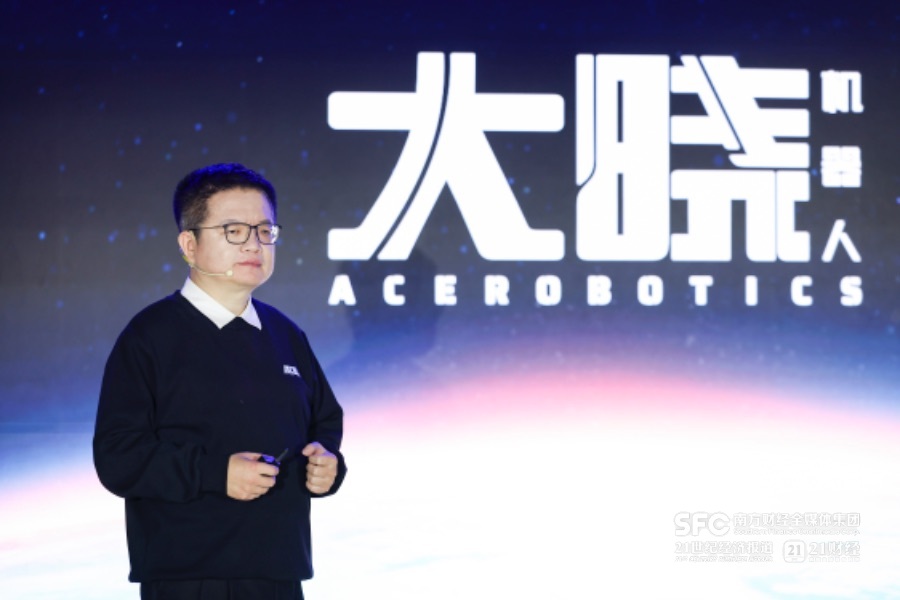
Core Insights - SenseTime's Xiaodao Robot emphasizes ecological collaboration within the AI industry chain, focusing on human-centered solutions that address real-world needs [2][3] - The company aims to leverage breakthrough technologies like ACE embodied research paradigm and Enlightenment World Model to scale embodied intelligence commercially [2][3] Data and Technology - The transition to embodied intelligence faces a significant data gap, with current real machine data in the field only amounting to 100,000 hours compared to Tesla's FSD V14 training equivalent to 400 million hours of human driving experience [2] - The ACE paradigm allows for the collection of over 10 million hours of data annually, enhancing the value of real data to achieve a scale of over 100 million hours [3] Industry Trends - The global humanoid robot market is projected to reach 6 million units sold and a market size exceeding $120 billion by 2035, with optimistic scenarios suggesting sales could surpass 10 million units and a market size of $260 billion [11] - The industry consensus is that the true value of robots lies in their ability to solve practical problems in real-world applications rather than their physical form [8] Challenges and Opportunities - The key obstacles to scaling embodied intelligence include high data collection costs and the inefficiency of current data acquisition methods, which are often tied to specific hardware [7] - The cost of critical components, such as planetary roller screws and six-dimensional torque sensors, constitutes about 40% of the total cost, with potential reductions of 70% to 80% as domestic supply chains mature [13][14] Future Outlook - The next two to three years are expected to see significant advancements in industrial applications, particularly in areas like front warehouses and flash purchase warehouses, which could lead to large-scale deployment [13] - Breakthroughs in AI chips, battery technology, and thermal management are anticipated to take 5 to 10 years, impacting the overall cost structure and feasibility of humanoid robots [14]
李想: 特斯拉V14也用了VLA相同技术|25年10月18日B站图文版压缩版
理想TOP2· 2025-10-18 16:03
Core Viewpoint - The article discusses the five stages of artificial intelligence (AI) as defined by OpenAI, emphasizing the importance of each stage in the development and application of AI technologies [10][11]. Group 1: Stages of AI - The first stage is Chatbots, which serve as a foundational model that compresses human knowledge, akin to a person completing their education [2][14]. - The second stage is Reasoners, which utilize supervised fine-tuning (SFT) and reinforcement learning from human feedback (RLHF) to perform continuous reasoning tasks, similar to advanced academic training [3][16]. - The third stage is Agents, where AI begins to perform tasks autonomously, requiring a high level of reliability and professionalism, comparable to a person in a specialized job [4][17]. - The fourth stage is Innovators, focusing on generating and solving problems through reinforcement training, necessitating a world model for effective training [5][19]. - The fifth stage is Organizations, which manage multiple agents and innovations to prevent chaos, similar to corporate management [4][21]. Group 2: Computational Needs - The demand for reasoning computational power is expected to increase by 100 times, while training computational needs may expand by 10 times over the next five years [7][23]. - The article highlights the necessity for both edge and cloud computing to support the various stages of AI development, particularly in the Agent and Innovator phases [6][22]. Group 3: Ideal Self-Developed Technologies - The company is developing its own reasoning models (MindVLA/MindGPT), agents (Driver Agent/Ideal Classmate Agent), and world models to enhance its AI capabilities [8][24]. - By 2026, the company plans to equip its autonomous driving technology with self-developed advanced edge chips for deeper integration with AI [9][26]. Group 4: Training and Skill Development - The article emphasizes the importance of training in three key areas: information processing ability, problem formulation and solving ability, and resource allocation ability [33][36]. - It suggests that effective training requires real-world experience and feedback, akin to the 10,000-hour rule for mastering a profession [29][30].



揭秘特斯拉FSD V14 “车位到车位”核心算法:高保真3D Occ占用预测
自动驾驶之心· 2025-10-11 16:03
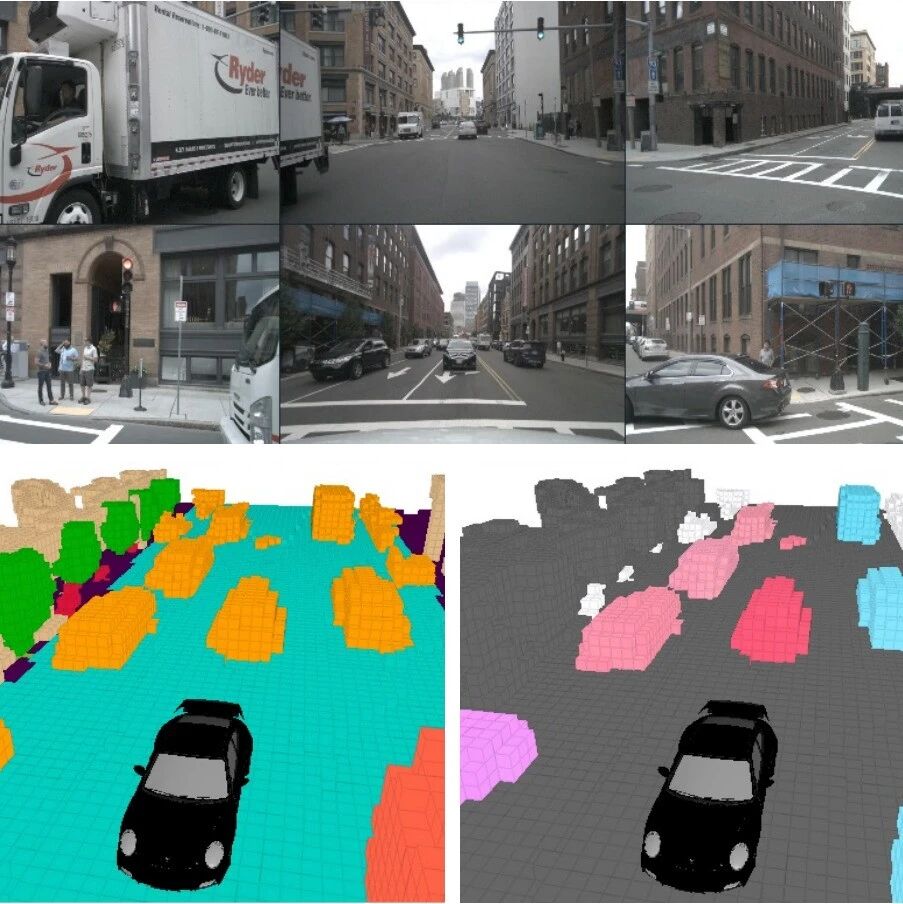
Core Insights - The article discusses Tesla's FSD V14 and its innovative "space occupancy detection" algorithm, which allows for high-precision 3D spatial reconstruction using only 2D image data from cameras, achieving accuracy within 10 cm [4][11][20]. Group 1: Overview of the High-Fidelity 3D Occupancy Algorithm - The high-fidelity 3D occupancy algorithm utilizes AI to accurately perceive and make decisions in complex dynamic environments, focusing on the occupancy attributes of surrounding space [5][6]. - Key components of the algorithm include the occupancy grid algorithm, which predicts the occupancy status of voxels (3D pixels) around the vehicle [5][6]. Group 2: Technical Mechanisms - The algorithm employs a Signed Distance Function (SDF) to predict the distance to the nearest occupied voxel, enhancing spatial perception and enabling more refined shape recognition [7][18]. - The system processes images from multiple cameras using convolutional neural networks (CNN) to extract meaningful features, which are then transformed into 3D spatial representations [12][20]. Group 3: Applications and Use Cases - The high-fidelity occupancy network can be applied in advanced parking assistance systems, enabling the identification of available parking spaces and assessing their suitability based on various factors [23][24]. - The algorithm is also applicable in autonomous robots for indoor navigation, allowing them to distinguish between obstacles and navigable areas [29]. Group 4: Advantages and Innovations - The SDF-based rendering approach provides richer detail and smoother visuals compared to traditional point cloud or binary voxel occupancy rendering methods [21]. - The algorithm's reliance solely on 2D visual data, without the need for depth cameras or LiDAR, represents a significant innovation in the field of autonomous driving [11][12].