
生物制造产品

Search documents
中国工业的2026:大省如何挑大梁
Di Yi Cai Jing· 2026-02-01 13:23
Core Viewpoint - The industrial value added in China is expected to achieve a medium to high-speed growth rate of around 5% by 2026, supported by various initiatives aimed at upgrading traditional industries and promoting emerging sectors [1][2]. Group 1: Industrial Growth Targets - The Ministry of Industry and Information Technology (MIIT) has prioritized stabilizing industrial growth and fostering innovation as key tasks for 2026, emphasizing the need for a modern industrial system [1]. - In 2025, the industrial value added for large-scale industries grew by 5.9%, with manufacturing maintaining a stable share of GDP, indicating a strong foundation for future growth [2]. - Various provinces, including Zhejiang and Anhui, have set specific growth targets for industrial value added, aiming for increases of around 6% to 6.5% in 2026 [3]. Group 2: Major Projects and Investments - Shanghai plans to initiate 133 industrial projects in 2026, with a total investment of 110 billion yuan, focusing on large-scale projects to support the "14th Five-Year Plan" [4]. - Hebei is set to implement a "Project Construction Year" in 2026, emphasizing the completion of key projects and the development of emerging industries [3]. - The overall manufacturing investment is projected to improve in 2026, with expected growth rates between 3% and 5% due to new technologies and market demand [5]. Group 3: Emerging Industries and Future Development - The "14th Five-Year Plan" emphasizes building a modern industrial system and strengthening the real economy, with a focus on developing new industries and technologies [6]. - Various regions are actively promoting new growth points in sectors such as 6G, quantum technology, and biomanufacturing, aiming to enhance their industrial capabilities [8]. - The integration of technology and industry is expected to accelerate, with significant government support for artificial intelligence, advanced manufacturing, and future industries [8].
锐财经丨工业经济持续向优向新发展
Ren Min Ri Bao Hai Wai Ban· 2026-01-26 03:07
Group 1: Industrial Growth and Performance - In 2025, the industrial added value of large-scale industries increased by 5.9% compared to the previous year, showing a faster growth rate, up by 0.1 percentage points [2] - The mining, manufacturing, and electricity, heat, gas, and water production and supply industries saw added value growth of 5.6%, 6.4%, and 2.3% respectively [2] - Among 41 major industrial categories, 36 experienced growth, resulting in a growth coverage of 87.8% [2] Group 2: Export Performance - Large-scale industrial enterprises achieved an export delivery value of 15.8 trillion yuan, a 2.2% increase from the previous year, demonstrating strong resilience [2] - The equipment manufacturing sector showed significant export performance, with railway, shipbuilding, aerospace, and specialized equipment exports increasing by 24.2%, 10.2%, and 7.5% respectively [2] Group 3: Profit Structure Improvement - From January to November 2025, profits of large-scale industrial enterprises continued to grow, with the equipment manufacturing sector's profits increasing by 7.7%, contributing 2.8 percentage points to the overall profit growth of large-scale industrial enterprises [2] Group 4: High-tech Manufacturing Growth - In 2025, the added value of high-tech manufacturing increased by 9.4%, the highest growth rate since 2022, contributing 26.1% to the overall industrial growth [5] - Specific industries such as integrated circuit manufacturing, aircraft manufacturing, and biopharmaceuticals saw added value growth rates of 26.7%, 24.8%, and 12.1% respectively [5] Group 5: Digital Product Manufacturing - The added value of the digital product manufacturing industry grew by 9.3% in 2025, contributing 20.3% to the overall industrial growth [7] - Production of communication products like mobile communication base station equipment and 5G smartphones increased by 13.5% and 12.5% respectively [7] Group 6: Technological Innovation and Product Development - Companies are focusing on technological and industrial innovation, with examples like the AI-powered unmanned bulldozer deployed in complex mining environments [4] - New technologies such as perovskite materials and quantum computing are advancing rapidly, with successful prototypes being developed [4] Group 7: Consumer Supply and Market Trends - The industrial sector is adapting to new consumption trends, with a focus on optimizing product supply and enhancing brand development [8] - The integration of 5G, industrial internet, and other technologies into various sectors is expected to support the digital transformation of the economy [8]
多地布局新一轮未来产业发展 加大金融支持成重要抓手
Zheng Quan Ri Bao· 2026-01-22 16:13
Group 1 - The core viewpoint emphasizes the importance of future industries in driving high-quality economic development and optimizing industrial structure, with various regions actively promoting innovation and application of future industries [1][4] - Multiple local governments are focusing on supporting enterprise growth and increasing financial support as key measures to foster innovation in future industries, recognizing that enterprises are the core carriers for technology exploration and commercialization [2][3] - The future industries are characterized by high investment, high risk, long cycles, and multiple technology iterations, necessitating a balanced mechanism between encouraging bold investments and ensuring accurate investments to avoid resource misallocation [3] Group 2 - The Ministry of Industry and Information Technology has outlined nine key future industries, including metaverse, brain-computer interfaces, quantum information, humanoid robots, generative artificial intelligence, biomanufacturing, future displays, future networks, and new energy storage, indicating a structured approach to future industry development [4] - Significant progress has been made in future industries, such as continuous upgrades in brain-computer interface technology and the expansion of humanoid robot industry scale, while challenges remain in the collaborative development of innovation chains, industrial chains, and ecological chains [4][5] - The government is committed to implementing strategic technology projects and establishing future industry pilot zones, aiming to create a competitive environment for future industries across the country [5][6]
工业和信息化领域对经济增长贡献超四成 人工智能产业亮点纷呈
Ren Min Ri Bao· 2026-01-22 00:02
Core Insights - In 2025, China's industrial added value is expected to grow by 5.9% year-on-year, with the manufacturing sector maintaining a stable share of GDP, and the manufacturing scale likely to remain the largest globally for 16 consecutive years [1] Group 1: Industrial and Economic Growth - The industrial and information technology sectors are projected to contribute over 40% to economic growth [1] - The added value of integrated circuits and electronic materials increased by 26.7% and 23.9% respectively, while industrial robot production rose by 28% [3] - New energy vehicle sales reached 16.49 million units, marking a year-on-year growth of 28.2% [3] Group 2: Technological Advancements - The global AI technology is accelerating innovation and integration across various industries, with significant advancements in materials like perovskite and permanent magnet materials [2] - New products such as intelligent robots and biomanufacturing products are rapidly entering the market, supported by new scenarios like "5G+" and "industrial internet+" [2] Group 3: Smart and Green Transformation - The first batch of 15 leading factories has been showcased, achieving an average production efficiency increase of 29% and a reduction in product defect rates by 47% [4] - The average renewable energy utilization rate for national green computing facilities is expected to exceed 70% by 2025 [5] Group 4: Digital Economy Integration - By the end of 2025, China's digital industry revenue is projected to reach approximately 38.3 trillion yuan, with profits of 3.1 trillion yuan, reflecting growth rates of 39.5% and 48.4% respectively compared to 2020 [6] - The number of connected industrial devices has surpassed 100 million, with significant improvements in production capacity and quality due to the integration of digital technologies [7] Group 5: Consumer Goods Sector - The added value of the consumer goods industry is expected to grow by 3.7% year-on-year, accounting for 26.1% of total industrial output [8] - Initiatives to enhance supply and meet consumer demand have led to the release of numerous innovative products and the establishment of a quality safety traceability system for infant formula [8][9]
人工智能产业亮点纷呈
Xin Hua Wang· 2026-01-21 23:41
Core Insights - The Chinese industrial economy is projected to achieve a year-on-year growth of 5.9% in industrial added value by 2025, with manufacturing's contribution to GDP remaining stable and maintaining its position as the world's largest manufacturing sector for 16 consecutive years [1] Group 1: AI Industry Development - The global AI technology is accelerating innovation and integration across various sectors, with China's AI industry showing significant vitality and innovation since the 14th Five-Year Plan [2] - High-quality innovative results are emerging, including advancements in perovskite materials, permanent magnet materials, and power batteries, with technologies like quantum computing and brain-computer interfaces expanding into new fields [2] Group 2: Competitive Industries - Key industries such as integrated circuits and electronic materials have seen substantial growth, with added value increasing by 26.7% and 23.9% respectively, while industrial robot production rose by 28% [3] - New energy vehicle sales reached 16.49 million units, marking a year-on-year increase of 28.2% [3] Group 3: Smart and Green Transformation - The initiative aims to create "Chinese models" of smart manufacturing, with 15 pilot factories showcasing high efficiency and quality, achieving an average production efficiency increase of 29% and a reduction in defect rates by 47% [4] - AI has penetrated over 70% of operations in these pilot factories, leading to the development of over 6,000 vertical models and the application of more than 1,700 key smart manufacturing equipment and industrial software [4] Group 4: Digital Economy Integration - By the end of 2025, China's digital industry revenue is expected to reach approximately 38.3 trillion yuan, with profits of 3.1 trillion yuan, reflecting growth rates of 39.5% and 48.4% compared to the end of the 13th Five-Year Plan [6] - The industrial internet has achieved comprehensive coverage, with over 100 high-level 5G factories leading globally, resulting in a 25% increase in average capacity and a 21% improvement in product quality [7] Group 5: Consumer Goods Industry - The consumer goods industry is projected to grow by 3.7% by 2025, accounting for 26.1% of total industrial output, with efforts focused on expanding domestic demand and optimizing supply [8] - Initiatives to enhance product quality and brand strategy are underway, including the launch of 93 consumer brands and 43 regional brands, aimed at boosting domestic consumption [8] Group 6: Industry Upgrading Foundations - Implementation of digital transformation plans for various sectors, including textiles and food, is being prioritized to strengthen the consumer goods industry's unique clusters [9]
李乐成:加快建设现代化产业体系
Ren Min Ri Bao· 2026-01-13 03:15
Core Viewpoint - The interview with Li Lecheng, Minister of Industry and Information Technology, emphasizes the importance of implementing the spirit of the Central Economic Work Conference to ensure a strong start for the "14th Five-Year Plan" by focusing on innovation-driven development and building a modern industrial system with international competitiveness [2][3]. Group 1: Industrial Economic Stability - The industrial economy in China is expected to maintain stability and growth, with a focus on four key areas: stabilizing growth in key industries and regions, expanding effective demand, promoting value creation, and enhancing the vitality of business entities [3][4]. - Key industries and regions account for 80% of the total industrial output, necessitating targeted support and policy measures to ensure their growth [3]. Group 2: Modernization of the Industrial System - The "14th Five-Year Plan" aims to accelerate the modernization of the industrial system by promoting intelligent, green, and integrated development in manufacturing [5][6]. - Traditional industries will undergo renewal through the implementation of targeted upgrade plans, while new industries will be developed to create new growth drivers [5][6]. Group 3: Technological Innovation - The Ministry plans to enhance the integration of technological and industrial innovation, focusing on high-quality technological supply and the establishment of national manufacturing innovation centers [8][9]. - There will be an emphasis on increasing the participation of enterprises in major national technology projects and enhancing their innovation capabilities [8]. Group 4: Digital Transformation - The Ministry will promote the digital transformation of manufacturing through the large-scale application of industrial internet and artificial intelligence technologies [10][11]. - Efforts will be made to improve data quality and facilitate the digital transition of enterprises, particularly small and medium-sized enterprises [10][11].
利安隆董事长李海平:化学与生物技术双轮驱动公司高质量发展
Zheng Quan Ri Bao· 2026-01-08 16:45
Core Insights - The company emphasizes strategic stability during adversity, focusing on its core chemical business while also investing in biotechnology as a new growth engine [1] Group 1: Business Strategy - The company is a leader in the polymer materials anti-aging industry and has experienced rapid growth since its listing on the Shenzhen Stock Exchange in 2017 [2] - The company identifies three global trends: supply chain restructuring, energy transition, and the omnipresence of AI, which will guide its R&D and investment strategies [2] - The company is committed to technological innovation to upgrade its business, expanding from material anti-aging to human anti-aging products, with nine categories of traditional chemical sunscreen products already launched [2][3] Group 2: International Expansion - The company is actively pursuing international expansion, as evidenced by its recent announcement of capital increases to support the construction of a research and production base in Malaysia [2] - The company aims to establish a robust supply chain to support emerging industries such as new energy vehicles and flexible displays through acquisitions and new production bases [3] Group 3: Biotechnology Development - The company views biotechnology as a strategic new engine for growth, focusing on life sciences to create long-term value [3] - The company has invested in R&D for small nucleic acid drugs, biomanufacturing, and personal care, collaborating with institutions like Tianjin University [3] Group 4: Operational Efficiency - The company has implemented a ten-year strategic planning management model to ensure effective execution of its strategies [4] - The management team has maintained a zero voluntary turnover rate, indicating strong organizational cohesion [4] - The company has outlined three key areas for capital expenditure: differentiated domestic investments, a focus on biological innovation, and increased international presence [4]
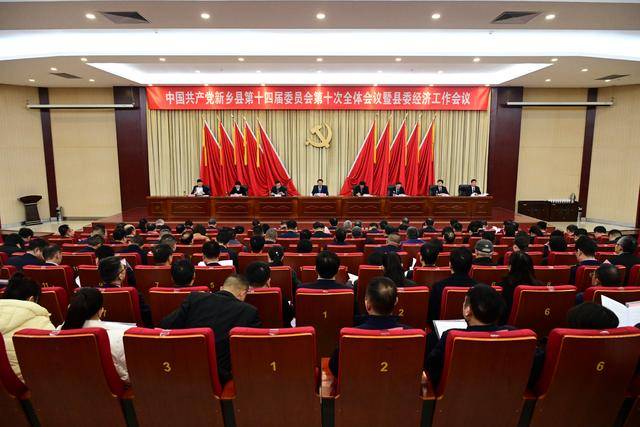
确保“十五五”开好局 新乡县提出“八个关键着力点”
Sou Hu Cai Jing· 2026-01-08 07:12
Economic Growth and Development - During the "14th Five-Year Plan" period, the GDP of Xinxiang County increased from 21.77 billion to 31.8 billion, with per capita GDP exceeding 90,000, ranking first among eight counties and cities [2] - The general public budget revenue rose from 1.06 billion to 1.4 billion, with an average annual growth of 5.8%, maintaining an 80% tax ratio, also ranking first among eight counties and cities [2] - By the end of the "14th Five-Year Plan," the per capita disposable income of residents reached 35,000, which is 1.3 times that of the end of the "13th Five-Year Plan," maintaining the absolute first position among eight counties and cities [2] Strategic Focus for Future Development - Xinxiang County has identified eight key focus areas for economic work in 2026 to ensure a strong start for the "15th Five-Year Plan" [2] - The county aims to enhance domestic demand, integrate into the national unified market, and promote efficient governance reforms [3] - There is a focus on strengthening the real economy and building a modern industrial system, with plans to implement a "special industry cluster excellence upgrade plan" [3] Innovation and Industrial Development - The county plans to promote innovation-driven development and enhance the integration of technological and industrial innovation [3] - Efforts will be made to establish an industrial innovation alliance centered around leading enterprises and to develop the "Xinxiang Manufacturing" regional brand [3] - The goal is to attract and cultivate significant projects in sectors such as industrial robotics, artificial intelligence, biomanufacturing, and new energy [3] Rural Revitalization and Environmental Protection - Xinxiang County is committed to comprehensive rural revitalization, ensuring food security, and enhancing agricultural productivity [4] - The county aims to strengthen pollution prevention and accelerate the transition to a green and low-carbon economy, with specific targets for reducing emissions and increasing green manufacturing enterprises [4] - There is a focus on improving public services in education, healthcare, and social security to enhance the quality of life for residents [5] Governance and Safety - The county emphasizes the importance of balancing high-quality development with safety, implementing effective governance through party leadership and data-driven approaches [5] - There are measures in place to mitigate financial risks and ensure compliance with land protection policies [5] - The county aims to enhance community safety and maintain social stability through ongoing efforts against crime and illegal land use [5]

晶采观察丨盘点2025!这些细节里藏着中国经济底气
Yang Guang Wang· 2025-12-23 12:41
Group 1 - The core economic temperature of China is reflected in daily life changes, such as the rise of new retail experiences and increased tourism among the elderly, indicating a solid foundation for economic growth [1] - The Central Economic Work Conference emphasizes achieving greater breakthroughs in quality and effectiveness, providing important guidance for the start of the 14th Five-Year Plan [1] - Technological advancements, including intelligent robots and breakthroughs in quantum communication and biomanufacturing, are creating new growth points and reinforcing the foundation for high-quality economic development [1] Group 2 - The resilience of the industrial chain has contributed to stability, with new energy vehicle sales reaching 14.78 million units in the first 11 months, a year-on-year increase of 31.2%, supported by collaboration among numerous component manufacturers [2] - The logistics sector has shown robust performance, with express delivery volumes exceeding 18 billion packages in the first 11 months, reflecting the vibrant consumer market [2] - Policy support has strengthened development, with the Hainan Free Trade Port officially starting operations, offering over 6,600 tax-free items to enhance consumer benefits and create broader opportunities for employment and entrepreneurship [2] Group 3 - Looking ahead, the Central Economic Work Conference has set the tone for the next year, focusing on stability and quality improvement, with investments in people's livelihoods as a priority [3] - The emphasis on enhancing medical services, stabilizing employment, and improving elderly care aims to ensure economic stability and progress [3]
未来产业的中国路径与全球竞合
Di Yi Cai Jing· 2025-12-16 11:32
Core Insights - The future industrial core tracks in China are distributed across six major fields: quantum technology, biomanufacturing, hydrogen energy, nuclear fusion energy, brain-computer interfaces, embodied intelligence, and sixth-generation mobile communication, characterized by strategic, leading, and disruptive features [1][6] Group 1: Future Industry Landscape - The Chinese government emphasizes "forward-looking layout of future industries" as a strategic initiative to clarify the main direction of industrial structure and reveal key driving forces for advanced industrial foundation and modernization of the industrial chain [1][6] - Major economies globally are experiencing a new wave of technological innovation leading to industrial innovation, with AI, biotechnology, controllable nuclear fusion, and quantum technology driving rapid marketization and industrialization [2] Group 2: Technological Advancements - Breakthroughs in clean energy technologies are accelerating global decarbonization, with solar photovoltaic capacity expected to reach 341 GW and 235 GW for ground-mounted and distributed solar respectively by 2030 [3] - The hydrogen energy sector is projected to account for 18% of global energy demand by 2050, while the nuclear fusion market is expected to grow to approximately $2.26 trillion by 2035 [3] - Quantum technology advancements are expected to lead to a global quantum computing market size of $20 billion and quantum communication market of $42.1 billion by 2030 [3] Group 3: China's Competitive Advantages - China possesses unique advantages in developing future industries, including a new type of national system for resource concentration, a complete industrial system for engineering and industrialization, and a vast market for commercializing new technologies [6][10] - The country has emerged as a leader in various fields, such as brain-computer interfaces, biomanufacturing, and quantum technology, with significant achievements in each area [7][8] Group 4: Policy and Strategic Initiatives - The Chinese government has issued several policy documents to promote innovation in future industries, including specific guidelines for brain-computer interfaces and biomanufacturing [9] - A comprehensive ecosystem for future industries is being constructed, focusing on technology breakthroughs, scene verification, industrial applications, and system upgrades [9][10] Group 5: Investment and Innovation - The development of future industries requires strengthening infrastructure, enhancing original innovation, and deepening the integration of technological and industrial innovation [11][12] - Establishing a risk-sharing mechanism for investment in future industries is crucial, with a focus on government-led initiatives to attract social capital [13][14]