
生酪拿铁

Search documents
库迪全场9.9元提前结束,原因找到了
2 1 Shi Ji Jing Ji Bao Dao· 2026-02-06 14:10
Core Viewpoint - Kudi Coffee is ending its 9.9 yuan pricing strategy, indicating a shift in the coffee market towards a more conventional industry model [3]. Pricing Strategy Changes - Starting February 1, 2026, Kudi will retain only 3-7 products at the 9.9 yuan price point, while other products will see price increases to 11.9-16.9 yuan, with some core items rising by 30%-60% [1]. - The new store opening coupon has increased from 6.9 yuan to 8.8 yuan, and new user reward coupons have risen from 8.8 yuan to 9.9 yuan [1]. Market Context - Kudi's decision to end the 9.9 yuan promotion comes earlier than expected, despite the company achieving profitability since May 2024 [7]. - The coffee market is experiencing a cooling period, moving away from aggressive discounting strategies that characterized previous years [8][10]. Competitive Landscape - Kudi's total store count is currently 18,000, which is below its original target, indicating potential growth challenges [11]. - The entry of new low-priced brands has further compressed margins, making the competitive environment more challenging compared to previous years [11]. Consumer Behavior - Despite the price increases, Kudi's stores remain busy, suggesting that customer traffic is still strong, particularly through delivery platforms [13]. - Franchisees have indicated that actual customer spending may not increase due to the continued reliance on delivery platforms, which have not adjusted their pricing [13]. Strategic Shift - Kudi's move away from the 9.9 yuan pricing may reflect a strategic pivot towards focusing on profitability rather than aggressive growth [15]. - The company appears to be prioritizing cash flow and pricing autonomy by reducing reliance on self-operated channels [15]. Industry Trends - The coffee market is transitioning away from "barbaric growth," which is seen as a positive development for long-term industry sustainability [17].


库迪核心单品涨价超30%,取消全场9.9元,店员称对生意影响不大
21世纪经济报道· 2026-02-03 12:49
Core Viewpoint - Kudi Coffee has ended its "all products at 9.9 yuan" promotion earlier than expected, with plans to adjust prices and maintain profitability starting February 2024 [1][4]. Group 1: Pricing Strategy Changes - Starting February 1, 2026, Kudi will retain 3-7 products at the promotional price of 9.9 yuan, while other products will see price increases to 11.9-16.9 yuan, with some core items rising by 30%-60% [1][4]. - The new store opening coupon has increased from 6.9 yuan to 8.8 yuan, and the new user gift coupon has risen from 8.8 yuan to 9.9 yuan, with continued participation in various delivery platform subsidies [1][4]. Group 2: Market Dynamics and Competition - The end of the 9.9 yuan promotion is attributed to a cooling off in the delivery market, which previously fueled Kudi's growth [4][6]. - Kudi's pricing strategy was influenced by intense competition in the delivery market, where brands like Luckin and Mixue benefited from significant subsidies [4][6]. - The coffee market is experiencing a shift as the necessity for aggressive price wars diminishes, with Kudi's expansion reaching a potential bottleneck, having 18,000 stores, which is below original targets [8][10]. Group 3: Consumer Behavior and Sales Performance - Despite the price adjustments, Kudi's stores remain busy, with peak sales observed during specific hours, indicating that consumer demand is still strong [10]. - The impact of low pricing on overall sales appears to be declining, as evidenced by the limited contribution of the lowest prices to total sales figures [10].
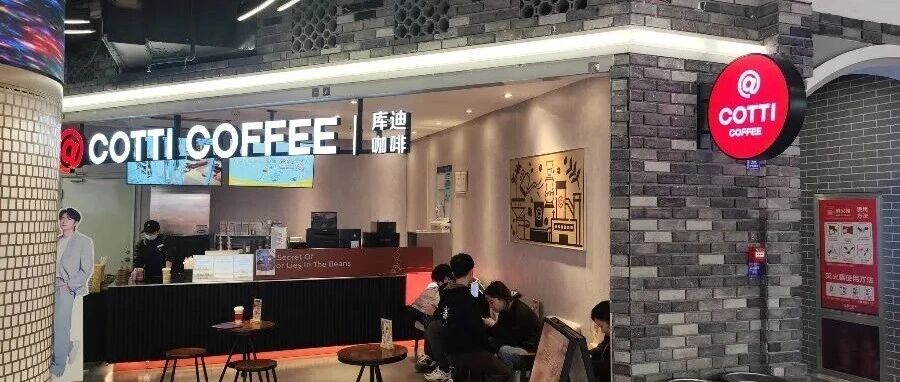
库迪咖啡提前结束全场9块9:店员称影响有限
2 1 Shi Ji Jing Ji Bao Dao· 2026-02-03 10:08
Core Viewpoint - Kudi Coffee has decided to end its promotional pricing of 9.9 yuan earlier than expected, with a shift back to regular prices ranging from 11.9 to 16.9 yuan starting February 1, 2026, indicating a strategic adjustment in response to market conditions and competition [1][3][10] Pricing Strategy - From February 1, 2026, Kudi will maintain a limited selection of products at the promotional price of 9.9 yuan, while core products will see price increases of 30% to 60%, such as the salted caramel vanilla latte rising from 9.9 yuan to 15.9 yuan [1] - Kudi's promotional activities have also been adjusted, with new store opening vouchers increasing from 6.9 yuan to 8.8 yuan, and new user rewards rising from 8.8 yuan to 9.9 yuan [1] Market Impact - The early termination of the 9.9 yuan promotion appears to have a limited impact on Kudi's operations, as store employees reported that customers were not significantly concerned about the price changes [2] - The competitive landscape has shifted, with Kudi and other brands like Luckin Coffee and Mixue Ice City benefiting from the previous aggressive pricing strategies, as evidenced by significant sales milestones on platforms like JD.com [3][5] External Factors - The external delivery market has cooled down, which has contributed to Kudi's decision to end the low-price strategy, as the intense competition and subsidies have pressured operational strategies across the industry [3][10] - Regulatory scrutiny has increased, with the National Market Supervision Administration conducting investigations into the competitive practices of delivery platforms, aiming to foster a fair market environment [8][9] Operational Insights - Kudi's expansion appears to be reaching a plateau, with the total number of stores at 18,000, which is below initial projections, suggesting that the effectiveness of the 9.9 yuan strategy for expansion is diminishing [11] - Despite the price adjustments, Kudi's stores remain busy, indicating that customer demand may not be as sensitive to price changes as previously thought [11]
瑞幸拟竞购蓝瓶咖啡:高端化与全球化背后的战略豪赌
Xin Lang Cai Jing· 2025-12-24 10:04
Core Viewpoint - Luckin Coffee, China's largest coffee chain, is considering acquiring Blue Bottle Coffee, a premium brand owned by Nestlé, marking a significant move towards the global high-end coffee market [1][10]. Group 1: Strategic Implications - The potential acquisition is part of Luckin's globalization strategy, aiming to enhance its brand image and enter the high-end market dominated by Starbucks and independent cafes [2][11]. - Luckin Coffee has surpassed Starbucks in store count in China but is perceived as a budget brand, while Blue Bottle represents a premium positioning with a focus on quality and aesthetics [2][12]. - The acquisition could provide Luckin with over 100 international store locations, particularly in the U.S. and Japan, enhancing its global footprint [1][3][10]. Group 2: Financial Performance - As of Q3 2025, Luckin reported a net revenue of $2.1 billion, a 50% year-on-year increase, and a net profit of approximately $180 million, indicating strong financial health post-scandal [3][13]. - The financial strength supports the feasibility of a large-scale acquisition, allowing Luckin to pursue its strategic goals [3][13]. Group 3: Challenges and Risks - The acquisition faces significant challenges, including high valuation risks, as Blue Bottle's worth has likely increased since Nestlé's 2017 acquisition for approximately $425 million [4][14]. - Cultural integration poses a challenge, as Luckin's operational model differs significantly from Blue Bottle's emphasis on artisanal coffee and customer experience [4][15]. - Operational complexities arise from differing business models and supply chain management, which could hinder efficiency post-acquisition [4][15]. Group 4: Competitive Landscape - The coffee market in China is becoming increasingly competitive, with new entrants like Luckin's former executive's brand and aggressive pricing strategies from competitors [5][15]. - Luckin's profit margins are under pressure, with a reported 2.7% decline in net profit and a net profit margin of 8.26%, the lowest since 2022 [5][15]. - The global coffee industry is evolving, with major players like Starbucks expanding aggressively, indicating a shift from mere store count competition to brand positioning and capital strategies [7][17].
报道称瑞幸咖啡要买Blue Bottle,% Arabica也在考虑范围内
Hua Er Jie Jian Wen· 2025-12-16 20:22
Group 1 - Luckin Coffee is considering acquiring Blue Bottle Coffee, a subsidiary of Nestlé, to enhance its brand image and expand into the high-end coffee market [1] - The discussions regarding the acquisition are still in the early stages and may not lead to a final offer [1] - Luckin Coffee has surpassed Starbucks in the number of stores in China, becoming the largest coffee chain in the country [1][2] Group 2 - Luckin Coffee has experienced rapid growth since its establishment in 2017, offering low-priced coffee and customized drinks, resulting in a net revenue of $2.1 billion for the quarter ending September, a 50% year-on-year increase [2] - The company added 3,008 new stores in the latest quarter, bringing its total global store count to 29,214 [2] - Nestlé has commissioned Morgan Stanley to evaluate the future development plans for Blue Bottle Coffee, which it invested in back in 2017 for approximately $425 million [3]

全球农业观察 | 人均16杯到240杯的想象空间:中国咖啡消费潜能激活本土品牌新势力
2 1 Shi Ji Jing Ji Bao Dao· 2025-05-13 09:36
Group 1: Market Growth and Consumer Preferences - China's coffee consumption has been growing steadily over the past 30 years, with an average annual growth rate of 12.69% from 2020 to 2024, significantly higher than the global average of 0.09% [1] - The per capita annual coffee consumption in China is only 16 cups, compared to the global average of 240 cups, indicating substantial growth potential in the market [1] - Different regions in China exhibit varying preferences for coffee flavors, with southern consumers favoring acidic, light-roasted coffee, while northern consumers prefer deep-roasted coffee with richer flavors [1] Group 2: Competitive Landscape - The coffee retail market in China is becoming increasingly competitive, with both international brands like Nestlé and Starbucks, and local brands such as Luckin, Yongpu, and Manner vying for market share [2] - Yunnan province, which previously dominated coffee bean production, is now focusing on brand development and deep processing to enhance its market position [2] - There are over 600 coffee businesses in Yunnan, with more than 30 large-scale enterprises generating annual sales exceeding 100 million yuan [2] Group 3: Brand Development and Quality Improvement - Starbucks has established a coffee innovation park in China, marking a significant step in integrating the coffee supply chain from bean to cup [3] - Since 2012, Starbucks has trained over 36,800 coffee farmers in Yunnan, significantly improving the quality of coffee beans sourced from the region [4] - The quality compliance rate of coffee passing Starbucks' quality tests has increased from 20% in 2012 to 80% currently, reflecting a commitment to quality improvement [4] Group 4: Local Brand Emergence - The rise of local coffee brands has been stimulated by the growing consumer market, with Luckin Coffee achieving a net revenue of 8.865 billion yuan in Q1 2025, a 41.2% year-on-year increase [5] - Local brands like Zhongka have gained recognition, with Zhongka being named one of Yunnan's top ten brands in 2022 and maintaining the top sales position in the coffee category on Tmall for three consecutive years [5][6] - The full industry chain approach adopted by companies like Zhongka allows for better quality control and enhances brand recognition among consumers [6] Group 5: Future Outlook - The demand for coffee, particularly specialty coffee, is expected to continue growing, driven by consumer preferences and market dynamics [7] - The sustainable development of the Yunnan coffee industry is supported by training and technical assistance from multinational companies, indicating a positive outlook for the sector [7]


坐拥 20000 家门店,瑞幸做茶饮是 “顺手”?
晚点LatePost· 2024-08-12 11:33
上午咖啡下午茶。 随着门店数量迈入 20000 家,瑞幸开始顺手做起了茶饮。 随着门店的迅速扩张,瑞幸月均交易用户数和业绩纷纷创下了新高。 8 月 11 日,瑞幸官宣刘亦菲为瑞幸咖啡全球品牌代言人及茶饮首席推荐官;而早在一周前,瑞幸推出了 "轻轻茉莉·轻乳茶" 新品。 至今,这款轻乳茶产品首周销量已经突破 1100 万杯。 从创立到 10000 家门店,瑞幸花了五年半。而再多 10000 家门店,瑞幸仅用了 13 个月。瑞幸的增长似乎 还看不到尽头。 在刚刚过去的第二季度,瑞幸的月均交易用户数达到了 6969 万,营收则创下了 84 亿元。其中,瑞幸产品 总售卖数突破 7.5 亿件,本季度新品销量占到了国内总杯量的 24%,也就是每卖出 4 杯瑞幸,就有 1 杯是 本季新品。 靠着更快的上新速度、更丰富多元的风味咖啡和更广泛年轻的用户群体,一个更轻快、也更全能的瑞幸, 在过去几年里以意想不到的速度攻城略地。 这一次,瑞幸把目光放在了茶饮上,试图覆盖更广泛的消费场景。"瑞幸经验",或许将再一次被验证。 并不意外的跨界 "上午咖啡下午茶",作为国内咖啡的头部品牌,瑞幸牢牢占据着上午咖啡的消费场景,通过高频打低频的 ...