
电子病历

Search documents
张文宏反对电子病历引热议,云知声黄伟:AI不能替代医生成长
Feng Huang Wang Cai Jing· 2026-02-14 06:57
Core Viewpoint - The discussion highlights the ongoing debate in the AI medical field, emphasizing that while AI has potential, it is not yet fully reliable, and the importance of continuing to train and value human doctors remains critical [1][2]. Group 1: Perspectives on AI in Healthcare - Huang Wei acknowledges that both Zhang Wenhong and Wang Xiaochuan present valid points regarding the role of AI in medicine, with Zhang focusing on the current limitations of AI and the need for ongoing doctor training [2]. - The core argument from Zhang Wenhong is that AI should not be fully relied upon at this stage, and there should be a pathway for doctors to grow and evolve in their roles [2]. - Wang Xiaochuan's perspective emphasizes patient autonomy and the ideal scenario where AI can assist without compromising the growth of medical professionals [2]. Group 2: AI Reliability and Patient Interaction - Huang Wei points out that many patients may use AI tools like DeepSeek to self-diagnose, but they often overlook the high error rates associated with such AI models, which do not take responsibility for their conclusions [2]. - The discussion illustrates the tension between the ideal use of AI in healthcare and the current reality where AI cannot replace the need for human doctors [2].
从“工作总结”到“管理科学”,写给医院管理研究者的4条建议
Sou Hu Cai Jing· 2026-01-20 12:42
Core Insights - The article emphasizes the need for improvement in hospital management research in China, highlighting a gap between practical administrative work and rigorous management science research [1][2][3] - It advocates for a shift from broad, ambitious topics to more focused, specific research questions that can yield actionable insights [2][3][5] - The importance of quantitative analysis and statistical rigor in presenting management outcomes is stressed, moving beyond mere descriptive statistics [7][8] Group 1: Research Focus - Current hospital management research often resembles administrative summaries rather than scientific studies, lacking depth in addressing specific problems and methodologies [1][5] - International journals favor research that uncovers the underlying mechanisms of management practices, such as the impact of power structures on decision-making efficiency [2][3] - Topics like "green healthcare" and patient-reported outcomes are identified as underexplored areas that could attract international attention [3][10] Group 2: Methodological Rigor - Effective management research should adopt a "intervention-control" mindset, clearly defining measurable core indicators and intervention variables [6][7] - The necessity for statistical validation in research findings is highlighted, with a focus on P-values and confidence intervals to ensure credibility [7][8] - Management practices should not become overly complex or tool-centric, but rather align with the core mission of enhancing healthcare value [8][10] Group 3: Future Directions - The article calls for a cultural shift among young management professionals in China to approach management research with the same rigor as clinical practices [10] - It emphasizes the potential for Chinese hospital management practices to contribute to global knowledge through scientific refinement and articulation [10]
产业联盟:给医疗器械企业的启发与案例观察
思宇MedTech· 2025-11-23 13:55
Core Viewpoint - The article emphasizes the importance of industry alliances in the medical device sector, highlighting their role as collaborative platforms that connect various stakeholders in the industry to facilitate innovation and application of technology [2][3][21]. Group 1: Definition and Role of Industry Alliances - Industry alliances serve as "innovation collaboration platforms" that connect different elements of the industry, unlike associations that focus on management or academic societies that prioritize scholarly development [4]. - These alliances are typically non-profit organizations that enable dialogue and cooperation among research institutions, enterprises, hospitals, investors, and supply chains [3][4]. - The core function of industry alliances is to establish a collaborative mechanism that allows different roles within the industry to understand each other and create executable paths for innovation [4][21]. Group 2: Global Examples of Successful Industry Alliances - SEMATECH, established in the 1980s, helped the U.S. semiconductor industry regain its leading position by fostering collaboration among major companies and the government [6]. - ML Commons, formed by leading AI companies, created a unified performance testing standard for AI, enabling comparability across the industry [7]. - CharIN, a global alliance for electric vehicle fast charging, has facilitated the development of charging standards that benefit multiple automotive manufacturers [8]. - In the medical field, alliances like FHIR and IHE have significantly influenced data interoperability and the openness of medical device data [9][12]. Group 3: Challenges in the Medical Device Industry - The primary challenge in the medical device sector is not the technology itself but rather how to effectively implement it in clinical settings [13]. - Common pain points for innovative companies include difficulties in finding appropriate clinical pathways, fragmented resources, lack of a common language among stakeholders, and the need for specific discussions around practical applications [14][15][16]. Group 4: Benefits of Industry Alliances for Medical Device Companies - Industry alliances can enhance visibility for innovations by providing channels for companies to communicate their value effectively [17]. - They facilitate resource connectivity, improving the efficiency of integrating AI medical products into hospitals [18]. - The core value of alliances lies in their ability to advance innovation by focusing on actionable next steps rather than just theoretical discussions [21]. Group 5: Conclusion - The article concludes that industry alliances are essential for driving innovation in the medical device sector, acting as neutral connectors among companies, hospitals, and policymakers [21].

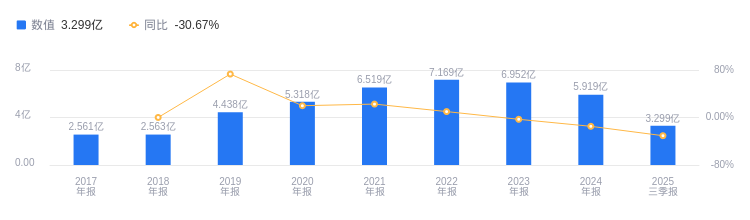
嘉和美康的前世今生:2025年三季度营收3.3亿低于行业平均,净利润-1.9亿远逊同行
Xin Lang Zheng Quan· 2025-10-31 16:25
Core Viewpoint - 嘉和美康, a leading company in the domestic medical information industry, has faced challenges in its financial performance while actively investing in AI and product upgrades to enhance its competitive position [2][6]. Group 1: Company Overview - 嘉和美康 was established on March 3, 2006, and listed on the Shanghai Stock Exchange on December 14, 2021, with its headquarters in Beijing [1]. - The company specializes in the research and industrialization of medical information software and has maintained the highest market share in China's electronic medical records industry for 11 consecutive years [1]. Group 2: Financial Performance - For Q3 2025, 嘉和美康 reported revenue of 330 million yuan, ranking 60th among 102 companies in the industry, while the industry leader, 上海钢联, achieved revenue of 57.318 billion yuan [2]. - The net profit for the same period was -190 million yuan, placing the company 98th in the industry, with the top performer, 德赛西威, reporting a net profit of 1.805 billion yuan [2]. - The company's asset-liability ratio stood at 40.12%, higher than the industry average of 31.94%, and increased from 33.46% in the previous year [3]. - 嘉和美康's gross margin was 20.20%, significantly below the industry average of 41.71%, and down from 47.29% year-on-year [3]. Group 3: Shareholder Information - As of September 30, 2025, 嘉和美康 had 7,592 A-share shareholders, an increase of 1.84% from the previous period, with an average holding of 18,100 circulating A-shares, a decrease of 1.80% [5]. - The top ten circulating shareholders included 长城消费增值混合A, which held 2 million shares, down by 410,000 shares from the previous period [5]. Group 4: Management and Compensation - The chairman and general manager, 夏军, received a salary of 1.26 million yuan in 2024, an increase of 981,000 yuan from 2023 [4]. Group 5: Industry Outlook and Future Projections - 中泰证券 noted that while 嘉和美康's performance was under pressure in the first half of 2025, the medical information industry has significant growth potential, with the company actively expanding into the medical AI sector [5]. - The company plans to launch a smart clinical solution, C-Fusion 1.0, and is focused on upgrading its product system through increased R&D investment [5]. - 华泰证券 maintained its profit forecast for 嘉和美康, projecting net profits of 44 million, 102 million, and 191 million yuan for 2025 to 2027, respectively, and set a target price of 44.48 yuan [6].

从组织推动到资源循环,泰安 “无废医院” 建设为 “无废城市” 注入卫健动能
Qi Lu Wan Bao Wang· 2025-09-30 13:37
Core Viewpoint - The city of Tai'an is actively promoting the construction of "waste-free hospitals" as part of its broader initiative to develop a "waste-free city," contributing to green, low-carbon, and high-quality urban development [1][2]. Group 1: Achievements in "Waste-Free Hospital" Construction - Tai'an has established 5 provincial-level "waste-free hospitals" and 19 municipal-level "waste-free hospitals," with 2 exemplary cases included in the provincial list, demonstrating significant progress in this initiative [1]. - The city’s health commission has integrated "waste-free hospital" construction into the high-quality development framework of the health system, ensuring clear responsibilities and effective implementation through a structured work mechanism [2]. Group 2: Key Strategies and Actions - The health commission has emphasized the use of technology to enhance management efficiency, including the adoption of 5G smart logistics for precise material distribution and advanced wastewater treatment processes to ensure compliance with standards [2]. - A green operational model has been established focusing on "source reduction—process control—resource utilization," with initiatives such as electronic medical records, paperless operations, and strict medical waste classification leading to a 100% safe disposal rate of medical waste [2]. Group 3: Community Engagement and Future Plans - The city has engaged over 2,200 volunteers and distributed more than 20,000 promotional materials to raise awareness of the "waste-free" concept among healthcare workers and citizens, fostering a collaborative environment [3]. - The health commission plans to further consolidate the achievements of "waste-free hospitals," optimize medical processes, and explore new pathways for waste reduction and resource utilization to enhance the green operational level of medical institutions [3].
嘉和美康(688246):AI赋能产品端升级 H2需求有望改善
Xin Lang Cai Jing· 2025-08-30 00:53
Core Insights - The company reported a significant decline in revenue and net profit for the first half of 2025, with revenue at 219 million yuan, down 27.22% year-on-year, and a net profit of -116 million yuan compared to -27 million yuan in the same period last year [1] - The decrease in performance is attributed to delayed customer demand, slow bidding processes, tightened hospital budgets, increased industry competition, and rising implementation costs due to project delays [1] - The company is a leader in electronic medical records and anticipates that AI healthcare demand will enhance its value proposition in the future [1] Financial Performance - The gross margin for the first half of 2025 was 20.52%, a decrease of 27.51 percentage points, primarily due to extended project delivery cycles increasing cost pressures [2] - The sales, management, and R&D expense ratios were 19.35%, 17.52%, and 29.61%, respectively, with increases of 2.95, 1.31, and 4.26 percentage points, driven by rigid personnel costs and increased R&D investments [2] - R&D investment accounted for 43.36% of revenue, up 2.64 percentage points year-on-year, reflecting the company's commitment to enhancing its core technology and long-term competitiveness [2] Product Development - The company upgraded its core product, the electronic medical record system, integrating AI capabilities through the development of the Jiahe domain-specific medical model [3] - A new generation of intelligent electronic medical record platform (V7) was launched, featuring a microservices and B/S architecture, achieving full-stack compatibility and deep integration with the Jiahe medical model [3] - The company has accelerated the commercialization of AI products, with four core solution scenarios implemented in several large tertiary hospitals [3] Competitive Advantage - The company is enhancing its AI capabilities by upgrading its data center products into a multimodal intelligent platform, improving data governance and efficiency [4] - The integration of AI in emergency medical services has led to the development of a comprehensive platform that generates treatment plans and predicts mortality risk based on extensive data training [4] - The focus is on empowering clinical, research, teaching, and management scenarios with AI to enhance the competitiveness of medical products [4] Profit Forecast and Valuation - The profit forecast remains unchanged, with expected net profits of 44 million, 102 million, and 191 million yuan for 2025-2027 [5] - The company is assigned a target price of 44.48 yuan based on a 60x 2026 PE ratio, reflecting its strengthened competitiveness in the medical AI sector [5]
嘉和美康(688246):AI赋能产品端升级,H2需求有望改善
HTSC· 2025-08-29 08:10
Investment Rating - The investment rating for the company is "Buy" with a target price of RMB 44.48 [7][8]. Core Views - The company reported a significant decline in revenue and net profit for the first half of 2025, primarily due to deferred customer demand, delayed bidding processes, tightened hospital budgets, and increased competition [1]. - Despite the current challenges, the company is expected to benefit from AI-driven demand in the healthcare sector, which may enhance its value proposition [1]. - The company maintains a strong focus on R&D, with R&D expenses accounting for 43.36% of revenue in the first half of 2025, indicating a commitment to enhancing its technological capabilities [2]. Summary by Sections Financial Performance - In the first half of 2025, the company achieved revenue of RMB 2.19 billion, a year-on-year decrease of 27.22%, and a net profit attributable to shareholders of -RMB 1.16 billion, compared to -RMB 0.27 billion in the same period last year [1][12]. - The gross margin for the first half of 2025 was 20.52%, down 27.51 percentage points year-on-year, attributed to extended project delivery cycles and increased cost pressures [2]. Product Development - The company has launched a new generation of intelligent electronic medical record platforms (V7) that integrate AI capabilities, enhancing efficiency and quality in medical documentation [3]. - The company is actively upgrading its data center products to a multi-modal intelligent platform, improving data governance and operational efficiency through AI [4]. Market Position and Outlook - The company is ranked first in the electronic medical record segment for 2024, marking its 11th consecutive year at the top of the market [2]. - Profit forecasts for the company indicate a gradual recovery, with expected net profits of RMB 0.44 billion, RMB 1.02 billion, and RMB 1.91 billion for 2025, 2026, and 2027, respectively [5][11].
北医三院海淀北部院区病房已启用
Xin Jing Bao· 2025-08-18 05:37
Core Viewpoint - The Beijing University Third Hospital's Haidian North Campus has officially opened its wards, enhancing medical services in the Haidian District and expanding its capacity to serve the local population [1] Group 1: Hospital Overview - The Haidian North Campus occupies over 9,600 square meters and has a planned total of 400 beds [1] - The campus is an important part of the Haidian District's medical center and is directly managed by the main hospital [1] Group 2: Medical Services and Facilities - The hospital has expanded its departments, including hematology, neurology, cardiology, respiratory and critical care, gastroenterology, rehabilitation, and orthopedics, to improve service quality [1] - Advanced medical equipment is available to support outpatient, emergency, inpatient, and surgical services, ensuring comprehensive care for various diseases and critical conditions [1] Group 3: Technological Integration - The hospital will implement electronic medical records, mobile payments, and online follow-up consultations as part of its smart healthcare initiatives [1] - The aim is to explore smart campus construction to provide more efficient and convenient services for patients [1]
嘉和美康股价下跌4.76% 股东拟减持3%股份
Jin Rong Jie· 2025-07-30 18:25
Group 1 - The core stock price of Jiahe Meikang on July 30 was 35.24 yuan, down 1.76 yuan or 4.76% from the previous trading day [1] - The opening price on the same day was 36.00 yuan, with a highest price of 36.58 yuan and a lowest price of 34.80 yuan, resulting in a trading volume of 52,810 hands and a transaction amount of 188 million yuan [1] - Jiahe Meikang operates in the medical services sector, focusing on medical information technology, including the development, sales, and technical services of medical information systems [1] Group 2 - On July 29, the company announced that shareholder Guoshou Chengda plans to reduce its holdings by no more than 4.1276 million shares, accounting for 3% of the total share capital, between August 20 and November 19, 2025, due to personal funding needs [1] - On July 30, the net outflow of main funds for Jiahe Meikang was 26.4766 million yuan, representing 0.55% of the circulating market value [2]
蔡跃红:推进公立医院高质量发展 增强人民群众就医获得感
Ren Min Wang· 2025-05-20 05:40
Core Viewpoint - Public hospitals are essential to China's healthcare system, and achieving high-quality development is their unwavering goal. Strengthening smart hospital construction, enhancing medical humanistic quality, and ensuring medical quality and safety are crucial for promoting high-quality development and improving patient satisfaction and experience [1]. Group 1: Smart Hospital Construction - The "Opinions on Promoting High-Quality Development of Public Hospitals" emphasizes the need for a "three-in-one" smart hospital construction, which includes electronic medical records, smart services, and smart management [1]. - To achieve the goal of a "three-in-one" smart hospital, medical institutions should focus on two main aspects: first, improving top-level design by creating a comprehensive policy framework for smart hospital construction and establishing a dedicated coordination group [1]. - Second, institutions should ensure that key tasks are effectively implemented, enhancing the functionality of electronic medical record systems and establishing a unified medical data platform for interconnectivity among different departments and systems [1]. Group 2: Enhancing Patient Experience - Smart services are vital for improving patient satisfaction and accessibility to quality medical services. The hospital focuses on treating complex and critical cases and advancing core technologies for major diseases based on clinical needs [2]. - The hospital has planned the construction of high-end health check centers and international outpatient services to cater to diverse patient needs, while also implementing smart navigation systems to streamline patient visits [2]. - To improve patient efficiency, the hospital promotes day surgery and day chemotherapy models, allowing patients to return home on the same day after treatment, thus minimizing disruption to their daily lives [2]. Group 3: Patient-Centered Care - The hospital emphasizes a patient-centered approach, enhancing nursing humanistic care through initiatives like the palliative care project and establishing a health protection network that spans hospitals, communities, and homes [3]. - The hospital actively engages in health initiatives for the elderly and children, improving their medical experience and linking with charitable organizations for special patient assistance [3]. - The focus on quality and safety in medical services is reinforced by integrating quality control into clinical specialty capacity building, standardizing treatment processes, and utilizing information technology for real-time monitoring of medical quality [3].