
碳化钨

Search documents
如何理解现阶段的数控刀具投资
2026-03-16 02:20
Summary of Conference Call on Tungsten Tooling Industry Industry Overview - The tungsten concentrate price has increased sixfold since 2025, with expectations of supply contraction supporting high prices until mid-2026 [1] - Companies like Zhongtung High-tech, Oke Yi, Huarui Precision, and Xinxin Co. have significant low-cost tungsten carbide inventories, with costs below 1 million CNY/ton compared to the current price of 2.3 million CNY/ton [1][2] Key Company Insights Zhongtung High-tech - Current mining capacity is 12,000 to 13,000 tons, with profit expectations reaching tens of billions in 2026 [1][3] - Future capacity is expected to double with the addition of three new mines, providing solid support for its current market valuation of approximately 150 billion CNY [3] Huarui Precision - Anticipates a year-on-year shipment increase of over 30% in Q1 2026, following a price increase of 25-30% and further expected increases of at least 40% [1][8] - Established a joint venture to extend its reach into upstream hard alloy products and tungsten recycling, enhancing its profit potential [8][9] Oke Yi - Expected to see significant growth in 2026, driven by performance elasticity and potential expansion into PCB drilling needle markets [4][5] - Holds over 1,000 tons of low-cost tungsten carbide inventory, with costs around 1 million CNY/ton [7] Xinxin Co. - Has a substantial inventory of 2,000 to 3,000 tons of low-cost raw materials, with expected revenue and profit growth in 2026 [7] - The acquisition of Huilian Electronics for PCB drilling is expected to contribute to performance in mid-2026 [1][7] Market Dynamics - The price of tungsten-related products has seen a significant increase from early 2025 to Q1 2026, with tungsten concentrate prices rising from approximately 140,000 CNY/ton to 1,040,000 CNY/ton, a sixfold increase [2] - The price increase has directly driven stock price increases for related companies, particularly those with low-cost inventories [2] - Current market consensus indicates that recent price fluctuations are temporary, with no signs of a peak in tungsten prices [6] Performance Expectations - Companies are expected to see substantial profit releases in 2026 due to their low-cost inventory, with Oke Yi and Huarui Precision projected to support market capitalizations of 13 to 15 billion CNY, corresponding to annual profits of 400 to 600 million CNY [5][6] - Xinxin Co. is expected to support a market cap of 18 to 20 billion CNY, with annual profits of 700 to 1,000 million CNY [6] Conclusion - The tungsten tooling industry is poised for significant growth driven by rising prices and strategic inventory management by key players. The anticipated performance in 2026 is expected to exceed market expectations, particularly for companies with robust low-cost inventories and strategic acquisitions [6][7]


钨行业月度跟踪:2月供给收缩支撑钨价加速上行,关注新年度开采总量控制指标-20260306
Xiangcai Securities· 2026-03-06 07:48
Investment Rating - The industry investment rating is maintained at "Overweight" [2][41] Core Insights - The tungsten industry continues to show strong market performance, with a cumulative increase of 35.91% in February, significantly outperforming the benchmark (CSI 300) by 35.82 percentage points [5] - The valuation of the industry (TTM P/E ratio) has risen from 55.45x at the beginning of the month to 75.76x, currently at 97.52% of its historical percentile [5] - Domestic tungsten product prices have surged due to tight resource supply, with significant increases in both black and white tungsten concentrate prices [6][8] - The international tungsten prices have also risen, reflecting the upward trend in domestic prices [8] Monthly Performance Summary - In February, the domestic tungsten concentrate price for 65% black tungsten increased by 32.89% month-on-month to 684,500 CNY/ton, and by 375.35% year-on-year [8] - The price for 65% white tungsten rose by 32.92% month-on-month to 682,000 CNY/ton, with a year-on-year increase of 379.06% [8] - The ammonium paratungstate (88.5%) price increased by 32.63% month-on-month to 1,006,000 CNY/ton, with a year-on-year increase of 374.87% [8] - Tungsten powder prices also saw significant month-on-month increases, with prices for tungsten powder (≥99.7%, 2-10um) rising by 37.32% to 1,717.5 CNY/kg, and a year-on-year increase of 440.99% [8] Supply and Demand Dynamics - The tungsten supply chain is experiencing a seasonal decline in production, exacerbating supply tightness, with domestic tungsten concentrate production dropping by 39.46% month-on-month in February [9] - The operating rate for tungsten concentrate production fell to 35.31%, below the previous year's levels during the Spring Festival [9] - Inventory levels across the tungsten supply chain are at historical lows, with significant reductions in stock for tungsten concentrate, ammonium paratungstate, and tungsten powder [11] Profit Distribution and Market Outlook - The profit margins for tungsten concentrate are expanding due to resource scarcity and price increases, with simulated gross profit reaching 539,400 CNY/ton, a month-on-month growth of 50.71% [11] - The midstream sector is also seeing profit expansion, while the downstream sector faces pressure due to cost transmission issues [11] - Long-term, the tightening of tungsten supply due to various factors, including declining ore grades and stricter mining controls, is expected to support higher tungsten prices [11][38] - The report suggests that the first batch of tungsten mining control indicators for 2026 is expected to tighten, reinforcing the supply constraint logic [38]

钨价加速冲向百万-后市怎么看
2026-03-04 14:17
Summary of Tungsten Industry Conference Call Industry Overview - The tungsten industry is experiencing significant price increases, with the price of tungsten concentrate expected to reach 1 million yuan per ton in the future, although there may be downward pressure due to substitution risks and profit realization [1][10][29]. Key Points on Supply and Demand - **Production Forecasts**: - In 2025, the production of primary tungsten concentrate is expected to decline by approximately 2% year-on-year, with a total output of 133,600 tons [4][12]. - The domestic production for 2026 is projected to remain stable at around 135,000 tons, with no major new mines expected to come online [11][12]. - Global tungsten consumption growth is anticipated to accelerate from a normal level of 1.2% to over 5% in 2026, driven by demand from military, aerospace, and new energy sectors [1][16]. - **Supply Chain Dynamics**: - The supply of tungsten is constrained, with no significant new mining projects expected to contribute to production until 2027 [11]. - The inventory levels across the entire industry chain are at historical lows, with waste tungsten inventory having been largely cleared due to high prices in 2025 [1][21]. - **Recycling and Imports**: - The supply of recycled tungsten (waste tungsten) is expected to remain stable, with estimates of around 56,000 tons for 2025 [6]. - Imports of tungsten raw materials are projected to increase significantly, with a year-on-year growth of 64% in 2025 [7]. Price Trends - **Price Performance**: - The average price of 55-degree tungsten concentrate in 2025 is expected to be 212,700 yuan per ton, reflecting a year-on-year increase of 58.16% [9]. - The average price of APT (Ammonium Paratungstate) is projected to be 314,100 yuan per ton in 2025, with a year-on-year increase of 55.68% [9]. - **Future Price Expectations**: - Prices are expected to remain high in 2026, with the average price of tungsten concentrate projected to exceed that of 2025 [15][16]. Regulatory Environment - The regulatory environment remains stringent, with ongoing efforts to combat illegal mining and the circulation of non-compliant raw materials [2][19][21]. - Export controls are expected to continue, impacting the availability of tungsten on the global market [19][34]. Demand Drivers - The demand for tungsten is expected to be robust, particularly from the military and aerospace sectors, which are less sensitive to price increases [16][32]. - Other sectors such as new energy and nuclear power are also anticipated to contribute to demand growth [33]. Substitution Risks - There is a potential for substitution with molybdenum and tool steels in certain applications, although the overall impact on tungsten demand is expected to be limited [23][25][24]. Conclusion - The tungsten industry is poised for continued price strength due to constrained supply and increasing demand from high-end applications. The regulatory landscape and substitution risks will play critical roles in shaping the market dynamics moving forward.
构建招商中国金融条件指:假如PPI同比提前转正
CMS· 2026-02-11 14:34
Group 1: PPI Trends and Influences - Domestic PPI has been in a downward trend from 2022 to 2025, primarily due to insufficient domestic demand, with real estate investment contributing over 60% to the decline[6] - The core logic behind the PPI decline is not merely supply imbalance but rather weak domestic demand, particularly in the real estate sector[6] - The PPI is expected to turn positive in Q2 2026, with significant contributions from rising commodity prices, particularly iron ore, crude oil, coal, copper, silicon, and lithium carbonate[51] Group 2: Commodity Price Dynamics - Since the second half of 2025, international and domestic commodity prices have begun a significant upward trend, driven by a depreciating dollar and increased structural demand from sectors like AI and renewable energy[2] - Key industrial metals such as copper and aluminum have seen price increases of 18.51% and 45.78% respectively since early 2025, while lithium carbonate prices surged by 93%[27] - The financial environment for commodities has improved due to a weakening dollar, which historically correlates with rising commodity prices[34] Group 3: Sector Contributions to PPI - The contribution of various sectors to PPI has shifted, with energy, resources, and high-end manufacturing gaining pricing power, while traditional real estate has diminished[1] - Eight key industries, including non-ferrous metallurgy and chemical manufacturing, now account for approximately 70% of the overall PPI pricing influence[14] - In the latter half of 2025, the month-on-month PPI growth was driven significantly by non-ferrous metallurgy, contributing 15.40% to the increase[15]
从老式灯泡钨丝到大国重器核心材料,钨价年内暴涨近五成,供给收紧叠加高端制造需求爆发,战略小金属迎来全面价值重估
Xin Lang Cai Jing· 2026-02-11 10:16
Core Viewpoint - The articles highlight the strong performance and growth potential of various companies in the tungsten industry, driven by rising tungsten prices and increasing demand across multiple sectors such as aerospace, military, and renewable energy. Company Summaries - **China Tungsten High-Tech (000657)**: A leading player in the tungsten industry with a complete value chain from mining to manufacturing, benefiting from high self-sufficiency and significant profit elasticity due to rising tungsten prices. The company is positioned well in high-end manufacturing and military applications [1]. - **Xiamen Tungsten (600549)**: A comprehensive new materials leader with a strong presence in tungsten, rare earths, and lithium battery materials. The company is a major APT producer and benefits from dual market demand in tungsten and rare earths, with a clear long-term growth trajectory [2]. - **Zhangyuan Tungsten (002378)**: A private sector leader in the tungsten industry with a complete production system and high resource self-sufficiency. The company is well-positioned in high-end tungsten markets and is expected to see steady profit growth due to rising demand and supply constraints [3]. - **Xianglu Tungsten (002842)**: Focused on deep processing of tungsten, the company has a strong customer base and benefits from rising processing fees alongside tungsten prices. Future growth is expected through technological upgrades and high utilization rates [4]. - **Luoyang Molybdenum (603993)**: A global mining leader with significant tungsten operations, benefiting from high-quality overseas resources and a diversified metal portfolio. The company is expected to see profit growth as tungsten supply-demand dynamics improve [5]. - **Guangsheng Nonferrous Metals (600259)**: A state-owned enterprise with a focus on tungsten and rare earths, benefiting from dual price increases and strong resource integration capabilities. Future growth is anticipated through expanding resource reserves and high-end applications [6][7]. - **Hunan Gold (002155)**: A key mining platform in Hunan with a stable tungsten production and high resource self-sufficiency. The company benefits from rising prices across multiple metals, providing a unique advantage in the small metals sector [8]. - **Antai Technology (000969)**: A leader in high-end refractory metals, focusing on high-value tungsten products for semiconductor and aerospace applications. The company is expected to grow through increased domestic demand and technological advancements [9]. - **Jinmo Co., Ltd. (601958)**: A leading player in the molybdenum industry with significant tungsten operations, benefiting from low-cost resources and a complete production chain. The company is expected to see profit elasticity as tungsten prices rise [10]. - **Dongfang Tantalum (000962)**: A leader in rare metals with a strong tungsten processing capability, benefiting from stable demand in military and aerospace sectors. Future growth is expected from increasing domestic production of high-end tungsten products [11]. - **Xingye Mining (000426)**: A multi-metal mining company with significant tungsten resources, benefiting from price increases and a diversified portfolio that mitigates risks [12]. - **Zhuye Group (600961)**: A veteran in non-ferrous metal smelting with advantages in tungsten recycling and processing. The company is expected to see profit improvements through expanded processing capacity and technological upgrades [13]. - **Zhongkuang Resources (002738)**: A leader in lithium and rare metals with stable tungsten production, benefiting from price increases and a diversified business model [14]. - **Shengxin Lithium Energy (002240)**: A lithium leader with significant tungsten resources, providing stable profits and enhancing resilience against market fluctuations [15]. - **Huayou Cobalt (603799)**: A global leader in cobalt and lithium materials, with a strong tungsten business that supports overall profitability through market synergies [16]. - **Hanrui Cobalt (300618)**: Focused on cobalt and tungsten processing, benefiting from rising demand in high-end manufacturing and renewable energy sectors [17]. - **Xiamen Xinda (000701)**: Engaged in tungsten product trading and supply chain services, benefiting from price increases and a mature supply chain system [18]. - **Aluminum Corporation of China (601600)**: A leader in the non-ferrous sector with a focus on tungsten resource development, benefiting from market dynamics and resource value reassessment [19]. - **Tin Industry Co., Ltd. (000960)**: A global leader in tin with a strong tungsten portfolio, benefiting from price increases and a comprehensive multi-metal strategy [20]. - **Nanshan Aluminum (600219)**: A leading aluminum processor with a focus on tungsten-related materials, expected to grow through high-end manufacturing demand [21].


元素周期表新顶流!钨指数大涨9%,小金属的炒作行情能持续多久?
Sou Hu Cai Jing· 2026-02-11 10:02
Core Viewpoint - The tungsten sector in the A-share market has seen a significant surge, with tungsten prices reaching historical highs due to a tight supply-demand balance driven by increased demand from the photovoltaic and AI industries [1][2]. Group 1: Market Performance - The tungsten index in the A-share market rose by 9% today, with notable stock performances: Xianglu Tungsten Industries increased by 140%, Zhangyuan Tungsten and Zhongtung High-tech nearly doubled, and Xiamen Tungsten rose by 50% since January [1]. - The price of 55% tungsten concentrate has reached a record high of 690,000 yuan per ton, marking an increase of nearly 50% since the beginning of the year [1]. Group 2: Supply Constraints - The annual mining quota for tungsten is being reduced each year, with an 8% decrease from last year, and stricter environmental regulations are leading to the shutdown of many small mines, resulting in an overall industry operating rate of less than 60% [1]. - The quality of mined ore is declining, and industry inventory levels are nearing depletion, leading to a significant supply lock [1]. Group 3: Demand Drivers - The demand for tungsten is being driven by the photovoltaic industry, where tungsten wire is replacing traditional steel wire for cutting silicon wafers, increasing tungsten consumption for each efficient solar panel produced [2]. - The AI sector's growth requires high-performance servers, which rely on precision micro-drills made from tungsten carbide, further boosting demand [2]. - A recent expansion project by Zhongtung High-tech aims to increase production capacity by 30 million PCB drill bits annually, highlighting the growing demand for tungsten in advanced manufacturing [2].
围剿中国工厂
虎嗅APP· 2026-02-06 10:18
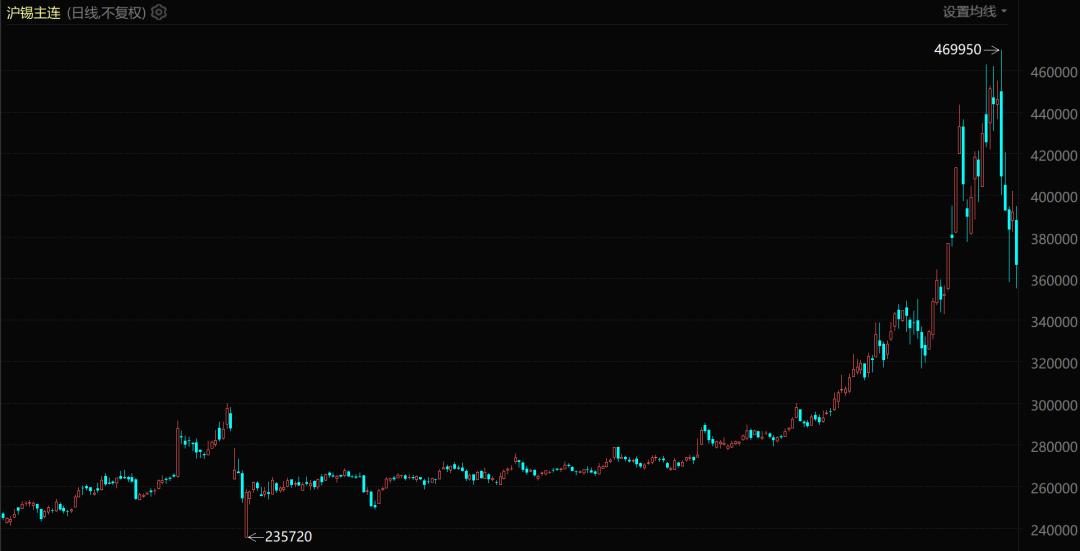
Core Viewpoint - The article discusses the significant pressure faced by Chinese manufacturing due to rising raw material prices, particularly in the context of the booming prices of copper and other industrial metals, which are squeezing profit margins for manufacturers while benefiting upstream resource companies [4][5]. Group 1: Raw Material Price Surge - The price of copper has seen a substantial increase, with a 34.34% rise in 2025, continuing into 2026 [4]. - Other metals such as aluminum, tin, zinc, and lead have also experienced significant price increases, with tin prices rising nearly 40% in 2025 [8]. - Lithium carbonate, essential for electric vehicle batteries, surged from 75,700 yuan per ton in January 2025 to 175,250 yuan per ton by January 2026, marking a 131.4% increase [9]. - Tungsten prices have also skyrocketed, with tungsten concentrate reaching 520,000 yuan per ton and carbide prices increasing from approximately 300,000 yuan per ton to 1,200,000 yuan per ton [9]. Group 2: Impact on Manufacturing Sector - The rising costs of raw materials have led to significant profit pressure on downstream manufacturing sectors, particularly in the home appliance industry, where copper constitutes over 20% of the total cost [12]. - The cost of air conditioning units has increased by 8.45% due to rising copper prices, which reached 105,020 yuan per ton in February 2026, a 42.25% increase from early 2025 [12]. - In the electric vehicle sector, the cost inflation for raw materials alone is estimated at 5,600 yuan per vehicle, primarily driven by lithium price increases [15]. Group 3: Broader Economic Context - Despite being the world's largest manufacturing nation, China's manufacturing sector is facing a dual squeeze from rising upstream costs and competitive pressures from downstream pricing [19][22]. - The profit margin for manufacturing has been declining, with the profit rate dropping to 4.7% in 2025, compared to higher rates in mining and energy sectors [23]. - The article highlights that marketing costs are also rising, with over 63% of surveyed e-commerce businesses spending more than 10% of their sales on paid traffic, further compressing profit margins [20]. Group 4: Strategies for Survival - Chinese manufacturers are exploring three main strategies to cope with these challenges: 1. Expanding business scope by increasing exports of high-value products, with a trade surplus of $1.19 trillion in 2025 [30]. 2. Extending the industrial chain by integrating vertically to reduce dependency on external raw materials [32]. 3. Innovating through technology to replace expensive raw materials, such as the development of sodium-ion batteries as an alternative to lithium-ion [33]. Group 5: Conclusion - The article concludes that the current challenges faced by Chinese manufacturing are indicative of a need for a strategic overhaul, requiring not only corporate efforts but also broader political and economic support to regain control over the industrial chain [28][34].

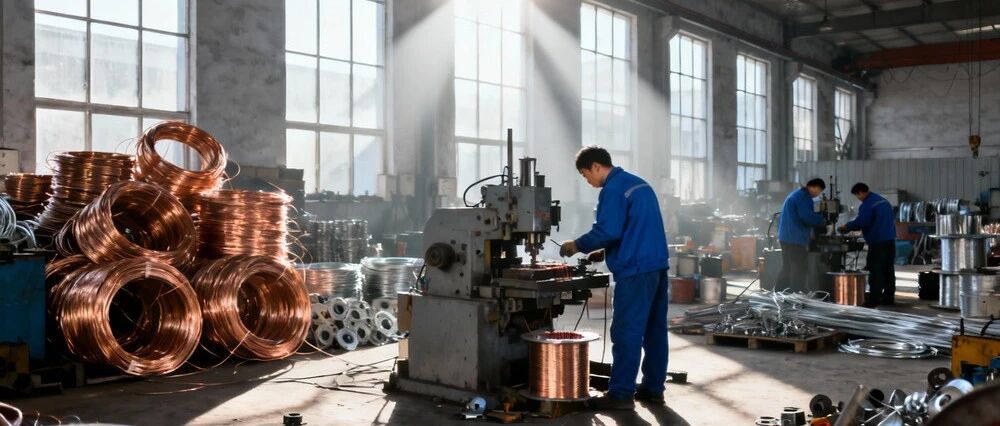
“围剿”中国工厂
3 6 Ke· 2026-02-05 05:27
Core Viewpoint - The surge in metal prices, particularly copper, is significantly impacting downstream manufacturing industries in China, leading to squeezed profit margins for manufacturers while upstream companies benefit from rising raw material prices [3][5][9]. Group 1: Price Surge in Raw Materials - In 2025, copper prices increased by 34.34%, and the upward trend continued into 2026 [2]. - The price of lithium carbonate, essential for electric vehicle batteries, skyrocketed from 75,700 yuan per ton in January 2025 to 175,250 yuan per ton by January 23, 2026, marking a 131.4% increase [7]. - Tungsten concentrate prices surged to 520,000 yuan per ton, while tungsten carbide prices rose from approximately 300,000 yuan per ton to 1,200,000 yuan per ton [7]. Group 2: Impact on Manufacturing Industries - The home appliance industry is heavily affected by rising copper prices, with copper accounting for over 20% of the total cost of air conditioners. The copper price reached 105,020 yuan per ton in February 2026, up 42.25% from early 2025, leading to an 8.45% increase in air conditioner costs [10]. - The electric vehicle industry faces significant cost inflation, with UBS reporting that the cost increase for pure electric vehicles (BEVs) due to metal prices alone is approximately 5,600 yuan per vehicle, primarily driven by lithium price increases [12]. - The automotive industry's single vehicle gross profit was only 13,000 yuan in 2025, making it challenging for manufacturers to pass on rising costs to consumers amid fierce competition [13]. Group 3: Upstream vs. Downstream Dynamics - Upstream mining companies are experiencing explosive profit growth due to rising raw material prices, with Zijin Mining forecasting a net profit of 51 to 52 billion yuan for 2025, a year-on-year increase of 59% to 62% [8]. - In contrast, manufacturing companies are facing unprecedented cost pressures, leading to a decline in profit margins. The manufacturing sector's profit margin was only 4.7% in 2025, compared to 15.9% for the mining sector [21][19]. - The overall revenue of China's industrial enterprises has been increasing, but profit margins have been declining, indicating a challenging environment for manufacturers [19][21]. Group 4: Strategies for Survival and Growth - Many Chinese manufacturing companies are exploring ways to extend their business scope internationally, moving beyond low-end products to high-value items like electric vehicles and industrial robots [24]. - Some companies are actively integrating vertically by acquiring upstream resources, such as copper mines, to mitigate the impact of rising raw material prices [24]. - Technological advancements are also being pursued, with companies investing in alternatives to reduce dependency on expensive raw materials, such as the development of sodium-ion batteries [26].






格林美20260130
2026-02-02 02:22
Summary of the Conference Call for Greenme (格林美) Company Overview - **Company**: Greenme (格林美) - **Industry**: Nickel and Cobalt Recycling, Tungsten Recovery, Battery Recycling Key Points and Arguments Nickel Project Performance - The Indonesian MHP project shipped over 110,000 tons in 2025, with the company's equity share around 50%-55% and costs controlled between $8,500 and $9,000 per ton. Nickel price increases have ensured project profitability, with total shipments expected to reach 140,000-150,000 tons by 2026, and the company's equity share projected at 75,000-80,000 tons [2][4][8] Tungsten Recovery Business - The tungsten recovery business is expected to grow significantly, with recovery volume projected to increase to around 10,000 tons by 2025, driven by rising tungsten prices. This segment's revenue is anticipated to improve substantially due to price increases and capacity expansion [2][4][8] Strategic Adjustments - The company is adjusting its precursor strategy by reducing low-margin products and shifting focus to high-nickel and ultra-high-nickel products. The cobalt tetroxide business is expected to grow steadily, with annual shipments of over 20,000 tons and a normal growth rate of 5%-10% anticipated for 2026 [2][4][8] Appliance Recycling and Scrap Vehicle Business - The appliance recycling business is expected to be divested in 2026, with an estimated loss of over 100 million yuan impacting 2025 profits. The scrap vehicle business is reducing losses, projected to decrease from over 150 million yuan in 2023 to below 100 million yuan in 2024, and is expected to synergize with the battery recycling business [5][6] Battery Recycling Business - The battery recycling segment has maintained profitability and is expanding, with a nearly 50% year-on-year increase in recovery volume expected in 2025. The business is projected to continue its strong profitability in 2026 due to rising lithium prices [7][8] Nickel Price Forecast - The company expects nickel prices to stabilize in the range of $18,000-$19,000 per ton in 2026, with a projected increase of about 20% compared to 2025. The Indonesian government is implementing quota controls to stabilize the nickel resource market [3][10][15][16] Financial Costs and Impact - Financial costs are calculated based on investment intensity, working capital needs, and turnover rates. The company faces higher costs in foreign operations due to dollar-denominated expenses [9] Market Dynamics and Government Regulations - The Indonesian government controls approximately 60% of global nickel resources and aims to prevent significant price drops through regulatory measures. This aligns with the government's goal of promoting the development of new energy applications through industrial upgrades [16][17] New Capacity and Project Progress - New projects in collaboration with Vale began construction in 2025, with an expected completion date by the end of 2026. However, potential policy adjustments may delay the timeline [18][19] Recovery Business Details - The company recycles various products, including scrap tools and hard alloys, primarily containing tungsten and cobalt. The annual shipment volume is expected to reach 10,000 tons by 2026, with a gross margin maintained between 15%-20% [20][21] Market Share and Competitive Position - The market share for the company's APP terminal products is estimated to be between 10%-20%, although specific data requires confirmation from business departments [23] Pricing Strategies - The company has established long-term pricing agreements with suppliers, with coverage ratios between 60%-70%. The pricing for long-term contracts has increased compared to the previous year [26] Impact of Competitors - The new projects by Qingshan Company are not expected to significantly impact Greenme, as Qingshan's supply to Greenme is minimal [28] Production Capacity - The company’s maximum production capacity is 150,000 tons, with quarterly production expected to range between 36,000 to 39,000 tons, limiting the potential for significant overproduction [29] Inventory Management - Inventory absorption is expected in the third and fourth quarters, primarily through nickel-cobalt hydroxide rather than raw material sales due to tight raw material supplies [30]

钨行业月度跟踪:1月钨价延续强势上涨,矿端供应紧张短期难改-20260130
Xiangcai Securities· 2026-01-30 03:50
Investment Rating - The industry rating is upgraded to "Overweight" from "Buy" due to rapid valuation increases and optimistic expectations reflected in stock prices [5]. Core Insights - The tungsten industry has shown strong market performance with a significant valuation increase, outperforming the benchmark index [2]. - Domestic tungsten prices have reached historical highs, driven by tight supply at the mining level and rising prices for long-term contracts [3]. - The supply chain remains constrained by tight raw material availability, leading to limited demand release and reduced transaction volumes [6]. Price Statistics - In January 2026, the average price of 65% black tungsten concentrate increased by 26.69% month-on-month to 510,600 CNY/ton, and by 254.75% year-on-year, with the increase from December 2025 expanding by 72.05 percentage points [5]. - The average price of 65% white tungsten concentrate rose by 26.76% month-on-month to 508,700 CNY/ton, with a year-on-year increase of 256.66% [5]. - The average price of ammonium paratungstate (APT) increased by 26.2% month-on-month to 751,400 CNY/ton, with a year-on-year increase of 254.53% [5]. Supply and Demand Dynamics - The supply of tungsten concentrate has slightly decreased, with weekly production dropping from 1,880 tons to 1,870 tons [6]. - The production of APT is estimated to increase by 5.88% in January 2026, but the overall supply remains constrained due to tight raw material availability [6]. - Demand is primarily driven by essential needs, with limited room for growth as rising raw material prices suppress downstream replenishment [6]. Profitability Analysis - Mining profits are expanding due to resource scarcity and price increases, with simulated gross profit for tungsten concentrate reaching 334,900 CNY/ton, a month-on-month increase of 40.77% [6]. - The midstream refining sector is also seeing steady profit growth, while downstream processing and alloy sectors are experiencing profit pressure due to lagging price transmission [6]. Investment Recommendations - The long-term outlook for the tungsten industry is positive, with supply constraints expected to strengthen due to declining ore grades and increased mining costs [6]. - Short-term expectations indicate that tight supply conditions will likely persist, supporting strong tungsten concentrate prices [6]. - Continued focus is recommended on companies with rich tungsten resources and integrated industrial layouts, particularly those investing in deep processing and emerging product areas [7].